Kirjojen hintavertailu. Mukana 11 241 044 kirjaa ja 12 kauppaa.

Kirjahaku

Etsi kirjoja tekijän nimen, kirjan nimen tai ISBN:n perusteella.

1000 tulosta hakusanalla Timothy J. Stapleton

Martin Luther's Catechisms

Martin Luther's Catechisms

Timothy J. Wengert

Augsburg Fortress
2009
nidottu
Martin Luther's catechisms 3 the Small Catechism in 1528-29, and the Large Catechism in spring 1529 - responded in part to "the deplorable, wretched deprivation that I recently encountered while I was a visitor" to rural Saxon congregations. The former was for laity, the latter an elaboration largely for the education of clergy, with Luther excoriating "their pure laziness and concern for their bellies." Reformation scholar Timothy Wengert has studied Luther's catechisms for the light they shed on the maturing Reformation faith but also for the fascinating lens they afford into the social world of Wittenberg in those years: children, clergy, education and publishing, marriage customs, devotion and prayer, and celebration of the Lord's Supper in this period, along with Luther's own hearty faith, are all illumined by these Western classics. In this volume, which also includes the texts of the catechisms, Wengert follows the traditional catechism order to demonstrate the dynamic faith exhibited in the catechisms in their original context and ours. An ideal resource for college and seminary classes, as well as individual and group reading, this volume will be a valued vehicle for understanding Reformation faith for many years to come.
Priesthood, Pastors, Bishops

Priesthood, Pastors, Bishops

Timothy J. Wengert

Fortress Press,U.S.
2008
nidottu
Protestant churches are often rent by disagreement and dissent over the office of bishop, the roles of the ordained, and myriad forms of lay ministry. Timothy Wengert's text overturns many of the 'pious myths' about these matters to probe the core conviction of Martin Luther, Philip Melanchthon, and the early Reform about public ministry.
Reading the Bible with Martin Luther – An Introductory Guide

Reading the Bible with Martin Luther – An Introductory Guide

Timothy J. Wengert

Baker Academic, Div of Baker Publishing Group
2013
nidottu
Prominent Reformation historian Timothy Wengert introduces the basic components of Martin Luther's theology of the Bible and examines Luther's contributions to present-day biblical interpretation. Wengert addresses key points of debate regarding Luther's approach to the Bible that have often been misunderstood, including biblical authority, the distinction between law and gospel, the theology of the cross, and biblical ethics. He argues that Luther, when rightly understood, offers much wisdom to Christians searching for fresh approaches to the interpretation of Scripture. This brief but comprehensive overview is filled with insights on Luther's theology and its significance for contemporary debates on the Bible, particularly the New Perspective on Paul.
Indians and Colonists at the Crossroads of Empire

Indians and Colonists at the Crossroads of Empire

Timothy J. Shannon

Cornell University Press
1999
sidottu
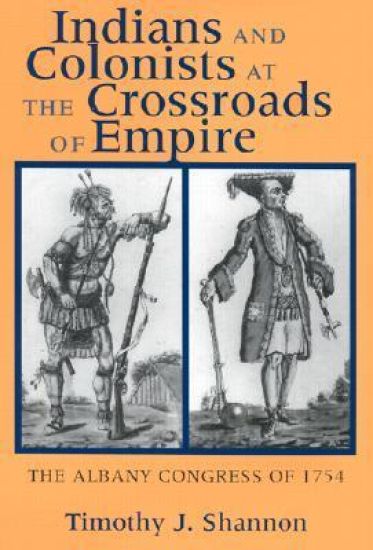
On the eve of the Seven Years' War in North America, the British crown convened the Albany Congress, an Anglo-Iroquois treaty conference, in response to a crisis that threatened imperial expansion. British authorities hoped to address the impending collapse of Indian trade and diplomacy in the northern colonies, a problem exacerbated by uncooperative, resistant colonial governments. In the first book on the subject in more than forty-five years, Timothy J. Shannon definitively rewrites the historical record on the Albany Congress. Challenging the received wisdom that has equated the Congress and the plan of colonial union it produced with the origins of American independence, Shannon demonstrates conclusively the Congress's importance in the wider context of Britain's eighteenth-century Atlantic empire. In the process, the author poses a formidable challenge to the Iroquois Influence Thesis. The Six Nations, he writes, had nothing to do with the drafting of the Albany Plan, which borrowed its model of constitutional union not from the Iroquois but from the colonial delegates' British cousins.Far from serving as a dress rehearsal for the Constitutional Convention, the Albany Congress marked, for colonists and Iroquois alike, a passage from an independent, commercial pattern of intercultural relations to a hierarchical, bureaucratic imperialism wielded by a distant authority.
Air Pollutant Deposition and Its Effects on Natural Resources in New York State
Ecosystem effects from air pollution in the Adirondacks, Catskills, and elsewhere in New York have been substantial. Efforts to characterize and quantify these impacts, and to examine more recent recovery, have focused largely on surface waters, soils, and forests. Lakes, streams, and soils have acidified. Estuaries have become more eutrophic. Nutrient cycles have been disrupted. Mercury has bioaccumulated to toxic levels. Plant species composition has changed. Some surface waters show signs of partial chemical recovery in response to emissions control programs, but available data suggest that soil chemistry may continue to deteriorate under expected future emissions and deposition. Resource managers, policymakers, and scientists now need to know the extent to which current and projected future emissions reductions will lead to ecosystem recovery. In this book, Timothy J. Sullivan provides a comprehensive synthesis of past, current, and potential future conditions regarding atmospheric sulfur, nitrogen oxides, ammonium, and mercury deposition; surface water chemistry; soil chemistry; forests; and aquatic biota in New York, providing much needed information to help set emissions reduction goals, evaluate incremental improvements, conduct cost/benefit analyses, and prioritize research needs. He draws upon a wealth of research conducted over the past thirty years that has categorized, quantified, and advanced understanding of ecosystem processes related to atmospheric deposition of strong acids, nutrients, and mercury and associated ecosystem effects. An important component of this volume is the new interest in the management and mitigation of ecosystem damage from air pollution stress, which builds on the "critical loads" approach pioneered in Europe and now gaining interest in the United States. This book will inform scientists, resource managers, and policy analysts regarding the state of scientific knowledge on these complex topics and their policy relevance and will help to guide public policy assessment work in New York, the Northeast, and nationally.
The New Masters of Capital

The New Masters of Capital

Timothy J. Sinclair

Cornell University Press
2008
pokkari
In The New Masters of Capital, Timothy J. Sinclair examines a key aspect of the global economy—the rating agencies. In the global economy, trust is formalized in the daily operations of such firms as Moody's and Standard & Poor's, which continuously monitor the financial health of bond-issuers ranging from private corporations to local and national governments. Their judgments affect unimaginably large sums, approximately $30 trillion in outstanding debt issues, according to a recent Moody's estimate. The difference between an AA and a BB rating may cost millions of dollars in interest payments or determine if a corporation or government can even issue bonds.Without bond rating agencies, there would be no standard means to compare risks in the global economy, and international investment would be problematic. Most observers assume that the agencies are neutral and scientific, and that they interpret their role in narrowly economic terms. But these agencies, by their nature, wield extraordinary power and exert massive influence over public policy. Sinclair offers a highly accessible account of these institutions, their origins, and the rating processes they use to judge creditworthiness. Illustrated with a wide range of cases, this book offers a fresh assessment of the role of an often-overlooked institution in the dynamics of modern global capitalism.
Indians and Colonists at the Crossroads of Empire

Indians and Colonists at the Crossroads of Empire

Timothy J. Shannon

Cornell University Press
2002
pokkari
On the eve of the Seven Years' War in North America, the British crown convened the Albany Congress, an Anglo-Iroquois treaty conference, in response to a crisis that threatened imperial expansion. British authorities hoped to address the impending collapse of Indian trade and diplomacy in the northern colonies, a problem exacerbated by uncooperative, resistant colonial governments. In the first book on the subject in more than forty-five years, Timothy J. Shannon definitively rewrites the historical record on the Albany Congress. Challenging the received wisdom that has equated the Congress and the plan of colonial union it produced with the origins of American independence, Shannon demonstrates conclusively the Congress's importance in the wider context of Britain's eighteenth-century Atlantic empire. In the process, the author poses a formidable challenge to the Iroquois Influence Thesis. The Six Nations, he writes, had nothing to do with the drafting of the Albany Plan, which borrowed its model of constitutional union not from the Iroquois but from the colonial delegates' British cousins.Far from serving as a dress rehearsal for the Constitutional Convention, the Albany Congress marked, for colonists and Iroquois alike, a passage from an independent, commercial pattern of intercultural relations to a hierarchical, bureaucratic imperialism wielded by a distant authority.
Marine Mammal Research

Marine Mammal Research

Timothy J. Ragen

Johns Hopkins University Press
2006
sidottu
Marine mammal conservation presents a number of challenges for scientists and other stakeholders, especially using natural resources in ways that avoid crisis management. Scientists play the special role of providing vital information to decision makers to help them understand long-term consequences of their actions and avoid crises before they develop. The contributors to this visionary work look beyond the current crises to present a compelling argument about how science, if conducted properly, can provide insights that minimize crisis management and implement more anticipatory action. Despite the significant reduction of marine mammal harvesting, stocks of some species remain greatly reduced or are in decline. This volume provides an overview of the current state of marine mammal populations and identifies the major obstacles facing marine mammal conservation, including fisheries, sonar and other noise pollution, disease, contaminants, algal booms, and habitat loss. The contributors chart a scientifically-supported plan to direct marine management toward a well-defined recovery protocol. This comprehensive resource will be indispensable for marine mammal biologists, oceanographers, conservation program managers, government regulators, policy makers, and anyone who is concerned about the future of these captivating species.
Essentials of E-Learning for Nurse Educators

Essentials of E-Learning for Nurse Educators

Timothy J. Bristol; Joann V. Zerwekh

F.A. Davis Company
2011
nidottu
AJN Book of the Year 2011Meet the growing demand for more interactive, self-paced, educational opportunities- master the world of online learning! This comprehensive, user-friendly, text will help you understand the principles behind online learning; show you how to successfully use it in the classroom, in clinical, and for staff development. Maximize your educational creativity with this exceptional resource!
Convicts and Orphans

Convicts and Orphans

Timothy J. Coates

Stanford University Press
2002
sidottu
This book examines how the early modern Portuguese state used convicts and orphans to populate its global empire over a period of two hundred years. In a country with as small a population base and the global labor requirements of Portugal, no one was expendable, not even such marginal figures as criminals, gypsies, orphans, and prostitutes. The author examines how the Portuguese judicial system, Overseas Council, Courts of the Inquisition, and charities coordinated their efforts to populate border cities in Portugal during the Middle Ages, and then turned to various sites in the empire as places of exile for these elements of society. In addition, he addresses the issue of gender in the state's use of two distinct groups of single women as colonizers, orphan girls and reformed prostitutes, each given state-awarded dowries if they agreed to relocate overseas. We are well acquainted with this system as it was used by the British in Australia in the nineteenth century, and much work has been done on similar efforts by other imperial powers, such as France, Spain, Russia, and China, to populate remote regions of their empires. However, this is the first study of the much earlier Portuguese case, and it provides a significant link between the medieval and modern applications of penal exile. The Portuguese state, with a population in 1600 one-sixth that of Great Britain and one-tenth that of France, exiled around 50,000 people, the same number as each of these larger powers. The punishment of exile was thus far more pervasive in Portuguese society. This work represents a new chapter in the study of exile as a punishment and the use of criminals as colonizers. It helps to explain the longevity of the Portuguese global empire as well as the growth of informal Portuguese-related communities around the world.
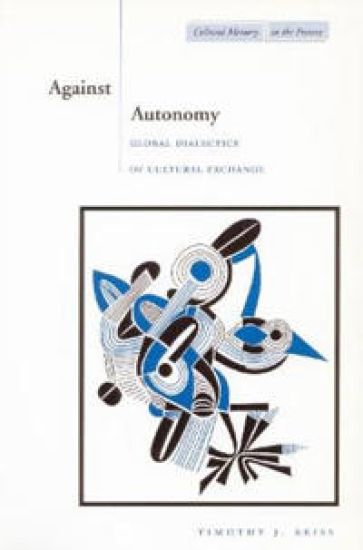
Against Autonomy

Against Autonomy

Timothy J. Reiss

Stanford University Press
2002
sidottu
This book investigates "cultural instruments," meaning normative forms of analysis and practice that are central to Western culture and in the course of their history came to be ways of understanding and controlling different cultures. Examples are: notions of autonomy and the division of intellectual, social, cultural, and aesthetic practices; ideas of otherness (taking forms like Gemeinschaft/Gesellschaft, négritude, and afrocentrism); cultural and aesthetic forms such as tragedy, mimesis, self, mind/body; certain modes of history and memory; and particular forms of discourse such as science, philosophy, and literature. The book explores the interlocking histories of cultural instruments from antiquity to the early Enlightenment and their instrumental use and reworking by different cultures, moving from Europe to Africa and the Americas, especially the Caribbean. In the process, the author gives close readings of works by a wide range of authors: Balboa, Balbuena, Brathwaite, Calvino, Carpentier, Cervantes, Césaire, Depestre, Descartes, Eltit, Fanon, Freud, Gombrowicz, Harris, Kane, Kipling, Marshall, Walcott. Many other authors' works become part of the book's general argument about how cultures are made, how they figure both themselves and other cultures, and how they mutually interact (when they do) through productions of what the author calls the "fictive imagination"—what in the West is called "art" but in different cultures may take different names and serve different purposes.
Against Autonomy

Against Autonomy

Timothy J. Reiss

Stanford University Press
2002
pokkari
This book investigates "cultural instruments," meaning normative forms of analysis and practice that are central to Western culture and in the course of their history came to be ways of understanding and controlling different cultures. Examples are: notions of autonomy and the division of intellectual, social, cultural, and aesthetic practices; ideas of otherness (taking forms like Gemeinschaft/Gesellschaft, négritude, and afrocentrism); cultural and aesthetic forms such as tragedy, mimesis, self, mind/body; certain modes of history and memory; and particular forms of discourse such as science, philosophy, and literature. The book explores the interlocking histories of cultural instruments from antiquity to the early Enlightenment and their instrumental use and reworking by different cultures, moving from Europe to Africa and the Americas, especially the Caribbean. In the process, the author gives close readings of works by a wide range of authors: Balboa, Balbuena, Brathwaite, Calvino, Carpentier, Cervantes, Césaire, Depestre, Descartes, Eltit, Fanon, Freud, Gombrowicz, Harris, Kane, Kipling, Marshall, Walcott. Many other authors' works become part of the book's general argument about how cultures are made, how they figure both themselves and other cultures, and how they mutually interact (when they do) through productions of what the author calls the "fictive imagination"—what in the West is called "art" but in different cultures may take different names and serve different purposes.
Mirages of the Selfe

Mirages of the Selfe

Timothy J. Reiss

Stanford University Press
2002
sidottu
Through extensive readings in philosophical, legal, medical, and imaginative writing, this book explores notions and experiences of being a person from European antiquity to Descartes. It offers quite new interpretations of what it was to be a person—to experience who-ness—in other times and places, involving new understandings of knowing, willing, and acting, as well as of political and material life, the play of public and private, passions and emotions. The trajectory the author reveals reaches from the ancient sense of personhood as set in a totality of surroundings inseparable from the person, to an increasing sense of impermeability to the world, in which anger has replaced love in affirming a sense of self. The author develops his analysis through an impressive range of authors, languages, and texts: from Cicero, Seneca, and Galen; through Avicenna, Hildegard of Bingen, and Heloise and Abelard; to Petrarch, Montaigne, and Descartes.
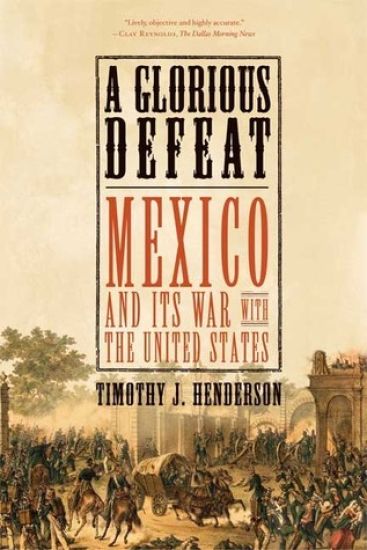
A Glorious Defeat

A Glorious Defeat

Timothy J. Henderson

Hill Wang Inc.,U.S.
2008
nidottu
The war that was fought between the United States and Mexico from 1846 to 1848 was a major event in the history of both countries: it cost Mexico half of its national territory, opened western North America to U.S. expansion, and brought to the surface a host of tensions that led to devastating civil wars in both countries. Among generations of Latin Americans, it helped to cement the image of the United States as an arrogant, aggressive, and imperialist nation, poisoning relations between a young America and its southern neighbors. In contrast to many current books, which treat the war as a fundamentally American experience, Timothy J. Henderson offers a fresh perspective by looking closely at the Mexican side of the equation. He examines the tremendous inequalities of Mexican society and provides a greater understanding of the intense factionalism and political paralysis leading up to and through the war. Also touching on a range of topics from culture and ethnicity to religion and geography, this comprehensive yet concise narrative humanizes the conflict and serves as the perfect introduction for new readers of Mexican history.
Soccer in Spain

Soccer in Spain

Timothy J. Ashton

Scarecrow Press
2013
sidottu
Soccer has the unique ability to represent and strengthen different cultural identities and ideologies throughout the world. Perhaps nowhere can this be seen more prominently than in Spain, which has surged to the forefront of the world’s most popular sport. The national team has won the last two European Championships and the 2010 World Cup, while the two preeminent club teams in Spain, Real Madrid and FC Barcelona, have reached the semifinals of the UEFA Champions League in 2011, 2012, and 2013. Even before the sport became a global phenomenon, soccer had established a strong connection with Spanish identity and culture. In Soccer in Spain: Politics, Literature, and Film, Timothy J. Ashton examines the sport’s association with Spanish culture and society. In this volume, Ashton demonstrates how Spain’s soccer clubs reflected the politics of the region they represented and continue to reflect them today. The author also explores the often-tenuous relationship between the intellectual classes and the soccer community in Spain. Although some of the country’s most highly-praised literary figures had a passion for soccer—which was often reflected in their work—many intellectuals deemed the topic unsuitable for critical study. Ashton also discusses how soccer films faced a similar rebuff from Spanish intellectuals, though the popularity of these films has grown in recent years. As soccer continues to be one of the modern world’s most significant representations of globalization, its importance as a cultural touchpoint cannot be ignored. For anyone wanting to learn more about the relationship between soccer, politics, and popular culture, this volume offers critical insights. Soccer in Spain is a valuable read for students and scholars of Spanish political history, literature, film, and sport.
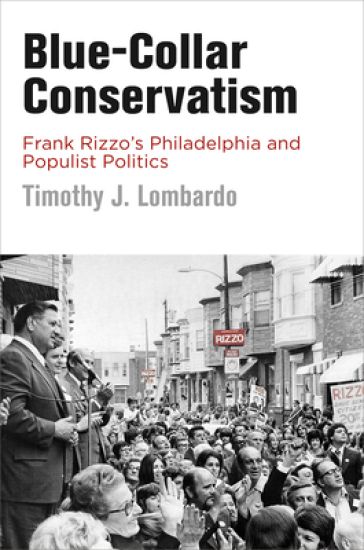
Blue-Collar Conservatism

Blue-Collar Conservatism

Timothy J. Lombardo

University of Pennsylvania Press
2021
pokkari
The postwar United States has experienced many forms of populist politics, none more consequential than that of the blue-collar white ethnics who brought figures like Ronald Reagan and Donald Trump to the White House. Blue-Collar Conservatism traces the rise of this little-understood, easily caricatured variant of populism by presenting a nuanced portrait of the supporters of Philadelphia Mayor Frank Rizzo. In 1971, Frank Rizzo became the first former police commissioner elected mayor of a major American city. Despite serving as a Democrat, Rizzo cultivated his base of support by calling for "law and order" and opposing programs like public housing, school busing, affirmative action, and other policies his supporters deemed unearned advantages for nonwhites. Out of this engagement with the interwoven politics of law enforcement, school desegregation, equal employment, and urban housing, Timothy J. Lombardo argues, blue-collar populism arose. Based on extensive archival research, and with an emphasis on interrelated changes to urban space and blue-collar culture, Blue-Collar Conservatism challenges the familiar backlash narrative, instead contextualizing blue-collar politics within postwar urban and economic crises. Historian and Philadelphia-native Lombardo demonstrates how blue-collar whites did not immediately abandon welfare liberalism but instead selectively rejected liberal policies based on culturally defined ideas of privilege, disadvantage, identity, and entitlement. While grounding his analysis in the postwar era's familiar racial fissures, Lombardo also emphasizes class identity as an indispensable driver of blue-collar political engagement. Blue-Collar Conservatism ultimately shows how this combination of factors created one of the least understood but most significant political developments in recent American history.
Blue-Collar Conservatism

Blue-Collar Conservatism

Timothy J. Lombardo

University of Pennsylvania Press
2018
sidottu
The postwar United States has experienced many forms of populist politics, none more consequential than that of the blue-collar white ethnics who brought figures like Ronald Reagan and Donald Trump to the White House. Blue-Collar Conservatism traces the rise of this little-understood, easily caricatured variant of populism by presenting a nuanced portrait of the supporters of Philadelphia Mayor Frank Rizzo. In 1971, Frank Rizzo became the first former police commissioner elected mayor of a major American city. Despite serving as a Democrat, Rizzo cultivated his base of support by calling for "law and order" and opposing programs like public housing, school busing, affirmative action, and other policies his supporters deemed unearned advantages for nonwhites. Out of this engagement with the interwoven politics of law enforcement, school desegregation, equal employment, and urban housing, Timothy J. Lombardo argues, blue-collar populism arose. Based on extensive archival research, and with an emphasis on interrelated changes to urban space and blue-collar culture, Blue-Collar Conservatism challenges the familiar backlash narrative, instead contextualizing blue-collar politics within postwar urban and economic crises. Historian and Philadelphia-native Lombardo demonstrates how blue-collar whites did not immediately abandon welfare liberalism but instead selectively rejected liberal policies based on culturally defined ideas of privilege, disadvantage, identity, and entitlement. While grounding his analysis in the postwar era's familiar racial fissures, Lombardo also emphasizes class identity as an indispensable driver of blue-collar political engagement. Blue-Collar Conservatism ultimately shows how this combination of factors created one of the least understood but most significant political developments in recent American history.
From Rights to Economics

From Rights to Economics

Timothy J. Minchin

University Press of Florida
2025
pokkari
Examining the African American stuggle for economic parity in the South after the 1960sRich with the voices of Black and white southern workers, From Rights to Economics shows how African Americans have continued fighting for economic parity in the decades since the civil rights legislation of the 1960s.Using oral histories and case studies that focus on Black activism throughout the entire South, award-winning historian Timothy Minchin examines the work of grassroots groups—including the Southern Regional Council and the NAACP Legal Defense Fund—who struggled with the economic dimensions of the movement.While white workers and managers resisted integration, activists' efforts gradually secured a wider range of job opportunities for Black people. Minchin shows, however, that the decline of manufacturing industry in the South has been especially difficult for the African American community, wiping out many good jobs just as Black people were gaining access to them.Minchin also offers a detailed discussion of a major school integration battle in Louisville, Kentucky, and examines the role of affirmative action in the ongoing Black struggle.A volume in the series New Perspectives on the History of the South, edited by John David Smith.
Mass Destruction

Mass Destruction

Timothy J. LeCain

Rutgers University Press
2009
sidottu
The place: The steep mountains outside Salt Lake City. The time: The first decade of the twentieth century. The man: Daniel Jackling, a young metallurgical engineer. The goal: A bold new technology that could provide billions of pounds of cheap copper for a rapidly electrifying America. The result: Bingham's enormous "Glory Hole," the first large-scale open-pit copper mine, an enormous chasm in the earth and one of the largest humanmade artifacts on the planet. Mass Destruction is the compelling story of Jackling and the development of open-pit hard rock mining, its role in the wiring of an electrified America, as well its devastating environmental consequences.Mass destruction mining soon spread around the nation and the globe, providing raw materials essential to the mass production and mass consumption that increasingly defined the emerging "American way of life." At the dawn of the last century, Jackling's open pit replaced immense but constricted underground mines that probed nearly a mile beneath the earth, to become the ultimate symbol of the modern faith that science and technology could overcome all natural limits. A new culture of mass destruction emerged that promised nearly infinite supplies not only of copper, but also of coal, timber, fish, and other natural resources.But, what were the consequences? Timothy J. LeCain deftly analyzes how open-pit mining continues to affect the environment in its ongoing devastation of nature and commodification of the physical world. The nation's largest toxic Superfund site would be one effect, as well as other types of environmental dead zones around the globe. Yet today, as the world's population races toward American levels of resource consumption, truly viable alternatives to the technology of mass destruction have not yet emerged.
Postmodern Tales of Slavery in the Americas
Unlike 19th century slave narratives, many recent novel-like texts about slavery deploy ironic narrative strategies, innovative structural features, and playful cruelty. This study analyzes the postmodern aesthetics common to seven tales of slavery from the United States, Martinique, and Guadeloupe, Cuba, abd Colombia from authors including Alejo Carpentier, Miguel Barnet, Toni Morrison, and Charles Johnson.