Kirjojen hintavertailu. Mukana 12 111 431 kirjaa ja 12 kauppaa.

Kirjahaku

Etsi kirjoja tekijän nimen, kirjan nimen tai ISBN:n perusteella.

654 tulosta hakusanalla Tito Perdue

Poppy and Tito

Poppy and Tito

Mathilde Domecq

Picture Window Books
2020
sidottu
Poppy and Tito love to do everything together. But what happens when a silly spat splits them apart? Find out in this wordless graphic novel where the artwork brings the story to life.
L'Illusion héroïque de Tito Bassi

L'Illusion héroïque de Tito Bassi

Henri de Régnier

Createspace Independent Publishing Platform
2016
nidottu
"...Vicence et ses Palais, Vicence et ses Villas, quelles belles images m'a laiss es son d cor pompeux et singulier, soit par la douce clart du printemps, soit par la riche lumi re de l'automne C'est durant ces journ es de promenades et de fl neries que j'ai rencontr le pauvre Tito Bassi et que je me suis cont ses aventures imaginaires et son h ro que illusion. Qu'il me pardonne de l'avoir re u de sa ville natale Ce n'est pas moi qui l'ai invent . C'est Vicence elle-m me qui me l'a offert et, si je l'ai accept tel qu'elle me le pr sentait, ce ne fut que pour mieux me souvenir d'elle et pour le lui rendre en faible t moignage de ma gratitude charm e..."
A Muslim Woman in Tito's Yugoslavia

A Muslim Woman in Tito's Yugoslavia

Munevera Hadzisehovic; Sabrina Petra Ramet

Texas A M University Press
2003
sidottu
Born in a small river town in the largely Muslim province of Sandzak, Munevera Hadzisehovic grew up in an area sandwiched between the Orthodox Christian regions of Montenegro and Serbia, cut off from other Muslims in Bosnia and Herzegovina. Her story takes her from the rural culture of the early 1930s through the massacres of World War II and the repression of the early communist regime to the dissolution of Yugoslavia in the early 1990s. It sheds light on the history of Yugoslavia from the interwar kingdom to the break-up of the socialist state. Hadzisehovic paints a picture not only of her own life, but also of the lives of other Muslims, especially women, in an era and an area of great change. Readers are given a loving yet accurate portrait of Muslim customs pertaining to the household, gardens, food and dating - in short, of everyday life. She writes from the inside out, starting with her emotions and experiences, then moving outward to the facts that concern those interested in this region: the role of the Ustashe, Chetniks and Germans in World War II; the attitude of Serb-dominated Yugoslavia toward Muslims; and the tragic state of ethnic relations that led to war again in the 1990s. Some of Hadzisehovic's experiences and many of her views may be controversial. She speaks of Muslim women's reluctance to give up the veil, the disapproval of mixed marriages and the problems between Serb and Croat nationals. Her benign view of Italian occupation is in stark contrast to her depiction of bloodthirsty Chetnik irregulars. Her analysis of Belgrade's Muslims suggests that class differences were just as important as religious affiliation. In this personal story, Hadzisehovic mourns the loss of two worlds - the orderly Muslim world of her childhood and the secular, multi-ethnic world of communist Yugoslavia.
A Muslim Woman in Tito's Yugoslavia

A Muslim Woman in Tito's Yugoslavia

Munevera Hadzisehovic; Sabrina Petra Ramet

Texas A M University Press
2003
nidottu
Born in a small river town in the largely Muslim province of Sandzak, Munevera Hadzisehovic grew up in an area sandwiched between the Orthodox Christian regions of Montenegro and Serbia, cut off from other Muslims in Bosnia and Herzegovina. Her story takes her from the rural culture of the early 1930s through the massacres of World War II and the repression of the early communist regime to the dissolution of Yugoslavia in the early 1990s. It sheds light on the history of Yugoslavia from the interwar kingdom to the break-up of the socialist state. Hadzisehovic paints a picture not only of her own life, but also of the lives of other Muslims, especially women, in an era and an area of great change. Readers are given a loving yet accurate portrait of Muslim customs pertaining to the household, gardens, food and dating - in short, of everyday life. She writes from the inside out, starting with her emotions and experiences, then moving outward to the facts that concern those interested in this region: the role of the Ustashe, Chetniks and Germans in World War II; the attitude of Serb-dominated Yugoslavia toward Muslims; and the tragic state of ethnic relations that led to war again in the 1990s. Some of Hadzisehovic's experiences and many of her views may be controversial. She speaks of Muslim women's reluctance to give up the veil, the disapproval of mixed marriages and the problems between Serb and Croat nationals. Her benign view of Italian occupation is in stark contrast to her depiction of bloodthirsty Chetnik irregulars. Her analysis of Belgrade's Muslims suggests that class differences were just as important as religious affiliation. In this personal story, Hadzisehovic mourns the loss of two worlds - the orderly Muslim world of her childhood and the secular, multi-ethnic world of communist Yugoslavia.
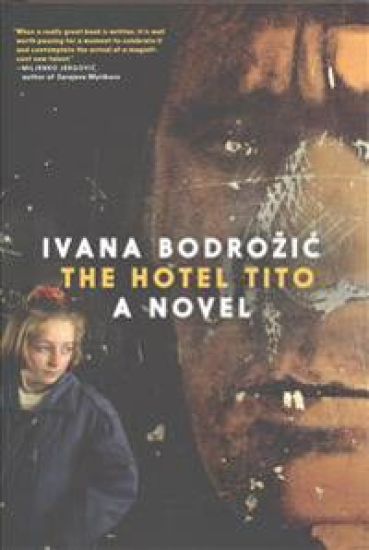
The Hotel Tito

The Hotel Tito

Ivana Bodrozic

SEVEN STORIES PRESS
2017
sidottu
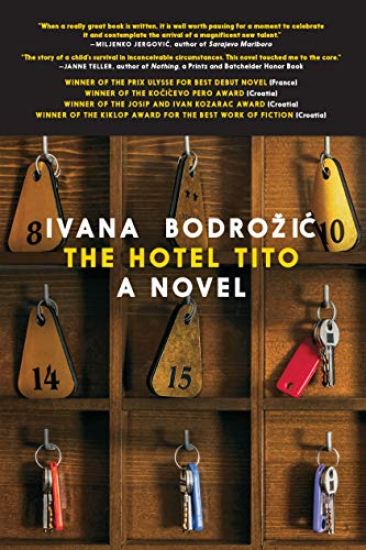
The most powerful autobiographical novel written about the Yugoslav wars. A timely and deeply accessible book that speaks to what it is like to be displaced by war.Hotel Tito is an award-winning autobiographical novel of the Serbo-Croatian War. Author Ivana Bodrožic was born in the Croatian town of Vukovar, just across the Danube from Serbia. In the fall of 1991, Vukovar was besieged by the Yugoslav People's Army for eighty-seven days. When the army broke the siege, people came up out of the basements where they'd been sheltering from bombardment; women and children were allowed out of the besieged city, but the army bused 400 men from the hospital to a farm on the outskirts where soldiers and Serbian paramilitaries massacred them. Bodrožic's father was among those taken and murdered. In Hotel Tito, after fleeing the war zone their town has become, the mother and two children are housed along with other displaced persons at a former communist school in the village of Kumrovec (the birthplace of Josip Tito). For years they share a single room just large enough for their three beds, waiting to hear whether the narrator's father survived and when they'll be granted an apartment of their own. In the meantime life goes on for the teenage protagonist, first loves bloom and burn quickly, new friendships are acquired and lost, new truths emerge, and new emotions. But she never loses her shy, insightful voice, nor her self-deprecating sense of humor. Hotel Tito is a sensitive and forthright coming of age novel in a time of atrocity and loss.
The Hotel Tito

The Hotel Tito

Ivana Bodrozic

SEVEN STORIES PRESS
2019
nidottu
Winner of the Prix Ulysse for best debut novel in FranceWinner in Croatia and the Balkan region of the Kočicevo Pero Award, the Josip and Ivan Kozarac Award, and the Kiklop Award for the best work of fiction When the Croatian War of Independence breaks out in her hometown of Vukovar in the summer of 1991 she is nine years old, nestled within the embrace of family with her father, mother, and older brother. She is sent to a seaside vacation to be far from the hostilities. Meanwhile, her father has disappeared while fighting with the Croatian forces. By the time she returns at summer's end everything has changed. Against the backdrop of genocide (the Vukovar hospital massacre) and the devastation of middle-class society within the Yugoslav Federation, our young narrator, now with her mother and brother refugees among a sea of refugees, spends the next six years experiencing her own self-discovery and transformation amid unfamiliar surroundings as a displaced person. As she grows from a nine-year old into a sparkling and wonderfully complicated fifteen-year-old, it is as a stranger in her own land. Applauded as the finest work of fiction to appear about the Yugoslav Wars, Ivana Bodrožic's The Hotel Tito is at its heart a story of a young girl's coming of age, a reminder that even during times of war--especially during such times--the future rests with those who are the innocent victims and peaceful survivors.
Ratni ZloCinac Tito

Ratni ZloCinac Tito

Mladen Ivezic

Lulu.com
2020
pokkari
Ivezic iz titovske vojne i policijske korespondencije jasno dokazuje, da se o zločinima nad Hrvatima stupnjevano izvjescivalo sve do vrha titovske vojske i partije, da je Josip Broz Tito sva ta izvjesca odobravao te, osim implicitno, i eksplicitno zločine zapovijedao. Titovska je toboznja legislativa u Ratu također bila zločinačka. Ivezic je dokazao krivnju Josipa Broza Tita u svim trima područjima (vojno-policijsko, pravno i promičbeno) i u njihovoj sintezi.
Jack and Tito

Jack and Tito

Natalie Song Allen

Gooddog
2022
sidottu
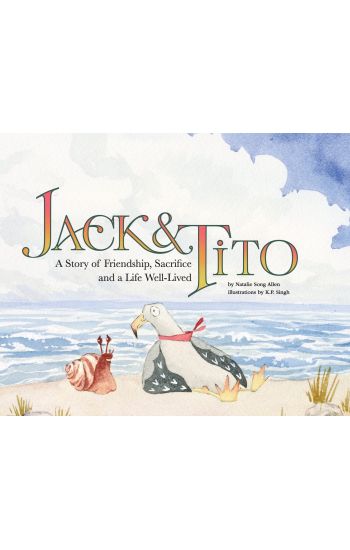
"Someday I will go to the ocean," Jack the snail told his Mother. "Oh no, sweetheart. We're land snails. We can never go to the ocean."On a beautiful, tiny tropical island, a baby snail is born. His mother names him Jack. Against all odds, Jack befriends a baby seagull, Tito.Thus begins an improbable friendship that blossoms with humor and adventure. Jack grows into a brave and accomplished mature snail and Tito becomes legendary for his exploits in the sea and sky. Although Jack becomes happy and wise, he longs to do something of great importance - and to visit the ocean, his lifelong dream. Then one day, the opportunity arises, but it will take bravery, strength and, in the end, sacrifice. Jack and Tito is the bittersweet celebration of bravery, friendship, and life well-lived. A gentle story about complex things, Jack and Tito embraces life - and its end - with remarkable grace and perception.
The Unused Life of Tito López

The Unused Life of Tito López

Luis Luna

Piwaiwaka Press
2023
pokkari
A clever, hopeful, young graduate, Tito L pez, is poised at the entry to adulthood as well as a whole new millennium. Living in a provincial Mexican city at the turn of the 21st century he wants what most of us want ... a career, love, happiness. But will he find any of them on Cerro del Calvario?What's up with his nunnish clever sister Angelita? Will the deer's eye work - the amulet given by the wrinkled family workhorse, Mar a? Who's the mysterious blond god, Salvador?The Unused Life of Tito L pez portrays the Lopez family in a way that will seem familiar to those from middle-class suburban amilies almost anywhere else in the world. Meanwhile, readers from outside Mexico will be intrigued by the sense of other, parallel, exotic, existences in our contemporary world.
In Search of Tito’s Punks

In Search of Tito’s Punks

Barry Phillips

INTELLECT
2023
sidottu
The book traces the story of how a song recorded in 1981 by a young punk rock band from a cultural backwater on the English-Welsh border, and released on a tiny independent record label, became famous in a Yugoslavia formed in the image of Marshall Tito? Why was it 30 years before the members of the band found out? How did this ‘socialist’ country have one of the most vibrant punk scenes in the world? Gloucester, England, 1981; multi-racial, teenage street-punk band, Demob, recorded and released what would become their best known and most enduring song, No Room For You. A rasping vocal told the story of the 1979 closure of a short-lived, punk rock venue at a disused motel on the edge of the provincial city. Depending on your mind-set, the lyrics were either a howl of rage at the injustice, a wail at the loss, or a love-song to an era. More than three decades later, the author – and Demob’s bass player in 1981 – set out to follow the song across a country that no longer exists. On the road he heard the life stories of the heroes of Yugoslavian punk and the punks themselves; from the Tito era, through the disintegration and wars, forced displacements and permanent exiles, to today’s turbulent ‘reconstruction. Who were ’Tito’s punks’ and who are they now? An unvarnished but also affectionate portrait of Yugoslavia in the years before its demise through to the present, seen through the unlikely lens of punk and punk rockers. Part travelogue, part history the book is both, and neither, of those things. Rather, it is a mural and soundtrack of a journey through a time and place which no longer exists. The latest addition to the Global Punk series from Intellect.