
Kirjahaku
Etsi kirjoja tekijän nimen, kirjan nimen tai ISBN:n perusteella.
1000 tulosta hakusanalla Vector Hasting


Vector de cooperação - Ásia
Edições Nosso Conhecimento
2022
nidottu


Vector Biology
S Jeyaparvathi; M Balachandar; M Baranitharan
Lap Lambert Academic Publishing
2025
pokkari
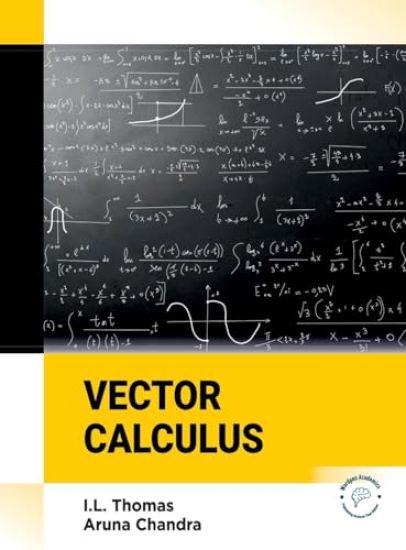
It strives to present the material in a clear and accessible manner, with a focus on providing practical examples and applications to various fields such as physics, engineering, computer graphics, and more.Covers the essential concepts of vectors in three-dimensional Euclidean space and explains vector operations, including addition, subtraction, scalar multiplication, and dot product.Discusses partial derivatives, gradient vectors, directional derivatives, and tangent planes and also provides a comprehensive introduction to double and triple integrals.Demonstrates techniques for evaluating integrals using different coordinate systems and covers line integrals and their relationship to work and circulation.This book serves as a valuable resource for students studying mathematics, physics, engineering, and related disciplines. It also serves as an excellent reference for professionals seeking a concise and practical guide to vector calculus.

Vector Biology, Ecology and Control
Springer
2009
sidottu
Mir S. Mulla joined the faculty of the Entomology Department at the University of California, Riverside in 1956, only two years after the Riverside campus was established as an independent campus within the University of California system. Prior to his appointment, Mir received his B.S. from Cornell University and then moved to the University of California, Berkeley to pursue his graduate studies. His Ph.D. from Berkeley, awarded in 1955, completed his formal American education which was the purpose of his immigration from his native Kandahar in Afghanistan. In his over 50 years at Riverside, Mir has made an incalculable impact on vector biology both within the United States and in developing countries throughout the world. Within Southern California, Mir’s basic and applied research led to the rapid and sustainable control of mosquitoes and eye gnats in the Coachella Valley and so directly enabled this region to grow to the thriving, large community it is today. In 2006 his efforts in facilitating the development of the low desert of southern California were recognized through the dedication of the Mir S. Mulla Biological Control Facility by the Coachella Valley Mosquito and Vector Control District. His success has been so profound that it remains somewhat cryptic to the many who now reside in, visit, and enjoy, this region of California, oblivious to the insect problems that severely restrained development until Mir and his students ?rst applied their expertise many decades ago.
Vector Lyapunov Functions and Stability Analysis of Nonlinear Systems
V. Lakshmikantham; V.M. Matrosov; S. Sivasundaram
Springer
2010
nidottu
One service mathematics has rendered the 'Et moi, "', si j'avait su comment en revenir, je n'y serais point all".' human race. It has put common sense back where it belongs, on the topmost shelf next Jules Verne to the dusty canister labelled 'discarded non- sense'. The series is divergent; therefore we may be able to do something with it. Eric T. Bell O. Heaviside Mathematics is a tool for thought. A highly necessary tool in a world where both feedback and non- linearities abound. Similarly, all kinds of parts of mathematics serve as tools for other parts and for other sciences. Applying a simple rewriting rule to the quote on the right above one finds such statements as: 'One service topology has rendered mathematical physics ...'; 'One service logic has rendered com- puter science ...'; 'One service category theory has rendered mathematics ...'. All arguably true. And all statements obtainable this way form part of the raison d'etre of this series.
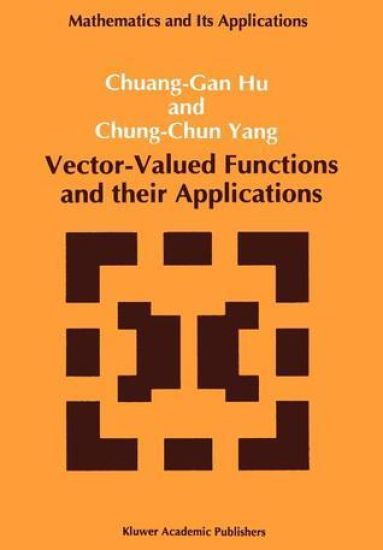
This book is the first to be devoted to the theory of vector-valued functions with one variable. This theory is one of the fundamental tools employed in modern physics, the spectral theory of operators, approximation of analytic operators, analytic mappings between vectors, and vector-valued functions of several variables. The book contains three chapters devoted to the theory of normal functions, Hp-space, and vector-valued functions and their applications. Among the topics dealt with are the properties of complex functions in a complex plane and infinite-dimensional spaces, and the solution of vector-valued integral equations and boundary value problems by complex analysis and functional analysis, which involve methods which can be applied to problems in operations research and control theory. Much original research is included. This volume will be of interest to those whose work involves complex analysis and control theory, and can be recommended as a graduate text in these areas.
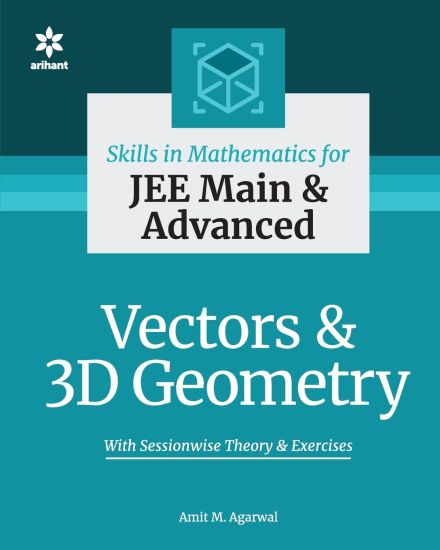


This book has been considered by academicians and scholars of great significance and value to literature. This forms a part of the knowledge base for future generations. So that the book is never forgotten we have represented this book in a print format as the same form as it was originally first published. Hence any marks or annotations seen are left intentionally to preserve its true nature.
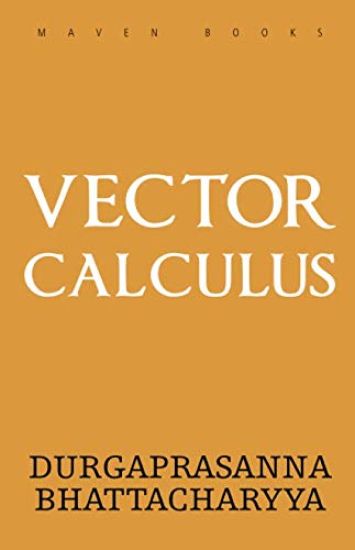

Vector Biology, Ecology and Control
Springer
2014
nidottu
Mir S. Mulla joined the faculty of the Entomology Department at the University of California, Riverside in 1956, only two years after the Riverside campus was established as an independent campus within the University of California system. Prior to his appointment, Mir received his B.S. from Cornell University and then moved to the University of California, Berkeley to pursue his graduate studies. His Ph.D. from Berkeley, awarded in 1955, completed his formal American education which was the purpose of his immigration from his native Kandahar in Afghanistan. In his over 50 years at Riverside, Mir has made an incalculable impact on vector biology both within the United States and in developing countries throughout the world. Within Southern California, Mir’s basic and applied research led to the rapid and sustainable control of mosquitoes and eye gnats in the Coachella Valley and so directly enabled this region to grow to the thriving, large community it is today. In 2006 his efforts in facilitating the development of the low desert of southern California were recognized through the dedication of the Mir S. Mulla Biological Control Facility by the Coachella Valley Mosquito and Vector Control District. His success has been so profound that it remains somewhat cryptic to the many who now reside in, visit, and enjoy, this region of California, oblivious to the insect problems that severely restrained development until Mir and his students ?rst applied their expertise many decades ago.

Vector Lattices and Intergal Operators
Springer
2011
nidottu
The theory of vector lattices, stemming from the mid-thirties, is now at the stage where its main achievements are being summarized. The sweeping changes of the last two decades have changed its image completely. The range of its application was expanded and enriched so as to embrace diverse branches of the theory of functions, geometry of Banach spaces, operator theory, convex analysis, etc. Furthermore, the theory of vector lattices was impregnated with principally new tools and techniques from other sections of mathematics. These circumstances gave rise to a series of mono graphs treating separate aspects of the theory and oriented to specialists. At the same time, the necessity of a book intended for a wider readership, reflecting the modern diretions of research became clear. The present book is meant to be an attempt at implementing this task. Although oriented to readers making their first acquaintance with vector-lattice theory, it is composed so that the main topics dealt with in the book reach the current level of research in the field, which is of interest and import for specialists. The monograph was conceived so as to be divisible into two parts that can be read independently of one another. The first part is mainly Chapter 1, devoted to the so-called Boolean-valued analysis of vector lattices. The term designates the applica tion of the theory of Boolean-valued models by D. Scott, R. Solovay and P.

This book covers vector calculus up to the integral theorems; linear algebra up to the spectral theorem; and harmonic analysis until the Dirichlet theorem on convergence of Fourier series with applications to partial differential equations. It also contains a unique introduction to proofs, while providing a solid foundation in understanding the proof techniques better.The book incorporates fundamentals from advanced calculus and linear algebra but it is still accessible to a rather general student audience.Students will find materials that are usually left out like differential forms in calculus, the Taylor theorem in arbitrary dimensions or the Jordan normal form in linear algebra, the convergence proof of Fourier series, and how to do calculus on discrete networks.The contents of this book were used to teach in a two-semester course at Harvard University during fall 2018 and spring 2019. For the last 30 years, Oliver Knill has taught calculus, linear algebra, probability theory and differential equations starting at ETH Zürich, moving onward to Caltech, and the University of Arizona, and ever since 2000, at Harvard.

This book covers vector calculus up to the integral theorems; linear algebra up to the spectral theorem; and harmonic analysis until the Dirichlet theorem on convergence of Fourier series with applications to partial differential equations. It also contains a unique introduction to proofs, while providing a solid foundation in understanding the proof techniques better.The book incorporates fundamentals from advanced calculus and linear algebra but it is still accessible to a rather general student audience.Students will find materials that are usually left out like differential forms in calculus, the Taylor theorem in arbitrary dimensions or the Jordan normal form in linear algebra, the convergence proof of Fourier series, and how to do calculus on discrete networks.The contents of this book were used to teach in a two-semester course at Harvard University during fall 2018 and spring 2019. For the last 30 years, Oliver Knill has taught calculus, linear algebra, probability theory and differential equations starting at ETH Zürich, moving onward to Caltech, and the University of Arizona, and ever since 2000, at Harvard.
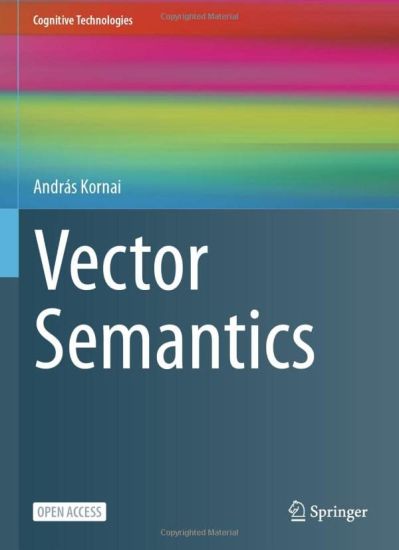
This open access book introduces Vector semantics, which links the formal theory of word vectors to the cognitive theory of linguistics. The computational linguists and deep learning researchers who developed word vectors have relied primarily on the ever-increasing availability of large corpora and of computers with highly parallel GPU and TPU compute engines, and their focus is with endowing computers with natural language capabilities for practical applications such as machine translation or question answering. Cognitive linguists investigate natural language from the perspective of human cognition, the relation between language and thought, and questions about conceptual universals, relying primarily on in-depth investigation of language in use. In spite of the fact that these two schools both have ‘linguistics’ in their name, so far there has been very limited communication between them, as their historical origins, data collection methods, and conceptual apparatuses are quite different. Vector semantics bridges the gap by presenting a formal theory, cast in terms of linear polytopes, that generalizes both word vectors and conceptual structures, by treating each dictionary definition as an equation, and the entire lexicon as a set of equations mutually constraining all meanings.