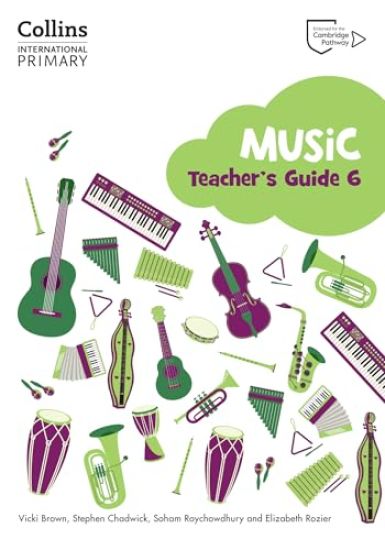
The Collins International Primary Music series provides a holistic, enjoyable and easy-to-deliver approach to classroom music for Stages 1â??6. Learning is facilitated through the exploration of a diverse range of musical styles and topics from around the world. It supports the Cambridge Primary Music curriculum framework (0068) from 2024.
Get Rid of Chronic Pain and Discover How to Look and Feel Your Best Every Day Back problems, nightly headaches, tight shoulders, achy feet-all of us have nagging, daily pains that seem to get worse when our lives get busier. In The Body Doesn't Lie, Vicky Vlachonis shows us how to locate the source of our pain, understand its origin and manifestation in the body, and then let it go, using a holistic approach that includes easy-to-implement guidelines for diet, exercise, and emotional well-being.
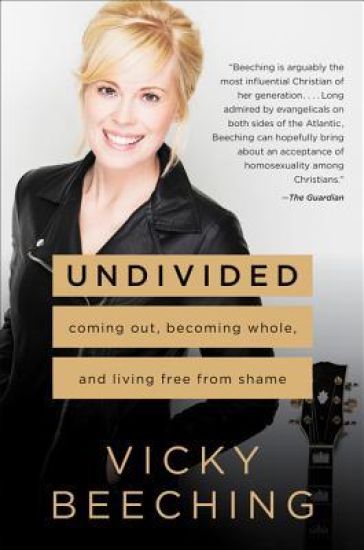
Vicky Beeching, called "arguably the most influential Christian of her generation" in The Guardian, began writing songs for the church in her teens. By the time she reached her early thirties, Vicky was a household name in churches on both sides of the pond. Recording multiple albums and singing in America's largest megachurches, her music was used weekly around the globe and translated into numerous languages.But this poster girl for evangelical Christianity lived with a debilitating inner battle: she was gay. The tens of thousands of traditional Christians she sang in front of were unanimous in their view - they staunchly opposed same-sex relationships and saw homosexuality as a grievous sin. Vicky knew if she ever spoke up about her identity it would cost her everything.Faced with a major health crisis, at the age of thirty-five she decided to tell the world that she was gay. As a result, all hell broke loose. She lost her music career and livelihood, faced threats and vitriol from traditionalists, developed further health issues from the immense stress, and had to rebuild her life almost from scratch.But despite losing so much she gained far more: she was finally able to live from a place of wholeness, vulnerability, and authenticity. She finally found peace. What's more, Vicky became a champion for others, fighting for LGBT equality in the church and in the corporate sector. Her courageous work is creating change in the US and the UK, as she urges people to celebrate diversity, live authentically, and become undivided.
"Arguably the most influential Christian of her generation" (The Guardian) Vicky Beeching chronicles her rise at the heights of Christian music and her brave decision to come out as gay--leading to self-acceptance and acknowledgment which changed her relationship with God and the practice of her faith.From a young age, Vicky Beeching loved to write songs and lead worship in church. In singing, she experienced the fullest expression of herself, what God had uniquely blessed her to do. After college, Vicky quickly achieved stardom, touring with some of Christian music's biggest names.But Vicky's success was threatened by a terrifying secret. She was gay. There was no room in Christian music for a gay worship leader. For ten years, Vicky rejected who she really was--a denial that damaged her in body and soul. After leaving music behind to enroll in a theology program at Oxford University, Vicky discovered that she could not worship God with a pure heart if she did not accept who she was. When she courageously came out publically in 2014, Vicky lost the support of her Christian community. But she gained much more: the truth had set her free.Focusing on her speaking and writing instead of music, Vicky leads worship in a new way now, emphasizing God's inclusive love and faithfulness. Undivided is the story of her transformation, a joyous tale of God's love, and a call for all Christians to worship God in authentic ways.
Introducing I Can Read Comics, a brand-new early reader line that familiarizes children with the world of graphic novel storytelling and encourages visual literacy in emerging readers. Meet the robots Blink and Block in this STEM-inspired story by debut author-illustrator Vicky Fang. Blink is scanning the playground for treasure, and Block is pretty sure there’s no gold to be found. Will Blink prove that treasure does exist—or will these two new pals find something even better? Friendbots: Blink and Block Make a Wish is a Level Two I Can Read Comic, an engaging story for children starting to read on their own.
Introducing I Can Read Comics, a brand-new early reader line that familiarizes children with the world of graphic novel storytelling and encourages visual literacy in emerging readers. Meet the robots Blink and Block in this STEM-inspired story by debut author-illustrator Vicky Fang. Blink is scanning the playground for treasure, and Block is pretty sure there's no gold to be found. Will Blink prove that treasure does exist--or will these two new pals find something even better? Friendbots: Blink and Block Make a Wish is a Level Two I Can Read Comic, an engaging story for children starting to read on their own.
Let’s read comics! I Can Read Comics is an early reader line that familiarizes children with the world of graphic novel storytelling and encourages visual literacy in emerging readers.Blink and Block are back in another STEM-inspired I Can Read Comic by author-illustrator Vicky Fang!This time, Block is drawing in the park, but Blink wants to play. So much, in fact, that Blink can’t stop pressing Block’s buttons . . . literally. Blink is silly and Block is logical, and they’re best when they’re together! Whether they’re searching for treasure, playing pretend, or learning to compromise, Blink's imagination and Block's clever ideas turn any ordinary day into the most fun ever.Friendbots: Blink and Block Bug Each Other is a Level Two I Can Read Comic, geared for kids who are comfortable with comics and can read on their own, but still need a little help.
Let's read comics I Can Read Comics is an early reader line that familiarizes children with the world of graphic novel storytelling and encourages visual literacy in emerging readers.Blink and Block are back in another STEM-inspired I Can Read Comic by author-illustrator Vicky Fang This time, Block is drawing in the park, but Blink wants to play. So much, in fact, that Blink can't stop pressing Block's buttons . . . literally. Blink is silly and Block is logical, and they're best when they're together Whether they're searching for treasure, playing pretend, or learning to compromise, Blink's imagination and Block's clever ideas turn any ordinary day into the most fun ever.Friendbots: Blink and Block Bug Each Other is a Level Two I Can Read Comic, geared for kids who are comfortable with comics and can read on their own, but still need a little help.
Let’s read comics! I Can Read Comics is an early reader line that familiarizes children with the world of graphic novel storytelling and encourages visual literacy in emerging readers.Blink and Block are back in another STEM-inspired I Can Read Comic by author-illustrator Vicky Fang!Blink is silly and Block is logical, and they’re best when they’re working together! Whether they’re searching for treasure, playing pretend, or learning to compromise, Blink's imagination and Block's clever ideas turn any ordinary day into the most fun ever. This time, the pair find a pile of boxes perfect for making a fort. But when the friendly competition starts heating up, will they be able to find a middle ground?Friendbots: Blink and Block Build a Fort is a Level Two I Can Read Comic, geared for kids who are comfortable with comics and can read on their own but still need a little help.
Let's read comics I Can Read Comics is an early reader line that familiarizes children with the world of graphic novel storytelling and encourages visual literacy in emerging readers.Blink and Block are back in another STEM-inspired I Can Read Comic by author-illustrator Vicky Fang Blink is silly and Block is logical, and they're best when they're working together Whether they're searching for treasure, playing pretend, or learning to compromise, Blink's imagination and Block's clever ideas turn any ordinary day into the most fun ever. This time, the pair find a pile of boxes perfect for making a fort. But when the friendly competition starts heating up, will they be able to find a middle ground?Friendbots: Blink and Block Build a Fort is a Level Two I Can Read Comic, geared for kids who are comfortable with comics and can read on their own but still need a little help.
Child daycare is a crucial issue for gender equality. In Britain its provision, and especially publicly provided or subsidised daycare, has been meagre in comparison with a range of European States. In seeking to explain childcare policy in post-war Britain to the present, this study focuses primarily on the institutional context. It shows how the liberal state tradition, limiting intervention in the private family, and market spheres has intersected with an issue that impinges on family responsibilities and, arguably, requires public resources for its effective resolution. The book also argues that liberalism - in practice an eminently flexible approach - cannot on its own explain policy. Account must be taken of the gender assumptions of policy-makers and their principal advisers, including in the past trade unions; of the centralization of the British governmental process; of the weakness and fragmentation of the childcare lobby, including the less than wholehearted involvement of the women's movement; and of the sheer contingencies of timing.
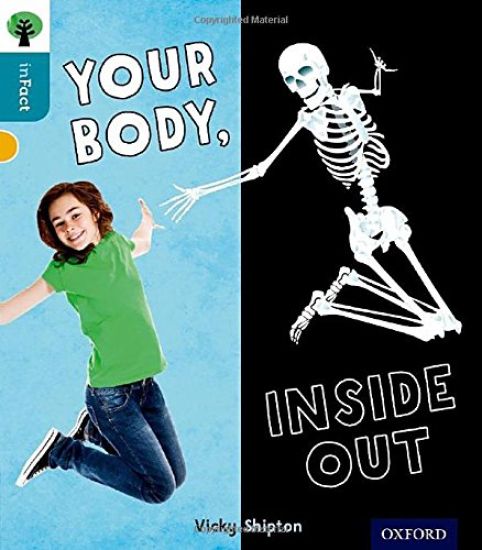
Your Body, Inside Out looks at the amazing ways in which your body works. Start with your skeleton, move your muscles and breathe in and out! Oxford Reading Tree inFact is a non-fiction series that aims to engage children in reading for pleasure as powerfully as fiction does. The variety of topics means there are books to interest every child in this compelling series. The series is written by top children's authors and subject experts. The books are carefully levelled, making it easy to match every child to the right book.
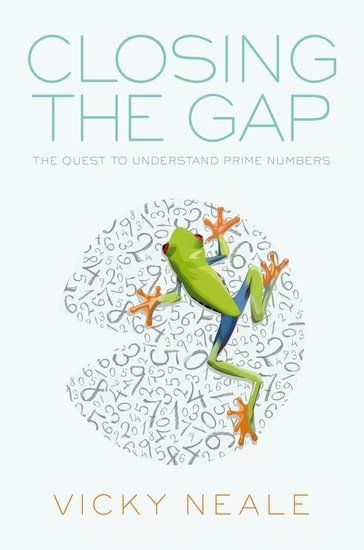
In 2013, a little known mathematician in his late 50s stunned the mathematical community with a breakthrough on an age-old problem about prime numbers. Since then, there has been further dramatic progress on the problem, thanks to the efforts of a large-scale online collaborative effort of a type that would have been unthinkable in mathematics a couple of decades ago, and the insight and creativity of a young mathematician at the start of his career. Prime numbers have intrigued, inspired and infuriated mathematicians for millennia. Every school student studies prime numbers and can appreciate their beauty, and yet mathematicians' difficulty with answering some seemingly simple questions about them reveals the depth and subtlety of prime numbers. Vicky Neale charts the recent progress towards proving the famous Twin Primes Conjecture, and the very different ways in which the breakthroughs have been made: a solo mathematician working in isolation and obscurity, and a large collaboration that is more public than any previous collaborative effort in mathematics and that reveals much about how mathematicians go about their work. Interleaved with this story are highlights from a significantly older tale, going back two thousand years and more, of mathematicians' efforts to comprehend the beauty and unlock the mysteries of the prime numbers.
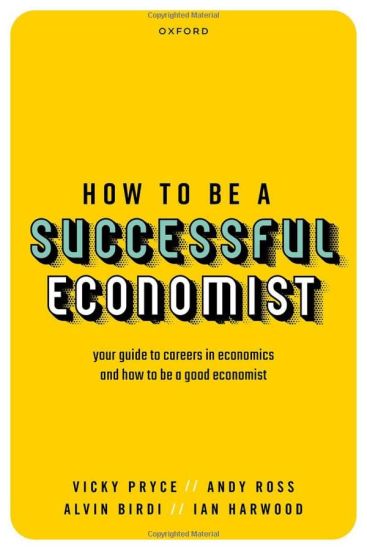
Exploring the wealth of career opportunities open to those with an interest in economics, Pryce, Ross, Birdi, and Harwood reflect on how students can become successful economists. An ideal complement to skills and employability modules on economics courses, or as pre-course reading, the authors explain the attributes that employers want and guide students to assemble the essential toolkit that all good economists need. The content uniquely brings together chapters which demystify the roles and industries that typically recruit economists; explore the importance of strong communication, quantitative, and broader soft skills and how to develop these; and coaches readers through the application and interview process for graduate positions. Readers will benefit from candid reflections on the advantages and drawbacks of particular career paths as well as the insights contributed by the authors, recent graduates, and experienced industry professionals. Professionals with experience working in industries such as financial services, government and policy, journalism, and consultancy participated in conversations with the authors about their careers. The valuable insights and advice they shared are included throughout the book and full video interviews can be found either in the e-book version of this title, or with the accompanying online resources. Digital formats and resources This book is available for students and institutions to purchase in a variety of formats, and is supported by online resources. The e-book offers a mobile experience and convenient access along with video content capturing conversations between the authors and practitioners and links that offer extra learning support: www.oxfordtextbooks.co.uk/ebooks
This book addresses the factors that explain the child welfare service careers of children, and the goals of permanency planning to be met for children entering foster care after initial abuse. It focuses on common child placements along the child welfare path.
This book addresses the factors that explain the child welfare service careers of children, and the goals of permanency planning to be met for children entering foster care after initial abuse. It focuses on common child placements along the child welfare path.
From Henry David Thoreau to Bill McKibben, critics and philosophers have long sought to demonstrate how a sufficient life—one without constant, environmentally damaging growth—might still be rich and satisfying. Yet one crucial episode in the history of sufficiency has been largely forgotten. Green Victorians tells the story of a circle of men and women in the English Lake District who attempted to create a new kind of economy, turning their backs on Victorian consumer society in order to live a life dependent not on material abundance and social prestige but on artful simplicity and the bonds of community. At the center of their social experiment was the charismatic art critic and political economist John Ruskin. Albritton and Albritton Jonsson show how Ruskin’s followers turned his theory into practice in a series of ambitious local projects ranging from hand spinning and woodworking to gardening, archaeology, and pedagogy. This is a lively yet unsettling story, for there was a dark side to Ruskin’s community as well—racist thinking, paternalism, and technophobia. Richly illustrated, Green Victorians breaks new ground, connecting the ideas and practices of Ruskin’s utopian community with the problems of ethical consumption then and now.
This book rigorously examines the work of leading contemporary playwright Martin Crimp. It examines his plays, adaptations, translations and versions, treats them as texts and performance events and argues that their challenge to audiences derives from their 'making strange': producing theatrical innovation, thus rendering the familiar unfamiliar.