Kirjojen hintavertailu. Mukana 11 699 587 kirjaa ja 12 kauppaa.

Kirjahaku

Etsi kirjoja tekijän nimen, kirjan nimen tai ISBN:n perusteella.

1000 tulosta hakusanalla Vivek Aggarwal

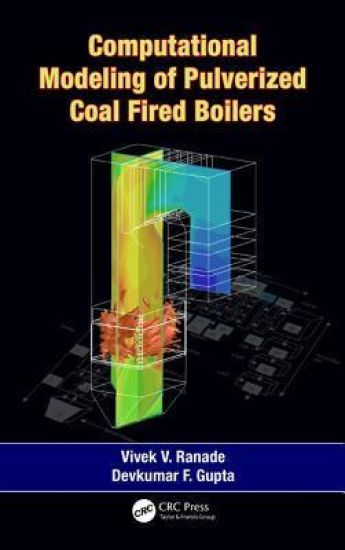
Computational Modeling of Pulverized Coal Fired Boilers

Computational Modeling of Pulverized Coal Fired Boilers

Vivek V. Ranade; Devkumar F. Gupta

Apple Academic Press Inc.
2014
sidottu
Harness State-of-the-Art Computational Modeling Tools Computational Modeling of Pulverized Coal Fired Boilers successfully establishes the use of computational modeling as an effective means to simulate and enhance boiler performance. This text factors in how computational flow models can provide a framework for developing a greater understanding of the underlying processes in PC boilers. It also provides a detailed account of the methodology of computational modeling of pulverized coal boilers, as well as an apt approach to modeling complex processes occurring in PC boilers in a manageable way.Connects Modeling with Real-Life ApplicationsRestricted to the combustion side of the boiler (the authors assume some prior background of reaction engineering and numerical techniques), the book describes the individual aspects of combustion and heat recovery sections of PC boilers that can be used to further improve the design methodologies, optimize boiler performance, and solve practical boiler-related problems. The book provides guidelines on implementing the material in commercial CFD solvers, summarizes key points, and presents relevant case studies. It can also be used to model larger boilers based on conventional, super-critical, or ultra-super critical technologies as well as based on oxy-fuel technologies.Consisting of six chapters, this functional text:Provides a general introductionExplains the overall approach and methodologyExplores kinetics of coal pyrolysis (devolatilization) and combustion and methods of its evaluationPresents computational flow modeling approach to simulate pulverized coal fired boiler Covers modeling aspects from formulation of model equations to simulation methodologyDetermines typical results obtained with computational flow modelsDiscusses the phenomenological models or reactor network modelsIncludes practical applications of computational modelingComputational Modeling of Pulverized Coal Fired Boilers explores the potential of computational models for better engineering of pulverized coal boilers, providing an ideal resource for practicing engineers working in utility industries. It also benefits boiler design companies, industrial consultants, R & D laboratories, and engineering scientists/research students.
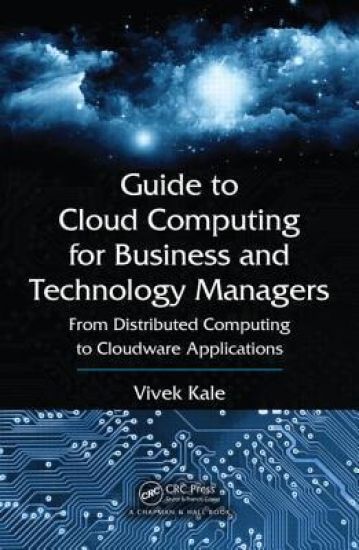
Guide to Cloud Computing for Business and Technology Managers
Guide to Cloud Computing for Business and Technology Managers: From Distributed Computing to Cloudware Applications unravels the mystery of cloud computing and explains how it can transform the operating contexts of business enterprises. It provides a clear understanding of what cloud computing really means, what it can do, and when it is practical to use. Addressing the primary management and operation concerns of cloudware, including performance, measurement, monitoring, and security, this pragmatic book:Introduces the enterprise applications integration (EAI) solutions that were a first step toward enabling an integrated enterpriseDetails service-oriented architecture (SOA) and related technologies that paved the road for cloudware applicationsCovers delivery models like IaaS, PaaS, and SaaS, and deployment models like public, private, and hybrid cloudsDescribes Amazon, Google, and Microsoft cloudware solutions and services, as well as those of several other playersDemonstrates how cloud computing can reduce costs, achieve business flexibility, and sharpen strategic focusUnlike customary discussions of cloud computing, Guide to Cloud Computing for Business and Technology Managers: From Distributed Computing to Cloudware Applications emphasizes the key differentiator—that cloud computing is able to treat enterprise-level services not merely as discrete stand-alone services, but as Internet-locatable, composable, and repackageable building blocks for generating dynamic real-world enterprise business processes.
Implementing SAP® CRM

Implementing SAP® CRM

Vivek Kale

Apple Academic Press Inc.
2014
sidottu
In today's competitive business environment, most companies realize that the better they can manage their customer relationships, the more successful they will become. Customer Relationship Management (CRM) software systems are key tools for companies to manage the customer-facing processes of their businesses. However, many companies have resisted implementing this most critical customer-oriented application due in large part to the lack of a single-point resource on implementing a CRM system. This book attempts to fill that gap.Implementing SAP® CRM will help technologists and managers come to grips with the vision, concept, and technology of CRM. It begins by laying out the groundwork for understanding CRM. It explains the concept and context of CRM and the tangible business benefits of CRM adoption. Demonstrating a professional approach to the evaluation and selection of SAP, it details the critical success factors (CSFs), patterns, and anti-patterns of a successful SAP CRM implementation.CRM implementations can add significant benefit to the company’s bottom line only if the company first transforms itself into a customer-centric and customer-responsive enterprise. This book explains what it means to be a customer-centric and responsive enterprise, and provides a framework for business operations based on customer relationships, rather than the traditional four Ps (product, positioning, price, promotion). It further spells out business process reengineering (BPR) strategies to configure internal business processes and operations with SAP CRM to improve customer-facing strategies, services, and relationships.
Beginning Apache Cassandra Development
Beginning Apache Cassandra Development introduces you to one of the most robust and best-performing NoSQL database platforms on the planet. Apache Cassandra is a document database following the JSON document model. It is specifically designed to manage large amounts of data across many commodity servers without there being any single point of failure. This design approach makes Apache Cassandra a robust and easy-to-implement platform when high availability is needed.Apache Cassandra can be used by developers in Java, PHP, Python, and JavaScript—the primary and most commonly used languages. In Beginning Apache Cassandra Development, author and Cassandra expert Vivek Mishra takes you through using Apache Cassandra from each of these primary languages. Mishra also covers the Cassandra Query Language (CQL), the Apache Cassandra analog to SQL. You'll learn to develop applications sourcing data from Cassandra, query that data, and deliver it at speed to your application's users.Cassandra is one of the leading NoSQL databases, meaning you get unparalleled throughput and performance without the sort of processing overhead that comes with traditional proprietary databases. Beginning Apache Cassandra Development will therefore help you create applications that generate search results quickly, stand up to high levels of demand, scale as your user base grows, ensure operational simplicity, and—not least—provide delightful user experiences.
C++/CLI Primer

C++/CLI Primer

Vivek Ragunathan

APress
2016
nidottu
Enter a world of hardcore back-end, server-side enterprise programming on the .NET platform. This book presents some of the important aspects of the C++/CLI language that often become a barrier preventing programmers from exploring further. The C++/CLI Primer is a powerful but compact book that will guide you through that barrier. Many of today's complex transactions and enterprise applications count on C++/CLI. Visual Studio 2015 and earlier versions support C++/CLI if you program using an IDE. C++/CLI is unattractive, clumsy, and hard when compared to other modern languages that run on the .NET platform. That's because it is powerful. Like light that can be viewed as a wave or particle, C++/CLI can be exercised as an unmanaged or managed or actually as the sandwich language to do mixed mode programming, which is its real power. That's also why it is unique.What You'll LearnDiscover C++/CLIand why is it used in .NET programmingWork with types, primitive types, object creation, and managed and abstract classesUse abstract classes in C++/CLIHarness the power of nullptreImplement code that uses boxing/unboxingUse equality/identity, properties, enums, strings, arrays, and moreWho This Book Is ForExperienced Microsoft .NET application developers, familiar with .NET framework and C++.
Hamiltonian Cycle Problem and Markov Chains

Hamiltonian Cycle Problem and Markov Chains

Vivek S. Borkar; Vladimir Ejov; Jerzy A. Filar; Giang T. Nguyen

Springer-Verlag New York Inc.
2014
nidottu
This research monograph summarizes a line of research that maps certain classical problems of discrete mathematics and operations research - such as the Hamiltonian Cycle and the Travelling Salesman Problems - into convex domains where continuum analysis can be carried out. Arguably, the inherent difficulty of these, now classical, problems stems precisely from the discrete nature of domains in which these problems are posed. The convexification of domains underpinning these results is achieved by assigning probabilistic interpretation to key elements of the original deterministic problems. In particular, the approaches summarized here build on a technique that embeds Hamiltonian Cycle and Travelling Salesman Problems in a structured singularly perturbed Markov decision process. The unifying idea is to interpret subgraphs traced out by deterministic policies (including Hamiltonian cycles, if any) as extreme points of a convex polyhedron in a space filled with randomized policies.The above innovative approach has now evolved to the point where there are many, both theoretical and algorithmic, results that exploit the nexus between graph theoretic structures and both probabilistic and algebraic entities of related Markov chains. The latter include moments of first return times, limiting frequencies of visits to nodes, or the spectra of certain matrices traditionally associated with the analysis of Markov chains. However, these results and algorithms are dispersed over many research papers appearing in journals catering to disparate audiences. As a result, the published manuscripts are often written in a very terse manner and use disparate notation, thereby making it difficult for new researchers to make use of the many reported advances.Hence the main purpose of this book is to present a concise and yet easily accessible synthesis of the majority of the theoretical and algorithmicresults obtained so far. In addition, the book discusses numerous open questions and problems that arise from this body of work and which are yet to be fully solved. The approach casts the Hamiltonian Cycle Problem in a mathematical framework that permits analytical concepts and techniques, not used hitherto in this context, to be brought to bear to further clarify both the underlying difficulty of NP-completeness of this problem and the relative exceptionality of truly difficult instances. Finally, the material is arranged in such a manner that the introductory chapters require very little mathematical background and discuss instances of graphs with interesting structures that motivated a lot of the research in this topic. More difficult results are introduced later and are illustrated with numerous examples.
Straight from the Gut: Battling Inflammatory Bowel Disease

Straight from the Gut: Battling Inflammatory Bowel Disease

Vivek Sardana

Createspace Independent Publishing Platform
2015
nidottu
An immigrant from India, Vivek Sardana moves to Silicon Valley to begin a new life. But an ulcerative colitis diagnosis threatens his ambitious plans. This marks the beginning of his lifelong battle with inflammatory bowel disease, when he had to dig deep within himself to keep his life on track in the face of multiple surgeries and crippling pain. Through numerous consultations, countless procedures, and an exploration of alternative medicine, Sardana continues fighting to restore his body to a semblance of normality. Those who suffer from similar illnesses will learn from this book how to manage their bodies, navigate the labyrinth of medical services, and build a support network for combating their diseases. Sardana's inspirational battle with his own body isn't just a story about his gut-it's a portrait of what it means to have guts. His struggle to tame his recalcitrant digestive system is a story written in blood and gore. Amid debilitating pain, uncertainty, and loneliness, Sardana is the personification of resilience and hope, as he finally makes peace with his body-and with the unseen force that saw fit to inflict this illness. Whether it's a chronic illness or an external life complication, Sardana's story will inspire in the reader a positive outlook, self-empowerment, an appreciation of the importance of a loving family, and the motivation to never give up.
Enhancing Enterprise Intelligence: Leveraging ERP, CRM, SCM, PLM, BPM, and BI
Enhancing Enterprise Intelligence: Leveraging ERP, CRM, SCM, PLM, BPM, and BI takes a fresh look at the benefits of enterprise systems (ES), focusing on the fact that ES collectively contribute to enhancing the intelligence quotient of an enterprise. The book provides an overview of the characteristic domains (i.e., business functions, processes, and activities) addressed by the various categories of ES, namely, ERP, CRM, SCM, PLM, BPM, and BI.The book begins with an overview of agile enterprises and dimensions of intelligent enterprises. The middle chapters detail CRM’s decisive concept of customer centricity, SCM's differentiating concept of customer responsiveness, and PLM's stupendous transformative potential for renewing the enterprise along with the establishment of a collaborative enterprise with BPM and enterprise BPM methodology.The latter chapters deal with the realization of an informed enterprise with BI coupled with the novel concept of decision patterns. The author highlights the fact that any end-user application’s effectiveness and performance can be enhanced by transforming it from a bare transaction to one clothed by a surrounding context formed from an aggregate of all relevant past decision patterns. The final chapter examines various aspects relating to a successful ES implementation project, and the appendix provides an overview of the SAP Business Suite to give you a practical context to the discussions presented in the book.
Automotive Product Development

Automotive Product Development

Vivek D. Bhise

Productivity Press
2017
sidottu
This book is about how to develop future automotive products by applying the latest methodologies based on a systems engineering approach and by taking into account many issues facing the auto industry such as meeting government safety, emissions and fuel economy regulations, incorporating advances in new technology applications in structural materials, power trains, vehicle lighting systems, displays and telematics, and satisfying the very demanding customer.It is financially disastrous for any automotive company to create a vehicle that very few people want. To design an automotive product that will be successful in the marketplace requires carefully orchestrated teamwork of experts from many disciplines, substantial amount of resources, and application of proven techniques at the right time during the product development process.Automotive Product Development: A Systems Engineering Implementation is intended for company management personnel and graduate students in engineering, business management and other disciplines associated with the development of automotive and other complex products.
Big Data Computing

Big Data Computing

Vivek Kale

Productivity Press
2016
sidottu
This book unravels the mystery of Big Data computing and its power to transform business operations. The approach it uses will be helpful to any professional who must present a case for realizing Big Data computing solutions or to those who could be involved in a Big Data computing project. It provides a framework that enables business and technical managers to make optimal decisions necessary for the successful migration to Big Data computing environments and applications within their organizations.
Agile Network Businesses

Agile Network Businesses

Vivek Kale

Productivity Press
2017
sidottu
"A highly readable and yet comprehensive book on network businesses that have become governable with the advent of cloud and big data computing. Vivek Kale is a master of simplifying the complex world of network theory and its relevance to business."—Jagdish N. Sheth, Charles H. Kellstadt Professor of Marketing, Emory University Agile Network Businesses: Collaboration, Coordination, and Competitive Advantage reflects the shift from traditional networks to virtual and agile networks that enable businesses to operate dynamically, thereby representing markets more closely. This book enables IT managers and business decision-makers to understand clearly what network businesses and enterprises are, what they can do for them, and how to realize them. Customers in geographically dispersed markets are demanding higher quality products in a greater variety, at lower cost, and in a shorter time. Thus, enterprises have moved from a few centralized and vertically integrated facilities to geographically dispersed networks of capabilities, competencies and resources, which are the core of network businesses. Enterprises are now constructing more fluid network businesses in which each member facility focuses on differentiation and relies increasingly on its partners, suppliers, and customers to provide the rest. Network businesses have emerged as an organizational paradigm for collaboration and coordination across loosely connected individual organizations.This pragmatic book: Introduces network solutions and distributed systems that are a first step towards enabling a network enterprise. It also gives a detailed description of networks and agent system that have paved the road to network enterprises.Describes the basics of service-oriented architecture (SOA), cloud computing, and big data that are essential to network enterprises.Details the distinguishing aspects of network enterprises, which include virtual enterprises, management of network enterprises, and collaborative network enterprises.Covers such major application areas as supply, manufacturing, e-business, platform, social and wireless sensor networks.Introduces decision networks in the context of supply chain networksThis book reinterprets the traditional supply chain in terms of the flow of decisions, information, and materials, which leads to reconfiguring the traditional supply chain network into mutually separate decision networks (e.g., fourth-party logistics or 4PL), information networks (e.g., wireless sensor networks), and logistics networks (e.g., third-party logistics or 3PL).