Kirjojen hintavertailu. Mukana 12 357 668 kirjaa ja 12 kauppaa.

Kirjahaku

Etsi kirjoja tekijän nimen, kirjan nimen tai ISBN:n perusteella.

1000 tulosta hakusanalla W Graham Scroggie

Darwin's Replacement: Introducing the Godly Life-Science of Atomic Biology As the Replacement for Darwin's Theory of Evolution
In 1987, a curiosity came to the mind of a new believer in our Creator God. Thomas W. Rogers came from a background in engineering, research, construction, and manufacturing. His nature is to understand how material things are constructed and maintained. The curiosity was to determine how this Creator actually constructs and maintains living entities, including us. When his research and findings went to where previous science had not gone, it was time to get serious. Tom established "Reality Research & Development Inc." to proceed more formally with the research. Through three decades of R&D with input from forty-five scholars, with special credit to the 2016 Nobel Prize Winners for Chemistry, super-intelligence is proven essential for building cell-parts, cells, and us. This, of course, eliminates Evolution as the cause of life as it has no intelligence with which to do the essential works. A new science was created to study the selection and assembly of the right numbers of the right atoms into cell-parts for living entities. The group called the science "Atomic Biology." Tom and his co-author, Dr. Graham McLennan have written the details into "Darwin's Replacement." This may sound technical but the basics are simple enough for a fifth-grader to understand. There seems to be only one real super-intelligent force; the majority of our citizens and our governments call this force, "God." Coupling this science with the facts that God is already highly recognized by the governments of Canada, the USA, the UK, and Australia, this gives our students the inalienable right to be taught Why God is a highly recognized part of Their Governments; especially now for scientific reasons. "The Atomic Biology Institute" has been established as a non-profit organization to further the research and education regarding this subject. Potential benefits that can be produced by applying Atomic Biology include, but are not limited to, improvements in Nutrition, Agriculture, Aquaculture, Medicine, Education, Belief in God, Mental and Physical Health. This is an exciting major project. The Purpose is to bring the credit for creating and maintaining us back to our Creator where it belongs. The Goal is to bring Him into science classes at all levels from grade five through university, to show the enormous scientific works and care He provides for each one of us every second of every day.Your interest is greatly appreciated. It will take many participants to be proud of helping to get the message out there and to make this happen.
Ancient Philosophy

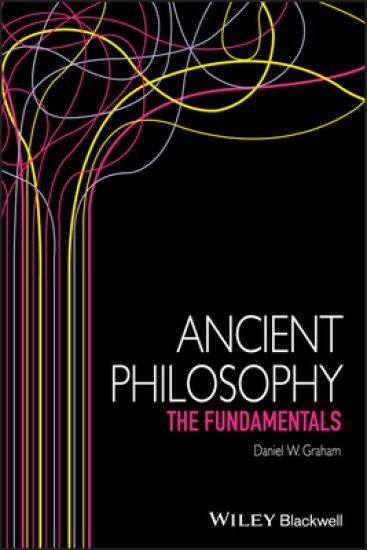
Ancient Philosophy

Daniel W. Graham

John Wiley Sons Inc
2020
nidottu
A comprehensive yet accessible survey of ancient philosophy, covering Greek, Roman, and early Judeo-Christian philosophy, ideal for introductory courses in the ancient roots of modern worldviews Part of the popular Fundamentals of Philosophy series, Ancient Philosophy is an ideal resource for beginning students as well as for advanced students wishing to hone their understanding of the philosophies of the ancient world. Clear and engaging, this book covers a representative selection of major ancient thinkers, movements, and schools of thought, including the Sophists and other significant Presocratics, Socrates, Plato, Aristotle, Hellenistic philosophy, the Stoics, the Skeptics, and early Judeo-Christian philosophy up to Augustine. Written by a prominent scholar and author in ancient philosophy studies, this book: Provides an overview of important issues in the study of the philosophies of the ancient worldExplores the relevance of the theories of ancient thinkers to the modern worldCharts the progression in the ancient world from worldviews based in mythology to systems of thought based on the analysis of evidencePresents up-to-date scholarship as well as historical material from ancient sourcesAssumes no prior knowledge of philosophy and examines all arguments carefully and sequentially
Jane Austen & Charles Darwin

Jane Austen & Charles Darwin

Peter W. Graham

Routledge
2016
nidottu
Are Jane Austen and Charles Darwin the two great English empiricists of the nineteenth century? Peter W. Graham poses this question as he brings these two icons of nineteenth-century British culture into intellectual conversation in his provocative new book. Graham shows that while the one is generally termed a naturalist (Darwin's preferred term for himself) and the other a novelist, these characterizations are at least partially interchangeable, as each author possessed skills that would serve well in either arena. Both Austen and Darwin are naturalists who look with a sharp, cold eye at the concrete particulars of the world around them. Both are in certain senses novelists who weave densely particularized and convincingly grounded narratives that convey their personal observations and perceptions to wide readerships. When taken seriously, the words and works of Austen and Darwin encourage their readers to look closely at the social and natural worlds around them and form opinions based on individual judgment rather than on transmitted opinion. Graham's four interlocked essays begin by situating Austen and Darwin in the English empirical tradition and focusing on the uncanny similarities in the two writers' respective circumstances and preoccupations. Both Austen and Darwin were fascinated by sibling relations. Both were acute observers and analysts of courtship rituals. Both understood constant change as the way of the world, whether the microcosm under consideration is geological, biological, social, or literary. Both grasped the importance of scale in making observations. Both discerned the connection between minute, particular causes and vast, general effects. Employing the trenchant analytical talents associated with his subjects and informed by a wealth of historical and biographical detail and the best of recent work by historians of science, Graham has given us a new entree into Austen's and Darwin's writings.
Mission Statements

Mission Statements

John W. Graham; Wendy C. Havlick

Routledge
2015
nidottu
First published in 1994. Mission Statements: A Guide to the Corporate and Nonprofit Sectors offers the most exciting opportunities for advancing the study of organization direction in the four decades that it has been actively pursued. The study of missions of organizations has remained on the “back burner” of scholarly pursuits because of the great difficulty that researchers have faced in gathering appropriate formal statements from corporations and nonprofit organizations. As a result, the importance of missions to distinguish among organizations and to guide the development and execution of implementing strategies has become a nearly universally endorsed but unenthusiastically practiced element in organizational planning activities. This information laden new book by John Graham and Wendy Havlick invites managers and academic researchers to undertake the study of missions with greater expectations that much can be learned about the organizations, their leaders, and their strategies through a comprehensive assessment of their written statements of values and priorities.
The Soviet Security System: International Conciliation, No. 252, September, 1929

The Soviet Security System: International Conciliation, No. 252, September, 1929

Malbone W. Graham Jr; Nicholas Murray Butler

Literary Licensing, LLC
2013
sidottu
The book titled ""The Soviet Security System: International Conciliation, No. 252, September, 1929"" is written by Malbone W. Graham Jr. The book offers a comprehensive analysis of the Soviet security system during the year 1929. The author examines the various components of the Soviet security system, including the secret police, the military, and the political apparatus. The book explores the Soviet Union's foreign policy and its relations with other countries during the time period. The author also discusses the challenges faced by the Soviet security system, including internal dissent and external threats. Overall, the book provides a detailed account of the Soviet security system and its role in shaping the country's political and social landscape during the early years of the Soviet Union.This scarce antiquarian book is a facsimile reprint of the old original and may contain some imperfections such as library marks and notations. Because we believe this work is culturally important, we have made it available as part of our commitment for protecting, preserving, and promoting the world's literature in affordable, high quality, modern editions, that are true to their original work.
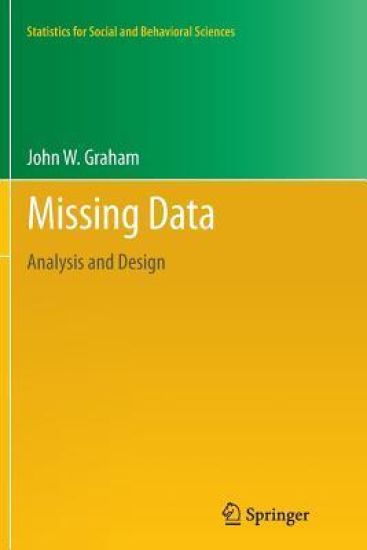
Missing Data

Missing Data

John W. Graham

Springer-Verlag New York Inc.
2012
sidottu
Missing data have long plagued those conducting applied research in the social, behavioral, and health sciences. Good missing data analysis solutions are available, but practical information about implementation of these solutions has been lacking. The objective of Missing Data: Analysis and Design is to enable investigators who are non-statisticians to implement modern missing data procedures properly in their research, and reap the benefits in terms of improved accuracy and statistical power. Missing Data: Analysis and Design contains essential information for both beginners and advanced readers. For researchers with limited missing data analysis experience, this book offers an easy-to-read introduction to the theoretical underpinnings of analysis of missing data; provides clear, step-by-step instructions for performing state-of-the-art multiple imputation analyses; and offers practical advice, based on over 20 years' experience, for avoiding and troubleshooting problems. For more advanced readers, unique discussions of attrition, non-Monte-Carlo techniques for simulations involving missing data, evaluation of the benefits of auxiliary variables, and highly cost-effective planned missing data designs are provided. The author lays out missing data theory in a plain English style that is accessible and precise. Most analysis described in the book are conducted using the well-known statistical software packages SAS and SPSS, supplemented by Norm 2.03 and associated Java-based automation utilities. A related web site contains free downloads of the supplementary software, as well as sample empirical data sets and a variety of practical exercises described in the book to enhance and reinforce the reader’s learning experience. Missing Data: Analysis and Design and its web site work together to enable beginners to gain confidence in their ability to conduct missing data analysis, and more advancedreaders to expand their skill set.
Missing Data

Missing Data

John W. Graham

Springer-Verlag New York Inc.
2014
nidottu
Missing data have long plagued those conducting applied research in the social, behavioral, and health sciences. Good missing data analysis solutions are available, but practical information about implementation of these solutions has been lacking. The objective of Missing Data: Analysis and Design is to enable investigators who are non-statisticians to implement modern missing data procedures properly in their research, and reap the benefits in terms of improved accuracy and statistical power. Missing Data: Analysis and Design contains essential information for both beginners and advanced readers. For researchers with limited missing data analysis experience, this book offers an easy-to-read introduction to the theoretical underpinnings of analysis of missing data; provides clear, step-by-step instructions for performing state-of-the-art multiple imputation analyses; and offers practical advice, based on over 20 years' experience, for avoiding and troubleshooting problems. For more advanced readers, unique discussions of attrition, non-Monte-Carlo techniques for simulations involving missing data, evaluation of the benefits of auxiliary variables, and highly cost-effective planned missing data designs are provided. The author lays out missing data theory in a plain English style that is accessible and precise. Most analysis described in the book are conducted using the well-known statistical software packages SAS and SPSS, supplemented by Norm 2.03 and associated Java-based automation utilities. A related web site contains free downloads of the supplementary software, as well as sample empirical data sets and a variety of practical exercises described in the book to enhance and reinforce the reader’s learning experience. Missing Data: Analysis and Design and its web site work together to enable beginners to gain confidence in their ability to conduct missing data analysis, and more advancedreaders to expand their skill set.
Whose Man in Havana?

Whose Man in Havana?

John W. Graham

University of Calgary Press
2015
nidottu
In Whose Man in Havana? the author offers an unconventional, often dark, but more often hilarious view of diplomacy in settings as varied as Haiti, London, the Dominican Republic, the Balkans, Palestine, Paraguay, Guyana, and Kyrgyzstan, including covert monitoring of Soviet military operations in Cuba on behalf of the CIA with the blessing of President Kennedy and Prime Minister Pearson.In a career that spans the Canadian foreign service and international organizations, he was fortunate to be in the right place at interesting, if turbulent, times. Throughout the book he has focussed on the lighter side of people and places, but almost everywhere the dark side intrudes. Graham makes plain that the intersection of the two is frequently black comedy.
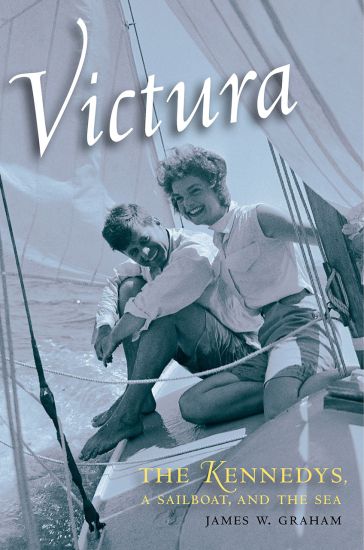
Victura

Victura

James W. Graham

Dartmouth College Press
2015
nidottu
To truly understand the dynamics and magic of the Kennedy family, one must understand their passion for sailing and the sea. Many families sail together, but the Kennedys' relationship with Victura, the 25-foot sloop purchased in 1932, stands apart. Throughout their brief lives, Joe Jr., Jack, and Bobby spent many hours racing Victura. Lack of effort in a race by one of his sons could infuriate Joseph P. Kennedy, and Joe Jr. and Jack ranked among the best collegiate sailors in New England. Likewise, Eunice emerged as a gifted sailor and fierce competitor, the equal of any of her brothers. The Kennedys believed that Jack's experience sailing Victura helped him survive the sinking of his PT boat during World War II. In the 1950s, glossy Life magazine photos of Jack and Jackie on Victura's bow helped define the winning Kennedy brand. Jack doodled sketches of Victura during Oval Office meetings, and it's probable that his love of seafaring played a role in his 1961 decision to put a man on the moon, an enterprise he referred to as"spacefaring." Ted loved Victura as much as any of his siblings did and, with his own children and the children of his lost brothers as crew, he sailed into his old age: past the shoals of an ebbing career, and into his eventual role as the"Lion of the Senate." In Victura, James W. Graham charts the progress of America's signature twentieth-century family dynasty in a narrative both stunningly original and deeply gripping. This true tale of one small sailboat is an invaluable contribution to our understanding of the great story of the Kennedys.