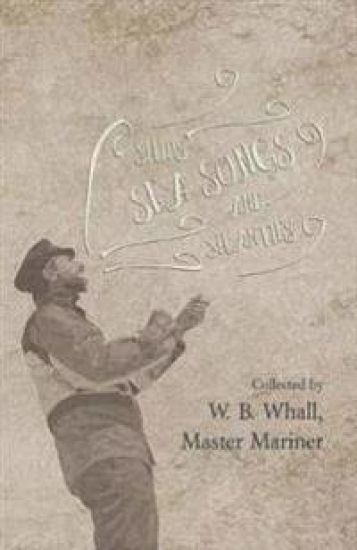
First published in 1910, "Ships, Sea Songs and Shanties" is a vintage collection of traditional sailing songs, collected and published in this volume by W. B. Whall. Originally appearing in the "Nautical Magazine and Yachting Monthly", the songs come complete with lyrics and sheet music, as well as pictures of various celebrated sailing ships of the time. William Boultbee Whall (1847-1917) was a Master mariner famous for writing this book. He became a member of the Merchant Navy when he was 14 and became acquainted with the songs during his 11 years aboard ships of the East India Companies. In addition to this volume, Whall also wrote a number of books related to practical seamanship and navigation. Many vintage books such as this are increasingly scarce and expensive. We are republishing this volume now in an affordable, modern, high-quality edition complete with specially-commissioned new introduction on folk music.
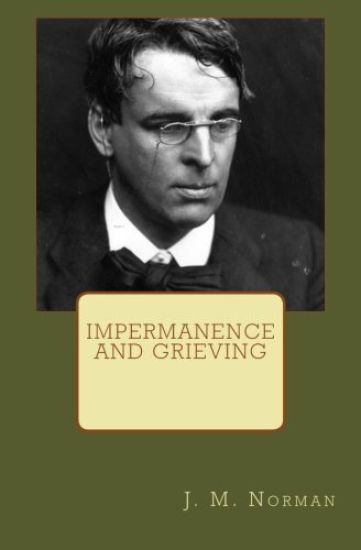
A work of literary criticism that analyzes the fundamental peculiarities of obsessing over transience and grief. J. M. Norman looks at two of W. B. Yeats best known poems and, approaching the two works thematically, structurally, and psychologically, tackles the anomalies in his own philosophical way.
Robert William Chambers (May 26, 1865 - December 16, 1933) was an American artist and fiction writer, best known for his book of short stories entitled The King in Yellow, published in 1895.He was born in Brooklyn, New York, to William P. Chambers (1827-1911), a corporate and bankruptcy lawyer, and Caroline Smith Boughton (1842-1913). His parents met when Caroline was twelve years old and William P. was interning with her father, Joseph Boughton, a prominent corporate lawyer. Eventually the two formed the law firm of Chambers and Boughton which continued to prosper even after Joseph's death in 1861. Robert's great-grandfather, William Chambers (birth unknown), a lieutenant in the British Royal Navy, was married to Amelia Saunders, (1765-1822), the great grand daughter of Tobias Saunders, of Westerly, Rhode Island. The couple moved from Westerly, to Greenfield, Massachusetts and then to Galway, New York, where their son, also William Chambers, (1798-1874) was born. The second William graduated from Union College at the age of 18, and then went to a college in Boston, where he studied to be a doctor. Upon graduating, he and his wife, Eliza P. Allen (1793-1880), a direct descendant of Roger Williams, the founder of Providence, Rhode Island were among the first settlers of Broadalbin, New York. His brother was architect Walter Boughton Chambers. Robert was first educated at the Brooklyn Polytechnic Institute, and then entered the Art Students' League at around the age of twenty, where the artist Charles Dana Gibson was his fellow student. Chambers studied at the cole des Beaux-Arts, and at Acad mie Julian, in Paris from 1886 to 1893, and his work was displayed at the Salon as early as 1889. On his return to New York, he succeeded in selling his illustrations to Life, Truth, and Vogue magazines. Then, for reasons unclear, he devoted his time to writing, producing his first novel, In the Quarter (written in 1887 in Munich). His most famous, and perhaps most meritorious, effort is The King in Yellow, a collection of Art Nouveau short stories published in 1895. This included several famous weird short stories which are connected by the theme of a fictitious drama of the same title, which drives those who read it insane.E. F. Bleiler described The King in Yellow as one of the most important works of American supernatural fiction.It was also strongly admired by H. P. Lovecraft and his circle. Chambers returned to the weird genre in his later short story collections The Maker of Moons, The Mystery of Choice and The Tree of Heaven, but none earned him as much success as The King in Yellow. Some of Chambers's work contains elements of science fiction, such as In Search of the Unknown and Police , about a zoologist who encounters monsters. Chambers later turned to writing romantic fiction to earn a living. According to some estimates, Chambers had one of the most successful literary careers of his period, his later novels selling well and a handful achieving best-seller status. Many of his works were also serialized in magazines. His novel The Man They Hanged was about Captain Kidd, and argued that Kidd was not a pirate, and had been made a scapegoat by the British government.During World War I he wrote war adventure novels and war stories, some of which showed a strong return to his old weird style, such as "Marooned" in Barbarians (1917). After 1924 he devoted himself solely to writing historical fiction.Chambers for several years made Broadalbin, New York, his summer home. Some of his novels touch upon colonial life in Broadalbin and Johnstown.On July 12, 1898, he married Elsa Vaughn Moller (1882-1939). They had a son, Robert Edward Stuart Chambers (who sometimes used the name Robert Husted Chambers).Robert W. Chambers died on December 16, 1933, after having undergone intestinal surgery three days earlier.
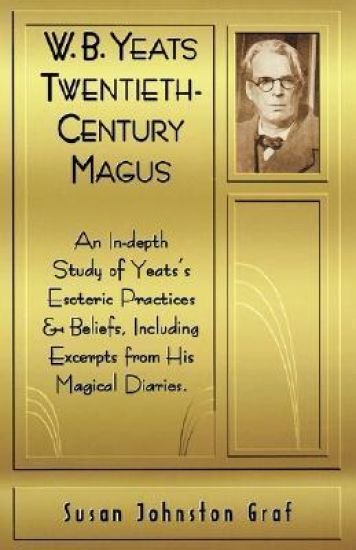
W.B. Yeats Twentieth Century Magus is a comprehensive study of his magical practices and beliefs. Yeats moved through many different phases of spiritual development, believing that his life was an intellectual, spiritual, and artistic questa quest greatly influenced by Celtic lore, Theosophy, Golden Dawn ceremonial magic, Swedenborg's metaphysics, the works of Jacob Boehme, and NeoPlatonism. For Yeats, writing poetry was an act of divine possession, and he believed that a perfected soul was the source of his inspiration, visiting him during times of superconscious awareness. Susan Johnston Graf meticulously documents and provides evidence that Yeat's poetry is brilliant, lyric narrative of realtiy captured through the mind of a practicing magician working in the Western Tradition.
A collector's edition of the landmark study that changed our understanding of the Civil War's aftermath and the legacy of racism in America Upon publication in 1935, W.E.B. Du Bois's Black Reconstruction offered a revelatory new assessment of Reconstruction--and of American democracy itself. One of the towering African American thinkers and activists of the twentieth century, Du Bois brought all his intellectual powers to bear on America's post-Civil War era of political reorganization, a time when African American progress was met with a white supremacist backlash and ultimately yielded to the consolidation of the unjust social order underpinning Jim Crow. Black Reconstruction is a pioneering, exemplary work of revisionist scholarship that, in the wake of censorship toward Du Bois's characterization of Reconstruction by the Encyclopaedia Britannica, was written to debunk influential historians whose racist ideas and emphases had disfigured the historical record. The chief witness in Reconstruction, the emancipated slave himself, writes Du Bois, has been almost barred from court. His written Reconstruction record has been largely destroyed and nearly always neglected. In setting the record straight Du Bois produced what Eric Foner has called an indispensable book, a magisterial work of detached scholarship that is also imbued with passionate outrage. Here presented in a handsome hardcover edition, with an illuminating editor's introduction and an authoritative text, Black Reconstruction is joined, for the first time in a single volume with important writings that trace his thinking throughout his career about Reconstruction and its centrality in understanding American democracy.
Introducing and presenting thirty core texts from the sociological writings of W. E. B. Du Bois, Robert Wortham's unique reader highlights Du Bois as a multifaceted researcher and thinker who, by attempting to approach African American social life from every angle, became a pioneer in American sociology. As this astute reader demonstrates, in addition to his profound contributions to our understanding of racial inequality in the United States, Du Bois made momentous advances in the areas of research methods, social problems, community studies, population studies, the sociology of religion, and crime and deviance. When sociology appeared to be heading toward a deductive methodology, Du Bois presented a strong argument for inductive methods, advocating for the use of a more interdisciplinary approach. Eventually, combining sociological perspectives with those of history and anthropology, he developed his landmark approach: methodological triangulation.In this long-overdue volume, Wortham showcases the enormous influence of Du Bois's wide-ranging sociological imagination. Organized into four major parts--""The Scientific Study of Society and Social Problems,"" ""Social Structure and Social Processes,"" ""Dimensions of Inequality,"" and ""Social Dynamics""--the reader concludes with a complete biography of Du Bois' early sociological works.
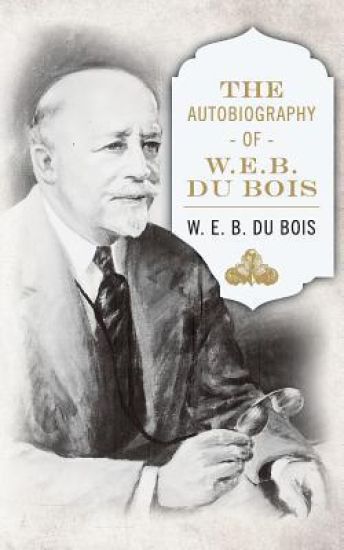
This edition of The Autobiography of W. E. B. Du Bois is the first to be arranged and dedicated in accordance with Du Bois's manuscript notes. It begins with these words: "I was born by a golden river and in the shadow of two great hills, five years after the Emancipation Proclamation which began the freeing of American Negro Slaves." Du Bois was born in the town where Berkshire Publishing Group is located. His autobiography tells the story of a little boy, the only Black boy in his school, who became the first African American PhD at Harvard, an educator, editor, and activist, and a writer of expressive, lyrical, and accessible prose. In this book, he explains why he chose to become a communist. While the communism he praised did not turn out to offer the utopia so many hoped for, the problems he identified are still with us. His reasoning will resonant with modern readers who share his frustration with the continued inequities in our society.The Autobiography is a fascinating and often horrifying look at the experience of a Black man in America. Literary critic Irving Howe called it "a classic of American narrative, . . . packed with information and opinion about the early years of Negro protest." But, like many, he found the later chapters, in which Du Bois reflects the official Communist views of the times, to read "as if they came from the very heart of a mimeograph machine." But these chapters, too, are part of US history. The short essay on Communism is especially worth reading it speaks to issues on our minds today, and puts Du Bois's communism in context. His reasoning, and emotion, will resonant with modern readers who share his frustration with the continued inequities in our society. While the Communism he praised did not turn out to offer the utopia so many hoped for, the problems he identified are still with us.And now that the chapters about his early life are in their proper place, we hope readers will note the personal and revelatory tone of the chapter "My Character." Along with an analysis of his own character, not always favorable, he discusses his sexual experience, including early ignorance, being raped as a young man by an unhappy landlady, and never convincing his wife that sexual relations were "the most beautiful of human experiences."Berkshire Publishing Group was founded in Great Barrington, the small western Massachusetts town where Du Bois was born and educated. He wrote eloquently about the town and its people, and he is remembered today as the most influential graduate of the town's schools. Berkshire is known for its focus on international issues, especially world history. We were thrilled when we learned that Du Bois had wanted to create an Encyclopedia Africana since we have specialized in similar projects. Equally relevant was hearing from Thomas Bender, a leading scholar of transnational history, that Du Bois's Harvard dissertation on the Atlantic slave trade was one of the first publications that could truly be called transnational history.
"As visually arresting as it is informative."—The Boston Globe "Du Bois's bold colors and geometric shapes were decades ahead of modernist graphic design in America."—Fast Company's Co.Design W.E.B. Du Bois's Data Portraits is the first complete publication of W.E.B. Du Bois's groundbreaking charts, graphs, and maps presented at the 1900 Paris Exposition. Famed sociologist, writer, and Black rights activist W.E.B. Du Bois fundamentally changed the representation of Black Americans with his exhibition of data visualizations at the 1900 Paris Exposition. Beautiful in design and powerful in content, these data portraits make visible a wide spectrum of African American culture, from advances in education to the lingering effects of slavery. They convey a literal and figurative representation of what he famously referred to as "the color line," collected here in full color for the first time. A landmark collection for social history, graphic design, and data science. • Data display, visualizations, and infographics far ahead of their time • Colorful graphs and charts are mesmerizing pieces of art in their own right • A valuable companion to W.E. B. Du Bois's The Souls of Black Folk • Includes contributions from Aldon Morris, Silas Munro, and Mabel O. Wilson W.E.B. Du Bois's Data Portraits is an informative and provocative history, data, and graphic design book that continues to resonate with audiences today.
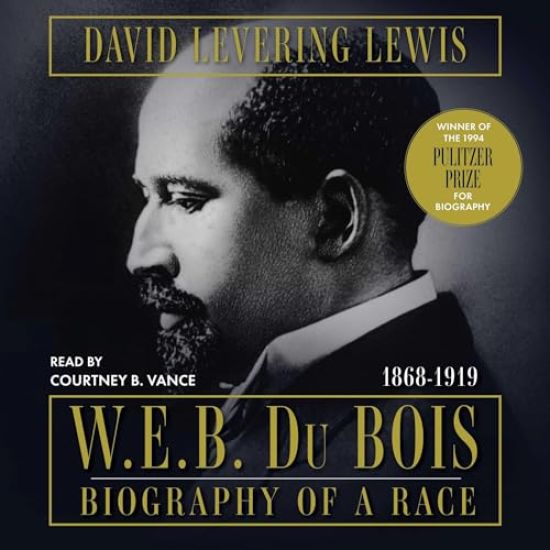
First time on audio The timeless Pulitzer Prize winner, the first in an epic two-volume biography that set the standard for historical scholarship on this era, narrated by Emmy and Tony Award winner Courtney B. Vance.This monumental biography by David Levering Lewis--eight years in the research and writing--treats the early and middle phases of a long and intense career: a crucial fifty-year period that demonstrates how W.E.B. Du Bois changed forever the way Americans think about themselves. William Edward Burghardt Du Bois?the premier architect of the civil rights movement in America?was a towering and controversial personality, a fiercely proud individual blessed with the language of the poet and the impatience of the agitator. In the first of his superlative two-volume biography, renowned scholar David Levering Lewis chronicles the first five decades of Du Bois's long and storied life, detailing in magisterial prose the momentous contributions to our national character that still echo today.
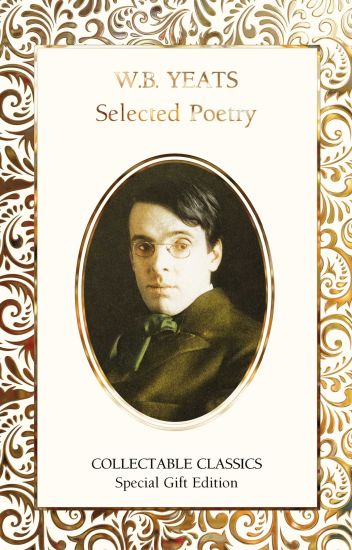
Little treasures, the FLAME TREE COLLECTABLE CLASSICS are chosen to create a delightful and timeless home library. Each stunning, gift edition features deluxe cover treatments, ribbon markers, luxury endpapers and gilded edges. The original text is accompanied by a Glossary of Victorian and Literary terms produced for the modern reader. The poetry of W.B. Yeats is among the most-loved literature of the twentieth century. At times dream-like, at others political, his verse has a rich sense of identity, infused with myth, mysticism and lyrical skill. This gift edition of selected poetry gathers some of the finest works by the Irish poet, including ‘The Lake Isle of Innisfree’, ‘The Stolen Child’, ‘When You Are Old’, ‘The Song of the Happy Shepherd’, 'Aedh Wishes for the Cloths of Heaven', ‘Easter, 1916’, 'The Second Coming' and 'A Prayer for my Daughter'. In place of the glossary are included selected notes by Yeats himself, and indexes of titles and first lines.
This unique collection of pictorial materials and illustrations relates to Benjamin Wills Newton (1807-1899). He was an evangelical Christian leader and expositor who at times ministered to large congregations in England in the nineteenth century. He was a prolific writer. This book includes portraits of him and his family, and a variety of memorabilia. It gives examples of his letter-writing and of his editing of books. It shows how, after his death, his written records were preserved by his private secretary, Frederick Wyatt, and his colporteur, Alfred Fry. It also gives pictures and brief accounts of some of his close associates in the later stages of his ministry. Most of this material has never before appeared in print.This booklet is a supplement to the definitive 'Guide to the Works and Remains of Benjamin Wills Newton'. It is the fruit of many years of recovering primary material regarding him. It adds human interest to Mr Newton's life and writing, and so brings us closer to the man himself.
Selected poems by WB Yeats in an attractive and collectible format, marketed at a competitive price. This is part of a series which will number about 12 titles.
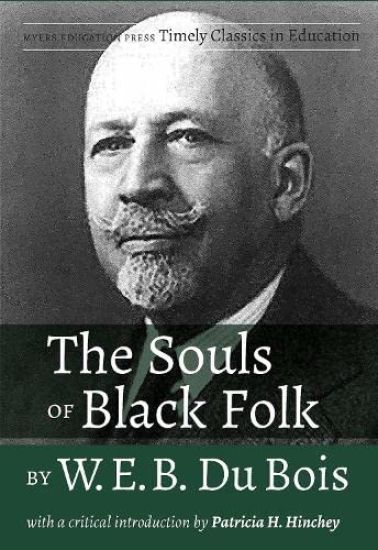
W. E. B. Du Bois’s seminal work, The Souls of Black Folk, not only captures the experience of African Americans in the years following the Civil War but also speaks to contemporary conditions. At a time when American public schools are increasingly re-segregating, are increasingly underfunded, and are perhaps nearly as separate and unequal as they were in earlier decades, this classic can help readers grasp links between a slavery past and a dismal present for too many young people of color. Disagreeing with Booker T. Washington, Du Bois analyzes the restrictiveness of education as a simple tool to prepare for work in pursuit of wealth (a trend still very much alive and well, especially in schools serving economically disadvantaged students). He also, however, demonstrates the challenges racism presents to individuals who embrace education as a tool for liberation. Du Bois’s accounts of how racism affected specific individuals allow readers to see philosophical issues in human terms. It can also help them think deeply about what kind of moral, social, educational and economic changes are necessary to provide all of America’s young people the equal opportunity promised to them inside and outside of schools.
Die vorgelegte Studie uber den irischen Nobelpreistrager W.B. Yeats geht von der Widerspruchlichkeit der Deutungen aus, die von der Forschung bisher vorgelegt wurde. Durch die detaillierte Analyse der theoretischen und dichterischen Werke von Yeats, in denen er die Rolle des Dichters in der Moderne zu bestimmen sucht, wird herausgearbeitet, dass er keiner einheitlichen Deutung zuganglich ist. In der vergeblichen Suche nach Einheit zwischen Werk und Umwelt erscheint er als Paradigma der modernen Dichter, die sich selber zum Problem geworden sind."