
Kirjahaku
Etsi kirjoja tekijän nimen, kirjan nimen tai ISBN:n perusteella.
1000 tulosta hakusanalla Walker Books

TAKING SIDES Ryan Walker has always known what he wants to be -- a cowboy, like his father was before being injured in a riding accident. But when Ryan's older brother, Gil, becomes a member of the Mountain Patriots Association, a militia group that wants to keep Wyoming free from immigrants, minorities, and government interference, Ryan finds himself questioning things he's taken for granted all his life. As tensions in the community build to inevitable violence, Ryan is torn between his love for the world in which he grew up and his sense of fairness and decency. How can he stand up for what is right when he's not sure what that is?
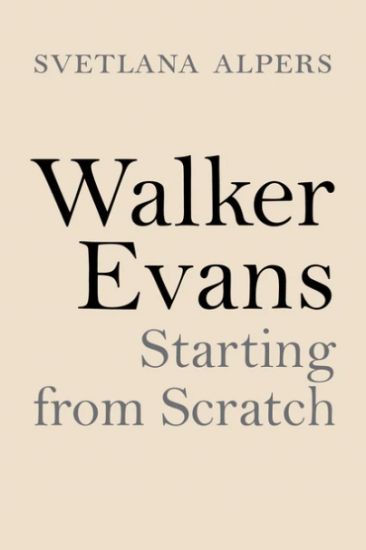
A magisterial study of celebrated photographer Walker EvansWalker Evans (1903–75) was a great American artist photographing people and places in the United States in unforgettable ways. He is known for his work for the Farm Security Administration, addressing the Great Depression, but what he actually saw was the diversity of people and the damage of the long Civil War. In Walker Evans, renowned art historian Svetlana Alpers explores how Evans made his distinctive photographs. Delving into a lavish selection of Evans’s work, Alpers uncovers rich parallels between his creative approach and those of numerous literary and cultural figures, locating Evans within the wide context of a truly international circle.Alpers demonstrates that Evans’s practice relied on his camera choices and willingness to edit multiple versions of a shot, as well as his keen eye and his distant straight-on view of visual objects. Illustrating the vital role of Evans’s dual love of text and images, Alpers places his writings in conversation with his photographs. She brings his techniques into dialogue with the work of a global cast of important artists—from Flaubert and Baudelaire to Elizabeth Bishop and William Faulkner—underscoring how Evans’s travels abroad in such places as France and Cuba, along with his expansive literary and artistic tastes, informed his quintessentially American photographic style.A magisterial account of a great twentieth-century artist, Walker Evans urges us to look anew at the act of seeing the world—to reconsider how Evans saw his subjects, how he saw his photographs, and how we can see his images as if for the first time.
A magisterial study of celebrated photographer Walker EvansWalker Evans (1903–75) was a great American artist photographing people and places in the United States in unforgettable ways. He is known for his work for the Farm Security Administration, addressing the Great Depression, but what he actually saw was the diversity of people and the damage of the long Civil War. In Walker Evans, renowned art historian Svetlana Alpers explores how Evans made his distinctive photographs. Delving into a lavish selection of Evans’s work, Alpers uncovers rich parallels between his creative approach and those of numerous literary and cultural figures, locating Evans within the wide context of a truly international circle.Alpers demonstrates that Evans’s practice relied on his camera choices and willingness to edit multiple versions of a shot, as well as his keen eye and his distant straight-on view of visual objects. Illustrating the vital role of Evans’s dual love of text and images, Alpers places his writings in conversation with his photographs. She brings his techniques into dialogue with the work of a global cast of important artists—from Flaubert and Baudelaire to Elizabeth Bishop and William Faulkner—underscoring how Evans’s travels abroad in such places as France and Cuba, along with his expansive literary and artistic tastes, informed his quintessentially American photographic style.A magisterial account of a great twentieth-century artist, Walker Evans urges us to look anew at the act of seeing the world—to reconsider how Evans saw his subjects, how he saw his photographs, and how we can see his images as if for the first time.
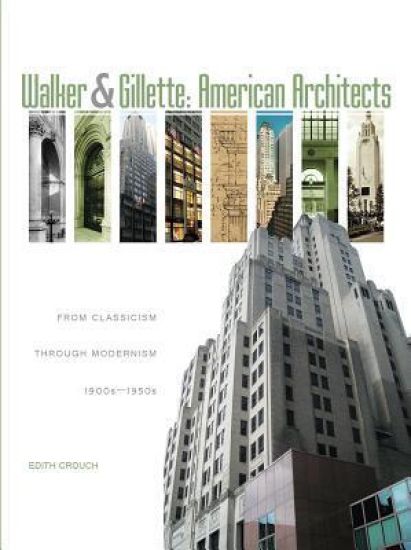
The work of Walker & Gillette, one of the leading architectural firms of the twentieth century, is documented with an extensive text and over 800 illustrations. These include many unpublished works by the company and by architect Joseph Mordecai Hirschman, whose passion for old world buildings influenced their design. The first half of the twentieth century featured a wide variety of architectural styles, including Classicism, Art Deco, and Modernism, which Walker & Gillette used well. Established in the early twentieth century, this firm would remain active until the 1950s. Over the years, the firm diversified, planning residential country estates, urban mansions, town homes, and apartments. Commercial, corporate, and governmental architecture, Art Deco skyscrapers, and unique commissions are all covered, as are the interiors they created for private yachts, ocean liners, the Playland Amusement Park, and their 1939 New York World's Fair offering. This book has relevance and appeal to architects, artists, historians, and readers who love vibrant American history.
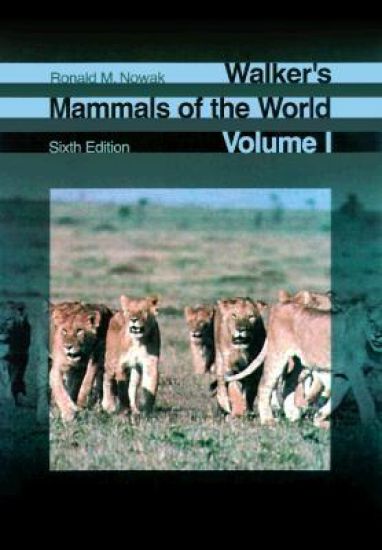
Gives an historical account of the world's mammals since 3,000 B.C., and then provides detailed information about every mammal on earth, divided by genus.

Walker Percy, the Last Catholic Novelist
Kieran Quinlan
Louisiana State University Press
1998
nidottu
In this important study, Kieran Quinlan examines the theological principles and religious views that underlay Walker Percy's writing, primarily his belief in the validity and efficacy of the Roman Catholic faith, and offers some new and controversial conclusions.Quinlan grounds the writer's concerns squarely in the context of the intellectual milieu of the 1940s, citing the influence of Jacques Maritain's The Dream of Descartes and the conversions of prominent contemporaries such as Thomas Merton, Robert Lowell, and Allen Tate. In an illuminating discussion, Quinlan follows the future novelist through the events that would mold his sensibility: his father's suicide in 1929; his rearing by William Alexander Percy, himself a former Catholic, who inculcated the young man with the Stoic philosophy of Marcus Aurelius; and his contraction of tuberculosis and subsequent long convalescence, during which he studied Kierkegaard, Sartre, Camus, and Heidegger, thinkers pivotal in his own development as a Catholic novelist.With a mind keenly attuned to philosophical nuances and an impressive grasp of semiotics and theology, Quinlan deftly presents close readings of the novels, from the muted Catholicism of The Moviegoer to the explicit agendas of The Last Gentleman, Love in the Ruins, and The Thanatos Syndrome. He shows how Percy contrasts Catholicism with Stoicism in Lancelot and The Second Coming. He also sheds light on the dense and often abstruse arguments of the philosophical essays, asserting that Percy, despite his early attention to existentialism, was actually a neo-Thomist rationalist who rejected Kierkegaard's irrational ""leap of faith."" Lost in the Cosmos, Quinlan demonstrates, is an ambitious work requiring that its readers move beyond the realm of a comfortable skepticism.Critical but respectful, Quinlan points out Percy's confusion and frank lack of knowledge on the topic of linguistics. He also questions many aspects of Percy's philosophical and theological views in light of current thinking in those disciplines, stressing in particular Percy's failure to address the very real problems that an evolutionary view of the universe poses for the traditional revealed religions.Quinlan presents here a searching, lucidly written examination of a spiritual pilgrim whose vision of the world, he finally maintains, is no longer tenable (thus making Percy ""the last Catholic novelist"") yet is admirable in its steadfast dignity. It is a book that is sure to arouse controversy and debate in our understanding of an important contemporary novelist.
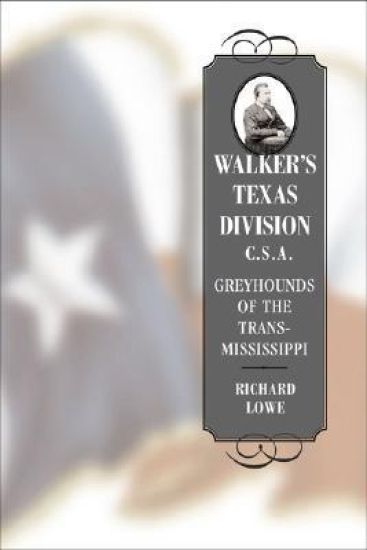
Colourfully known as the ""Greyhound Division"" for its lean and speedy marches across thousands of miles in three states, Major General John G. Walker's infantry division in the Confederate army was the largest body of Texans -- about 12,000 men at its formation -- to serve in the American Civil War. From its creation in 1862 until its disbandment at the war's end, Walker's unit remained, uniquely for either side in the conflict, a stable group of soldiers from a single state. Richard Lowe's compelling saga shows how this collection of farm boys, store clerks, carpenters, and lawyers became the trans-Mississippi's most potent Confederate fighting unit, from the vain attack at Milliken's Bend, Louisiana, in 1863 during Grant's Vicksburg Campaign to stellar performances at the battles of Mansfield, Pleasant Hill, and Jenkins' Ferry that helped repel Nathaniel P. Banks's Red River Campaign of 1864. Lowe's skillful blending of narrative drive and demographic profiling represents an innovative history of the period that is sure to set a new benchmark.

Walker Percy's The Moviegoer at Fifty
Louisiana State University Press
2016
sidottu
More than fifty years after its publication, Walker Percy's National Book Award Winner, The Moviegoer, still confronts, comforts, and enlightens generations of readers. This collection of twelve new essays, edited and introduced by Jennifer Levasseur and Mary A. McCay, emphasize the evolving significance of this seminal, New Orleans novel. Authors' consider the text with diverse perspectives, drawing from philosophy, theology, disability theory, contemporary music and literature, social media, and film studies.Jay Tolson opens the volume with reflections on rereading the novel on a Kindle decades after writing his important biography of Percy. H. Collin Messer, Montserrat Gin�s, Jessica Hooten Wilson, and Brian Jobe follow with illuminating essays analyzing Percy's influences, from St. Augustine and Cervantes to Heidegger and Dostoevsky. Jonathan Potter and Read Mercer Schuchardt, Mary A. McCay, Matthew Luter, and Dorian Speed delve into the novel's significance to cinema, including an exhaustive guide to its film references, a meditation on Binx Bolling as a director of his existence, and the semiotics of celebrity. Brent Walter Cline and Robert Bolton, Michael Kobre, and L. Lamar Nisly present a roadmap for Bolling's inward journey, exploring a variety of elements from the role of the broken body to the spiritual connection to Bruce Springsteen lyrics. Walker Percy's The Moviegoer at Fifty is the first critical work devoted solely to the author's debut novel. Coinciding with the centenary of Percy's birth, this collection invites both new and veteran readers to enjoy The Moviegoer with fresh perspectives that underscore its lasting relevance.

Walker's Appeal, in Four Articles
The University of North Carolina Press
2011
nidottu
First published in 1829, Walker's Appeal called on slaves to rise up and free themselves. The two subsequent versions of his document (including the reprinted 1830 edition published shortly before Walker's death) were increasingly radical. Addressed to the whole world but directed primarily to people of color around the world, the 87-page pamphlet by a free black man born in North Carolina and living in Boston advocates immediate emancipation and slave rebellion. Walker asks the slaves among his readers whether they wouldn't prefer to ""be killed than to be a slave to a tyrant."" He advises them not to ""trifle"" if they do rise up, but rather to kill those who would continue to enslave them and their wives and children. Copies of the pamphlet were smuggled by ship in 1830 from Boston to Wilmington, North Carolina, Walker's childhood home, causing panic among whites. In 1830, members of North Carolina's General Assembly had the Appeal in mind as they tightened the state's laws dealing with slaves and free black citizens. The resulting stricter laws led to more policies that repressed African Americans, freed and slave alike. A DOCSOUTH BOOK. This collaboration between UNC Press and the University of North Carolina at Chapel Hill Library brings selected classic works from the digital library of Documenting the American South back into print. DocSouth Books uses the latest digital technologies to make these works available as downloadable e-books or print-on-demand publications. DocSouth Books are unaltered from the original publication, providing affordable and easily accessible editions to a new generation of scholars, students, and general readers.

Walker Percy (1916-1990), the reclusive southern author most famous for his 1961 novel The Moviegoer, spent much of his adult life in Covington, Louisiana. In the spirit of traditional southern storytelling, this biography of Percy takes its shape from candid interviews with his family, close friends, and acquaintances. In thirteen interviews, we get to know Percy through his lifelong friend Shelby Foote, Percy's brothers LeRoy and Phin, his former priest, his housekeeper, and former teachers, among others--all in their own words. Over the course of the interviews, readers learn intimate details of Percy's writing process; his interaction with community members of different ethnic, religious, and socioeconomic backgrounds; and his commitment to civil rights issues. What emerges is a multidimensional portrait of Percy as a man, a friend, and a family member.
Walker Percy, Fyodor Dostoevsky, and the Search for Influence
Jessica Hooten Wilson
Ohio State University Press
2017
pokkari
Although Walker Percy named many influences on his work and critics have zeroed in on Kierkegaard in particular, no one has considered his intentional influence: the nineteenth-century Russian novelist Fyodor Dostoevsky. In a study that revives and complicates notions of adaptation and influence, Jessica Hooten Wilson details the long career of Walker Percy. Walker Percy, Fyodor Dostoevsky, and the Search for Influence demonstrates-through close reading of both writers' works, examination of archival materials, and biographical criticism-not only how pervasive and inescapable Dostoevsky's influence was but also how necessary it was to the distinctive strengths of Percy's fiction. From Dostoevsky, Percy learned how to captivate his non-Christian readership with fiction saturated by a Christian vision of reality. Not only was his method of imitation in line with this Christian faith but also the aesthetic mode and very content of his narratives centered on his knowledge of Christ. The influence of Dostoevsky on Percy, then, becomes significant as a modern case study for showing the illusion of artistic autonomy and long-held, Romantic assumptions about artistic originality. Ultimately, Wilson suggests, only by studying the good that came before can one translate it in a new voice for the here and now.
Walker Percy's novels are fraught with characters struggling toward a destiny and purpose in life who must sort through conflicting inner voices and the voices of family, friends, therapists, and mentors until they finally find their own paths. Through trial, error, and retrial, Percy's characters continuously reinvent themselves, struggling until they reach solutions, satisfaction, and maturity.In this multifaceted work, Michael Kobre analyzes Walker Percy's major fiction works—The Moviegoer, The Last Gentleman, Love in the Ruins, Lancelot, The Second Coming, and The Thanatos Syndrome—in terms of the Russian philosopher and literary scholar Mikhail Bakhtin's critical theory. Kobre begins with an introduction to Percy's view of language and consciousness and a clear, accessible explanation of Bakhtin's ideas. His subsequent discussion of the novels connects each work in turn with Percy's advancing career and explores the deepening conflict in Percy's fiction between his desire to express his own religious and moral beliefs and his commitment to the essential freedom of his art—the play of many voices in his narratives.
In the first undertaking of its kind in Percy criticism, John F. Desmond traces—through Walker Percy's six published novels—the writer's central and enduring concerns with community. These concerns, Desmond argues, were grounded in the realism of such Scholastics as Aquinas and Duns Scotus—realism as updated by the semiotic theory of Charles Sanders Peirce, the American philosopher whose work Percy studied for more than forty years. Percy gleaned from Peirce the basic truth that humans are by nature relational beings, a truth reinforced by Percy's Catholic belief in mystical community.Desmond shows how Percy's theosemiotic outlook shaped each of his novels, from The Moviegoer (1961) to The Thanatos Syndrome (1987), and provided a foundation for his analysis of alienation, his critique of scientism, and his vision of community. Percy's vision of community extended from the flawed social world of modern America and Western society to the mystical community beyond time and place prophesied in the Hebrew-Christian scriptures. This vision grew more explicit as Percy's novelistic career unfolded and was of a piece with the ideas developed in his many essays and in his "self-help" parable, Lost in the Cosmos (1983).Percy saw himself as a witness to the collapse of scientific humanism in the face of consumerism, self-absorption, and violence. However, Desmond says, Percy also looked forward to a reconciliation of science, religion, and art. In one of his last public lectures, "The Fateful Rift: The San Andreas Fault in the Modern Mind," Percy called for a "new anthropology" based on a Peircean realism that accurately accounted for man's true nature as a wayfarer on a journey with others toward God. This call is echoed in the novels, in which, according to Desmond, Percy explores his vision of community "through representation of the shattered and deformed state of society and the searching of his protagonists, and through suggesting possibilities for healing their riven state."
In Walker Percy: Books of Revelations, Gary M. Ciuba examines how Percy’s apocalyptic vision inspires the structure, themes, and strategies of his fiction. This book explores the unity of the southern novelist’s fiction by focusing on its religious and artistic design—one of the first studies to approach Percy’s work from this perspective.Ciuba considers Percy’s six published novels—The Moviegoer, The Last Gentleman, Love in the Ruins, Lancelot, The Second Coming, and The Thanatos Syndrome—and also offers the first extended critical analysis of his unpublished work “The Gramercy Winner.” Although the novels are often seen as increasingly satiric jeremiads about the possible doom of America, Ciuba argues that Percy’s fiction is principally shaped by a demythologized and partially realized form of eschatology. This apocalyptic vision has less to do with the end of the external world than with the demise of the protagonists’ internal worldviews. According to Ciuba, Percy does more than offer direly comic warnings about the end of the world; he shows how the world actually ends and then may begin again in the everyday lives and extraordinary loves of his astonished seers.
Walker Evans: American Photographs
Museum of Modern Art
2012
sidottu
A 75th-anniversary facsimile edition of one of the most significant photobooks ever publishedMore than any other artist, Walker Evans invented the images of essential America that we have long since accepted as fact, and his work has influenced not only modern photography but also literature, film and visual arts in other mediums. The original edition of American Photographs was a carefully prepared letterpress production, published by The Museum of Modern Art in 1938 to accompany an exhibition of photographs by Evans that captured scenes of America in the early 1930s. As noted on the jacket of the first edition, Evans, "photographing in New England or Louisiana, watching a Cuban political funeral or a Mississippi flood, working cautiously so as to disturb nothing in the normal atmosphere of the average place, can be considered a kind of disembodied, burrowing eye, a conspirator against time and its hammers." This seventy-fifth anniversary edition of American Photographs, made with new reproductions, recreates the original 1938 edition as closely as possible to make the landmark publication available for a new generation. American Photographs has fallen out of print for long periods of time since it was first published, and even subsequent editions--two of which altered the design and typography of the book in small but significant ways--are often available only at libraries and rare bookstores. This version, like the fiftieth-anniversary edition produced by the Museum in 1988, captures the look and feel of the very first edition with the aid of new digital technologies. Walker Evans (1903-1975) took up photography upon his return to New York in 1927, following a year in Paris when his aspiration to become a writer withered in the shadow of Fitzgerald, Hemingway and Joyce. In 1935, Evans was commissioned by the Farm Security Administration to photograph the effects of the Great Depression in the Southeast. During this time he took many of the photographs that appeared in his collaboration with James Agee, Let Us Now Praise Famous Men (1941), a book which has become a defining document of that era. Evans joined the staff of Time magazine in 1945 and shortly thereafter became an editor at Fortune, where he stayed for the next two decades. In 1964, he became a professor at the Yale University School of Art, where he taught until his death in 1975.
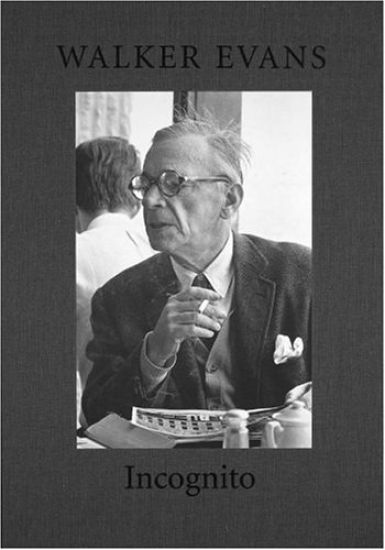
Walker Evans: Incognito
Eakins Press,N.Y.
2015
sidottu
Aware of the immortal power of words, Walker Evans (1903–75) chose to leave a last will and testament, unmistakable in its clarity, in the form of an interview. He made sure that none of his intended clarity would be lost. This he achieved by choosing a close and trusted friend to collaborate in conducting several recorded conversations and editing them into a carefully articulated credo. Much sought and widely appreciated, but previously unavailable except in books of collected essays, the interview that is the text of Walker Evans Incognito is a true, first-hand source: Evans speaking freely about his photography and his philosophy. From Evans' own words the personality of the man behind the great, famously laconic photographs emerges. Walker Evans Incognito gives this brilliant text the grand presentation it deserves. The book features eight scrupulously reproduced full-page photographs. Each photograph is accompanied by Evans' own comments on that picture. The text of the interview and the captions are printed in letterpress. Bound in buckram, with a tipped-on tritone photograph and mylar protective cover, the edition of the book is limited to a single printing of 2,500 copies.
Walker Evans: A Gallery of Postcards
Eakins Press,N.Y.
2000
muu
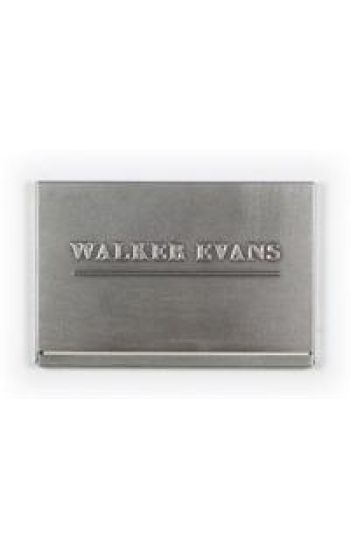
Documenting Walker Evans's lifelong fascination with the picture postcard The eight scrupulously tritone dry-trap printed postcards that make up A Gallery of Postcards were originally produced by Walker Evans in 1936 by contact printing sections of his 8 x 10-inch negatives onto the smaller Kodak gelatin silver postcard stock. This edition comes with an essay by Jeff L. Rosenheim, curator of The Metropolitan Museum of Art's 2000 Walker Evans exhibition, from which these postcards are drawn. "Like a poet refining an idea word by word, Evans often clarified and intensified the meanings of his pictures by trimming his prints just slightly to present the leanest possible image," Rosenheim writes. "With the postcards he took that impulse to another level. Evans was a master of the edge and one of the mediums greatest precisionists."
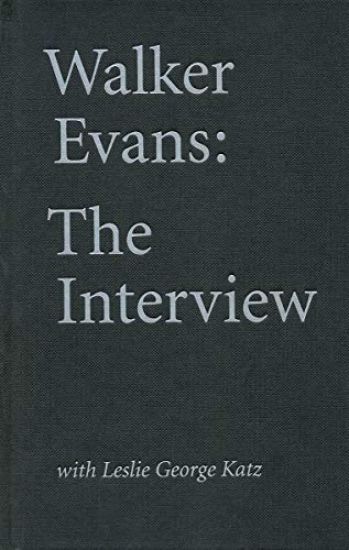
Walker Evans in his own words: the legendary interview, back in print In 1971, Art in America published an interview with Walker Evans conducted by Leslie George Katz, writer and publisher of the Eakins Press. The interview is charming and illuminating in its clarity and candor. Nearing the end of his life, Evans speaks freely about his influences and how he got started as a photographer (“I was damn well going to be an artist and I wasn’t going to be a businessman,” he remembers), and reflects back on his work and his thinking. The interview has become legendary, consulted by curators, scholars and students for half a century and considered a definitive source for insights into the process, philosophy and personality of one of America’s greatest photographers. In 1995, the Eakins Press Foundation republished Evans’ interview in a deluxe clothbound edition titled Walker Evans Incognito. More than 20 years later, this new edition brings the Evans interview back into print in an elegant and affordable volume for a new generation. Walker Evans scholar Anne Bertrand introduces the interview and its publication history, and contributes notes throughout the text that provide important contextual information. Walker Evans: The Interview offers an opportunity to rediscover the man behind the famous images, in his own words. Born in St. Louis, Missouri, Walker Evans (1903–75) took up photography in 1928. His book collaboration with James Agee, Let Us Now Praise Famous Men (1941), which portrayed the lives of three white tenant families in southern Alabama during the Depression, has become one of that era's most defining documents. Evans joined the staff of Time magazine in 1945, and shortly after moved to Fortune magazine, where he stayed until 1965. That year, he became a professor of photography at the Yale University School of Art. Evans died at his home in Old Lyme, Connecticut, in 1975. Leslie George Katz (1918–97) was the founder and publisher of the Eakins Press Foundation. Until his death in 1997, he wrote extensively about American art and culture, and through his sustained efforts to celebrate his heroes—Thomas Eakins, Walt Whitman, and Walker Evans—found a way to define a new sort of democratic, patriotic intellectualism.
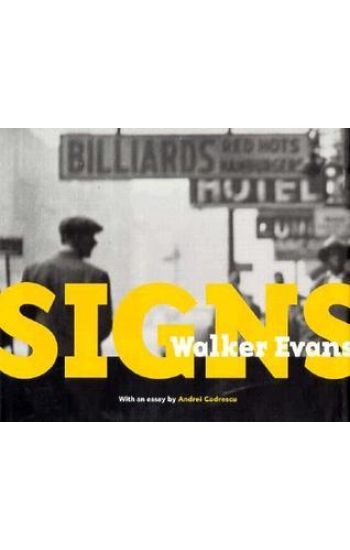
Brings together images from the era most closely associated with Evans, the rural south in the 1930s, and also includes images of New York City, Chicago, and Havana.