Kirjojen hintavertailu. Mukana 11 699 587 kirjaa ja 12 kauppaa.

Kirjahaku

Etsi kirjoja tekijän nimen, kirjan nimen tai ISBN:n perusteella.

1000 tulosta hakusanalla Walter Benjamin

Revolution and History in Walter Benjamin
This book places Benjamin’s writing on revolution in the context of his conception of historical knowledge. The fundamental problem that faces any analysis of Benjamin’s approach to revolution is that he deploys notions that belong to the domain of individual experience. His theory of modernity with its emphasis on the disintegration of collective experience further aggravates the problem. Benjamin himself understood the problem of revolution to be primarily that of the conceptualization of collective experience (its possibility and sites) under the conditions of modern bourgeois society. The novelty of his approach to revolution lies in the fact that he directly connects it with historical experience. Benjamin’s conception of revolution thus constitutes an integral part of his distinctive theory of historical knowledge, which is also essentially a theory of experience. Through a detailed study of Benjamin’s writings on the topics of the child and the dream, and an analysis of his ideas of history, the fulfilled wish, similitude and communist society, this book shows how the conceptual analysis of his corpus can get to the heart of Benjamin’s conception of revolutionary experience and distil its difficulties and mechanisms.
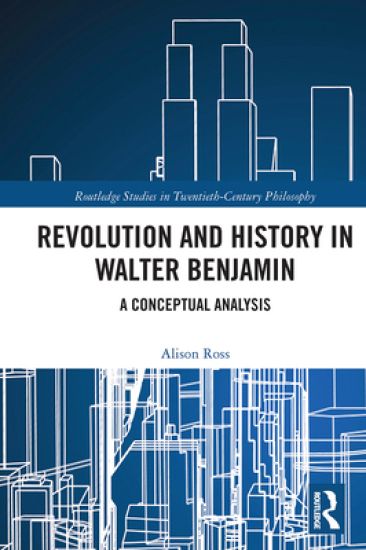
Revolution and History in Walter Benjamin
This book places Benjamin’s writing on revolution in the context of his conception of historical knowledge. The fundamental problem that faces any analysis of Benjamin’s approach to revolution is that he deploys notions that belong to the domain of individual experience. His theory of modernity with its emphasis on the disintegration of collective experience further aggravates the problem. Benjamin himself understood the problem of revolution to be primarily that of the conceptualization of collective experience (its possibility and sites) under the conditions of modern bourgeois society. The novelty of his approach to revolution lies in the fact that he directly connects it with historical experience. Benjamin’s conception of revolution thus constitutes an integral part of his distinctive theory of historical knowledge, which is also essentially a theory of experience. Through a detailed study of Benjamin’s writings on the topics of the child and the dream, and an analysis of his ideas of history, the fulfilled wish, similitude and communist society, this book shows how the conceptual analysis of his corpus can get to the heart of Benjamin’s conception of revolutionary experience and distil its difficulties and mechanisms.
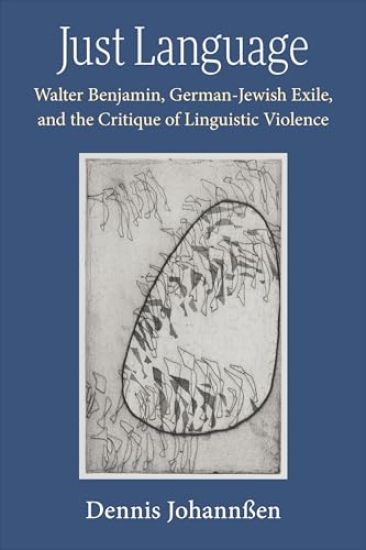
Just Language: Walter Benjamin, German-Jewish Exile, and the Critique of Linguistic Violence
Just Language revisits the Weimar period and its representation in the postwar years to explore narratives of linguistic resistance in the works of Walter Benjamin, Theodor W. Adorno, Hannah Arendt, and Paul Celan. How did this generation of exile writers grapple with their experiences of oppression and persecution? How did they create a language of resistance during the decades that prepared the Third Reich and the Shoah? Facing the devastations of World War I, the book explores how Walter Benjamin analyzed language's ability to radically break the cyclical violence of war and examines his opposition to expansionism and imperialism in Weimar education and culture. Based on Benjamin's analysis, Johann en traces the postwar responses of Hannah Arendt and Paul Celan. While Arendt proposed strategies of metaphorical thinking to counteract the formation of totalitarianism, Celan mobilized silence as a poetic counterforce against oppression and erasure. Just Language argues that every linguistic act and practice, no matter how small or marginalized, entails the ethical task of opposing the normalization and institutionalization of political violence. By tracing how Benjamin and his interlocutors struggled against German fascism, Johann en presents a memory-based critique of linguistic violence, opening a dialogue between German-Jewish writers and today's debates on non-discrimination, propaganda, and social justice.
Just Language: Walter Benjamin, German-Jewish Exile, and the Critique of Linguistic Violence
Just Language revisits the Weimar period and its representation in the postwar years to explore narratives of linguistic resistance in the works of Walter Benjamin, Theodor W. Adorno, Hannah Arendt, and Paul Celan. How did this generation of exile writers grapple with their experiences of oppression and persecution? How did they create a language of resistance during the decades that prepared the Third Reich and the Shoah? Facing the devastations of World War I, the book explores how Walter Benjamin analyzed language's ability to radically break the cyclical violence of war and examines his opposition to expansionism and imperialism in Weimar education and culture. Based on Benjamin's analysis, Johann en traces the postwar responses of Hannah Arendt and Paul Celan. While Arendt proposed strategies of metaphorical thinking to counteract the formation of totalitarianism, Celan mobilized silence as a poetic counterforce against oppression and erasure. Just Language argues that every linguistic act and practice, no matter how small or marginalized, entails the ethical task of opposing the normalization and institutionalization of political violence. By tracing how Benjamin and his interlocutors struggled against German fascism, Johann en presents a memory-based critique of linguistic violence, opening a dialogue between German-Jewish writers and today's debates on non-discrimination, propaganda, and social justice.
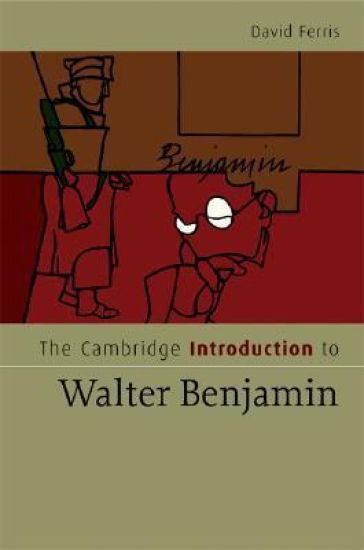
The Cambridge Introduction to Walter Benjamin

The Cambridge Introduction to Walter Benjamin

David S. Ferris

Cambridge University Press
2008
pokkari
For students of modern criticism and theory, Walter Benjamin's writings have become essential reading. His analyses of photography, film, language, history, allegory, material culture, the poet Charles Baudelaire, and his vast examination of the social, political and historical significance of the Arcades of nineteenth-century Paris have left an enduring and important critical legacy. This volume examines in detail a substantial selection of his important critical writings on these topics from 1916 to 1940 and outlines his life in pre-war Germany, his association with the Frankfurt School, and the dissemination of his ideas and methodologies into a variety of academic disciplines since his death. David Ferris traces the development of Benjamin's key critical concepts and provides students with an accessible overview of the life, work and thought of one of the twentieth-century's most important literary and cultural critics.
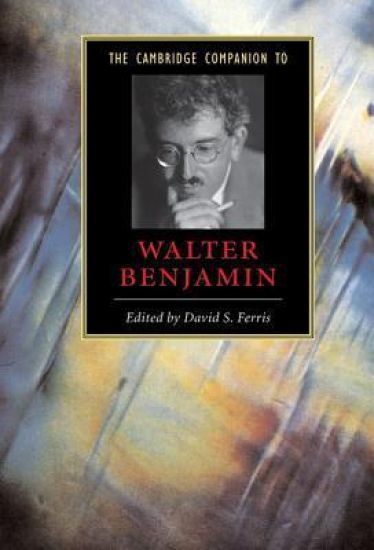
The Cambridge Companion to Walter Benjamin
This Companion offers a comprehensive introduction to the work and thought of the highly influential twentieth-century critic and theorist Walter Benjamin. The volume provides examinations of the different aspects of Benjamin's work that have had a significant effect on contemporary critical and historical thought. Topics discussed by experts in the field include Benjamin's relation to the avant-garde movements of his time, the form of the work of art, his theories on language and mimesis, modernity, his relation to Brecht and the Frankfurt School, his significance and relevance to modern cultural studies, his formative interpretation of Romanticism, and his autobiographical writings. The volume is aimed at readers who may be coming to Benjamin for the first time or who have some knowledge of Benjamin but would like to know more about the issues and concepts central to his work. Additional material includes a guide to further reading and a chronology.
The Cambridge Introduction to Walter Benjamin

The Cambridge Introduction to Walter Benjamin

David S. Ferris

Cambridge University Press
2008
sidottu
For students of modern criticism and theory, Walter Benjamin's writings have become essential reading. His analyses of photography, film, language, history, allegory, material culture, the poet Charles Baudelaire, and his vast examination of the social, political and historical significance of the Arcades of nineteenth-century Paris have left an enduring and important critical legacy. This volume examines in detail a substantial selection of his important critical writings on these topics from 1916 to 1940 and outlines his life in pre-war Germany, his association with the Frankfurt School, and the dissemination of his ideas and methodologies into a variety of academic disciplines since his death. David Ferris traces the development of Benjamin's key critical concepts and provides students with an accessible overview of the life, work and thought of one of the twentieth-century's most important literary and cultural critics.
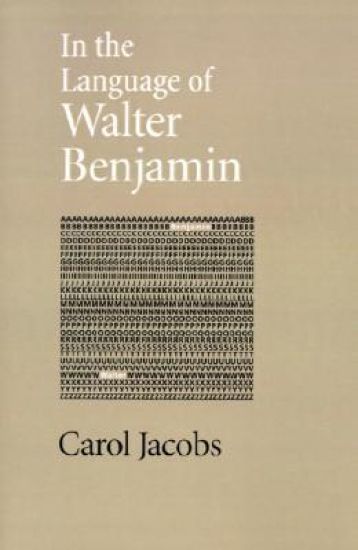
In the Language of Walter Benjamin

In the Language of Walter Benjamin

Carol Jacobs

Johns Hopkins University Press
2000
pokkari
If Walter Benjamin (with an irony that belies his seemingly tragic life) is now recognized as one of the century's most important writers, reading him is no easy matter. Benjamin opens one of his most notable essays, "The Task of the Translator", with the words "No poem is intended for the reader, no image for the beholder, no symphony for the listener". How does one read an author who tells us that writing does not communicate very much to the reader? How does one learn to regard what comes to us from Benjamin as something other than direct expression? Carol Jacobs' In the Language of Walter Benjamin is an attempt to come to terms with this predicament. It does so by teasing out such guidelines for criticism as Benjamin seems to offer in The Origin of German Tragic Drama. Jacobs reminds us of Benjamin's distinction between truth and knowledge. She above all insists on his method of philosophical contemplation as performance, on a performance that demands precise immersion in the minute details of subject matter.
The Actuality of Walter Benjamin

The Actuality of Walter Benjamin

Laura Marcus; Lynda Nead

Lawrence Wishart Ltd
1998
nidottu
This collection of essays concentrates on the work of Walter Benjamin. Topics covered include: the question of historical understanding versus historicism; Benjamin and the sources of Judaism; feminism and cultural analysis; and images in Benjamin's novels and other writings.
Mikhail Bakhtin and Walter Benjamin

Mikhail Bakhtin and Walter Benjamin

T. Beasley-Murray

Palgrave Macmillan
2007
nidottu
This first comparative study of the philosophers and literary critics, Walter Benjamin and Mikhail Bakhtin, focuses on the two thinkers' conceptions of experience and form, investigating parallels between Bakhtin's theories of responsibility, dialogue, and the novel, and Benjamin's theories of translation, montage, allegory, and the aura.
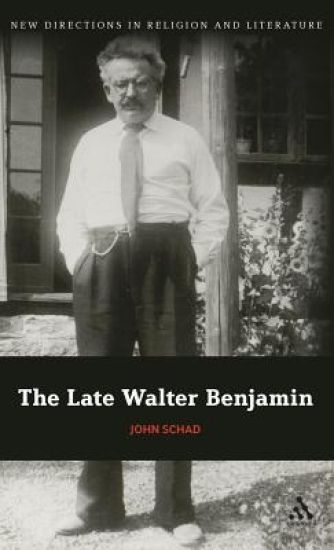
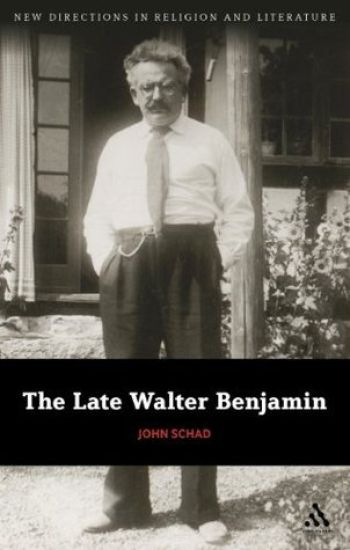
The Late Walter Benjamin

The Late Walter Benjamin

John Schad

Continuum Publishing Corporation
2012
sidottu
This fully-annotated documentary novel explores the life and thought of Walter Benjamin, imaginatively examining its implications in the political context of a post-War London estate. A startling critical-creative examination of one of the 20th Century's leading thinkers, "The Late Walter Benjamin" is a documentary novel that juxtaposes the life and death of Walter Benjamin with the days, hours and minutes of a working-class council estate on the edge of London in post-war Austerity England. The novel centres on one particular tenant who claims to be Walter Benjamin, and only ever uses words written by Benjamin, apparently oblivious that the real Benjamin committed suicide 20 years earlier whilst fleeing the Nazis. Initially set in the sixties, the text slips back to the early years of the estate and to Benjamin's last days, as he moves across Europe seeking ever-more desperately to escape the Third Reich. Through this fictional narrative, John Schad explores not only the emergence of Benjamin's thinking from a politicised Jewish theology forced to confront the rise of Nazism but also the implications of his utopian Marxism, forged in exile, for the very different context of a displaced working class community in post-war Britain. This series aims to showcase new work at the forefront of religion and literature through short studies written by leading and rising scholars in the field. Books will pursue a variety of theoretical approaches as they engage with writing from different religious and literary traditions. Collectively, the series will offer a timely critical intervention to the interdisciplinary crossover between religion and literature, speaking to wider contemporary interests and mapping out new directions for the field in the early twenty-first century.
The Late Walter Benjamin

The Late Walter Benjamin

John Schad

Continuum Publishing Corporation
2012
nidottu
This fully-annotated documentary novel explores the life and thought of Walter Benjamin, imaginatively examining its implications in the political context of a post-War London estate. A startling critical-creative examination of one of the 20th Century's leading thinkers, "The Late Walter Benjamin" is a documentary novel that juxtaposes the life and death of Walter Benjamin with the days, hours and minutes of a working-class council estate on the edge of London in post-war Austerity England. The novel centres on one particular tenant who claims to be Walter Benjamin, and only ever uses words written by Benjamin, apparently oblivious that the real Benjamin committed suicide 20 years earlier whilst fleeing the Nazis. Initially set in the sixties, the text slips back to the early years of the estate and to Benjamin's last days, as he moves across Europe seeking ever-more desperately to escape the Third Reich. Through this fictional narrative, John Schad explores not only the emergence of Benjamin's thinking from a politicised Jewish theology forced to confront the rise of Nazism but also the implications of his utopian Marxism, forged in exile, for the very different context of a displaced working class community in post-war Britain. This series aims to showcase new work at the forefront of religion and literature through short studies written by leading and rising scholars in the field. Books will pursue a variety of theoretical approaches as they engage with writing from different religious and literary traditions. Collectively, the series will offer a timely critical intervention to the interdisciplinary crossover between religion and literature, speaking to wider contemporary interests and mapping out new directions for the field in the early twenty-first century.
An Analysis of Walter Benjamin's The Work of Art in the Age of Mechanical Reproduction
The Work of Art in the Age of Mechanical Reproduction combats traditional art criticism’s treatment of artworks as fixed, unchanging mystical objects. For Walter Benjamin, the consequences of addressing a work of art in this manner have a wider resonance: closed off from any active visual or tactile engagement, the work of art becomes an object of passive contemplation and a potential tool of oppression.Benjamin argues that technology has fundamentally altered the way art is experienced. Potentially open to interpretation and accessible to many, art in the age of mechanical reproduction has the potential to be mobilized for radical purposes. While ostensibly addressing the artistic consequences of technical reproducibility on art, Benjamin also addresses the wider political consequences of this shift.
An Analysis of Walter Benjamin's The Work of Art in the Age of Mechanical Reproduction
The Work of Art in the Age of Mechanical Reproduction combats traditional art criticism’s treatment of artworks as fixed, unchanging mystical objects. For Walter Benjamin, the consequences of addressing a work of art in this manner have a wider resonance: closed off from any active visual or tactile engagement, the work of art becomes an object of passive contemplation and a potential tool of oppression.Benjamin argues that technology has fundamentally altered the way art is experienced. Potentially open to interpretation and accessible to many, art in the age of mechanical reproduction has the potential to be mobilized for radical purposes. While ostensibly addressing the artistic consequences of technical reproducibility on art, Benjamin also addresses the wider political consequences of this shift.
The Palgrave Walter Benjamin Handbook

The Palgrave Walter Benjamin Handbook

Springer International Publishing AG
2025
sidottu
Walter Benjamin is one of the most influential authors in contemporary humanities, exerting a deep fascination for students and garnering scholarly interest in a variety of fields, such as history of philosophy, literature, film and media studies, political science, religion, architecture, art and history. This Handbook provides students and scholars with a guide to Walter Benjamin’s work that explores each of these areas in depth while also giving the reader a chance to discover connections to other areas of thought. In order to do justice to the complexity of Benjamin’s thinking, this volume includes international scholars from a variety of academic disciplines, and is organized such that a dialogue emerges between them. Each section presents an argument for the integration of its subject into the whole, demonstrating that what might seem specialized and esoteric actually intersects with the problems and questions of the other sections.
Darstellung bei Walter Benjamin

Darstellung bei Walter Benjamin

Jan Urbich

de Gruyter
2011
sidottu
This study is dedicated to the comprehensive explanation of what is probably Walter Benjamin's most difficult text, the Erkenntniskritische Vorrede (critical foreword) to his Ursprung des deutschen Trauerspiels (Origin of German Tragic Drama). The thorough analytical commentary exposes the historical and systematic terminological constructions of this text and places them within the context of the discourse on presentation since the 18th century. For the first time Benjamin's premarxist philosophy and literary theory are seen as an independent contribution to a philosophy of literary representation with potential for problem-solving up to the present day.