Marxism has tended to ignore religion assuming it is something that would eventually disappear even though it retained theological elements. This collection of essays brings together a group of scholars who use frameworks provided by Marx and Critical Theory in analyzing religion. Its goal is to establish a critical theory of religion within the sociology of religion as an alternative to rational choice.
Selected as a Doody's Core Title for 2022 and 2023! For more than 30 years, Designing Clinical Research has set the standard as the most practical, authoritative guide for physicians, nurses, pharmacists, and other practitioners involved in all forms of clinical and public health research. Using a reader-friendly writing style, Drs. Warren S. Browner, Thomas B. Newman, Steven R. Cummings, Deborah G. Grady, Alison J. Huang, Alka M. Kanaya, and Mark J. Pletcher, all of the University of California, San Francisco, provide up-to-date, commonsense approaches to the challenging judgments involved in designing, funding, and implementing a study. This state-of-the-art fifth edition features new figures, tables, and design, as well as new editors, new content, and extensively updated references to keep you current. Covers clinical research in its many forms, including clinical trials, observational studies, translational science, and patient-oriented research. Presents epidemiologic terms and principles and advanced conceptual material in a practical and reader-friendly manner. Discusses key changes in the field, including confounding and directed acyclic graphs, surrogate outcomes and biomarkers, instrumental variables and Mendelian randomization, regression discontinuity designs, alternative data sources, AI and machine learning, pilot studies, as well as an update on P values and Bayesian analysis.. Covers modifications of classic randomized trials, such as pre/post, interrupted time series, difference-in-differences, stepped wedge and cluster randomized designs, as well as randomized trials in health systems. Adds new chapters on qualitative approaches to clinical research and on community-engaged research Enrich Your eBook Reading ExperienceRead directly on your preferred device(s),such as computer, tablet, or smartphone Easily convert to audiobook,powering your content with natural language text-to-speech
Durante más de 30 años, Diseño de investigaciones clínicas ha establecido la pauta como la guía más práctica y de mayor autoridad para médicos, profesionales de enfermería, farmacéuticos y para otros profesionales involucrados en todas las formas de investigación clínica y de salud pública. Con un estilo de escritura fácil de leer, los autores proporcionan enfoques actualizados y de sentido común para los criterios desafiantes involucrados en el diseño, la financiación y la implementación de un estudio. Dividida en tres grandes secciones, esta 5.ª edición de vanguardia se enfoca principalmente en investigadores clínicos que se encuentran al inicio de su carrera, y se mantiene centrada en los aspectos más importantes: la búsqueda de una buena hipótesis alternativa y el desarrollo de un diseño de estudio eficiente, eficaz y ético.
This popular learning tool is divided into 5 distinct part: Algebra Topics, Use of a Calculator, Basic Skills, Selected Solutions, and Answers to the Final Examination. In Algebra Topics, selected topics from algebra are reviewed because of their relevance to calculus. The Use of a Calculator section reviews the essential functionality of the graphing calculator and its use within precalculus. In Selected Solutions, a detailed solution of every third problem in the exercise set is given. Answers to the Final Examination is a list of answers for all questions in the Final Exam.
If humans are purely physical, and if it is the brain that does the work formerly assigned to the mind or soul, then how can it fail to be the case that all of our thoughts and actions are determined by the laws of neurobiology? If this is the case, then free will, moral responsibility, and, indeed, reason itself would appear to be in jeopardy. Nancey Murphy and Warren S. Brown here defend a non-reductive version of physicalism whereby humans are (sometimes) the authors of their own thoughts and actions. Did My Neurons Make Me Do It? brings together insights from both philosophy and the cognitive neurosciences to defeat neurobiological reductionism. One resource is a 'post-Cartesian' account of mind as essentially embodied and constituted by action-feedback-evaluation-action loops in the environment, and 'scaffolded' by cultural resources. Another is a non-mysterious account of downward (mental) causation explained in terms of a complex, higher-order system exercising constraints on lower-level causal processes. These resources are intrinsically related: the embeddedness of brain events in action-feedback loops is the key to their mentality, and those broader systems have causal effects on the brain itself. With these resources Murphy and Brown take on two problems in philosophy of mind: a response to the charges that physicalists cannot account for the meaningfulness of language nor the causal efficacy of the mental qua mental. Solutions to these problems are a prerequisite to addressing the central problem of the book: how can biological organisms be free and morally responsible? The authors argue that the free-will problem is badly framed if it is put in terms of neurobiological determinism; the real issue is neurobiological reductionism. If it is indeed possible to make sense of the notion of downward causation, then the relevant question is whether humans exert downward causation over some of their own parts and processes. If all organisms do this to some extent, what needs to be added to this animalian flexibility to constitute free and responsible action? The keys are sophisticated language and hierarchically ordered cognitive processes allowing (mature) humans to evaluate their own actions, motives, goals, and rational and moral principles.
If humans are purely physical, and if it is the brain that does the work formerly assigned to the mind or soul, then how can it fail to be the case that all of our thoughts and actions are determined by the laws of neurobiology? If this is the case, then free will, moral responsibility, and, indeed, reason itself would appear to be in jeopardy. Nancey Murphy and Warren S. Brown here defend a non-reductive version of physicalism whereby humans are (sometimes) the authors of their own thoughts and actions. Did My Neurons Make Me Do It? brings together insights from both philosophy and the cognitive neurosciences to defeat neurobiological reductionism. One resource is a 'post-Cartesian' account of mind as essentially embodied and constituted by action-feedback-evaluation-action loops in the environment, and 'scaffolded' by cultural resources. Another is a non-mysterious account of downward (mental) causation explained in terms of a complex, higher-order system exercising constraints on lower-level causal processes. These resources are intrinsically related: the embeddedness of brain events in action-feedback loops is the key to their mentality, and those broader systems have causal effects on the brain itself. With these resources Murphy and Brown take on two problems in philosophy of mind: a response to the charges that physicalists cannot account for the meaningfulness of language nor the causal efficacy of the mental qua mental. Solutions to these problems are a prerequisite to addressing the central problem of the book: how can biological organisms be free and morally responsible? The authors argue that the free-will problem is badly framed if it is put in terms of neurobiological determinism; the real issue is neurobiological reductionism. If it is indeed possible to make sense of the notion of downward causation, then the relevant question is whether humans exert downward causation over some of their own parts and processes. If all organisms do this to some extent, what needs to be added to this animalian flexibility to constitute free and responsible action? The keys are sophisticated language and hierarchically ordered cognitive processes allowing (mature) humans to evaluate their own actions, motives, goals, and rational and moral principles.
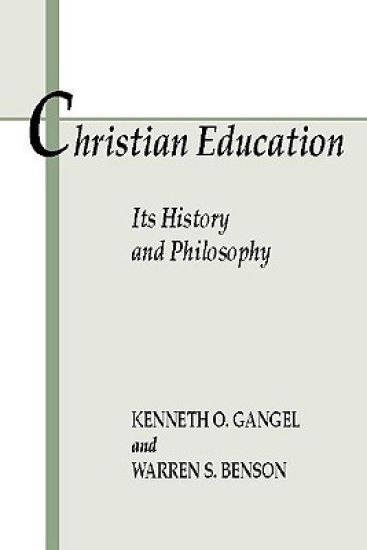
""A history of Christian education must not be confused with a record of the achievements of the Sunday School. The discipline has advanced well beyond that stage, and today's sophisticated students fully understand that no proper concept of the history and philosophy of Christian education can be gained without seeing all the ramifications, implications, and influences that have affected it from pre-Christian times to the present."" So Drs. Gangel and Benson have written this book, a historical flow of philisophical thought from a Christian point of view. Its focus is cultural-biographical, discussing each philosophy in its particular socio-historical setting, and giving special attention to significant individuals. The format is chronological, beginning with education in biblical times, working upward through history to arrive at the present - and beyond, raising questions and issues for the future.
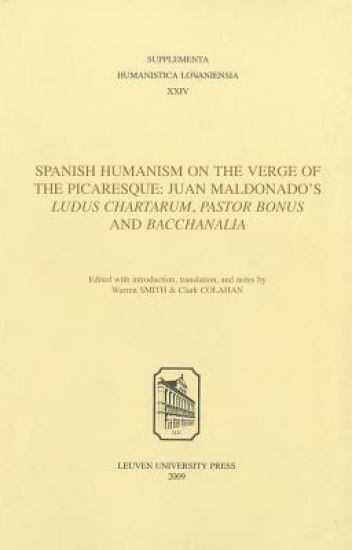
The 16th-century humanist Juan Maldonado in his Latin essays foreshadows the Spanish picaresque. Like Erasmus, with whom he corresponded,Maldonado advocated the use of Latin in a wide-range of activities. Maldonado’s Pastor Bonus, a lengthy open letter to a bishop, reviews in a vivid and satirical style the abuses of the churchmen in his diocese. His ludus chartarum is framed as a colloquium similar to Vives’ on the subject, entertaining while teaching a Latin terminology for card playing. His Bacchanalia, written for student actors, is a spirited play pitting the forces of Lent against those of Bacchus, as in the Libro de buen amor. These works have been edited and translated into English by Warren Smith and Clark Colahan for the first time, with illustrations of scenes from each work, and of 16th-century cards, by Richard Simmons and Caleb Smith.
This book has been considered by academicians and scholars of great significance and value to literature. This forms a part of the knowledge base for future generations. So that the book is never forgotten we have represented this book in a print format as the same form as it was originally first published. Hence any marks or annotations seen are left intentionally to preserve its true nature.
Dennis Zill's mathematics texts are renowned for their student-friendly presentation and robust examples and problem sets. The Fourth Edition of Single Variable Calculus: Early Transcendentals is no exception. This outstanding revision incorporates all of the exceptional learning tools that have made Zill's texts a resounding success. Appropriate for the first two terms in the college calculus sequence, students are provided with a solid foundation in important mathematical concepts and problem solving skills, while maintaining the level of rigor expected of a Calculus course.
Appropriate for the third semester in the college calculus sequence, the Fourth Edition of Multivariable Calculus maintains the student-friendly writing style and robust exercises and problem sets that Dennis Zill is famous for. Ideal as a follow-up companion to Zill's first volume, or as a stand-alone text, this exceptional revision presents the topics typically covered in the traditional third course, including Vector-valued Functions, Differential Calculus of Functions of Several Variables, Integral Calculus of Functions of Several Variables, Vector Integral Calculus, and an Introduction to Differential Equations.
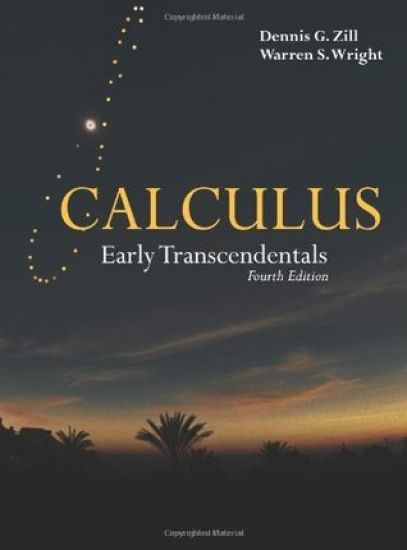
Appropriate for the traditional 3-term college calculus course, Calculus: Early Transcendentals, Fourth Edition provides the student-friendly presentation and robust examples and problem sets for which Dennis Zill is known. This outstanding revision incorporates all of the exceptional learning tools that have made Zill's texts a resounding success. He carefully blends the theory and application of important concepts while offering modern applications and problem-solving skills.
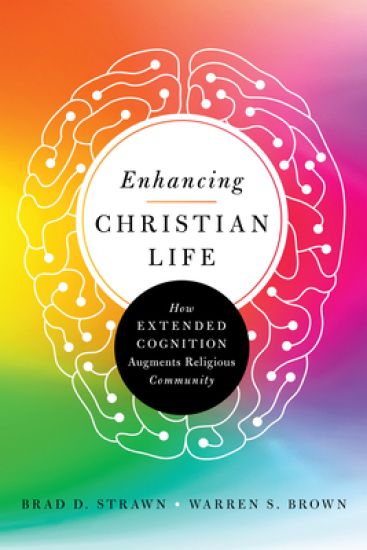
2020 Foreword INDIES Book of the Year Finalist - Science and Technology No one is really Christian on their own. But often the religious life is seen as individual, private, and internal—resulting in a truncated, consumeristic faith. And what if that kind of individualistic Christianity is built on a fundamental misunderstanding of human nature? According to psychologists Brad Strawn and Warren Brown, it's time to rethink the Christian life in light of current research on the human mind, particularly with a deeper understanding of the process called "extended cognition." Using insights from neuroscience, psychology, and philosophy, they argue in Enhancing Christian Life that persons must be understood as not only embodied and embedded within particular contexts, but also extended beyond the body to encompass aspects of the physical and social world. Embracing a vision of the Christian life as extended into interactions with a local network of believers, they help us discover a fuller, more effective way to be Christian. After exploring the psychological dynamics of extended cognition, including how the mind is "supersized" by the incorporation of physical tools and social networks, Strawn and Brown consider implications for spiritual practices, congregational life, and religious language and traditions, which they describe as mental "wikis." The formation of robust Christian life, they show, is a process that takes place within a larger mesh of embodiment and mind—broader, deeper, and richer than we could ever be on our own.
The book ""The Structure Of The Metropolitan Community: A Study Of Dominance And Subdominance"" by Donald Joseph Bogue is a comprehensive study of the hierarchical power structure within metropolitan communities. The author analyzes the dominant and subdominant groups that exist within these communities, examining their relationships and interactions with each other. The book is based on extensive research and data analysis, including interviews with community leaders and residents, and a thorough review of relevant literature. Bogue explores the factors that contribute to the formation of dominant and subdominant groups, including economic, social, and political factors. He also examines the impact of these power dynamics on community development, social justice, and equity. The book provides a nuanced and insightful understanding of the complex power dynamics that shape metropolitan communities, making it a valuable resource for scholars, policymakers, and community leaders alike.This scarce antiquarian book is a facsimile reprint of the old original and may contain some imperfections such as library marks and notations. Because we believe this work is culturally important, we have made it available as part of our commitment for protecting, preserving, and promoting the world's literature in affordable, high quality, modern editions, that are true to their original work.
Electricity has penetrated deeply into virtually every aspect of American life, be it in industry, the home, or in the rapidly growing commercial and service sectors. This book documents and analyzes the existence of a strong, and growing, synergy between technological progress and the use of electrified production techniques in the United States during the twentieth century. The authors use two types of information in their work: case studies of the ways in which technological progress in particular industries and economic sectors has depended upon the adoption of electrified methods of production and aggregative long-term national economic statistics that measure the changing relationship over time between increases in the use of electricity and other factor inputs and the growth in industrial productivity. Eleven of the book's thirteen chapters cover the case studies, while the remaining two chapters and the statistical appendix contain the broad quantitative findings and supporting data.In their analysis, the authors address three inter-related questions from a long-term evolutionary perspective: Why has electricity's share of total energy risen so sharply over the years? How has this rise been related to productivity growth? and Why has the rise in electricity led to long-term improvements in the efficiency of overall energy use despite the thermal energy losses sustained when fuels are converted into electricity? The answer to these questions, they contend, is the technological progress represented by electrified production technologies, and in the new ways of organizing production that are now possible. The different ways in which electrical energy has been put to work, and with what results, are examined in the various case studies presented, and further documented in the aggregative statistical analysis. This study reveals the important role that the electrification of production operations has played in supporting productivity growth in manufacturing and other economic sectors in the past, and the important part that it can continue to play in the future. This book will appeal to a broad spectrum of readers; those interested in productivity issues, energy policy, electricity in general, historians of technology, economic historians, and those interested in current technological issues. It will be a necessary acquisition for college and university libraries, as well as those individuals interested in energy, technology, economic growth, history, and the interfaces among them.
Using the letters Warren Buffett wrote to his partners between 1956 and 1970, a veteran financial advisor presents the renowned guru's "ground rules" for investing--guidelines that remain startlingly relevant today.In the fourteen years between his time in New York with value-investing guru Benjamin Graham and his start as chairman of Berkshire Hathaway, Warren Buffett managed Buffett Partnership Limited, his first professional investing partnership. Over the course of that time--a period in which he experienced an unprecedented record of success--Buffett wrote semiannual letters to his small but growing group of partners, sharing his thoughts, approaches, and reflections.Compiled for the first time and with Buffett's permission, the letters spotlight his contrarian diversification strategy, his almost religious celebration of compounding interest, his preference for conservative rather than conventional decision making, and his goal and tactics for bettering market results by at least 10% annually. Demonstrating Buffett's intellectual rigor, they provide a framework to the craft of investing that had not existed before: Buffett built upon the quantitative contributions made by his famous teacher, Benjamin Graham, demonstrating how they could be applied and improved.Jeremy Miller reveals how these letters offer us a rare look into Buffett's mind and offer accessible lessons in control and discipline--effective in bull and bear markets alike, and in all types of investing climates--that are the bedrock of his success. Warren Buffett's Ground Rules paints a portrait of the sage as a young investor during a time when he developed the long-term value-oriented strategy that helped him build the foundation of his wealth--rules for success every investor needs today.