Kirjojen hintavertailu. Mukana 11 342 296 kirjaa ja 12 kauppaa.

Kirjahaku

Etsi kirjoja tekijän nimen, kirjan nimen tai ISBN:n perusteella.

1000 tulosta hakusanalla Wauter Mannaert

Water and Ritual

Water and Ritual

Lisa J. Lucero

University of Texas Press
2006
pokkari
In the southern Maya lowlands, rainfall provided the primary and, in some areas, the only source of water for people and crops. Classic Maya kings sponsored elaborate public rituals that affirmed their close ties to the supernatural world and their ability to intercede with deities and ancestors to ensure an adequate amount of rain, which was then stored to provide water during the four-to-five-month dry season. As long as the rains came, Maya kings supplied their subjects with water and exacted tribute in labor and goods in return. But when the rains failed at the end of the Classic period (AD 850-950), the Maya rulers lost both their claim to supernatural power and their temporal authority. Maya commoners continued to supplicate gods and ancestors for rain in household rituals, but they stopped paying tribute to rulers whom the gods had forsaken.In this paradigm-shifting book, Lisa Lucero investigates the central role of water and ritual in the rise, dominance, and fall of Classic Maya rulers. She documents commoner, elite, and royal ritual histories in the southern Maya lowlands from the Late Preclassic through the Terminal Classic periods to show how elites and rulers gained political power through the public replication and elaboration of household-level rituals. At the same time, Lucero demonstrates that political power rested equally on material conditions that the Maya rulers could only partially control. Offering a new, more nuanced understanding of these dual bases of power, Lucero makes a compelling case for spiritual and material factors intermingling in the development and demise of Maya political complexity.
Water and Light

Water and Light

Stephen Harrigan

University of Texas Press
1999
pokkari
This evocative account of the months Stephen Harrigan spent diving on the coral reefs off Grand Turk Island in the Caribbean was originally published by Houghton Mifflin in 1992.
Water Management in the Yellow River Basin of China

Water Management in the Yellow River Basin of China

Charles Greer

University of Texas Press
1979
pokkari
Throughout history the Yellow River, or Huang Ho, has repeatedly broken through its levees to rampage over the densely populated North China Plain. In spite of its importance as the major river of China, little has been written on the Yellow River and its management. Charles Greer fills this gap with his comprehensive and thoroughly researched book. This work deals with the technological problems faced by the Chinese in taming the destructive river and also focuses on cultural attitudes that have governed the Chinese response to nature. For example, water control was not highly regarded by the Taoists, who preferred to let nature take its course; but the Buddhists sought to harness the river against devastating floods and also to benefit their crops. Greer traces water use and management in the Yellow River Basin through Chinese history and discusses early Western interest in the flood problem and Soviet assistance in Yellow River development. He analyzes traditional methods of control as well as newer strategies and their implications. The author of this book is one of a small number of social scientists able to master the original Chinese-language historical materials necessary to this undertaking. He has also examined Chinese water management methods first-hand as part of a delegation of water management specialists in 1976. In addition to geographers and conservationists, China scholars will find this book valuable because of the axial role the control of the Yellow River plays in the fundamental economic health of the People’s Republic of China. Water management engineers will find much useful comparative material.
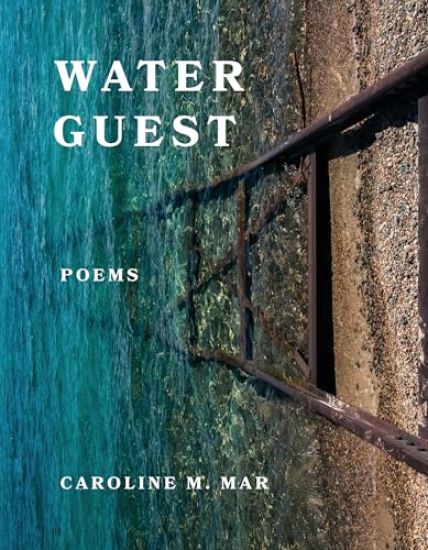
Water Guest

Water Guest

Caroline M. Mar

UNIVERSITY OF WISCONSIN PRESS
2025
nidottu
Lake Tahoe: home of the Washoe Tribe, a shining blue jewel that crowns the Sierra Nevada, and a beloved American vacation destination made accessible by the transcontinental railroad built largely by Chinese laborers. This gorgeous location forms the site from which Caroline M. Mar’s stunning collection, Water Guest, attempts to reconcile issues of identity, ownership, and place. The poems wander through Mar’s attempts to locate herself geographically, genealogically, and etymologically. A direct ancestor was a railroad laborer; is that why her love for the land feels older than herself? Or is it the siren call of the deep, clear water? Raising questions of inheritance, the conundrum of land ownership, and the violence of history, Mar gives voice to the lost writing of Chinese laborers and silent communion to those of us still here—immigrant and Indigenous, settler and resister. This beautiful collection finds acceptance, if not resolution, through the questions themselves.
Walter De Maria

Walter De Maria

Yale University Press
2012
sidottu
American artist Walter De Maria is associated with Minimal, conceptual, installation, and land art. He is best known for The Lightning Field, 1977, a long-term installation in western New Mexico made up of four hundred pointed stainless steel poles arranged in a grid over an area measuring one mile by one kilometer. Despite the role he has played in contemporary art over the past fifty years, few books have been dedicated to the artist. Featuring new paintings and sculptures and never before published texts, this volume explores in detail the works in the artist's first major museum exhibition in the United States: "Walter De Maria: Trilogies" at the Menil Collection.In the expansive new work the Bel Air Trilogy, 2000–11, De Maria has combined exacting geometry with the entirely unexpected element of three impeccably restored 1955 Chevrolet Bel Air two-tone hardtops. Each car is pierced by a twelve-foot-long stainless steel rod in the shape of a circle, square, or triangle that runs through the front and rear windshields. The Bel Air Trilogy is joined by De Maria's austere tripartite sculpture with moveable spheres, the Channel Series, 1972, and The Statement Series, 1968/2011. Building upon his large-scale 1968 canvas The Color Men Choose When They Attack The Earth, for The Statement Series, the artist created two additional monochrome paintings with engraved stainless steel plates that complement the original piece. The works in this volume are a testament to De Maria's ongoing investigation of the conceptual, the dramatic, the monumental, the minimal, and the real. Together these three trilogies challenge and broaden our understanding of the artist's work.Distributed for The Menil CollectionExhibition Schedule:The Menil Collection(09/16/11-01/08/12)
Water 4.0

Water 4.0

David Sedlak

Yale University Press
2015
pokkari
The little-known story of the systems that bring us our drinking water, how they were developed, the problems they are facing, and how they will be reinvented Turn on the faucet, and water pours out. Pull out the drain plug, and the dirty water disappears. Most of us give little thought to the hidden systems that bring us water and take it away when we’re done with it. But these underappreciated marvels of engineering face an array of challenges that cannot be solved without a fundamental change to our relationship with water, David Sedlak explains in this enlightening book. To make informed decisions about the future, we need to understand the three revolutions in urban water systems that have occurred over the past 2,500 years and the technologies that will remake the system. The author starts by describing Water 1.0, the early Roman aqueducts, fountains, and sewers that made dense urban living feasible. He then details the development of drinking water and sewage treatment systems—the second and third revolutions in urban water. He offers an insider’s look at current systems that rely on reservoirs, underground pipe networks, treatment plants, and storm sewers to provide water that is safe to drink, before addressing how these water systems will have to be reinvented. For everyone who cares about reliable, clean, abundant water, this book is essential reading.
Walter Benjamin

Walter Benjamin

Peter E. Gordon

YALE UNIVERSITY PRESS
2026
sidottu
An accessible and authoritative biography of Walter Benjamin that guides the reader through the complexity of his intellectual legacy and the turbulence of his time Walter Benjamin (1892–1940) is widely considered one of the most creative cultural critics of the twentieth century. Esteemed for his literary acumen and capacious imagination, he developed a unique style of criticism—his friend Hannah Arendt called it pearl-diving—that sought out fragments of redemption in the ruins of bourgeois civilization. Award-winning author Peter E. Gordon tells Benjamin’s story in a vivid and poetic style, inviting the reader to look beyond the image of Benjamin as a tragic figure of German-Jewish history and portraying him as a complex personality of unique and multifaceted gifts. Tracing Benjamin’s life from his Berlin childhood to his Parisian exile, through the romanticism of the youth movements and the conflicts over modernism and Marxism, Gordon brings Benjamin to life.
Walter Leblanc

Walter Leblanc

Yale University Press
2017
sidottu
Little is known about Walter Leblanc (1932–1986), one of the key representatives of kinetic and optical art in the mid-20th century. This comprehensive monograph, the first on this artist for an international audience, includes unpublished materials, which provide insight not only into the art of LeBlanc, but also into the ZERO artist movement to which he was connected and with which he was in close dialogue beginning in the 1950s. Walter Leblanc is based on extensive studies of the artist’s work: with about 150 images of his paintings and sculptures, comparative works, historical photos and documents, it includes a selection of Leblanc’s writings, an iconographic mapping of selected works in museums around the world, and a bio-bibliographical appendix. Demonstrating the wealth of his creative output, the book reaffirms the enduring role Leblanc played in the development of modern and contemporary art on a global scale.Distributed for Mercatorfonds
Water for All

Water for All

David Sedlak

YALE UNIVERSITY PRESS
2024
sidottu
A fresh look at the world’s water crises, and the existing and emerging solutions that can be used to solve them It is not your imagination: water crises are more frequent. Our twentieth-century systems for providing the water that grows food, sustains cities, and supports healthy ecosystems are failing to meet the demands of growing population and the challenges brought on by climate change. But the grim news reports—of empty reservoirs, withering crops, failing ecosystems—need not be cause for despair, argues award-winning author David Sedlak. Communities on the front lines of previous water crises have pioneered approaches that are ready to be applied elsewhere. Some have resolved shortages by enhancing water-use efficiency, and others have used moments of crisis to resolve historic disagreements over water rights. Still others have employed treatment technologies that unlock vast quantities of untapped water resources. Sedlak identifies the challenges that society faces, including ineffective policies and outdated infrastructure, and the myriad of tools at our disposal—from emerging technologies in desalination to innovations for recycling wastewater and capturing more of the water that falls on fields and cities. He offers an informed and hopeful approach for rethinking our assumptions about the way that water is managed. With this knowledge we can create a future with clean, abundant, and affordable water for all.
Walter Crane

Walter Crane

Francesca Tancini

YALE UNIVERSITY PRESS
2025
sidottu
Born in 1845, Walter Crane was the first professional illustrator to proudly apply himself to commercial arts in the rising age of mechanical reproduction, he reformed the way his contemporaries perceived books, transforming them into influential, political, powerful objects to be pondered with intent and produced with art. Cheap as they were, they could still shape society, instil ideas and conjure worlds of possibility. His picture books served as a tool of popular education, helping to emancipate less well-to-do children and form their taste and personalities. They were of such artistic quality that they entered the homes of intellectuals such as Oscar Wilde and Dame Ellen Terry. This publication catalogues almost 450 titles illustrated by the artist, 274 of which have been newly discovered by Francesca Tancini, including unpublished illustrator’s diaries and account books and printer’s and publisher’s ledgers and archives. This catalogue offers a completely new picture of Crane and the publishing and artistic world in which he operated and excelled.
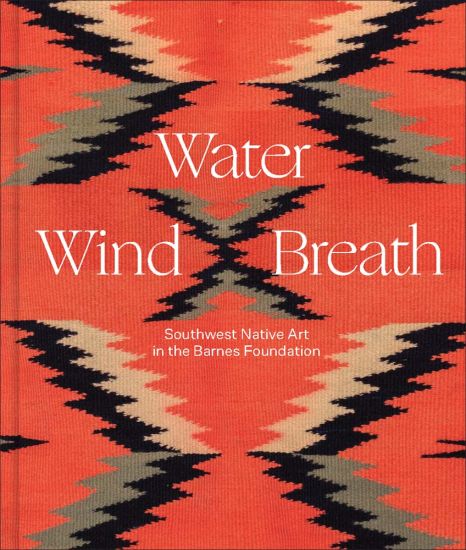
Water, Wind, Breath

Water, Wind, Breath

YALE UNIVERSITY PRESS
2022
sidottu
The Barnes Foundation’s historic Pueblo and Navajo collections are explored alongside works by contemporary Native American artists This richly illustrated book makes the Barnes Foundation’s exceptional collection of Native American art from the Southwest available to the public for the first time. Collector and educator Albert C. Barnes traveled to the U.S. Southwest in 1930 and 1931 and, deeply impressed by the generative art practices he saw there, formed a collection of Pueblo and Navajo pottery, textiles, and jewelry. Water, Wind, Breath illuminates the materials, forms, and designs of the objects as they relate to Pueblo and Navajo histories and ideas. The book blends postcolonial and Indigenous perspectives, introducing readers to living artistic traditions filled with purpose, intention, and a deeply embedded spirituality that connects places, practices, and Native identities. Works by contemporary Native American artists are juxtaposed with historic pieces, illuminating the connections between heritage traditions and modern practices.Distributed for the Barnes FoundationExhibition Schedule:The Barnes Foundation, Philadelphia (February 20–May 15, 2022)
Water and Ions in Biological Systems

Water and Ions in Biological Systems

Alberte Pullman; V. Vasilescu; L. Packer

Kluwer Academic/Plenum Publishers
1985
sidottu
As the First International Conference on Water and Ions in Biological Systems (Bucharest, June 25-27, 1980) was appreciated as a success, a second one was organized in the fall of the year 1982 under the sponsorship of the United Nations Educational, Scientific and Cultural Organization (UNESCO), the Romanian Academy of Medical Sciences, the Romanian Biophysical Society (Union of Societies for Medical Sciences in the Socialist Republic of Romania) and in co­ operation with the International Union for Pure and Applied Bio­ physics (IUPAB). The responsibility for the scientific program and organization of the Second Conference on Water fell on an International Scientific Committee which included Prof. J. Tigyi (Pees), President of the UNESCO Expert Committee on Biophysics, Prof. K. Wuthrich, Secretary General of IUPAB and Prof. H. Eisenberg, (member of the IUPAB Council) under the guidance of an Executive Board whose members were Prof. J. Jaz (representative of UNESCO), Prof. B. Pullman (Vice­ President of IUPAB) and Prof. V. Vasilescu (President of the Romanian Biophysical Society). The Meeting was attended by more than 250 specialists including 150 Romanian participants and others from Bulgaria, Czechoslovakia, England, the Federal Republic of Germany, the German Democratic Republic, Greece, Hungary, India, Israel, Italy, Japan, the Netherlands, Nigeria, Poland, Sweden, Switzerland, USSR, USA, Venezuela, Yugoslavia. The proceedings of the Conference took place in the Medical Faculty of Bucharest. The theoretical and practical importance of the Meeting was pointed out by the speakers, among whom were Prof.
Water-Soluble Polymers for Petroleum Recovery

Water-Soluble Polymers for Petroleum Recovery

G.A. Stahl; D.N. Schulz

Kluwer Academic/Plenum Publishers
1988
sidottu
We both found ourselves working on water-soluble polymers for oil recovery in the early 1980' s. Our previ ous backgrounds i nvo 1 ved the synthesi sand characteri zati on of hydrocarbon polymers for everythi ng from elastomers to plastics. As such, we were largely unprepared for the special difficulties associated with water soluble polymers in genera 1, and thei ruse in enhanced oi 1 recovery (EOR) , in parti cul ar. Oil patch applications have a jargon and technical heritage quite apart from that usually experienced by traditional polymer scientists. At that time, no books were available to help us "get up to speed" in the polymers for oil recovery field. Since then, there have been a number of symposia on this topic, but still few books, especially from the polymer (rather than the field-applications) perspective. Synthetic water soluble/swellable polymers have commercial importance in such application as water treatment, cosmetics, and foods. Yet, these polymers have not received the scientific/technological attention they deserve. The application of water soluble polymers to oil recovery has, in fact, highlighted the need for new water based materials, and a fundamental understanding of their structure and use. Interest has been spurred not only for the potenti a 1 economi c credi ts from enhanced oi 1 recovery and an augmented polymers business, but also by the challenge of designing water soluble polymers for harsh environments.
Water Relationships in Foods

Water Relationships in Foods

Kluwer Academic/Plenum Publishers
1991
sidottu
This book was developed from the papers presented at a symposium on "Water Relationships in Foods," which was held from April 10-14, 1989 at the 197th National Meeting of the American Chemical Society in Dallas, Texas, under the auspices of the Agricultural and Food Chemistry Division of ACS. The editors of this book organized the symposium to bring tagether an es­ teemed group of internationally respected experts, currently active in the field of water relationships in foods, to discuss recent advances in the 1980's and future trends for the 1990's. It was the hope of all these con­ tributors that this ACS symposium would become a memorable keystone above the foundation underlying the field of "water in foods. " This strong foundation has been constructed in large part from earlier technical conferences and books such as the four milestone International Symposia on the Properties of Water (ISOPOW I-IV), the recent IFT BasicSymposium on "Water Activity" and Penang meeting on Food Preservation by Maisture Control, as well as the key fundamental contributions from the classic 1980 ACS Symposium Series #127 on Water in Polymers, and from Felix Franks' famous seven-volume Comprehensive Treatise on Water plus five subsequent volumes of the ongoing Water Science Reviews. The objective of the 1989 ACS symposiumwas to build on this foun­ dation by emphasizing the most recent and maj or advanc.
Water Soluble Polymers

Water Soluble Polymers

Kluwer Academic/Plenum Publishers
1998
sidottu
This volume contains a series of papers originally presented at the symposium on Water Soluble Polymers: Solution Properties and Applications, sponsored by the Division of Colloids and Surface Chemistry of the American Chemical Society. The symposium took place in Las Vegas City, Nevada on 9 to 11th September, 1997 at the 214th American Chemical Society National Meeting. Recognized experts in their - spective fields were invited to speak. There was a strong attendance from academia, g- ernment, and industrial research centers. The purpose of the symposium was to present and discuss recent developments in the solution properties of water soluble polymers and their applications in aqueous systems. Water soluble polymers find applications in a number of fields of which the following may be worth mentioning: cosmetics, detergent, oral care, industrial water treatment, g- thermal, wastewater treatment, water purification and reuse, pulp and paper production, sugar refining, and many more. Moreover, water soluble polymers play vital role in the oil industry, especially in enhanced oil recovery. Water soluble polymers are also used in ag- culture and controlled release pharmaceutical applications. Therefore, a fundamental kno- edge of solution properties of these polymers is essential for most industrial scientists. An understanding of the basic phenomena involved in the application of these polymers, such as adsorption and interaction with different substrates (i. e. , tooth enamel, hair, reverse - mosis membrane, heat exchanger surfaces, etc. ) is of vital importance in developing high performance formulations for achieving optimum efficiency of the system.
Water and Sustainable Development

Water and Sustainable Development

National Academies Press
2004
nidottu
Experts in the areas of water science and chemistry from the government, industry, and academic arenas discussed ways to maximize opportunities for these disciplines to work together to develop and apply simple technologies while addressing some of the world's key water and health problems. Since global water challenges cross both scientific disciplines, the chemical sciences have the ability to be a key player in improving the lives of billions of people around the world. Table of Contents Front Matter Executive Summary Context and Overview 1 Meeting the Global Water Challenge 2 Green Chemistry: The Impact on Water Quality and Supplies 3 Methylmercury Contamination of Aquatic Ecosystems: A Widespread Problem with Many Challenges for the Chemical Sciences Water Quality and Supply: Analysis and Treatment 4 Desalination: Limitations and Challenges 5 Organic Contaminants in the Environment: Challenges for the Water/Environmental Engineering Commmunity 6 AquasentinelSM: Biosensors for Rapid Monitoring of Primary-Source Drinking Water Business Opportunities and Responsibilities 7 Some New Approaches at the Orange County Water District 8 A Perspective from a Water Company 9 Sustainable Development: Role of Industrial Water Management 10 Water Solutions and Strategies in the Chemical Industry 11 Classifying Drinking Water Contamination for Regulatory Consideration Appendix A: Workshop Participants Appendix B: Biographical Sketches of Workshop Speakers Appendix C: Origin of and Information on the Chemical Sciences Roundtable Appendix D: For Further Reading
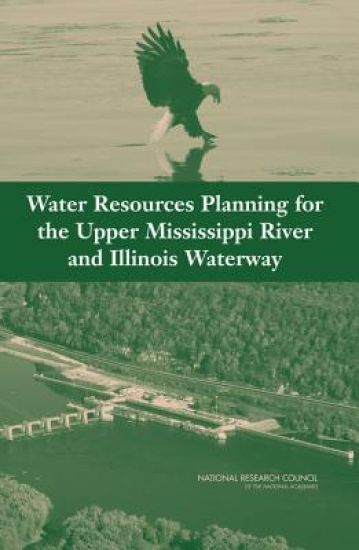
Water Resources Planning for the Upper Mississippi River and Illinois Waterway
The U.S. Army Corps of Engineers recently completed its feasibility study for the Upper Mississippi River-Ilinois Waterway, which was one of the agency's longest and most complicated studies in its history. The first two reports from this WSTB committee reviewed analytical aspects of the Corps feasibility study. Water Resources Planning for the Upper Mississippi River and Illinois Waterway considers the broader issue of managing the multiple resources of the Upper Mississippi River and Illinois Waterway, especially with regard to several, recently-issued NRC reports on Corps of Engineers planning procedures. The report finds that a key issue regarding planning decisions on these river systems is the ambiguity related to several different pieces of legislation and acts that govern river management, and thus recommends that the administration and Congress clarify the federal intent for managing this river and waterway system. The report recommends an independent, retrospective reivew of the experience with a federal inter-agency Principals Group, which was convened to provide guidance to the Corps study. It is also recommended that the Corps strive to incorporate flexible, adaptive management principles through its entire water planning program, including operations of the lock and dam system.Table of ContentsFront Matter Summary1 Introduction2 The National Research Council "216" Studies: Corps of Engineers Water Resources Project Planning3 Improving UMR-IWW Resources Planning and Management4 EpilogueReferencesAppendix A: Water Resources Development Act of 2000Appendix B: National Research Council Board Membership and StaffAppendix C: Committee Members and Staff Biographies
Water-Walking

Water-Walking

John Ortberg

Zondervan
2019
sidottu
You’re only one step away from the adventure of your life.In this abridgement of his bestselling book, If You Want to Walk on Water You Have to Get Out of the Boat, now distilled down for busy readers, John Ortberg invites you to do with God’s help what you could never do on your own—step out of your comfort zone and step out on the risky waters of faith. If you do, you’ll find that Jesus is waiting to meet you in ways that will change you forever, deepening your character and your trust in God. The experience is terrifying. It’s thrilling beyond belief. It’s everything you’d expect of someone worthy to be called Lord. The choice is yours to know him as only a water-walker can, aligning yourself with God’s purpose for your life in the process.
Water Politics in the Middle East

Water Politics in the Middle East

Mostafa Dolatyar; T. Gray

Palgrave Macmillan
1999
sidottu
Most studies of water scarcity in the Middle East conclude that there is a significant risk of imminent conflict, even warfare, between states in the region. This book demonstrates that the evidence does not support this doom-laden prediction. Indeed, the authors show that although water scarcity has occasionally played a role in disputes in the Middle East, it has much more often promoted co-existence between adversaries. The reasoning behind this hypothesis is that water is too critical to be put at risk by warfare.
Water Touching Stone

Water Touching Stone

Eliot Pattison

St. Martin's Griffin
2009
nidottu
In Water Touching Stone, the sequel to the internationally acclaimed The Skull Mantra, Shan Tao Yun is cloistered in a remote Tibetan sanctuary when he receives shattering news. A teacher revered by the oppressed has been found slain and, one by one, her orphaned students have followed her to her grave, victims of a killer harboring unfathomable motives. Abandoning his mountain hermitage, Shan Tao Yun, a former Beijing police inspector who has been exiled to Tibet, embarks on a search for justice. Shadowed by bizarre tales of an unleashed 'demon, ' Shan braces himself for even darker imaginings as he stalks a killer and fights to restore spiritual balance to the ancient and tenuous splendor of Tibet.