Kirjojen hintavertailu. Mukana 11 627 630 kirjaa ja 12 kauppaa.

Kirjahaku

Etsi kirjoja tekijän nimen, kirjan nimen tai ISBN:n perusteella.

21 tulosta hakusanalla "Aaron Copland"

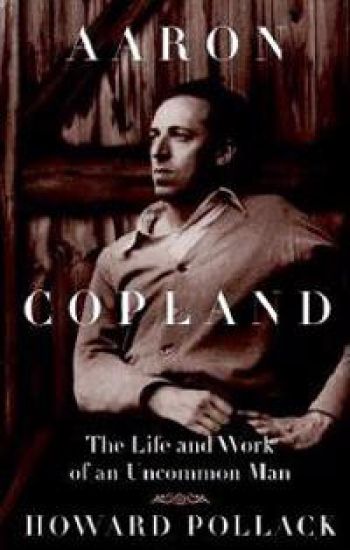
Aaron Copland

Aaron Copland

Howard Pollack

University of Illinois Press
2000
nidottu
One of America's most beloved and accomplished composers, Aaron Copland played a crucial role in American music's coming of age. Indeed, Copland masterworks like Appalachian Spring and A Lincoln Portrait only begin to tell the epic story of a career spent composing a wealth of music for opera, ballet, chorus, orchestra, chamber ensemble, band, radio, and film. Howard Pollack's expansive biography examines Copland's long list of accomplishments while also telling the story of the composer's musical development, political sympathies, personal life, relationships as an openly gay man, and tireless encouragement of younger composers. A winner of the Pulitzer Prize and an Academy Award, Copland played a vital role in the Yaddo Festival and as a beloved teacher at Tanglewood, Harvard, and the New School for Social Research. He turned to conducting later in life and via tours promoted American classical music overseas while taking it to appreciative audiences across the United States.
Aaron Copland

Aaron Copland

Routledge
2003
sidottu
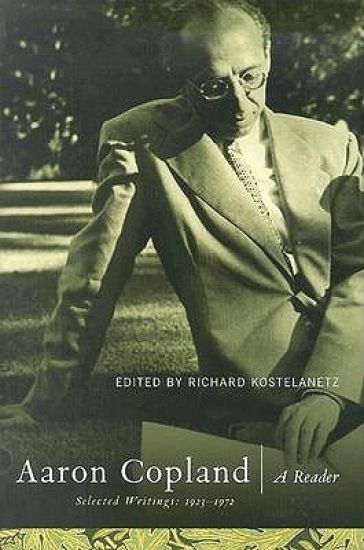
The American composer and music legend comes to life in this selection of his best writings on a wide variety of topics, featuring excerpts from his correspondance and recommendations he wrote for other composers.
Aaron Copland

Aaron Copland

Marta Robertson; Robin Armstrong

CRC Press Inc
2001
sidottu
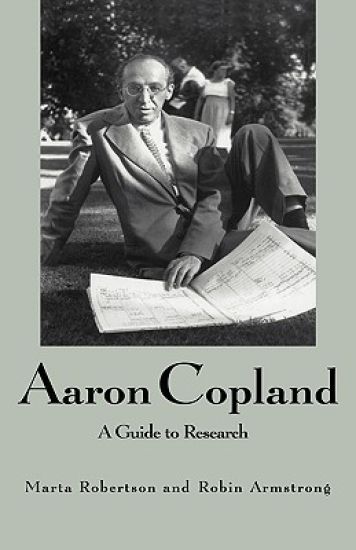
Aaron Copland (1900-1990) is generally considered the most popular and well-known composer of American art music, and yet little scholarly attention has been paid to Copland since the 1950s. This volume begins with a portrait of the composer and an evaluation of significant research trends which is intended to fill a void and to suggest directions for further research. The guide also provides a section discussing Copland's interdisciplinary interests, such as ballet and film work, as well as a comprehensive bibliography of writings about Copland and his music.
Aaron Copland

Aaron Copland

Marta Robertson; Robin Armstrong

Routledge
2016
nidottu
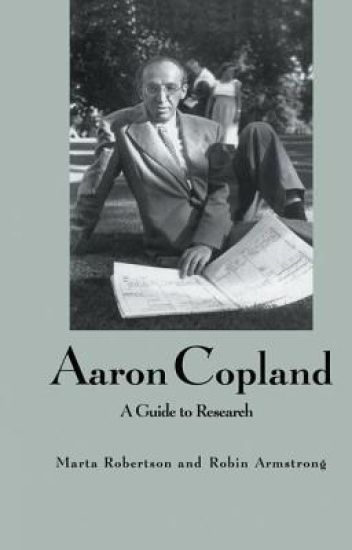
Aaron Copland (1900-1990) is generally considered the most popular and well-known composer of American art music, and yet little scholarly attention has been paid to Copland since the 1950s. This volume begins with a portrait of the composer and an evaluation of significant research trends which is intended to fill a void and to suggest directions for further research. The guide also provides a section discussing Copland's interdisciplinary interests, such as ballet and film work, as well as a comprehensive bibliography of writings about Copland and his music.
Aaron Copland's Appalachian Spring

Aaron Copland's Appalachian Spring

Fauser Annegret

Oxford University Press Inc
2017
sidottu
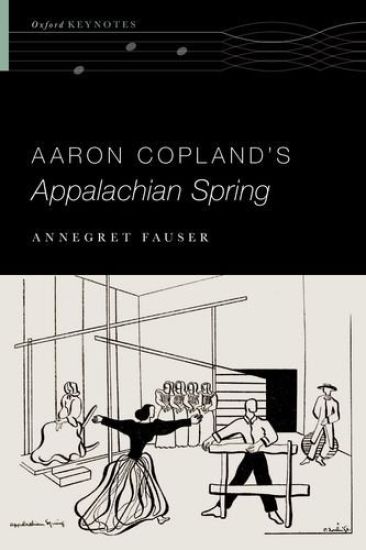
Appalachian Spring, with music by Aaron Copland and choreography by Martha Graham, counts among the best known American contributions to the global concert hall and stage. In the years since its premiere-as a dance work at the Library of Congress in 1944-it has become one of Copland's most widely performed scores, and the Martha Graham Dance Company still treats it as a signature work. Over the decades, the dance and the music have taken on a range of meanings that have transformed a wartime production into a seemingly timeless expression of American identity, both musically and visually. In this Oxford Keynotes volume, distinguished musicologist Annegret Fauser follows the work from its inception in the midst of World War II to its intersections with contemporary American culture, whether in the form of choreographic reinterpretations or musical ones, as by John Williams, in 2009, for the inauguration of President Barack Obama. A concise and lively introduction to the history of the work, its realization on stage, and its transformations over time, this volume combines deep archival research and cultural interpretations to recount the creation of Appalachian Spring as a collaboration between three creative giants of twentieth-century American art: Graham, Copland, and Isamu Noguchi. Building on past and current scholarship, Fauser critiques the myths that remain associated with the work and its history, including Copland's famous disclaimer that Appalachian Spring had nothing to do with the eponymous Southern mountain region. This simultaneous endeavor in both dance and music studies presents an incisive exploration this work, situating it in various contexts of collaborative and individual creation.
Aaron Copland's Appalachian Spring

Aaron Copland's Appalachian Spring

Annegret Fauser

Oxford University Press Inc
2017
nidottu
Appalachian Spring, with music by Aaron Copland and choreography by Martha Graham, counts among the best known American contributions to the global concert hall and stage. In the years since its premiere-as a dance work at the Library of Congress in 1944-it has become one of Copland's most widely performed scores, and the Martha Graham Dance Company still treats it as a signature work. Over the decades, the dance and the music have taken on a range of meanings that have transformed a wartime production into a seemingly timeless expression of American identity, both musically and visually. In this Oxford Keynotes volume, distinguished musicologist Annegret Fauser follows the work from its inception in the midst of World War II to its intersections with contemporary American culture, whether in the form of choreographic reinterpretations or musical ones, as by John Williams, in 2009, for the inauguration of President Barack Obama. A concise and lively introduction to the history of the work, its realization on stage, and its transformations over time, this volume combines deep archival research and cultural interpretations to recount the creation of Appalachian Spring as a collaboration between three creative giants of twentieth-century American art: Graham, Copland, and Isamu Noguchi. Building on past and current scholarship, Fauser critiques the myths that remain associated with the work and its history, including Copland's famous disclaimer that Appalachian Spring had nothing to do with the eponymous Southern mountain region. This simultaneous endeavor in both dance and music studies presents an incisive exploration this work, situating it in various contexts of collaborative and individual creation.
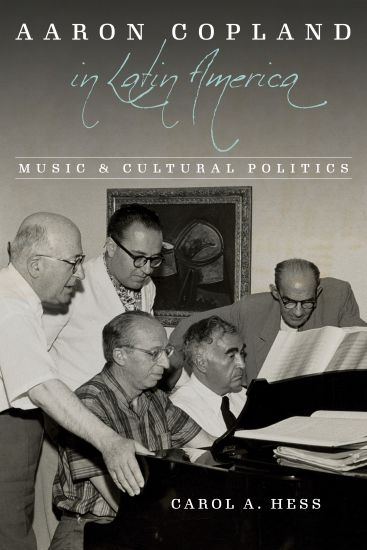
Aaron Copland in Latin America

Aaron Copland in Latin America

Carol A. Hess

UNIVERSITY OF ILLINOIS PRESS
2023
sidottu
Between 1941 and 1963, Aaron Copland made four government-sponsored tours of Latin America that drew extensive attention at home and abroad. Interviews with eyewitnesses, previously untapped Latin American press accounts, and Copland’s diaries inform Carol A. Hess’s in-depth examination of the composer’s approach to cultural diplomacy. As Hess shows, Copland’s tours facilitated an exchange of music and ideas with Latin American composers while capturing the tenor of United States diplomatic efforts at various points in history. In Latin America, Copland’s introduced works by U.S. composers (including himself) through lectures, radio broadcasts, live performance, and conversations. Back at home, he used his celebrity to draw attention to regional composers he admired. Hess’s focus on Latin America’s reception of Copland provides a variety of outside perspectives on the composer and his mission. She also teases out the broader meanings behind reviews of Copland and examines his critics in the context of their backgrounds, training, aesthetics, and politics.
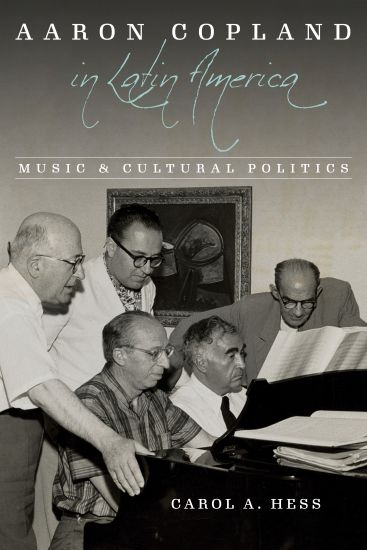
Aaron Copland in Latin America

Aaron Copland in Latin America

Carol A. Hess

UNIVERSITY OF ILLINOIS PRESS
2023
nidottu
Between 1941 and 1963, Aaron Copland made four government-sponsored tours of Latin America that drew extensive attention at home and abroad. Interviews with eyewitnesses, previously untapped Latin American press accounts, and Copland’s diaries inform Carol A. Hess’s in-depth examination of the composer’s approach to cultural diplomacy. As Hess shows, Copland’s tours facilitated an exchange of music and ideas with Latin American composers while capturing the tenor of United States diplomatic efforts at various points in history. In Latin America, Copland’s introduced works by U.S. composers (including himself) through lectures, radio broadcasts, live performance, and conversations. Back at home, he used his celebrity to draw attention to regional composers he admired. Hess’s focus on Latin America’s reception of Copland provides a variety of outside perspectives on the composer and his mission. She also teases out the broader meanings behind reviews of Copland and examines his critics in the context of their backgrounds, training, aesthetics, and politics.
Aaron Copland (Revised Edition) (Getting to Know the World's Greatest Composers)
Meet composer Aaron Copland Getting to Know the World's Greatest Composers series combines a delightful mix of full-color historical reproductions, photos, and hilarious cartoon-style illustrations that bring to life the works of renowned composers, combining poignant anecdotes with important factual information for readers (Ages 8-9).
Aaron Copland and His World

Aaron Copland and His World

Princeton University Press
2005
pokkari
Aaron Copland and His World reassesses the legacy of one of America's best-loved composers at a pivotal moment--as his life and work shift from the realm of personal memory to that of history. This collection of seventeen essays by distinguished scholars of American music explores the stages of cultural change on which Copland's long life (1900 to 1990) unfolded: from the modernist experiments of the 1920s, through the progressive populism of the Great Depression and the urgencies of World War II, to postwar political backlash and the rise of serialism in the 1950s and the cultural turbulence of the 1960s. Continually responding to an ever-changing political and cultural panorama, Copland kept a firm focus on both his private muse and the public he served. No self-absorbed recluse, he was very much a public figure who devoted his career to building support systems to help composers function productively in America. This book critiques Copland's work in these shifting contexts. The topics include Copland's role in shaping an American school of modern dance; his relationship with Leonard Bernstein; his homosexuality, especially as influenced by the writings of Andre Gide; and explorations of cultural nationalism. Copland's rich correspondence with the composer and critic Arthur Berger, who helped set the parameters of Copland's reception, is published here in its entirety, edited by Wayne Shirley. The contributors include Emily Abrams, Paul Anderson, Elliott Antokoletz, Leon Botstein, Martin Brody, Elizabeth Crist, Morris Dickstein, Lynn Garafola, Melissa de Graaf, Neil Lerner, Gail Levin, Beth Levy, Vivian Perlis, Howard Pollack, and Larry Starr.
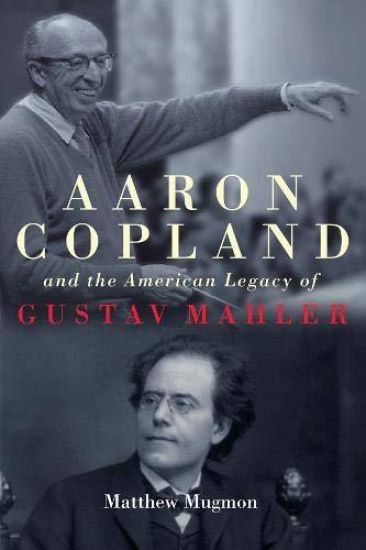
Aaron Copland and the American Legacy of Gustav Mahler

Aaron Copland and the American Legacy of Gustav Mahler

Matthew Mugmon

University of Rochester Press
2019
sidottu
Reveals how Aaron Copland's complex relationship with the music of Gustav Mahler shaped his vision for American music in the twentieth century. The iconic American composer Aaron Copland (1900-1990) is often credited with creating an unmistakably American musical style, a style free from the powerful sway of the European classics that long dominated the art-music scene inthe United States. Yet Copland was strongly attracted to the music of the late-romantic Austrian composer Gustav Mahler (1860-1911), whose monumental symphonies and powerful songs have captivated and challenged American audiencesfor more than a century. Drawing extensively on archival and musical materials, Aaron Copland and the American Legacy of Gustav Mahler offers the first detailed exploration of Copland's multifaceted relationshipwith Mahler's music and its lasting consequences for music in America. Matthew Mugmon demonstrates that Copland, inspired by Mahler's example, blended modernism and romanticism in shaping a vision for American music in the twentieth century, and that he did so through his multiple roles as composer, teacher, critic, and orchestral tastemaker. Copland's career-long engagement with Mahler's music, as Mugmon compellingly illustrates, intersected with Copland's own Jewish identity and with his links to such towering figures in American music as Nadia Boulanger, Serge Koussevitzky, and Leonard Bernstein. MATTHEW MUGMON is Associate Professor of Music at the University of Arizona.
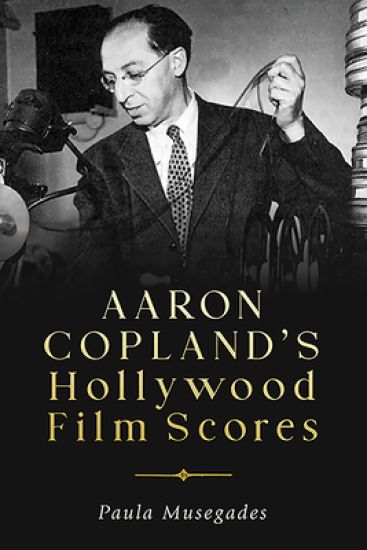
Aaron Copland's Hollywood Film Scores

Aaron Copland's Hollywood Film Scores

Paula Musegades

University of Rochester Press
2020
sidottu
A pioneering study of how American composer Aaron Copland helped shape the sound of the Hollywood film industry and introduced the moviegoing public to modern musical styles. One of the most influential and beloved American composers, Aaron Copland played a critical role in shaping what is often recognized as the "American sound." He is best known for achieving this through his works for the concert hall and ballet. Yet his film scores, though less familiar nowadays, were equally influential. Between 1939 and 1949, Copland composed the music for five major Hollywood films: Lewis Milestone's Of Mice and Men (1939), Sam Wood's Our Town (1940), Lewis Milestone's The North Star (1943) and The Red Pony (1949), and William Wyler's The Heiress (1949). These were high-prestige projects, based on literary works by such respected figures as Henry James, Lillian Hellman, and John Steinbeck. Using the film medium to introduce the moviegoing public to modern musical styles, Copland challenged Hollywood's traditional uses of music in film. His innovative approaches enhanced important national themes running through these films while also contributing to Hollywood's transformation as the Great Depression gave way to wartime tribulation and, eventually, postwar prosperity and Red Scare paranoia. Aaron Copland's Hollywood Film Scores explores Copland's scores, interviews, and lectures, tracing his legacy and lasting influence on Hollywood's sound.
Aaron Copland: Old American Songs Complete: Low Voice
(Boosey & Hawkes Voice). The two sets of Old American Songs are beloved, standard vocal literature. This edition combines them in one publication, and also transposes them from the original Medium Voice keys both up for High Voice, and down for Low Voice. The original Medium Voice publications remain available. Contents: FIRST SET: The Boatmen's Dance * The Dodger * Long Time Ago * Simple Gifts * I Bought Me a Cat * SECOND SET: the Little Horse * Zion's Walls * The Golden Willow Tree * At the River * Ching-a-ring Chaw
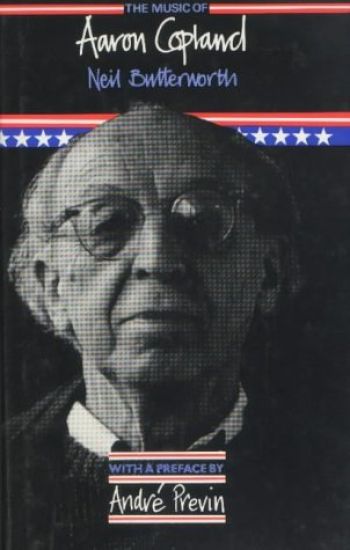
The Music of Aaron Copland

The Music of Aaron Copland

Neil Butterworth

Toccata Press
1985
sidottu
First survey of Copland's entire output for some 30 years - a period seeing some of his most important works. Aaron Copland was one of the twentieth century's most popular and distinguished composers. Copland was born in 1900 in Brooklyn, where he began his musical career, before moving to the Paris in the 1920s, where Stravinsky, Prokofiev and Les Six were the centre of attention. On his return to the United States at the end of the decade he began to produce a series of works which could leave no one in any doubt that American composers were capable of writing music equal to the best of their European contemporaries. This chronological survey of Copland's work discusses ever one of his compositions and examines his influential writings on music. Profusely illustrated with musicexamples and photographs, it includes a conversation on the piano music with Aaron Copland and Leo Smit and also features sketches of Copland in rehearsal by Milein Cosman. NEIL BUTTERWORTH was formerly Head of Music atNapier College, Edinburgh.
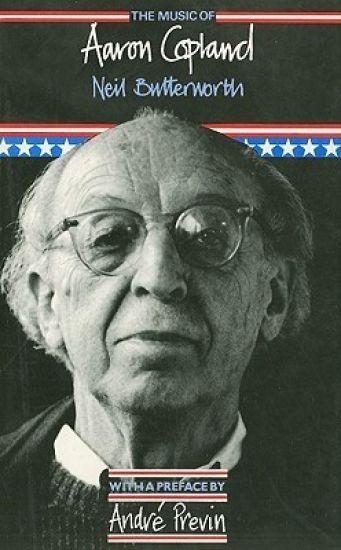
The Music of Aaron Copland

The Music of Aaron Copland

Neil Butterworth

Toccata Press
1985
pokkari
First survey of Copland's entire output for some 30 years - a period seeing some of his most important works. Aaron Copland was one of the twentieth century's most popular and distinguished composers. Copland was born in 1900 in Brooklyn, where he began his musical career, before moving to the Paris in the 1920s, where Stravinsky, Prokofiev and Les Six were the centre of attention. On his return to the United States at the end of the decade he began to produce a series of works which could leave no one in any doubt that American composers were capable of writing music equal to the best of their European contemporaries. This chronological survey of Copland's work discusses ever one of his compositions and examines his influential writings on music. Profusely illustrated with musicexamples and photographs, it includes a conversation on the piano music with Aaron Copland and Leo Smit and also features sketches of Copland in rehearsal by Milein Cosman. NEIL BUTTERWORTH was formerly Head of Music atNapier College, Edinburgh.
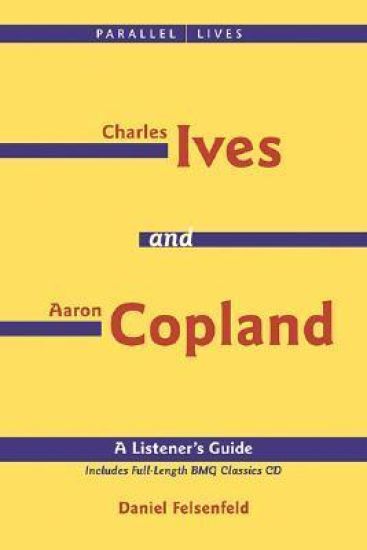
Charles Ives and Aaron Copland - A Listener's Guide
Ives and Copeland did not influence each other, but they each helped to define and build a place for American music and composers in the pantheon of classical music, which had been European-dominated until that time. This CD with book lays a foundation for a broader knowledge and understanding of American music in the 20th century overall. 1 CD.
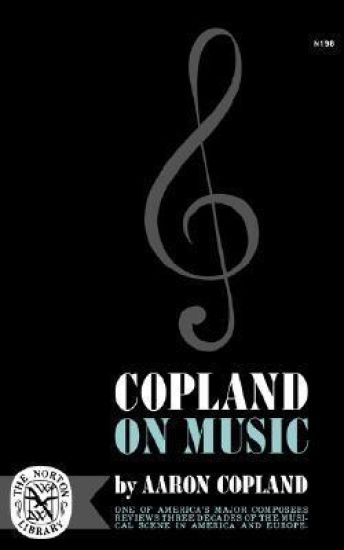
Copland on Music

Copland on Music

Aaron Copland

WW Norton Co
2007
nidottu
Whose fault is it that the artist counts for so little in the public mind? Has it always been thus? Is there something wrong, perhaps, with the nature of the art work being created in America? Is our system of education lacking in its attitude toward the art product? Should our state and federal governments take a more positive stand toward the cultural development of their citizens? These are some of the provocative questions which Aaron Copland raises and answers in Copland on Music.
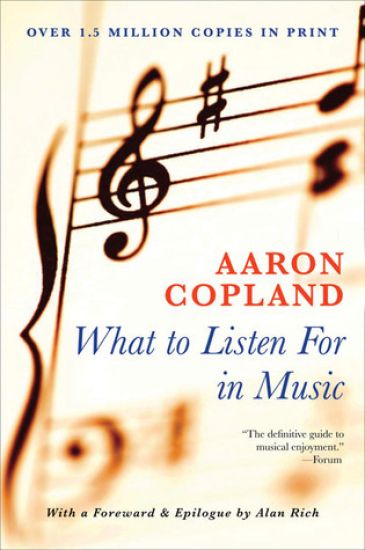
What to Listen for in Music

What to Listen for in Music

Aaron Copland

Signet
2009
pokkari
Now in trade paperback: "The definitive guide to musical enjoyment" (Forum). In this fascinating analysis of how to listen to both contemporary and classical music analytically, eminent American composer Aaron Copland offers provocative suggestions that will bring readers a deeper appreciation of the most viscerally rewarding of all art forms.
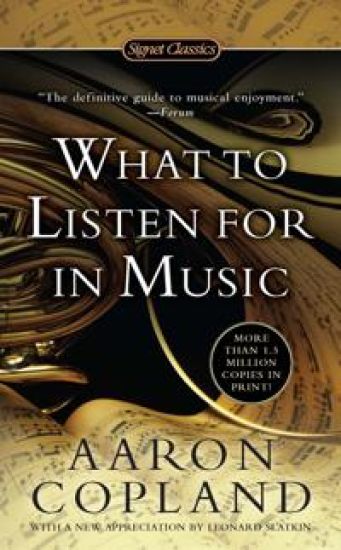
What To Listen For In Music

What To Listen For In Music

Aaron Copland

Signet Classics
2011
nidottu
Whether they listen to Mozart or Duke Ellington, Aaron Copland invites readers to ask two basic questions: Are they hearing everything that is going on? Are they really being sensitive to it? With his provocative suggestions, Aaron Copland guides readers through a deeper appreciation of the most rewarding of all art forms.