Kirjojen hintavertailu. Mukana 12 390 323 kirjaa ja 12 kauppaa.

Kirjahaku

Etsi kirjoja tekijän nimen, kirjan nimen tai ISBN:n perusteella.

55 tulosta hakusanalla "American Foreign Relations"

American Foreign Relations

American Foreign Relations

Andrew Preston

Oxford University Press Inc
2019
nidottu
For better or worse, be it militarily, diplomatically, politically, economically, or culturally, Americans have had a profound role in shaping the wider world beyond them. Unsurprisingly, most non-Americans have passionate views about the nature of U.S. foreign policy. America has been a savior to some, a curse to others-and both have good reason to feel that way. And yet, such views are often also based on a caricature of American actions and intentions. For their part, Americans themselves have strong opinions about their role in the world and how it has evolved over time. Yet these views are shrouded as much in myth as they are grounded in fact. American Foreign Relations, then, suffers from being a subject of immense worldwide importance but almost complete misunderstanding; it provokes strong emotions and much debate in newspapers daily, but is accompanied by little comprehension. This Very Short Introduction aims to offer analysis of key events, episodes, crises, and individuals in the making of American foreign relations. It will discuss events such as the Revolutionary War, the Louisiana Purchase, the War of 1812, manifest destiny, the Mexican War, the Civil War, industrialization, the beginnings of globalization, the Spanish-American War, imperialism, the annexation of the Philippines, informal imperialism and the Open Door policy, World War I, isolationism, World War II, the Cold War from its origins to its end (including the Korean and Vietnam Wars), the Iraq Wars, 9/11, and Afghanistan. Such topics will be situated within an analytical narrative that follows chronology generally, but not strictly or comprehensively. ABOUT THE SERIES: The Very Short Introductions series from Oxford University Press contains hundreds of titles in almost every subject area. These pocket-sized books are the perfect way to get ahead in a new subject quickly. Our expert authors combine facts, analysis, perspective, new ideas, and enthusiasm to make interesting and challenging topics highly readable.
American Foreign Relations

American Foreign Relations

Walter L. Hixson

Routledge
2015
sidottu
American Foreign Relations: A New Diplomatic History is a compelling narrative history of American foreign policy from the early settlement of North America to the present. In addition to economic and strategic motives, Walter L. Hixson integrates key cultural factors—including race, gender, and religion—into the story of American foreign policy. He demonstrates how these factors played a vital role in shaping the actions of the United States in world affairs. Beginning with the history of warfare and diplomacy between indigenous peoples and Europeans before the establishment of the United States, this book shows the formative influence of settler colonialism on the country’s later foreign policy and the growth of American empire.Clearly written and comprehensive, the book features: Extensive illustrations, with over 100 images and maps Primary documents in each chapter, showcasing the perspectives of historical actors "Interpreting the Past" features that explore how historians’ understanding of events has changed over time Selected bibliographies of key resources for further research in each chapterIn one concise volume, American Foreign Relations covers the full sweep of American foreign policy from the colonial period to the present day. It is an essential introduction for anyone seeking to understand the history of America’s role in the world.
American Foreign Relations

American Foreign Relations

Walter L. Hixson

Routledge
2015
nidottu
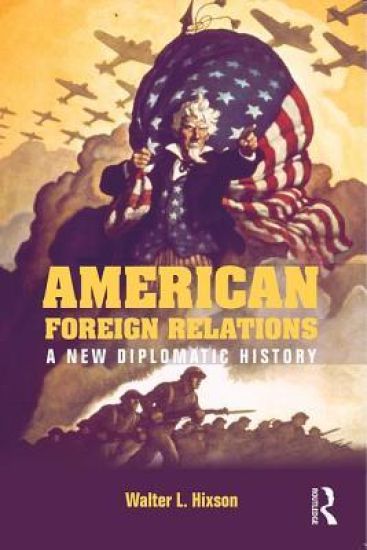
American Foreign Relations: A New Diplomatic History is a compelling narrative history of American foreign policy from the early settlement of North America to the present. In addition to economic and strategic motives, Walter L. Hixson integrates key cultural factors—including race, gender, and religion—into the story of American foreign policy. He demonstrates how these factors played a vital role in shaping the actions of the United States in world affairs. Beginning with the history of warfare and diplomacy between indigenous peoples and Europeans before the establishment of the United States, this book shows the formative influence of settler colonialism on the country’s later foreign policy and the growth of American empire.Clearly written and comprehensive, the book features: Extensive illustrations, with over 100 images and maps Primary documents in each chapter, showcasing the perspectives of historical actors "Interpreting the Past" features that explore how historians’ understanding of events has changed over time Selected bibliographies of key resources for further research in each chapterIn one concise volume, American Foreign Relations covers the full sweep of American foreign policy from the colonial period to the present day. It is an essential introduction for anyone seeking to understand the history of America’s role in the world.
American Foreign Relations

American Foreign Relations

Thomas Paterson; J. Garry Clifford; ; Michael Donoqhue; Kenneth Hagan; Deborah Kisatsky; Shane J. Maddock

Wadsworth Publishing Co Inc
2014
nidottu
This best-selling text presents the best synthesis of current scholarship available to emphasize the theme of expansionism and its manifestations.
American Foreign Relations Reconsidered
This major new textbook brings together twelve of the leading scholars of U.S. foreign relations. Each contributor provides a clear, concise summary of an important period or theme in US diplomatic and strategic affairs since the Spanish-American War. Michael Hunt and Joan Hoff provide an overview of the traditions behind US policy and a preview of things to come. Together, the contributors offer a succinct explanation of the controversies and questions that historians have grappled with throughout the twentieth century. Students will find these essays a reliable and useful guide to the various schools of thought which have emerged. Although each of the scholars is well known for their detailed and original work, these essays are new and have been specially commissioned for this book. The articles follow the chronological development of the emergence of the United States as a world power, but special themes such as the American policy process, economic interests, relations with the Third World, and the dynamics of the nuclear arms race have been singled out for separate treatment. American Foreign Relations Reconsidered, 1890-1993 represents essential reading for upper level undergraduates studying modern American history. The book has been designed and written exclusively to meet the needs of students, either as a major course text, or as a set of supplementary readings to support other texts.
American Foreign Relations Reconsidered
This major new textbook brings together twelve of the leading scholars of U.S. foreign relations. Each contributor provides a clear, concise summary of an important period or theme in US diplomatic and strategic affairs since the Spanish-American War. Michael Hunt and Joan Hoff provide an overview of the traditions behind US policy and a preview of things to come. Together, the contributors offer a succinct explanation of the controversies and questions that historians have grappled with throughout the twentieth century. Students will find these essays a reliable and useful guide to the various schools of thought which have emerged. Although each of the scholars is well known for their detailed and original work, these essays are new and have been specially commissioned for this book. The articles follow the chronological development of the emergence of the United States as a world power, but special themes such as the American policy process, economic interests, relations with the Third World, and the dynamics of the nuclear arms race have been singled out for separate treatment. American Foreign Relations Reconsidered, 1890-1993 represents essential reading for upper level undergraduates studying modern American history. The book has been designed and written exclusively to meet the needs of students, either as a major course text, or as a set of supplementary readings to support other texts.
American Foreign Relations Since 1898

American Foreign Relations Since 1898

Wiley-Blackwell (an imprint of John Wiley Sons Ltd)
2010
nidottu
This volume brings together more than 50 documents which examine foreign policy not only in terms of leaders and states, but also through social movements, cultures, ideas, and images, to provide comprehensive understanding of how Americans have interacted with the wider world since 1898. Draws together over 50 primary documents to give readers a first-hand account of the people and events that shaped the foreign policy of the United StatesIncorporates documents relating not only to leaders and states, but also to social movements, cultures, ideas, and imagesHighlights the diverse range of contributors to debates about American foreign policy, from presidents to protesters, students to singersIncludes a comprehensive introduction to the subject and headnotes for each document written by the editor, as well as a bibliography for further study
American Foreign Relations Since 1898

American Foreign Relations Since 1898

Wiley-Blackwell (an imprint of John Wiley Sons Ltd)
2010
sidottu
This volume brings together more than 50 documents which examine foreign policy not only in terms of leaders and states, but also through social movements, cultures, ideas, and images, to provide comprehensive understanding of how Americans have interacted with the wider world since 1898. Draws together over 50 primary documents to give readers a first-hand account of the people and events that shaped the foreign policy of the United StatesIncorporates documents relating not only to leaders and states, but also to social movements, cultures, ideas, and imagesHighlights the diverse range of contributors to debates about American foreign policy, from presidents to protesters, students to singersIncludes a comprehensive introduction to the subject and headnotes for each document written by the editor, as well as a bibliography for further study
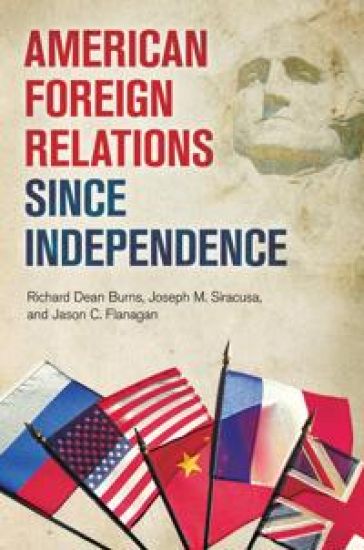
American Foreign Relations since Independence

American Foreign Relations since Independence

Richard Dean Burns; Joseph M. Siracusa; Jason C. Flanagan

Praeger Publishers Inc
2013
sidottu
This book provides a succinct and accessible interpretation of the major event and ideas that have shaped U.S. foreign relations since the American Revolution—historical factors that now affect our current debates and commitments in the Middle East as well as Europe and Asia.American Foreign Relations since Independence explores the relationship of American policies to national interest and the limits of the nation's power, reinterpreting the nature and history of American foreign relations.The book brings together the collective knowledge of three generations of diplomatic historians to create a readily accessible introduction to the subject. The authors explicitly challenge and reject the perennial debates about isolationism versus internationalism, instead asserting that American foreign relations have been characterized by the permanent tension inherent in America's desire to engage with the world and its equally powerful determination to avoid "entanglement" in the world's troubles. This work is ideally suited as a resource for students of politics, international affairs, and history, and it will provide compelling insights for informed general readers.
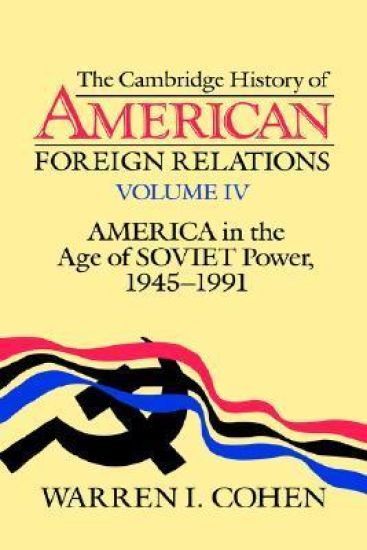
The Cambridge History of American Foreign Relations

The Cambridge History of American Foreign Relations

Warren I. Cohen

Cambridge University Press
1993
sidottu
This is an elegant and concise history of American foreign relations during the Cold War era, based on the most recent American, Chinese, and Soviet literature, written from a post-Cold War perspective. All of the major foreign policy issues, including the origins of the Soviet-American conflict; the extension of the confrontation to Asia, the Middle East, and elsewhere on the periphery; wars in Korea and Vietnam; crises involving the Taiwan Straits, Berlin, and Cuba; the rise and fall of détente; imperial overreach; and the critical roles of Reagan and Gorbachev in the 1980s are carefully analysed and clearly explained.
The Cambridge History of American Foreign Relations

The Cambridge History of American Foreign Relations

Iriye Akira

Cambridge University Press
1993
sidottu
Volume 3 describes the history of the foreign relations of the United States during 1913–1945, the period of two world wars as well as of momentous changes that brought to an end the period of European domination. The United States emerged as the key global power, actively participating in wars but also promoting trade and investment activities throughout the world, as well as 'Americanising' other countries' ways of life and habits of thought. The book is thus not a usual survey of foreign policy decisions but tells a story about America's growing involvement in all parts of the world and in all aspects of twentieth-century life.
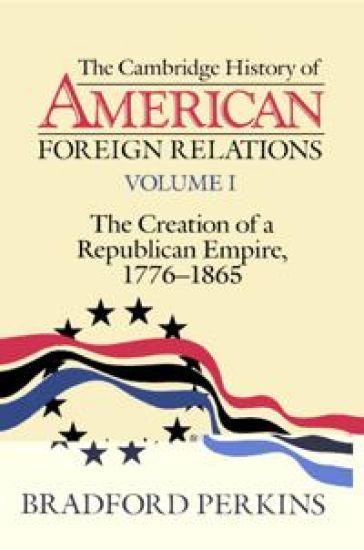
The Cambridge History of American Foreign Relations

The Cambridge History of American Foreign Relations

Bradford Perkins

Cambridge University Press
1993
sidottu
The Creation of a Republican Empire traces American foreign relations from the colonial era to the end of the Civil War, paying particular attention not only to the diplomatic controversies of the era but also to the origins and development of American thought regarding international relations. The primary purpose of the book is to describe and explain, in the diplomatic context, the process by which the United States was born, transformed into a republican nation, and extended into a continental empire. Central to the story are the events surrounding the American Revolution, the Constitutional Convention, the impact on the United States of the European wars touched off by the French Revolution, the Monroe Doctrine, the expansionism of the 1840s, and the ordeal of the Civil War.
Explaining the History of American Foreign Relations
This collection of essays presents many of the newer, innovative, and stimulating analytical approaches and methods used to study the history of American foreign relations. The essays highlight a variety of conceptual categories, including bureaucratic, dependency, and world-systems theories, corporatist and national security models, culture, gender, and ideology. The book seeks to define the study of American relations, stimulate research in fresh directions, and encourage cross-disciplinary thinking, especially between historians and political scientists.
The Cambridge History of American Foreign Relations: Volume 4, America in the Age of Soviet Power, 1945–1991
This is an elegant and concise history of American foreign relations during the Cold War era, based on the most recent American, Chinese, and Soviet literature, written from a post-Cold War perspective. All of the major foreign policy issues, including the origins of the Soviet-American conflict; the extension of the confrontation to Asia, the Middle East, and elsewhere on the periphery; wars in Korea and Vietnam; crises involving the Taiwan Straits, Berlin, and Cuba; the rise and fall of détente; imperial overreach; and the critical roles of Reagan and Gorbachev in the 1980s are carefully analysed and clearly explained.
The Cambridge History of American Foreign Relations: Volume 3, The Globalizing of America, 1913–1945
Volume 3 describes the history of the foreign relations of the United States during 1913–1945, the period of two world wars as well as of momentous changes that brought to an end the period of European domination. The United States emerged as the key global power, actively participating in wars but also promoting trade and investment activities throughout the world, as well as ‘Americanising’ other countries’ ways of life and habits of thought. The book is thus not a usual survey of foreign policy decisions but tells a story about America’s growing involvement in all parts of the world and in all aspects of twentieth-century life.
The Cambridge History of American Foreign Relations: Volume 2, The American Search for Opportunity, 1865–1913
Between the American Civil War and the outbreak of world War I, global history was transformed by two events: the United States's rise to the status of a great world power (indeed, the world's greatest economic power) and the eruption of nineteenth- and twentieth-century revolutions in Mexico, China, Russia, Cuba, the Philippines, Hawaii, Panama, Nicaragua, and elsewhere. The American Search for Opportunity traces the U.S. foreign policy between 1865 and 1913, linking these two historic trends by noting how the United States - usually thought of as antirevolutionary and embarked on a 'search for order' during this era - actually was a determinative force in helping to trigger these revolutions. Walter LaFeber argues that industrialization fuelled centralisation: Post-Civil War America remained a vast, unwieldy country of isolated, parochial communities, but the federal government and a new corporate capitalism now had the power to invade these areas and integrate them into an industrialization, railway-linked nation-state. The furious pace of economic growth in America attracted refugees from all parts of the world. Professor LaFeber describes and influx of immigration so enormous that it led to America's first exclusionary immigration act. In 1882, the United States passed legislation preventing all Chinese immigrant labour, skilled and unskilled, from entering the country for the next 10 years. Racism and domestic affairs, exemplified by the hundreds of lynchings in the United States during the 1890's and the rampant anti-Asian outbreaks of the era, influenced foreign policy as well. Racism was particularly important in the Philippine and native-American cases. In the late 1880's U.S. military forces consolidated white power by destroying the last major Indian opposition. This success in empire building at home led to attempts in the late 1890's to create a new empire of commerce and insular possession in the Caribbean and across the Pacific Ocean. The struggle for markets in Asia and elsewhere drove U.S. foreign policy during the era. The Cuban crisis of 1898, which sparked the Spanish-American War, provided the opportunity to annex the Philippines and thereby secure one of the most strategic positions in the Asian region. America's rise to the status of a world power necessitated the development of its naval forces to protect the nation's commerce. Such a navy, in turn, required overseas coaling bases and rest stops. These years were the beginning of the 'American century'. The roots of that century, and its two great products - U.S. power and revolutions abroad - are analysed here, as well as the 'imperial presidency' that U.S. officials developed to control the revolutionary outbreaks and restore order for the sake of further American opportunity. The book includes a valuable bibliographic essay on the large historical literature of American foreign relations during the period.
The Cambridge History of American Foreign Relations: Volume 1, The Creation of a Republican Empire, 1776–1865
The Creation of a Republican Empire traces American foreign relations from the colonial era to the end of the Civil War, paying particular attention not only to the diplomatic controversies of the era but also to the origins and development of American thought regarding international relations. The primary purpose of the book is to describe and explain, in the diplomatic context, the process by which the United States was born, transformed into a republican nation, and extended into a continental empire. Central to the story are the events surrounding the American Revolution, the Constitutional Convention, the impact on the United States of the European wars touched off by the French Revolution, the Monroe Doctrine, the expansionism of the 1840s, and the ordeal of the Civil War.