Kirjojen hintavertailu. Mukana 11 342 296 kirjaa ja 12 kauppaa.

Kirjahaku

Etsi kirjoja tekijän nimen, kirjan nimen tai ISBN:n perusteella.

1000 tulosta hakusanalla "Bernard Shaw"

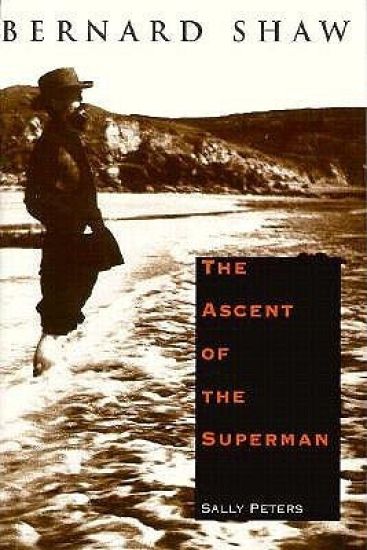
Bernard Shaw

Bernard Shaw

Sally Peters

Yale University Press
1998
pokkari
When he died in 1950, Bernard Shaw was a Nobel laureate hailed as the second greatest playwright in the English language. At the same time, his strangely flamboyant personality, so teeming with eccentricities and contradictions, aroused unquenchable curiosity. Despite many investigations into Shaw's life and art, parts of him—parts crucial to understanding both man and artist—have remained veiled in secrecy. In this critical biography, Sally Peters explores Shaw's background and beliefs, interests and obsessions, relations with men and women, prose writings and dramatic art. In deciphering the enigma that was Shaw, she uncovers a convoluted and extravagant inner life studded with erotic secrets.Peters examines the passions of Shaw's life—everything from vegetarianism and boxing to socialism and feminism—and pieces them together in a new configuration, offering a fresh interpretation of his life and works. Striving unceasingly to ascend, possessed of monumental energy, Shaw was in many ways a dazzling example of his idealized superman. But, says Peters, this superman was also a man haunted by phantoms, a man of gender ambivalences and romantic yearnings, and a man who championed will even while believing that his erotic inclinations were the secret mark of the "born artist." Throughout, he was braced by a resilient comic vision as he transformed his life into enduring art.
Bernard Shaw

Bernard Shaw

WW Norton Co
2005
pokkari
When Michael Holroyd's multivolume life of Bernard Shaw was published, it was hailed as a masterpiece. Now the biography is available for the first time in a lively and accessible abridgment by the author. Playwright, wit, socialist, polemicist, vegetarian, and irresistible charmer, Bernard Shaw was the most controversial literary figure of his age, the scourge of Victorian values and middle-class pretensions. At the turn of the century, Shaw was in his prime, a theatrical impresario and author of those great campaigning plays - "Man and Superman, " "Major Barbara, " "The Doctor's Dilemma, " and "John Bull's Other Island" - that used laughter as an anesthetic for the operation he performed on British society. By 1914 the author of "Pygmalion" was the most popular writer in England, and increasingly recognized throughout Europe and America. The reluctant recipient of a Nobel Prize for literature and an Academy Award for his screenplay for "Pygmalion, " Shaw became an international icon between the two world wars, feted from China and Soviet Russia to India and New Zealand, though still contriving to provoke the establishment in the United States, South Africa, and Ireland. He revealed himself increasingly as conjurer, fabulist, and seer through his powerful late works, including "Saint Joan, " the Chekhovian "Heartbreak House, " the modernist fantasy "Back to Methuselah, " and the imaginative dream plays and political extravaganzas.
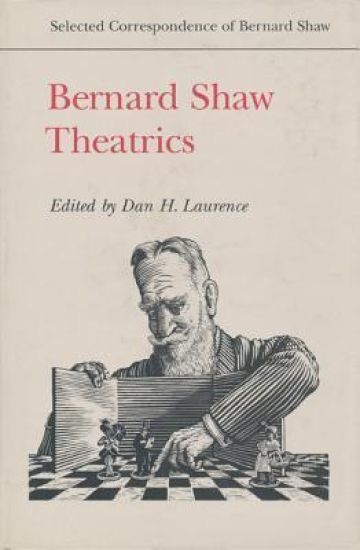
Bernard Shaw: Theatrics

Bernard Shaw: Theatrics

Bernard Shaw

University of Toronto Press
1995
sidottu
In his introduction Dan H. Laurence notes that 'theatrics' connotes not only activities of a theatrical character but behaviour that manifests itself as theatricality. All the correspondence selected for this volume - most of it hitherto unpublished - relates to Bernard Shaw's theatre dealings and theatrical interest, at the same time attesting to the 'histrionic instinct' and 'theatrified imagination' (his own phrases) of the man who penned them. More than one hundred letters are represented, starting from mid-1889, when Shaw had not yet completed his first play and was known instead as a music critic, journalist, socialist organizer, and street orator. The letters reveal a consummate man of the theatre: a dramatist, director, actor, designer, publicist, financial backer, translator, and critic concerned with such varied issues as censorship, theatre politics, prying journalists, and wireless and television performance. The letters are shaded with histrionic tones of assumed anger, irritation, and anguish. The style invariably is colloquial, free-flowing, ebullient - and personal.
Bernard Shaw and the Webbs

Bernard Shaw and the Webbs

Bernard Shaw

University of Toronto Press
2002
sidottu
Bernard Shaw was twenty-four and Sidney Webb twenty-one when they met in October 1880 at a gathering of a debating club called the Zetetical Society. Having sympathetic interests, both men decided, after some personal and joint exploration, to devote their lives to improving the human condition. This collection of 140 annotated letters, 74 of which have never been published, documents the subsequent friendship and collaboration shared by Shaw, Webb, and Webb's wife Beatrice, throughout their lives. The letters, written between 1883 and 1946, discuss the founding of the Fabian Society, the British Labour Party, the London School of Economics, and the New Statesman through the Boer, First, and Second World Wars. Fully annotated with headnotes and footnotes, this collection will expand the general view of Shaw the dramatist to incorporate Shaw the political activist and lifelong friend of the Webbs.
Bernard Shaw

Bernard Shaw

Leon Hugo

TAYLOR FRANCIS LTD
2025
sidottu
It was Shaw’s general contention that all great art was didactic; it was his specific contention that he wrote plays to convert people to his opinions on ‘Social Economy’, ‘Political Economy’ and ‘Vital Economy’. In this study of Bernard Shaw’s plays, originally published in 1971, Leon Hugo examines the implications of these contentions.Professor Hugo’s book, a lively and enthusiastic reappraisal of the literary and dramatic quality of Shaw’s plays, viewed in the light of their relationship to his social and political ideas, will be of value both as an introduction to new readers of Shaw and as a stimulus to the re-examination of many conventional and often dismissive views of his achievement as a dramatic poet.In the first part of the book, Shaw’s Fabian socialism, his political philosophy, and his belief in Creative Evolution are examined. In the second part, the author appraises Shaw’s plays by relating them to his ideas and by assessing them as ‘literature’. Among the plays discussed at length are: Mrs Warren’s Profession, Candida, Caesar and Cleopatra, Man and Superman, Major Barbara, Heartbreak House, and St Joan. In the third part an assessment is made of Shaw’s influence as a teacher and dramatist and the author argues that Shaw at his best achieves didactic and aesthetic unity in his plays.
Bernard Shaw

Bernard Shaw

Eric Bentley

Applause Theatre Book Publishers
2002
pokkari
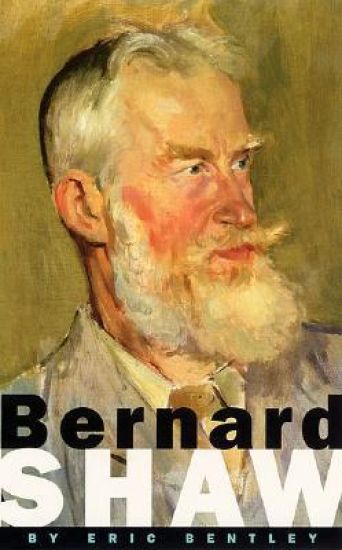
Eric Bentley's graceful look at George Bernard Shaw was first published over 50 years ago and time has only strengthened the conviction of his ideas and arguments about Shaw. When it arrived in the late 1940's this book was hailed by the great poet William Carlos Williams as the best treatise on contemporary manners I think I have ever read. I was fascinated and rewarded in the depths of my soul. Even Shaw himself described the book as the best critical description of my public activities I have yet come across.
Best-Loved Bernard Shaw

Best-Loved Bernard Shaw

Bernard Shaw

O'Brien Press Ltd
2021
sidottu
An attractive and approachable selection of the work of George Bernard Shaw. One of the most remarkable writers of the 20th century, Shaw contributed in a range of ways to both political and social writings as well as creating great works of literature. Shaw is one of only two people to have won both an Academy Award and a Nobel Prize for Literature. Shaw started from the most unpropitious of beginnings. But he possessed a steely self-determination, and turned the unshakeable conviction that he would become a great writer into a self-fulfilling prophecy. This book features selections and extracts from his plays, essays and personal letters.
Bernard Shaw's Preface to Androcles and the Lion

Bernard Shaw's Preface to Androcles and the Lion

Bernard Shaw

Createspace Independent Publishing Platform
2017
nidottu
The question seems a hopeless one after 2000 years of resolute adherence to the old cry of "Not this man, but Barabbas." Yet it is beginning to look as if Barabbas was a failure, in spite of his strong right hand, his victories, his empires, his millions of money, and his moralities and churches and political constitutions. "This man" has not been a failure yet; for nobody has ever been sane enough to try his way. But he has had one quaint triumph. Barabbas has stolen his name and taken his cross as a standard. There is a sort of compliment in that. There is even a sort of loyalty in it, like that of the brigand who breaks every law and yet claims to be a patriotic subject of the king who makes them. We have always had a curious feeling that though we crucified Christ on a stick, he somehow managed to get hold of the right end of it, and that if we were better men we might try his plan. There have been one or two grotesque attempts at it by inadequate people, such as the Kingdom of God in Munster, which was ended by crucifixion so much more atrocious than the one on Calvary that the bishop who took the part of Annas went home and died of horror. But responsible people have never made such attempts. The moneyed, respectable, capable world has been steadily anti-Christian and Barabbasque since the crucifixion; and the specific doctrine of Jesus has not in all that time been put into political or general social practice.