
Kirjahaku
Etsi kirjoja tekijän nimen, kirjan nimen tai ISBN:n perusteella.
346 tulosta hakusanalla "Bertolt Brecht"
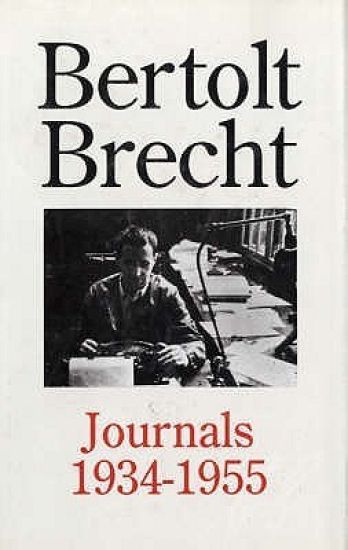
"Those who dismiss Brecht as a yea-sayer to Stalinism are advised to read these journals and moderate their opinion." (Paul Bailey, Weekend Telegraph) Brecht's "Work Journals" cover the period from 1938 to 1955, the years of exile in Denmark, Sweden, Finland and America, and his return via Switzerland to East Berlin. His criticisms of the work of other writers and intellectuals are perceptive and polemic, and the accounts of his own writing practice provide insight into the creation of his dramatic works of the period, the development of his political thinking and his theories about epic theatre. Also integrated into the journals are Brecht's immediate reactions to and commentary upon the events of the period: his political exile's view of the course of World War II and his account of the House Un-American Activities committee."A marvellous, motley collage of political ideas, domestic detail, artistic debate, poems, photographs and cuttings from newspapers and magazines, assembled, undoubtedly for posterity by one of the great writers of the century" (New Statesman and Society)
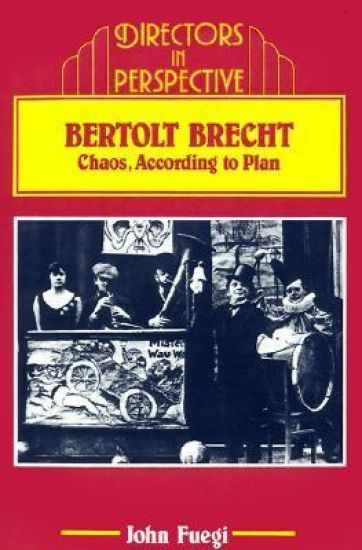
This is a full-length study of Bertolt Brecht's day-to-day work as a theatre director. Professor Fuegi has researched how Brecht worked and reacted with actors how his productions were actually put together in rehearsal. This book is the result of interviews with Brecht's closest associates.

Bertolt Brecht
Southern Illinois Univ Pr
1968
sidottu
Bertolt Brecht’s methods of collective experimentation, and his unique framing of the theatrical event as a forum for change, placed him among the most important contributors to the theory and practice of theatre. His work continues to have a signi?cant impact on performance practitioners, critics and teachers alike. Now revised and reissued, this book combines: an overview of the key periods in Brecht’s life and work a clear explanation of his key theories, including the renowned ideas of Gestus and Verfremdung an account of his groundbreaking 1954 production of The Caucasian Chalk Circle an in-depth analysis of his practical exercises and rehearsal methods.As a ?rst step towards critical understanding, and as an initial exploration before going on to further, primary research, Routledge Performance Practitioners are an invaluable resource for students and scholars.
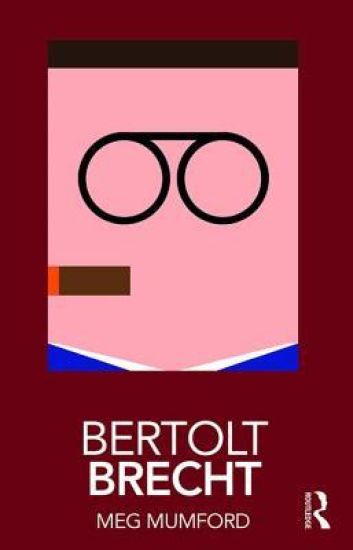
Bertolt Brecht’s methods of collective experimentation, and his unique framing of the theatrical event as a forum for change, placed him among the most important contributors to the theory and practice of theatre. His work continues to have a signi?cant impact on performance practitioners, critics and teachers alike. Now revised and reissued, this book combines: an overview of the key periods in Brecht’s life and work a clear explanation of his key theories, including the renowned ideas of Gestus and Verfremdung an account of his groundbreaking 1954 production of The Caucasian Chalk Circle an in-depth analysis of his practical exercises and rehearsal methods.As a ?rst step towards critical understanding, and as an initial exploration before going on to further, primary research, Routledge Performance Practitioners are an invaluable resource for students and scholars.

Bertolt Brecht
University of Georgia Press
2010
pokkari
First published in 1980, this collection of fifteen original essays touches on a variety of topics related to the genesis of Brecht’s works and their impact on contemporary literature, theater, and film. Discussed are Brecht’s confrontation with Marxism and its political manifestations, the influence of his work on film and theater practitioners, the uses his literary descendants have made of his political commitment, and much more.
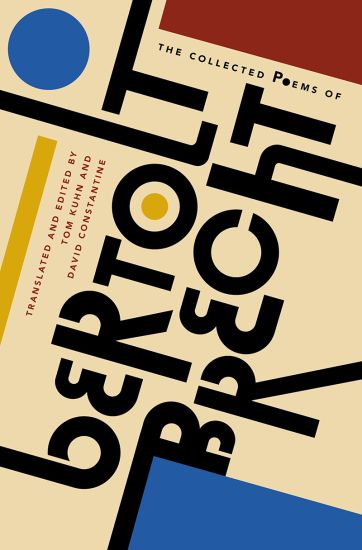
Widely celebrated as the greatest German playwright of the twentieth century, Bertolt Brecht was also, as George Steiner observed, “that very rare phenomenon, a great poet”. Hugely prolific, Brecht wrote some 2,000 poems and songs—though fewer than half were published in his lifetime and early editions were extremely selective. Now, award-winning translators Tom Kuhn and David Constantine give us the most comprehensive English collection of Brecht’s poetry to date. Written between 1913 and 1956, these poems celebrate Brecht’s unquenchable “love of life, the desire for better and more of it” and reflect the technical virtuosity of an artist driven by bitter and violent politics, as well as by the untrammelled forces of love and erotic desire. The Collected Poems of Bertolt Brecht is a monumental achievement and a reclamation.
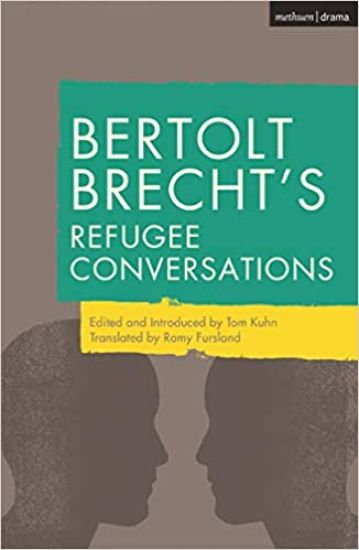
Published in English for the first time, Refugee Conversations is a delightful work that reveals Brecht as a master of comic satire. Written swiftly in the opening years of the Second World War, the dialogues have an urgent contemporary relevance to a Europe once again witnessing populations on the move. The premise is simple: two refugees from Nazi Germany meet in a railway cafe and discuss the current state of the world. They are a bourgeois Jewish physicist and a left-leaning worker. Their world views, their voices and their social experience clash horribly, but they find they have unexpected common ground – especially in their more recent experience of the surreal twists and turns of life in exile, the bureaucracy, and the pathetic failings of the societies that are their unwilling hosts. Their conversations are light and swift moving, the subjects under discussion extremely various: beer, cigars, the Germans’ love of order, their education and experience of life, art, pornography, politics, ‘great men’, morality, seriousness, Switzerland, America ... despite the circumstances of both characters there is a wonderfully whimsical serendipity about their dialogue, the logic and the connections often delightfully absurd. This edition features a full introduction and notes by Professor Tom Kuhn (St Hugh's College, University of Oxford, UK).

Published in English for the first time, Refugee Conversations is a delightful work that reveals Brecht as a master of comic satire. Written swiftly in the opening years of the Second World War, the dialogues have an urgent contemporary relevance to a Europe once again witnessing populations on the move. The premise is simple: two refugees from Nazi Germany meet in a railway cafe and discuss the current state of the world. They are a bourgeois Jewish physicist and a left-leaning worker. Their world views, their voices and their social experience clash horribly, but they find they have unexpected common ground – especially in their more recent experience of the surreal twists and turns of life in exile, the bureaucracy, and the pathetic failings of the societies that are their unwilling hosts. Their conversations are light and swift moving, the subjects under discussion extremely various: beer, cigars, the Germans’ love of order, their education and experience of life, art, pornography, politics, ‘great men’, morality, seriousness, Switzerland, America ... despite the circumstances of both characters there is a wonderfully whimsical serendipity about their dialogue, the logic and the connections often delightfully absurd. This edition features a full introduction and notes by Professor Tom Kuhn (St Hugh's College, University of Oxford, UK).
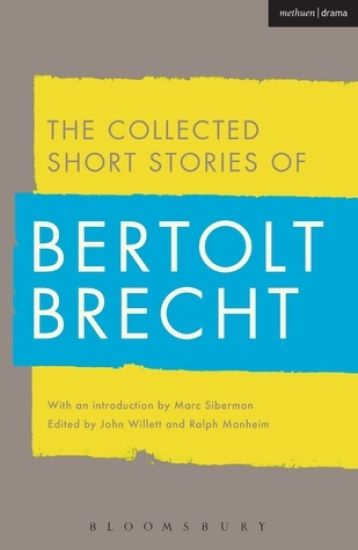
Everyone knows that Bertolt Brecht was one of the great 20th-century innovators in theatre - the literary-theatrical equivalent of a Picasso or Stravinsky - and Germany's greatest poet of the last century, but the playwright was also a dazzling writer of stories. Storytelling permeated his art as a dramatist; fundamentally in his plays he was a storyteller. This volume collects the complete short stories written by Brecht, including the prize-winning 'The Monster', and the fragmentary memoir ghost-written by Brecht, 'Life Story of the boxer Samson-Körner'. Brecht scholar Marc Silberman provides an introduction and editorial notes.Fans of Brecht will find in the 37 stories assembled here the same directness, lack of affectation, and wry humour that characterise his plays. Every lover of short stories will discover an unexpected trove of pleasure in this "mine for short-story addicts" (Observer).

Everyone knows that Bertolt Brecht was one of the great 20th-century innovators in theatre - the literary-theatrical equivalent of a Picasso or Stravinsky - and Germany's greatest poet of the last century, but the playwright was also a dazzling writer of stories. Storytelling permeated his art as a dramatist; fundamentally in his plays he was a storyteller. This volume collects the complete short stories written by Brecht, including the prize-winning 'The Monster', and the fragmentary memoir ghost-written by Brecht, 'Life Story of the boxer Samson-Körner'. Brecht scholar Marc Silberman provides an introduction and editorial notes.Fans of Brecht will find in the 37 stories assembled here the same directness, lack of affectation, and wry humour that characterise his plays. Every lover of short stories will discover an unexpected trove of pleasure in this "mine for short-story addicts" (Observer).
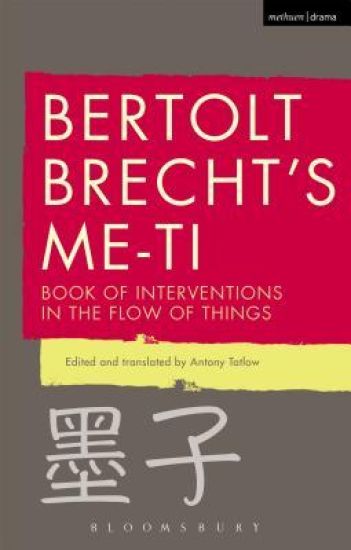
Bertolt Brecht’s Me-ti, which remained unpublished in his own lifetime, now appears for the first time in English. Me-ti counselled against ‘constructing too complete images of the world’. For this work of fragments and episodes, Brecht accumulated anecdotes, poems, personal stories and assessments of contemporary politics. Given its controversial nature, he sought a disguise, using the name of a Chinese contemporary of Socrates, known today as Mozi. Stimulated by his humorous aphoristic style and social focus, as well as an engrained Chinese awareness of the flow of things, Brecht developed a practical, philosophical, anti-systematic ethics, discussing Marxist dialectics, Lenin, Hitler, Stalin, the Moscow trials, and the theories behind current events, while warning how ideology makes people the ‘servants of priests’.Me-ti is central to an understanding of Brecht's critical reflections on Marxist dialectics and his commitment to change and the non-eternal, the philosophy which informs much of his writing and his most famous plays, such as The Good Person of Szechwan. Readers will find themselves both fascinated and beguiled by the reflections and wisdom it offers.First published in German in 1965 and now translated and edited by Antony Tatlow, Brecht's Me-ti: Book of Interventions in the Flow of Things provides readers with a much-anticipated accessible edition of this important work. It features a substantial introduction to the concerns of the work, its genesis and context - both within Brecht's own writing and within the wider social and political history, and provides an original selection and organisation of texts. Extensive notes illuminate the work and provide commentary on related works from Brecht's oeuvre.

Bertolt Brecht’s Me-ti, which remained unpublished in his own lifetime, now appears for the first time in English. Me-ti counselled against ‘constructing too complete images of the world’. For this work of fragments and episodes, Brecht accumulated anecdotes, poems, personal stories and assessments of contemporary politics. Given its controversial nature, he sought a disguise, using the name of a Chinese contemporary of Socrates, known today as Mozi. Stimulated by his humorous aphoristic style and social focus, as well as an engrained Chinese awareness of the flow of things, Brecht developed a practical, philosophical, anti-systematic ethics, discussing Marxist dialectics, Lenin, Hitler, Stalin, the Moscow trials, and the theories behind current events, while warning how ideology makes people the ‘servants of priests’.Me-ti is central to an understanding of Brecht's critical reflections on Marxist dialectics and his commitment to change and the non-eternal, the philosophy which informs much of his writing and his most famous plays, such as The Good Person of Szechwan. Readers will find themselves both fascinated and beguiled by the reflections and wisdom it offers.First published in German in 1965 and now translated and edited by Antony Tatlow, Brecht's Me-ti: Book of Interventions in the Flow of Things provides readers with a much-anticipated accessible edition of this important work. It features a substantial introduction to the concerns of the work, its genesis and context - both within Brecht's own writing and within the wider social and political history, and provides an original selection and organisation of texts. Extensive notes illuminate the work and provide commentary on related works from Brecht's oeuvre.
Known for his experimental, modernist Epic Theatre and its 'alienation effect', Bertolt Brecht (1898 - 1956) sought to break down the division between high art and popular culture. The Threepenny Opera, his collaboration with composer Kurt Weill, was a milestone in musical theatre, and plays like Mother Courage and Galileo changed the course of modern drama and aesthetic theory. Philip Glahn looks at Brecht's life and works through his plays and stories, poems and political essays in order to illustrate how they trace a lifelong attempt to relate to specific social, economic and political circumstances. Framed by two World Wars, the Weimar Republic and a global depression, Nazism and exile and the East German version of socialist reality, Brecht's own life became a project, illuminating and intervening in the ongoing crisis of modern experience, shaped by capitalism, nationalism and visions of social utopia. Glahn reveals how Brecht upended and used as weapons the language and gestures of philosophers and beggars, bureaucrats and thieves, priests and workers. The results are scenes, chapters, rhymes and questions that are at once funny and tragic, popular and complex, sharp, accessible and full of pleasure in the contradictions of being an active part in the production of history. Bertolt Brecht will interest scholars and students of modern theatre, as well as those who wish to know more about the life and work of this pivotal modern dramatist.
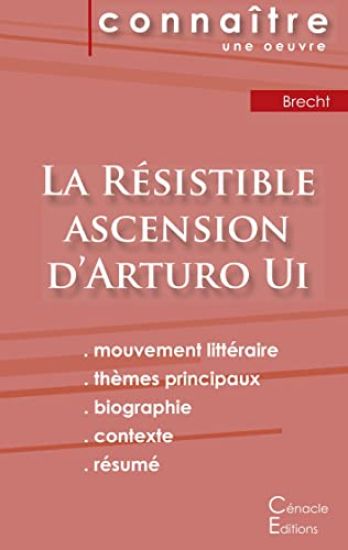
Fiche de lecture La Résistible ascension d'Arturo Ui de Bertolt Brecht (Analyse littéraire de référence et résumé complet)
Bertolt Brecht
Les Editions Du Cenacle
2022
pokkari
La collection Conna tre une oeuvre vous offre la possibilit de tout savoir de La R sistible ascension d'Arturo Ui de Bertold Brecht gr ce une fiche de lecture aussi compl te que d taill e. La r daction, claire et accessible, a t confi e un sp cialiste universitaire. Cette fiche de lecture r pond une charte qualit mise en place par une quipe d'enseignants. Ce livre contient la biographie de Bertolt Brecht, la pr sentation de l'oeuvre, le r sum d taill , les raisons du succ s, les th mes principaux et l' tude du mouvement litt raire de l'auteur.
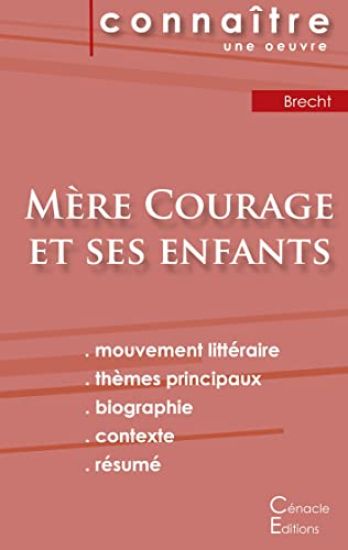
Fiche de lecture Mère Courage et ses enfants de Bertolt Brecht (Analyse littéraire de référence et résumé complet)
Bertolt Brecht
Les Editions Du Cenacle
2022
pokkari
La collection Conna tre une oeuvre vous offre la possibilit de tout savoir de la pi ce de th tre M re Courage et ses enfants, de Bertolt Brecht, gr ce une fiche de lecture aussi compl te que d taill e. La r daction, claire et accessible, a t confi e un sp cialiste universitaire. Cette fiche de lecture r pond une charte qualit mise en place par une quipe d'enseignants. Ce livre contient la biographie de Bertolt Brecht, la pr sentation de l'oeuvre, le r sum d taill , les raisons du succ s, les th mes principaux et l' tude du mouvement litt raire de l'auteur.
Fiche de lecture La Noce d'Arturo Ui de Bertolt Brecht (Analyse littéraire de référence et résumé complet)
Bertolt Brecht
Les Editions Du Cenacle
2022
pokkari
La collection Conna tre une oeuvre vous offre la possibilit de tout savoir de La Noce de Bertolt Brecht gr ce une fiche de lecture aussi compl te que d taill e. La r daction, claire et accessible, a t confi e un sp cialiste universitaire. Cette fiche de lecture r pond une charte qualit mise en place par une quipe d'enseignants. Ce livre contient la biographie de Bertolt Brecht, la pr sentation de l'oeuvre, le r sum d taill , les raisons du succ s, les th mes principaux et l' tude du mouvement litt raire de l'auteur.