Kirjojen hintavertailu. Mukana 11 447 361 kirjaa ja 12 kauppaa.

Kirjahaku

Etsi kirjoja tekijän nimen, kirjan nimen tai ISBN:n perusteella.

10 tulosta hakusanalla "Beth Henley"

Beth Henley

Beth Henley

CRC Press Inc
2002
sidottu
Beth Henley was awarded the Pulitzer Prize in Drama and the New York Drama Critics Circle Award for Best American Play for her first full-length play, Crimes of the Heart , yet there has been no book-length consideration of her body of work until now. This volume includes original essays that contextualize and analyze her works from a variety of perspectives, focusing on her vexed status as a southern writer, her use of the comic grotesque, and her alleged feminist critiques of modern society. Receiving special attention are lesser-known plays which are crucial to understanding Henley's development as a playwright and postmodern thinker.

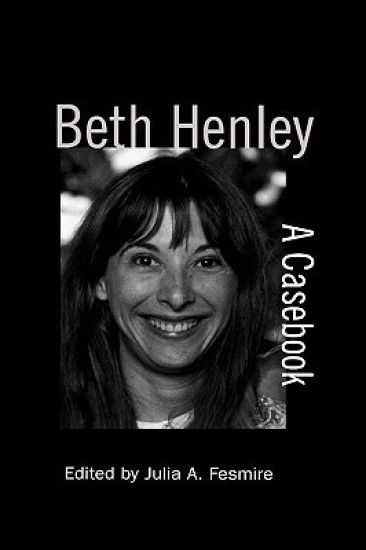
Beth Henley

Beth Henley

Routledge
2015
nidottu
Beth Henley was awarded the Pulitzer Prize in Drama and the New York Drama Critics Circle Award for Best American Play for her first full-length play, Crimes of the Heart , yet there has been no book-length consideration of her body of work until now. This volume includes original essays that contextualize and analyze her works from a variety of perspectives, focusing on her vexed status as a southern writer, her use of the comic grotesque, and her alleged feminist critiques of modern society. Receiving special attention are lesser-known plays which are crucial to understanding Henley's development as a playwright and postmodern thinker.
Understanding Beth Henley

Understanding Beth Henley

Robert J. Andreach

University of South Carolina Press
2006
sidottu
Beth Henley remains best known for ""Crimes of the Heart"", a play that won the Pulitzer Prize and the New York Drama Critics Circle Award and later was made into a major motion picture. In this introduction to the Mississippi-born playwright and her body of work, Robert J. Andreach presents Henley's plays as a unified whole, considering both her more accessible work of the 1980s and the commonly misunderstood - and often overlooked - plays of the 1990s. Andreach fills the gap in scholarship about the later plays and, in doing so, argues that they recast familiar themes, images, and motifs into new modes of self-discovery and expression. Andreach concedes that differences in setting and style separate the two decades of Henley's career: the plays from the earlier decade comprise single, representational sets in the Deep South of Mississippi and Louisiana while the plays from the 1990s are multiple, symbolic sets in Southern California and other locations. He contends, however, that whether dramatizing naturalistically or experimentally, Henley does not stray far from her original concerns. Andreach points out that while the self-discoveries of the two decades differ, Henley's goal is the same: characters who prove themselves worthy in a culture that denigrates them. Andreach's analysis features close readings of Henley's entire corpus. He positions her final three works of the 1990s as a trilogy that reconciles differing modes of self-discovery.
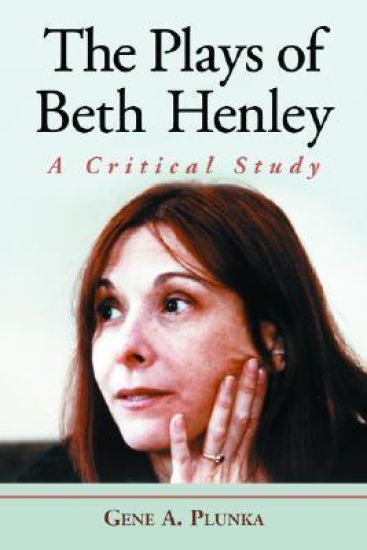
The Plays of Beth Henley

The Plays of Beth Henley

Gene A. Plunka

McFarland Co Inc
2005
pokkari
Beth Henley's twelve complete plays (three of which have been turned into films) have achieved worldwide production. At age 29, she produced her first full-length drama, Crimes of the Heart, which won a Pulitzer Prize and garnered three Academy Award nominations as a film. Her Mississippi upbringing and her penchant for the eccentricities of southern culture, however, have caused critics to categorize her writing as a kind of southern gothic folklore inspired by feminist ideology. This book, the first critical study of Henley's complete plays, attempts to dispel the common stereotypes that associate Henley's work with regional drama and sociological treatises. It argues instead that Henley can best be perceived as a dramatist who delineates an existential despair manifested in various forms of what Freud calls the modern neurosis. The book maintains that Henley's plays must be understood as universal statements about the angst of modern civilization, and Henley's characters are assessed in light of Freud's proposition that cultural restrictions create neurotic individuals. The introduction provides a brief account of Henley's childhood and career. Early chapters summarize the theory of the modern angoisse espoused in Freud's Civilization and Its Discontents, while later chapters relate this theory to thematic and stylistic elements of Henley's most popular play, Crimes of the Heart, as well as Am I Blue, The Wake of Jamie Foster, The Miss Firecracker Contest, The Debutante Ball, The Lucky Spot, Abundance, Signature, Control Freaks, Revelers, L-Play, and Impossible Marriage.
Conversations with Beth Henley

Conversations with Beth Henley

UNIVERSITY PRESS OF MISSISSIPPI
2023
sidottu
With roots in the American South, Beth Henley (b. 1952) has for four decades been a working playwright and screenwriter. Winner of the Pulitzer Prize in 1981 at the age of twenty-eight, Henley so far has written twenty-five produced plays that are always original, usually darkly comic, and often experimental. In these interviews, Henley speaks of the plays, from her early crowd-pleasers, Crimes of the Heart and The Miss Firecracker Contest, to her more experimental plays, including The Debutante Ball and Control Freaks, to her brilliant and time-bending play, The Jacksonian. Henley is a master at writing about the duality of human experience—the beautiful and the grotesque, the cruel and the loving. This duality provokes in Henley both amazement and compassion. She discusses here not only her admiration for Chekhov and other influences, but also her process of bringing a play from notebooks of images and bits of dialogues through rumination, writing, and rewriting to rehearsals and previews. The interviews range from 1981, just before she won the Pulitzer Prize, to 2020 and cover nearly forty years of a creative life, which, as Henley remarks in the most recent interview, is "such a life worth living: to be in tune with the creative process.
Conversations with Beth Henley

Conversations with Beth Henley

UNIVERSITY PRESS OF MISSISSIPPI
2023
pokkari
With roots in the American South, Beth Henley (b. 1952) has for four decades been a working playwright and screenwriter. Winner of the Pulitzer Prize in 1981 at the age of twenty-eight, Henley so far has written twenty-five produced plays that are always original, usually darkly comic, and often experimental. In these interviews, Henley speaks of the plays, from her early crowd-pleasers, Crimes of the Heart and The Miss Firecracker Contest, to her more experimental plays, including The Debutante Ball and Control Freaks, to her brilliant and time-bending play, The Jacksonian. Henley is a master at writing about the duality of human experience—the beautiful and the grotesque, the cruel and the loving. This duality provokes in Henley both amazement and compassion. She discusses here not only her admiration for Chekhov and other influences, but also her process of bringing a play from notebooks of images and bits of dialogues through rumination, writing, and rewriting to rehearsals and previews. The interviews range from 1981, just before she won the Pulitzer Prize, to 2020 and cover nearly forty years of a creative life, which, as Henley remarks in the most recent interview, is "such a life worth living: to be in tune with the creative process.
The Jacksonian

The Jacksonian

Beth Henley

Northwestern University Press
2014
nidottu
In The Jacksonian, Beth Henley returns to the Southern Gothic storytelling that made her reputation with both critics and audiences. Set in a seedy motel in Jackson, Mississippi, in 1964, the play centers around Rosy, a troubled teenager, and Bill, her dentist father who has been living at the motel for several months as his wife, Susan, considers the disgrace of divorce. Fred, the motel bartender, and Eva, a waitress, are locked in a gruesome pact: he'll marry her if she agrees to help him evade punishment for a hideous crime. But Bill, turning to nitrous oxide to ease the pain of his life collapsing around him, is a convenient target for Eva's desperate desire for companionship. At the height of the violence associated with the civil rights movement, these characters gradually reveal the shameful secrets and psychological turmoil just beneath the surface of their insistent Southern gentility.