Kirjojen hintavertailu. Mukana 11 244 527 kirjaa ja 12 kauppaa.

Kirjahaku

Etsi kirjoja tekijän nimen, kirjan nimen tai ISBN:n perusteella.

4 tulosta hakusanalla "Bruce Conner"

Bruce Conner

Bruce Conner

University of California Press
2016
sidottu
Artist Bruce Conner (1933-2008) moved to San Francisco in 1957 and quickly enmeshed himself in the Bay Area's distinctive cultural milieu, combining a vision and a multifaceted body of work that went beyond the limitations of any genre. From early assemblages of the 1950s and 1960s to iconic and pioneering works in film, from photography and photograms to prints, drawings, and paintings, Conner's oeuvre continues to exert tremendous influence on artists working today. This historic retrospective catalogue will be the definitive resource on this important artist for decades to come. Offering a highly anticipated contemporary perspective on Conner, it will prove revelatory in assessing his output and place in postwar art. Illustrated in full color throughout, this comprehensive volume provides access to a range of material that has never been published, including early paintings from the 1950s and works from the last decade of Conner's life, along with a trove of fascinating ephemeral materials. The publication features original scholarship by a range of luminaries, including essays by Frieling, Garrels, Stuart Comer, Diedrich Diederichsen, Rachel Federman, and Laura Hoptman as well as contributions from Michelle Barger, Kevin Beasley, Dara Birnbaum, Carol Bove, Stan Brakhage, Will Brown, David Byrne, Johanna Gosse, Roger Griffith, Kellie Jones, Christian Marclay, Greil Marcus, Michael McClure, Megan Randall, Henry S. Rosenthal, Dean Smith, and Kristine Stiles. Published in association with the San Francisco Museum of Modern Art Exhibition dates: Museum of Modern Art, New York: July 3-October 2, 2016 San Francisco Museum of Modern Art: October 29, 2016-January 29, 2017 Museo Nacional Centro de Arte Reina Sofia, Madrid, Spain: February 21-May 22, 2017

Bruce Conner Brass Handles
Artist and filmmaker Bruce Conner’s (1933–2008) mobility was severely limited for the last five years of his life, when he rarely left the San Francisco home he shared with his wife, Jean. To aid in his physical navigation of its spaces, he worked with assistants to install a succession of solid brass handles in each and every room--surrounding the stove, down the boat-like stairwell, inside the recesses of the bedroom closet. At last count, the handles, a labyrinth of critical support, numbered 163. Still in situ after his death in 2008, the handles are arguably Conner’s last great work--at once physical and metaphysical, fragmentary and elusive, elegant and anonymous. Together, they draft the ghost architecture of Conner’s final years, transforming the pedestrian into something altogether different. Will Brown is a collaborative project founded by Lindsey White, Jordan Stein and David Kasprzak. Formerly based in a San Francisco storefront, Will Brown’s main objective is to manipulate the structures of exhibition-making as a critical practice. Will Brown recently mounted a solo exhibition at the Berkeley Art Museum/Pacific Film Archive.
Looking for Bruce Conner

Looking for Bruce Conner

Kevin Hatch

MIT Press
2016
pokkari
A new perspective on the enormously influential but insufficiently understood work of San Francisco-based artist Bruce Conner (1933-2008).In a career that spanned five decades, most of them spent in San Francisco, Bruce Conner (1933-2008) produced a unique body of work that refused to be contained by medium or style. Whether making found-footage films, hallucinatory ink-blot graphics, enigmatic collages, or assemblages from castoffs, Conner took up genres as quickly as he abandoned them. In this first book-length study of Conner's enormously influential but insufficiently understood career, Kevin Hatch explores Conner's work as well as his position on the geographical, cultural, and critical margins.Generously illustrated with many color images of Conner's works, Looking for Bruce Conner proceeds in roughly chronological fashion, from Conner's notorious assemblages (BLACK DAHLIA and RATBASTARD among them) through his experimental films (populated by images from what Conner called "the tremendous, fantastic movies going in my head from all the scenes I'd seen"), his little-known graphic work, and his collage and inkblot drawings.
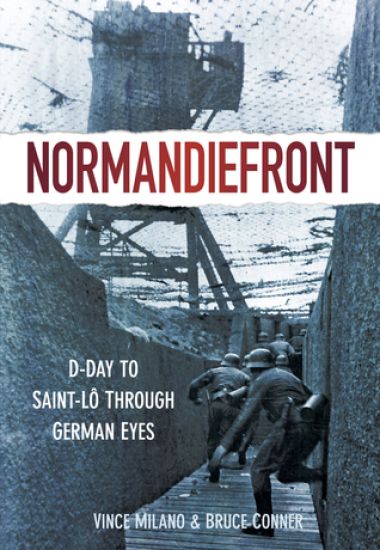
Normandiefront

Normandiefront

Vince Milano; Bruce Conner

The History Press Ltd
2012
nidottu
You probably already know the basic story of what happened on D-Day - but it is almost certain that your knowledge is based upon books written from the Allied perspective. "Normandiefront" provides a fresh and unique exploration of the greatest seaborne invasion in history. It also explains just why the Americans on Omaha beach suffered the Longest Day of all. As the ramps went down and the Amis plunged into the water, their commanders expected them to face just one battalion of mediocre occupation troops - but the veterans and the new recruits of the 352nd Division were waiting instead. Authors Vince Milano and Bruce Conner have interviewed the surviving members of that formidable fighting force - at the same time amassing a collection of German and Allied photographs and documents, many of which are published here for the first time. The fight to get off the beach and then the seemingly interminable struggle through the bocage - from hedgerow to hedgerow, as the German line fell back only to reform and counter-attack time and time again, all the way to the ruins of St Lo - was one of the most intense ever experienced by any army. Generalleutnant Dietrich Kraiss' deployment of his men is a fascinating military case study in itself. The General, responsible for the stretch of coastline that included Omaha beach and part of Gold beach, was an Eastern Front veteran, as were many of his men. He was therefore used to facing an adversary who outnumbered and outgunned his forces and was well versed in the tactics of defence and counter-attack. The division actually expected to be sent East any day and had been trained for it. Denied the use of one third of his division during the crucial first hours of the invasion that had been held in reserve by higher commands, he tenaciously held his ground until they were released and then mounted a skilful defensive campaign. The reinforcements needed to contain the Allied breakout from the beachhead never came - partly because German High Command refused to accept that Normandy really was the main invasion target and not Pas de Calais. As the authors point out, 'Any Grenadier in the 352nd could have told them differently.' With over 200 photographs and those priceless interviews with German veterans, "Normandiefront" is an important addition to the literature of World War II, telling as it does the story of how one German division changed the course of the invasion and almost the entire war.