Kirjojen hintavertailu. Mukana 11 699 587 kirjaa ja 12 kauppaa.

Kirjahaku

Etsi kirjoja tekijän nimen, kirjan nimen tai ISBN:n perusteella.

873 tulosta hakusanalla "E. T. A. Hoffmann"

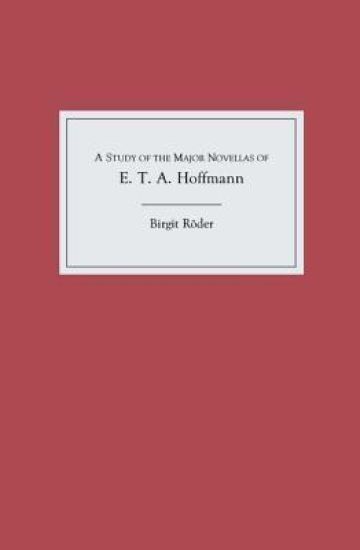
A Study of the Major Novellas of E.T.A. Hoffmann
Analysis of the novellas of the German Romantic writer and composer, focusing on the issues of art and the artist. The German Romantic writer and composer E. T. A. Hoffmann (1776-1822) -- perhaps best known to the English-speaking world through his Nutcracker and through Jacques Offenbach's opera Tales of Hoffmann -- struggled toconvince his predominantly bourgeois public of the merits of art and literature. Not surprisingly, many of his most important novellas are bound up with the dilemmas of art and the challenges faced by the Romantic artist, and itis these Künstlernovellen that are the focus of this study. Birgit Röderargues that Hoffmann's artists are not simply individuals who create works of art, but rather figures through whom the author explores the predicamentof those who reject the conventional world of bourgeois reality and seek to assert the claims of the imagination in a world dominated by prosaic rationalism. Contrary to previous scholars however, Röder demonstrates that Hoffmann's novellas clearly warn against a view of art as an autonomous aesthetic realm cut off from the world of reality. This is particularly apparent in Röder's analysis of gender relations in Hoffmann's oeuvre -- especially the relationship between (male) artist and (female) muse -- which underlines the extent to which art, literature, and the imagination are inseparably bound up with the prevailing social reality. The novellas that are given extensive consideration are Das Fräulein von Scuderi, Der Sandmann, Die Jesuiterkirche in G., Die Fermate, Der Artushof, Don Juan, Das Sanctus, and Rat Krespel. Birgit Röder teaches German language and literature at the University of Reading, UK.
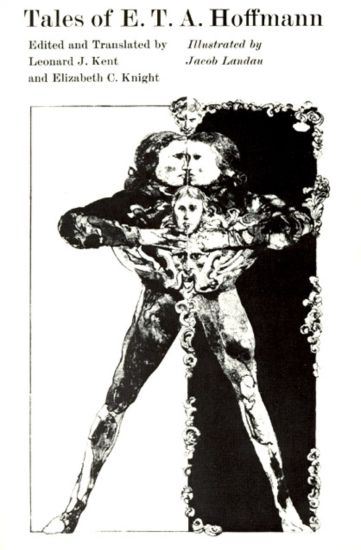
Tales of E. T. A. Hoffmann

Tales of E. T. A. Hoffmann

E. T. A. Hoffmann

University of Chicago Press
1972
nidottu
Ranging from macabre fantasies to fairy tales and tales of crime, these stories from the author of The Nutcracker create a rich fictional world. Hoffman paints a complex vision of humanity, where people struggle to establish identities in a hostile, absurd world.
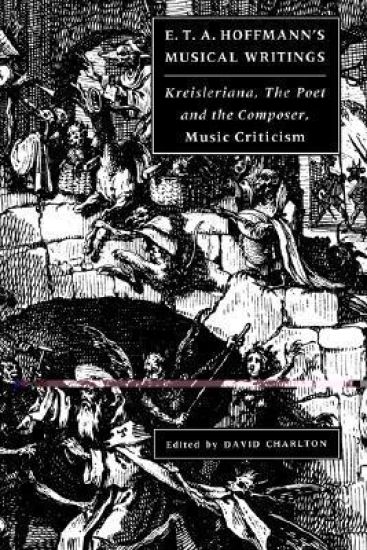
E. T. A. Hoffmann's Musical Writings

E. T. A. Hoffmann's Musical Writings

Hoffmann E. T. A.

Cambridge University Press
2004
pokkari
This book contains the first complete translation in English of E. T. A. Hoffmann’s major musical writings, complementing the well-known Tales. It offers, therefore, a long-awaited opportunity to assess the thought and influence of one of the most famous of all writers on music and the musical links with his fiction. Containing the first complete appearance in English of Kreisleriana, it reveals a masterpiece of imaginative writing whose title is familiar to musicians (from Robert Schumann’s piano cycle) and whose profound humour and irony can now be fully appreciated. This volume offers translations aiming at the greatest fidelity to Hoffmann, as well as musical accuracy in the reviews. David Charlton’s three introductory essays provide extensive information on the background to Romantic music criticism; on the origins and internal structure of Kreisleriana; and on Hoffmann and opera. A concluding essay by the late Friedrich Schnapp lists Hoffmann’s planned reviews and those mistakenly attributed to him.
E. T. A. Hoffmann Weird Tales Volume I and II

E. T. A. Hoffmann Weird Tales Volume I and II

E. T. a. Hoffmann

Createspace Independent Publishing Platform
2014
nidottu
Ernst Theodor Wilhelm Hoffmann (1776 - 1822), better known by his pen name E. T. A. Hoffmann (Ernst Theodor Amadeus Hoffmann), was a German Romantic author of fantasy and horror, a jurist, composer, music critic, draftsman and caricaturist.] His stories form the basis of Jacques Offenbach's famous opera The Tales of Hoffmann, in which Hoffman appears (heavily fictionalized) as the hero. He is also the author of the novella The Nutcracker and the Mouse King, on which the famous ballet The Nutcracker is based. The ballet Copp lia is based on two other stories that Hoffmann wrote, while Schumann's Kreisleriana is based on Hoffmann's character Johannes Kreisler.
E. T. A. Hoffmann

E. T. A. Hoffmann

Liverpool University Press
2018
sidottu
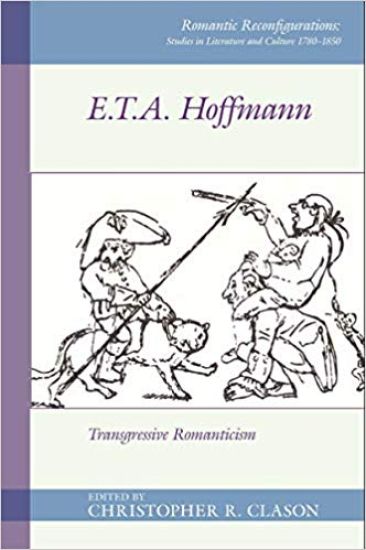
This collection of essays addresses a very broad range of E. T. A. Hoffmann’s most significant works, examining them through the lens of “transgression.” Transgression bears relevance to Hoffmann’s life and professions in three ways. First, his official career path was that of jurisprudence; he was active as a lawyer, a judge and eventually as one of the most important magistrates in Berlin. Second, his personal life was marked by numerous conflicts with political and social authorities. Seemingly no matter where he went, he experienced much chaos, grief and impoverishment in leading his always precarious existence. Third, his works explore characters and concepts beyond the boundaries of what was considered aesthetically acceptable. “Normal” bourgeois existence was often juxtaposed to the lives of criminals, sinners, and other deviants, both within the spaces of the known world as well as in supernatural realms. He, perhaps more than any other author of the German Romantic movement, regularly portrayed the dark side of existence in his works, including unconscious psychological phenomena, nightmares, somnambulism, vampirism, mesmerism, Doppelgänger, and other forms of transgressive behavior. It is the intention of this volume to provide a new look at Hoffmann’s very diverse body of work from numerous perspectives, stimulating interest in Hoffmann in English language audiences.
E. T. A. Hoffmann

E. T. A. Hoffmann

LIVERPOOL UNIVERSITY PRESS
2021
nidottu
This collection of essays addresses a very broad range of E. T. A. Hoffmann’s most significant works, examining them through the lens of “transgression.” Transgression bears relevance to Hoffmann’s life and professions in three ways. First, his official career path was that of jurisprudence; he was active as a lawyer, a judge and eventually as one of the most important magistrates in Berlin. Second, his personal life was marked by numerous conflicts with political and social authorities. Seemingly no matter where he went, he experienced much chaos, grief and impoverishment in leading his always precarious existence. Third, his works explore characters and concepts beyond the boundaries of what was considered aesthetically acceptable. “Normal” bourgeois existence was often juxtaposed to the lives of criminals, sinners, and other deviants, both within the spaces of the known world as well as in supernatural realms. He, perhaps more than any other author of the German Romantic movement, regularly portrayed the dark side of existence in his works, including unconscious psychological phenomena, nightmares, somnambulism, vampirism, mesmerism, Doppelgänger, and other forms of transgressive behavior. It is the intention of this volume to provide a new look at Hoffmann’s very diverse body of work from numerous perspectives, stimulating interest in Hoffmann in English language audiences.