Kirjojen hintavertailu. Mukana 11 244 527 kirjaa ja 12 kauppaa.

Kirjahaku

Etsi kirjoja tekijän nimen, kirjan nimen tai ISBN:n perusteella.

42 tulosta hakusanalla "Edward Jenner"

An inquiry into the causes and effects of the variolæ vaccinæ, a disease discovered in some of the western counties of England, ... and known by the name of the cow pox. By Edward Jenner, M.D.F.R.S.&c. Second edition.
The 18th century was a wealth of knowledge, exploration and rapidly growing technology and expanding record-keeping made possible by advances in the printing press. In its determination to preserve the century of revolution, Gale initiated a revolution of its own: digitization of epic proportions to preserve these invaluable works in the largest archive of its kind. Now for the first time these high-quality digital copies of original 18th century manuscripts are available in print, making them highly accessible to libraries, undergraduate students, and independent scholars.Medical theory and practice of the 1700s developed rapidly, as is evidenced by the extensive collection, which includes descriptions of diseases, their conditions, and treatments. Books on science and technology, agriculture, military technology, natural philosophy, even cookbooks, are all contained here.++++The below data was compiled from various identification fields in the bibliographic record of this title. This data is provided as an additional tool in helping to insure edition identification: ++++British LibraryT054052Half-title: 'An inquiry, &c. &c.' - The unnumbered leaf after p. 64 is the half-title: 'Further observations on the variol vaccin .' - 'A continuation of facts and observations relative to the variol vaccin ' has a half-title and titlepage; the registerLondon: printd for the author, by Sampson Low: and sold by Law; and Murray and Highley, 1800. vii, 1],64, 2],2, 1],70-182, 2]p., plates; 4
Further observations on the variolæ vaccinæ, or cow pox. By Edward Jenner, M.D. ...
The 18th century was a wealth of knowledge, exploration and rapidly growing technology and expanding record-keeping made possible by advances in the printing press. In its determination to preserve the century of revolution, Gale initiated a revolution of its own: digitization of epic proportions to preserve these invaluable works in the largest archive of its kind. Now for the first time these high-quality digital copies of original 18th century manuscripts are available in print, making them highly accessible to libraries, undergraduate students, and independent scholars.Medical theory and practice of the 1700s developed rapidly, as is evidenced by the extensive collection, which includes descriptions of diseases, their conditions, and treatments. Books on science and technology, agriculture, military technology, natural philosophy, even cookbooks, are all contained here.++++The below data was compiled from various identification fields in the bibliographic record of this title. This data is provided as an additional tool in helping to insure edition identification: ++++British LibraryT053874With a half-title.London: printed, for the author, by Sampson Low: and sold by Law, and Murray and Highley, 1799. 6],64p.; 4
Further Observations on the Variolæ Vaccinæ, or cow pox. By Edward Jenner, M.D.
The 18th century was a wealth of knowledge, exploration and rapidly growing technology and expanding record-keeping made possible by advances in the printing press. In its determination to preserve the century of revolution, Gale initiated a revolution of its own: digitization of epic proportions to preserve these invaluable works in the largest archive of its kind. Now for the first time these high-quality digital copies of original 18th century manuscripts are available in print, making them highly accessible to libraries, undergraduate students, and independent scholars.Medical theory and practice of the 1700s developed rapidly, as is evidenced by the extensive collection, which includes descriptions of diseases, their conditions, and treatments. Books on science and technology, agriculture, military technology, natural philosophy, even cookbooks, are all contained here.++++The below data was compiled from various identification fields in the bibliographic record of this title. This data is provided as an additional tool in helping to insure edition identification: ++++British LibraryT053874With a half-title.London: printed, for the author, by Sampson Low: and sold by Law, and Murray and Highley, 1799. 6],64p.; 4
An Inquiry Into the Causes and Effects of the Variolæ Vaccinæ, a Disease Discovered in Some of the Western Counties of England, ... and Known by the Name of the cow pox. By Edward Jenner, M.D.F.R.S.&c. Second Edition
The 18th century was a wealth of knowledge, exploration and rapidly growing technology and expanding record-keeping made possible by advances in the printing press. In its determination to preserve the century of revolution, Gale initiated a revolution of its own: digitization of epic proportions to preserve these invaluable works in the largest archive of its kind. Now for the first time these high-quality digital copies of original 18th century manuscripts are available in print, making them highly accessible to libraries, undergraduate students, and independent scholars.Medical theory and practice of the 1700s developed rapidly, as is evidenced by the extensive collection, which includes descriptions of diseases, their conditions, and treatments. Books on science and technology, agriculture, military technology, natural philosophy, even cookbooks, are all contained here.++++The below data was compiled from various identification fields in the bibliographic record of this title. This data is provided as an additional tool in helping to insure edition identification: ++++British LibraryT054052Half-title: 'An inquiry, &c. &c.' - The unnumbered leaf after p. 64 is the half-title: 'Further observations on the variol vaccin .' - 'A continuation of facts and observations relative to the variol vaccin ' has a half-title and titlepage; the registerLondon: printd for the author, by Sampson Low: and sold by Law; and Murray and Highley, 1800. vii, 1],64, 2],2, 1],70-182, 2]p., plates; 4
An Inquiry Into the Causes and Effects of the Variolæ Vaccinæ, a Disease Discovered in Some of the Western Counties of England, ... and Known by the Name of the cow pox. By Edward Jenner, M.D.F.R.S.&c
The 18th century was a wealth of knowledge, exploration and rapidly growing technology and expanding record-keeping made possible by advances in the printing press. In its determination to preserve the century of revolution, Gale initiated a revolution of its own: digitization of epic proportions to preserve these invaluable works in the largest archive of its kind. Now for the first time these high-quality digital copies of original 18th century manuscripts are available in print, making them highly accessible to libraries, undergraduate students, and independent scholars.Medical theory and practice of the 1700s developed rapidly, as is evidenced by the extensive collection, which includes descriptions of diseases, their conditions, and treatments. Books on science and technology, agriculture, military technology, natural philosophy, even cookbooks, are all contained here.++++The below data was compiled from various identification fields in the bibliographic record of this title. This data is provided as an additional tool in helping to insure edition identification: ++++British LibraryT054053With a half-title and a final leaf of errata.London: printed, for the author, by Sampson Low: and sold by Law; and Murray and Highley, 1798. 2], iv,75, 3]p., plates; 4
A Continuation of Facts and Observations Relative to the Variolæ Vaccinæ, or cow pox. By Edward Jenner, M.D.
The 18th century was a wealth of knowledge, exploration and rapidly growing technology and expanding record-keeping made possible by advances in the printing press. In its determination to preserve the century of revolution, Gale initiated a revolution of its own: digitization of epic proportions to preserve these invaluable works in the largest archive of its kind. Now for the first time these high-quality digital copies of original 18th century manuscripts are available in print, making them highly accessible to libraries, undergraduate students, and independent scholars.Medical theory and practice of the 1700s developed rapidly, as is evidenced by the extensive collection, which includes descriptions of diseases, their conditions, and treatments. Books on science and technology, agriculture, military technology, natural philosophy, even cookbooks, are all contained here.++++The below data was compiled from various identification fields in the bibliographic record of this title. This data is provided as an additional tool in helping to insure edition identification: ++++Countway Library of MedicineN005839With a half-title.London: printed, for the author, by Sampson Low: and sold by Law; and Murray and Highley, 1800. 42p.; 4
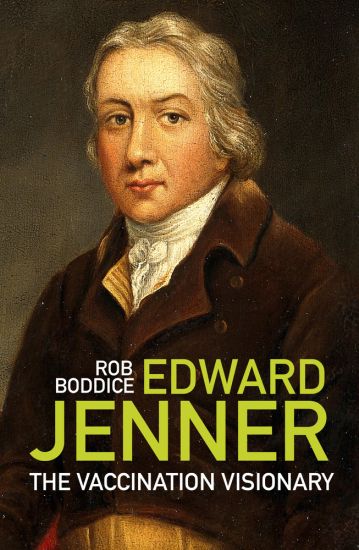
Edward Jenner

Edward Jenner

Rob Boddice

THE HISTORY PRESS LTD
2023
pokkari
Edward Jenner is a giant of modern medicine. Throughout history, smallpox had plagued humanity with disfigurement, blindness and death. It was an incurable blight, the suffering of which Jenner helped to end.Surmising from the immunity of milkmaids that cowpox might be some defence against the ravages of smallpox, in 1793 he took some of the matter from a human case of cowpox and inserted it into the arm of a young boy. To test this, the first human-to-human vaccination, he subsequently inoculated the boy with smallpox itself, and found him to be immune from the disease. In 1979 smallpox was declared extinct.In this concise biography, Rob Boddice tells the story of Jenner’s life, his medical vision and his profound legacy. It is a story that encompasses revolutions in medical experimentation, public health provision and the prevention of other diseases, from anthrax to measles, but above all it highlights the profound impact that Jenner’s vision has had upon humanity’s battle against disease.
Edward Jenner and Smallpox Vaccination

Edward Jenner and Smallpox Vaccination

Irmengarde Eberle; Henry S. Gillette

Literary Licensing, LLC
2012
sidottu
Edward Jenner And Smallpox Vaccination is a book written by Irmengarde Eberle that explores the life and work of Edward Jenner, the English physician who developed the first successful vaccine for smallpox. The book provides a detailed account of Jenner's childhood, education, and medical training, as well as his groundbreaking research on smallpox and vaccination. Eberle also delves into the social and historical context of Jenner's work, highlighting the widespread fear and devastation caused by smallpox in the 18th century and the resistance and skepticism that Jenner faced in his efforts to promote vaccination. Through a combination of historical research and engaging storytelling, Edward Jenner And Smallpox Vaccination offers readers a fascinating glimpse into the life of one of the most important figures in the history of medicine and public health.Immortals Of Science Series.This scarce antiquarian book is a facsimile reprint of the old original and may contain some imperfections such as library marks and notations. Because we believe this work is culturally important, we have made it available as part of our commitment for protecting, preserving, and promoting the world's literature in affordable, high quality, modern editions, that are true to their original work.
Edward Jenner et le vaccin contre la variole
D couvrez enfin tout ce qu'il faut savoir sur Edward Jenner et le vaccin contre la variole en moins d'une heure Pendant des si cles, la variole a effray l'Europe par son caract re end mique et mortel. Si des mesures sont prises pour s'en pr munir d s les premiers si cles de notre re, il faut attendre les XVIIIe et XIXe si cles pour que s'amorce une v ritable r volution cet gard. C'est Edward Jenner qui, avant m me la d couverte par Louis Pasteur du r le des micro-organismes comme agents infectieux, en invente le vaccin. Moins de deux si cles plus tard, la maladie est radiqu e. Ce livre vous permettra d'en savoir plus sur: - La vie d'Edward Jenner- Le contexte de l' poque- Les temps forts de sa vie - Les r percussions de son invention Le mot de l' diteur: Dans ce num ro de la collection 50MINUTES - Grandes Inventions, M lanie Mettra nous pr sente l'invention r volutionnaire d'Edward Jenner. Remarquant que ses patients atteints de la vaccine ne contractaient pas la variole, il m ne des exp riences afin de confirmer son intuition. Il s'attache ensuite tudier le mat riau vaccinable afin que celui-ci soit efficace sans qu'il n'y ait d'effets secondaires, et organise sa conservation et son transport, rendant possible la vaccination grande chelle. St phanie Dagrain PROPOS DE LA S RIE 50MINUTES-Grandes InventionsLa s rie Grandes Inventions de la collection 50MINUTES pr sente plus de cinquante inventions qui ont boulevers notre quotidien. Chaque livre a t pens pour les lecteurs curieux qui veulent faire le tour d'un sujet pr cis, tout en allant l'essentiel, et ce en moins d'une heure. Nos auteurs combinent les faits historiques, les analyses et les nouvelles perspectives pour rendre accessibles des si cles d'histoire.
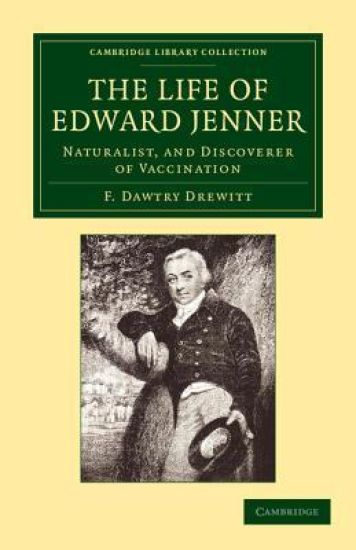
The Life of Edward Jenner M.D., F.R.S.

The Life of Edward Jenner M.D., F.R.S.

F. Dawtry Drewitt

Cambridge University Press
2013
pokkari
Active in fields spanning medicine, ornithology, zoology and even watercolour painting, Frederick Dawtrey Drewitt (1848–1942) was a prominent fellow of the Royal College of Physicians, exhibited at the Royal Academy, and was involved in governing the National Trust. His particular interest in birds led him to study the work of the physician and naturalist Edward Jenner (1749–1823), who contributed to the field of ornithology through his observations of the cuckoo's behaviour. Jenner is better known, however, as the 'father of immunology' for pioneering the smallpox vaccination - the word 'vaccine' comes from the Latin vacca (cow) as Jenner used the cowpox virus to inoculate against smallpox infection in humans. Drewitt had general readers in mind when he wrote about Jenner's extraordinary life and growing worldwide recognition. The first edition of this biography was published in 1931, and this enlarged second edition appeared in 1933.
The Life of Edward Jenner M.D.

The Life of Edward Jenner M.D.

Baron John

Cambridge University Press
2014
pokkari
Written by his friend, the physician John Baron (1786–1851), this laudatory biography of the 'father of immunology' did much to enhance the reputation of Edward Jenner (1749–1823) upon its publication in two volumes between 1827 and 1838. The work covers Jenner's personal and professional life both before and after his development of the vaccine for smallpox, as well as touching on the vaccine's reception and use around the world. Thoroughly explaining the history and facts of vaccination, Baron established himself as an authority on the subject. Although criticised by some for its unquestioning praise of Jenner's genius, the work is valuable for its use of primary sources, drawing heavily on correspondence and personal notes, excerpts of which appear throughout the text. Volume 1, published in 1827, focuses on Jenner's early life and the history and science of vaccination.
The Life of Edward Jenner M.D.

The Life of Edward Jenner M.D.

Baron John

Cambridge University Press
2014
pokkari
Written by his friend, the physician John Baron (1786–1851), this laudatory biography of the 'father of immunology' did much to enhance the reputation of Edward Jenner (1749–1823) upon its publication in two volumes between 1827 and 1838. The work covers Jenner's personal and professional life both before and after his development of the vaccine for smallpox, as well as touching on the vaccine's reception and use around the world. Thoroughly explaining the history and facts of vaccination, Baron established himself as an authority on the subject. Although criticised by some for its unquestioning praise of Jenner's genius, the work is valuable for its use of primary sources, drawing heavily on correspondence and personal notes, excerpts of which appear throughout the text. Volume 2, published in 1838, covers Jenner's later life and the global reception of vaccination. The appendix lists the various honours bestowed upon him.