Kirjojen hintavertailu. Mukana 11 342 296 kirjaa ja 12 kauppaa.

Kirjahaku

Etsi kirjoja tekijän nimen, kirjan nimen tai ISBN:n perusteella.

298 tulosta hakusanalla "Edward Thomas"

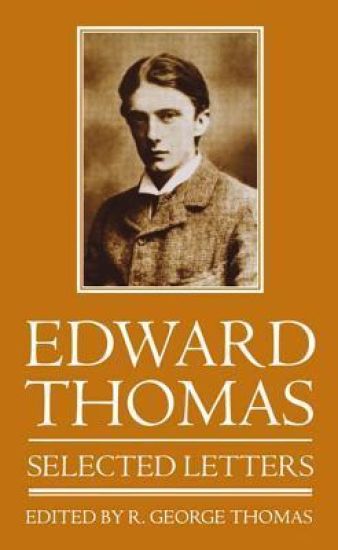
Edward Thomas: Selected Letters

Edward Thomas: Selected Letters

Edward Thomas

Clarendon Press
1996
sidottu
Edward Thomas, professional author and critic, was thirty-nine when he was killed in the Arras offensive on Easter Day, 1917. Six months later his first collection of poems was published and his literary reputation secured. These Selected Letters present a uniquely vivid portrait of Thomas's life, from his time as an undergraduate at Oxford through to his final days at the Front. Chosen from more than 2,000 extant letters from Thomas to his family and literary friends - including Robert Frost, Walter de la Mare, and Eleanor Farjeon - the selection traces his struggle to establish himself as a writer, his long and successful fight against depression, and, amid the strain of a marriage which sometimes brought much agony, the strength of his love for his wife Helen. The letters, which formed a key source for R George Thomas's highly praised biography of a poet, help substantiate the editor's belief that despite Thomas's immense prose output and the late flowering of his verse in 1914-1916, it was nevertheless the name and nature of poetry that was Edward Thomas's dominant lifelong concern.
Collected Poems of Edward Thomas

Collected Poems of Edward Thomas

Edward Thomas

Faber Faber
2004
nidottu
Since the publication of Walter de la Mare's first edition of his poems in 1920, Edward Thomas has gradually come to be recognised as one of the great English poets of the 20th century.Though sometimes classified with Owen, Rosenberg and Sassoon as a 'war poet', he was rather a poet who died tragically in the war, and whose main subjects were the English countryside and its people, and the solitude of the observing self. The present edition offers the complete poems together with detailed editorial apparatus in what has become acknowledged as the standard edition by R. George Thomas. It also includes Thomas's remarkable prose War Diary of 1917.
Selected Poems of Edward Thomas

Selected Poems of Edward Thomas

Edward Thomas

Faber Faber
2011
pokkari
When Edward Thomas was killed at the Battle of Arras in 1917 his poems were largely unpublished. But in the years since his death, his work has come to be cherished for its rare, sustained vision of the natural world and as 'a mirror of England' (Walter de la Mare). This edition, drawn from Thomas's manuscripts and typescripts as well as from his published works, offers an accessible introduction to this most resonant - and relevant - of poets.'In his lifetime, he was known and loved by a very, loving few. Now, since his death, he is known and loved by very many, and yearly this is more so. There is in his poems an unassumingly profound sense of permanence. A war came and ditched him, but his poems stay with no other wounds than those which caused them.' Dylan Thomas 'A very fine poet. And a poet all in his own right. The accent is absolutely his own.' Robert Frost'The one hundred and forty poems he wrote in the last two years of his life are a miracle. I can think of no body of work in English that is more mysterious.' Michael Longley
The Childhood of Edward Thomas

The Childhood of Edward Thomas

Edward Thomas

Faber Faber
2008
nidottu
Killed at Arras in 1917, Edward Thomas left behind him a short, vivid history of his own early life, covering the period from his birth to his entry into St Paul's. Though a fragment, in many senses it is far more: in the words of its author 'no less than an autobiography . . . an attempt to put down on paper what [this author] sees when he thinks of himself from 1878 to about 1895'. The Childhood of Edward Thomas was not published until 1938, over two decades after Thomas originally showed the manuscript to a publisher. Those eventual publishers, Faber & Faber, were building on their release two years earlier of Thomas's Collected Poems, for which he was becoming best known.This edition includes Edward Thomas's 'War Diary,' a record of the last three months of his life when, as an elderly - at thirty-eight - subaltern he fought among the misery of the trenches. To witness Thomas's childhood memoir and wartime diaries in such close proximity is to have a moving incarnation of his distinctive voice, its clarity and - even in war - its unfailing attention to his fellow-creatures.
Edward Thomas on the Countryside

Edward Thomas on the Countryside

Edward Thomas

Faber Faber
2009
pokkari
Edward Thomas was born in Lambeth, London, in 1878, and educated at St Paul's College and Lincoln College, Oxford. Thomas voluntarily enlisted in the Artists' Rifles in 1915 and was commissioned into the Royal Garrison Artillery in 1916. He was killed in action at Arras on 9 April 1917. Since his death his reputation as a poet has grown steadily, but the prose work is largely inaccessible or unknown. His books have often been dismissed as bread-and-butter work by a poet who was able to blossom only when his soldier's pay released him from wage-earning. Roland Gant has made a selection from Thomas's writings on country matters which will be welcomed not only by admirers of his poetry but also by readers interested in pre-1914 rural life. Drawing on nearly twenty books such as The South Country, Wales, The Heart of England and volumes of essays, Grant has arranged his extracts under the headings 'Roads and Footpaths', 'The Lie of the Land', 'Figures in the Landscape' and 'Through the Year'. Interspersed are poems that often distil the theme of a prose description and show that Thomas's strength as a poet is more than equal to his creative achievement as a writer of prose.
Edward Thomas

Edward Thomas

Eleanor Farjeon

Faber Faber
2010
pokkari
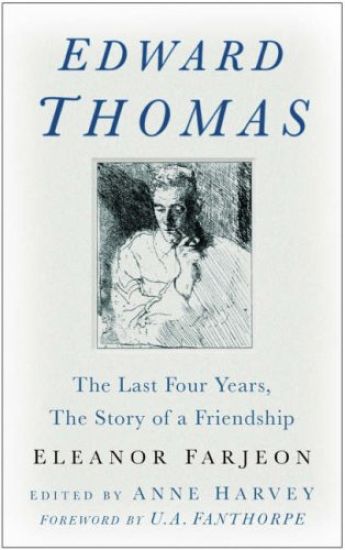
Eleanor Farjeon first met Edward Thomas in the late autumn of 1912, when her brother invited him to tea. It was the beginning of a deep friendship between the painfully shy 31-year-old woman and the reserved writer known for his prose works and literary criticism. Though he died at the Battle of Arras in April 1917, it was a friendship which for Eleanor did not end with his death, but lived beyond it in his letters, and his poems, many of which Edward had sent to her from the trenches of the First World War for her comments.This double memoir uses Edward's letters and Eleanor's diaries and linking commentary to provide an extraordinarily candid account of their developing friendship, and of the enthusiasms they shared - both loved walking, and it was during this period that Edward first found his way into poetry. Edward was often deeply depressed, a man who found in nature something fundamental and ideal, a soldier-poet who wrote about the war in a new way, but Eleanor also shows us another side to his character, capturing moments of joy and humour. She also offers a unique account of Thomas's development as a poet, including the momentous meeting in 1913 with the American poet Robert Frost, whose encouragement led to Thomas's first poems. Thomas describes for her his family, his friendships with other writers, D H Lawrence among them, and also provides an exceptionally detailed account of his experiences in the First World War with the Artists' Rifles.Edward Thomas: The Last Four Years, was widely acclaimed on its first publication in 1958 - this second edition, published on the 80th anniversary of Thomas's death, has an introduction by Anne Harvey, a selection of Eleanor's sonnets 'To E.T.', and 'Walking Tom', a hitherto little-known poem about Edward written by Clifford Bax and Herbert Farjeon. Also included are eight pages of black and white photographs.
Edward Thomas

Edward Thomas

Judy Kendall

University of Wales Press
2012
nidottu
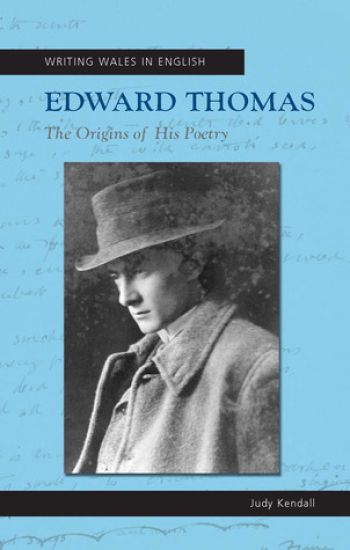
Edward Thomas: The Origins of his Poetry builds a new theoretical framework for critical work on imaginative composition through an investigation of Edward Thomas's composing processes, on material from his letters, his poems and his prose books. It looks at his relation to the land and landscape and includes detailed and illuminating new readings of his poems and close study of many of his hitherto relatively neglected prose works. It traces new and surprising connections between Thomas's approach to composition and the writing and thought of Freud, Woolf and William James, and introduces the significant influence of Japanese aesthetics on Thomas. Analysis of his drafts, layout and typographic and handwritten habits also illumine both his completed poetry and his approach to composition. The sustained study of some of Thomas's voluminous correspondence with fellow poets and writers helps also to provide an epistolary reading of his work. The result is not only an ambitious, detailed original consideration of Thomas as writer of poetry and prose but also a surprising and far-reaching analysis of poetic composition with wide-reaching implications for early twentieth-century aesthetic theory, and the limits or the conditions of the sayable, and, through the subtle use of epigraphs from a wide-range of differing sources, the location of the specific readings of Thomas in a much wider intellectual context .
Edward Thomas

Edward Thomas

Eleanor Farjeon

Sutton Publishing Ltd
2008
nidottu
Eleanor Farjeon, first met Edward Thomas in 1912, when her brother invited him to tea. It was the beginning of a deep friendship between the shy 31-year-old woman and the reserved writer. Though he died at the Battle of Arras in 1917, it was a friendship which for Eleanor did not end with his death, but lived beyond in his letters and poems. This double memoir uses Edward's letters and Eleanor's diaries and linking commentary to provide a candid account of their developing friendship. Edward was often deeply depressed but Eleanor also shows another side to his character, capturing moments of joy and humour. She offers a unique account of Thomas' development as a poet, including the momentous meeting with American poet Robert Frost whose encouragement led to Thomas' first poems. Thomas describes for her his family, his friendships with other writers, including D.H. Lawrence, and provides a detailed account of his First World War experiences. First published in 1948, this is an acclaimed classic. This edition, published for the 90th anniversary of Thomas' death, includes an introduction by Anne Harvey, a selection of Eleanor's sonnets, and "Walking Tom", the little-known poem about Edward by Clifford Bax and Herbert Farjeon.
Edward Thomas

Edward Thomas

Enitharmon Press
2017
sidottu
Edward Thomas ranks as one of the foremost poets of the twentieth century, both in his own poetry and in his influence on subsequent poets. 'He is the father of us all,' asserted Ted Hughes.This book combines the story of his life until his death at the Battle of Arras in 1917 with numerous illustrations, including photographs, printed material and original letters, many of which have never been published before. The book will add to what is already known of Thomas and his family before and after his death by putting his biography into a visual and historical context.
Edward Thomas: A Portrait

Edward Thomas: A Portrait

R. George Thomas

Oxford University Press
1985
sidottu
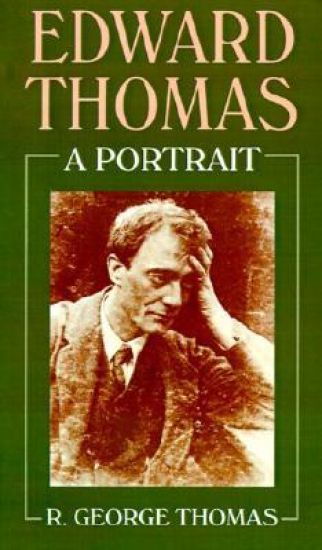
Edward Thomas 1878-1917, published author, critic, and essayist, died at 39, a casualty of World War I. At the suggestion of his friend Robert Frost, Thomas began to write poetry and six months after his death his first book of poems was published. As the prose writer died, the poet was born, and it is on the poems that his reputation still rests. This new biography--based on some 1,800 of Thomas's letters--tells the story of his courtship, his restless marriage, and his tormented need to choose between happiness with his wife and children and the need to find his way as a writer alone. With delicacy and understanding the book describes Thomas's complex character and his pilgrimage on the road to self-discovery, and reveals how the emergence of Thomas the poet became inevitable.
Edward Thomas: Prose Writings: A Selected Edition
Edward Thomas is a key figure in the English literary canon. A major twentieth-century poet, he was also one of England's most experienced and respected Edwardian and Georgian critics, and an exceptional observer of the countryside. Although he died at the age of only 39, his prose output was considerable and encompassed a wide range of genres: biography, autobiography, essays, reviews, fiction, nature books, travel writings, and anthologies. While Thomas's stature as a poet is widely appreciated, his prose works have yet to be given their critical due -- in large part because scholarly editions have hitherto been lacking. Edward Thomas: Prose Writings: A Selected Edition shows that Thomas's prose deserves to be much better known by literary scholars but also the general reading public. This six-volume edition establishes him as one of the most important prose writers in English, who contributed remarkable ideas and representations of the self and community, the landscape and ecology, literature and history, the spiritual and artistic life. It is the definitive edition of Thomas's prose and a significant scholarly resource for the twenty-first century. Volume V is dedicated to Edward Thomas's work in literary criticism. Known as a diverse and prolific reviewer of literature, including of modern poetry, Thomas also wrote a significant number of broadly critical studies at book length. These books helped alter his established reputation as a nature writer, and included studies of Lefcadio Hearn, Maurice Maeterlinck, and of Keats. Volume 5 reproduces the two most important of his works in criticism: Thomas's Algernon Charles Swinburne: A Study (1912) and Walter Pater: A Study (1913). These are important texts in the last few years of Thomas's career as a prose writer, in which obliquely he assesses his own relationship with prose and with creative language, analysing via two other writers what were some of the largest challenges for his authorship. Presented as an evaluation of two major Victorian writers, the two books are best understood as self-examination. And they are also, as the Introduction argues, telling versions of Thomas's 'unlived lives': in assessing both Swinburne and Pater, Thomas contemplates lives that he had not himself led. The books are suffused with his own dismay, self-criticism, longing, and desire. They are unmissable steps on Thomas the poet's way to discovering that prose was not the best literary form for his self-expression. Fully annotated, this edition draws widely on the surviving manuscripts of these two works to present a unique insight into Thomas at work, finding the physical traces in the manuscript record of the very troubles he was claiming true of two other writers. The edition also adds further literary material, including reviews and an early Paterian short-story by Thomas to indicate something of his debts -- sometimes despite his protestations -- to authors of the previous generation.
Edward Thomas: Prose Writings: A Selected Edition
Edward Thomas can be seen as the most important poetry critic in the early twentieth century. Thomas was a prose-writer before he was a poet. The Selected Edition of his prose, and especially this volume, shows that he was also a critic before he was a poet. His unusual literary career opens up key questions about the relation between poetry and criticism, as well as between poetry and prose. Thomas wrote books about poetry, but his criticism mainly took the form of reviews. He reviewed collections, editions, and studies of poetry, most regularly, for the Daily Chronicle and the Morning Post. These reviews amount to a unique commentary on the state of poetry and of poetry criticism after 1900. Since reviewing provided Thomas's main income, he also reviewed other kinds of book. Hence the sheer mass of his reviews, the stress he suffered as a literary journalist. Yet his criticism maintains an astonishingly high standard. Thomas's response to contemporary poetry intersects with his readings of older poetry. No critic or poet of the time was so deeply acquainted with the traditions of English-language poetry or so alert to new poetic movements in Ireland and America. Edward Thomas's writings on poetry have a double importance. Besides suggesting the hidden evolution of his own aesthetic, they constitute a lost history and critique of poetry before the Great War. They change our assumptions about that period. Thomas's perspectives on poets such as Yeats, Hardy, Frost, Lawrence, and Pound illuminate the making of modern poetry.
Edward Thomas's Prose

Edward Thomas's Prose

Ralph Pite

Oxford University Press
2025
sidottu
Edward Thomas (1878-1917) is a renowned poet. Until recently, his prose writing has, by comparison, been neglected and very often dismissed by critics. Thanks not least to the multi-volume new edition being published by OUP (gen. eds. Guy Cuthbertson and Lucy Newlyn), this body of work is being re-evaluated. This new study by Ralph Pite forms part of that undertaking; it is the first to consider Thomas's prose on its own terms, independently of the poetry that it preceded. By considering all of Thomas's prose work in its wide variety of genres (nature writing, literary criticism, fiction, autobiography) and by drawing, for the first time, on the whole range of his reviewing, this study transforms understanding of his development. The continuity of his critical perspective emerges; his Celtic loyalties, their nature and their depth, are revealed; both the complexity and the conviction of his politics are brought to light, alongside his receptive alertness to innovative writing and his own originality and daring as a writer. The view of his achievement generated by his interwar reception (itself the outcome of societal mourning and griefwork) is challenged; so is the critical consensus regarding the quality of his prose and the reasons behind its changing styles across Thomas's career. From all of this, it becomes clear, moreover, how powerfully Thomas's work speaks in the contemporary moment of environmental and climate breakdown. Thomas's prose seeks constantly to articulate a relationship of absolute interdependence between human beings and the natural world. His writing is so exploratory and original because Thomas seeks to address the problematic reality that interdependence--this truth of humanity's place in natural world--is perceptible to Western eyes only as mystery.
Edward Thomas: Prose Writings: A Selected Edition
Edward Thomas is an important figure in the English literary canon, a major twentieth-century poet, he was also one of England's most experienced and respected Edwardian and Georgian critics, and an observer of the countryside second to none. Although he died at the age of only 39, his prose output was massive and encompassed a range of genres: biography, autobiography, essays, reviews, fiction, nature books, travel writings, and anthologies. While Thomas's stature as a poet is widely appreciated, his prose works have yet to be given their critical due - in large part because scholarly editions have hitherto been lacking. Edward Thomas: Prose Writings: A Selected Edition shows that Thomas's prose deserves to be much better known, by literary scholars but also the general reading public. This six-volume edition establishes him as one of the most important prose writers in English, who contributed remarkable ideas and representations of the self and community, the landscape and ecology, literature and history, the spiritual and artistic life. It is the definitive edition of Thomas's prose and a significant scholarly resource for the twenty-first century. The second volume contains Thomas's writings on England and Wales, and is mostly concerned with his response to the countryside. It covers the entirety of his writing career, showing the development of his identity and style. Works appear in chronological order within the volume, which begins with a comprehensive introduction, providing biographical details, an account of the circumstances of composition, historical contextualisation of the volume's themes and concerns, and an interpretation based on original research. Thomas's complex and brilliant prose, intricately woven using many quotations and allusions, is elucidated by a detailed headnote at the start of each work, and by extensive annotation.
Edward Thomas: Prose Writings: A Selected Edition
Autobiographies is the first volume in Edward Thomas: Prose Writings: A Selected Edition. It contains the autobiographical prose of one of the most respected British writers of the twentieth century, including the autobiographical story The Happy-Go-Lucky Morgans, the posthumously published 'autobiography' The Childhood of Edward Thomas, the essay 'How I Began', the previously unpublished 'Addenda to Autobiography', and a long section from 'Fiction' (also previously unpublished). In these works, all written between 1912 and 1914, Thomas provides a remarkable portrait of his childhood and teenage years in London, Wiltshire, and Wales. Writing this prose was a journey away from a troubled present back into earlier and happier experiences, but these unique autobiographies also have much in common with his other prose works. The complexity and brilliance of Thomas's autobiographical prose is discussed and revealed in a long introduction, by a detailed headnote at the start of each work, and by extensive annotation. Thomas's prose has never previously been given the scholarly attention that it receives here. Although Thomas's autobiographies are very accessible, and written with a longing for the simplicity of childhood, they are also intricately woven, using many quotations and allusions. The longest of the works, The Happy-Go-Lucky Morgans, is both his simplest prose work and his most complex. Indeed, Autobiographies contains some of Thomas's finest prose, written in the two years, and in some cases merely a few months, before his decision to start writing the poetry for which he is most, and greatly, esteemed. Edward Thomas: Prose Writings: A Selected Edition will appeal to those who know and admire his prose, as well as those who have never encountered it before, and show that Thomas's prose, not least his autobiographical prose, deserves to be much better known.