Kirjojen hintavertailu. Mukana 12 352 240 kirjaa ja 12 kauppaa.

Kirjahaku

Etsi kirjoja tekijän nimen, kirjan nimen tai ISBN:n perusteella.

20 tulosta hakusanalla "Eric Rohmer"

Éric Rohmer

Éric Rohmer

Antoine de Baecque; Noël Herpe

Columbia University Press
2016
sidottu
The director of twenty-five films, including My Night at Maud's (1969), which was nominated for a Best Picture Academy Award, and the editor in chief of Cahiers du cinema from 1957 to 1963, Eric Rohmer set the terms by which people watched, made, and thought about cinema for decades. Such brilliance does not develop in a vacuum, and Rohmer cultivated a fascinating network of friends, colleagues, and industry contacts that kept his outlook sharp and propelled his work forward. Despite his privacy, he cared deeply about politics, religion, culture, and fostering a public appreciation of the medium he loved. This exhaustive biography uses personal archives and interviews to enrich our knowledge of Rohmer's public achievements and lesser known interests and relations. The filmmaker kept in close communication with his contemporaries and competitors: Francois Truffaut, Jean-Luc Godard, Claude Chabrol, and Jacques Rivette. He held a paradoxical fascination with royalist politics, the fate of the environment, Catholicism, classical music, and the French nightclub scene, and his films were regularly featured at New York and Los Angeles film festivals. Despite an austere approach to life, Rohmer had a voracious appetite for art, culture, and intellectual debate captured vividly in this definitive volume.
Éric Rohmer

Éric Rohmer

Antoine de Baecque; Noël Herpe

Columbia University Press
2018
pokkari
The director of twenty-five films, including My Night at Maud's (1969), which was nominated for a Best Picture Academy Award, and the editor in chief of Cahiers du cinema from 1957 to 1963, Eric Rohmer set the terms by which people watched, made, and thought about cinema for decades. Such brilliance does not develop in a vacuum, and Rohmer cultivated a fascinating network of friends, colleagues, and industry contacts that kept his outlook sharp and propelled his work forward. Despite his privacy, he cared deeply about politics, religion, culture, and fostering a public appreciation of the medium he loved. This exhaustive biography uses personal archives and interviews to enrich our knowledge of Rohmer's public achievements and lesser known interests and relations. The filmmaker kept in close communication with his contemporaries and competitors: Francois Truffaut, Jean-Luc Godard, Claude Chabrol, and Jacques Rivette. He held a paradoxical fascination with royalist politics, the fate of the environment, Catholicism, classical music, and the French nightclub scene, and his films were regularly featured at New York and Los Angeles film festivals. Despite an austere approach to life, Rohmer had a voracious appetite for art, culture, and intellectual debate captured vividly in this definitive volume.
Eric Rohmer

Eric Rohmer

Derek Schilling

Manchester University Press
2007
nidottu
Few filmmakers have taken the principle of the ‘talking picture’ so far as Eric Rohmer, the internationally reknowned director of the Moral Tales, Comedies and Proverbs, and Tales of the Four Seasons cycles. Occasionally dismissed as precious or overly literary, Rohmer’s features may leave the impression that there is more to listen to than to look at. Yet as the secretive director (b. Maurice Schérer in 1920) points out, dialogue is no less engaging than the best gunfights, and if his characters prefer discussing love to making it, they are no less the ‘heroes’ of the stories they tell.Charges of political conservatism aside, the author of My Night at Maud’s, Summer and such period films as Perceval and the all-digital The Lady and the Duke emerges - like Hitchcock before him - as a singular inventor of cinematic forms. This critical overview, which contains an extensive bibliography and a filmography, will appeal to students of Film Studies, French Studies, and enthusiasts.
Eric Rohmer

Eric Rohmer

K. Tester

Palgrave Macmillan
2008
nidottu
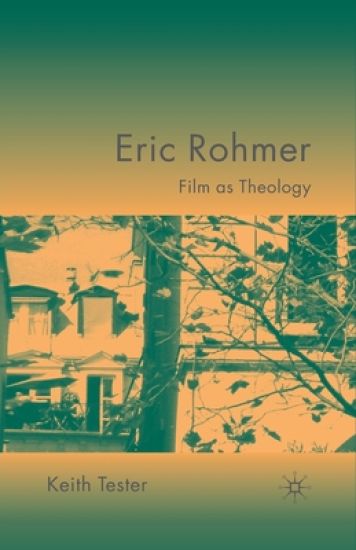
Since the 1950s Eric Rohmer has been one of the major presences in French cinema as critic and director. This book is a sophisticated engagement with his work in which Keith Tester argues that Rohmer is not the naIve realist he is often claimed to be. Instead, his films are revealed as a sustained exercise in Catholic theology.
Eric Rohmer

Eric Rohmer

K. Tester

Palgrave Macmillan
2008
sidottu
Since the 1950s Eric Rohmer has been one of the major presences in French cinema as critic and director. This book is a sophisticated engagement with his work in which Keith Tester argues that Rohmer is not the naIve realist he is often claimed to be. Instead, his films are revealed as a sustained exercise in Catholic theology.
Eric Rohmer

Eric Rohmer

Vittorio Hösle

Bloomsbury Academic
2016
nidottu
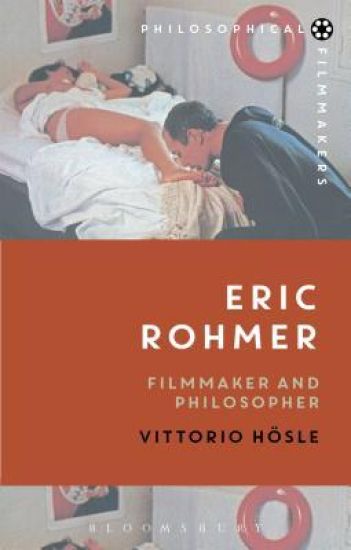
Rohmer is one of the most popular French directors of the second half of the 20th century, one of the members of the famous Nouvelle Vague that reconstituted French cinema based on the theoretical principles articulated in the Cahiers du Cinéma – from whose editorship he was fired when the conservative Catholic opposed its turn toward politicization. Like some of his colleagues, Rohmer is extremely interested in both the history and the philosophy of film: Brother of the noted French philosopher René Scherer, he begins his career as a film critic In his films, deep moral conflicts as well as the search for one’s own identity emerge from the intricacies of seemingly superficial everyday life interactions, particularly between a man and a woman. Hösle’s book puts Rohmer in the context of a long French tradition of reflected eroticism, with Marivaux, Musset, Stendhal, and Jean Renoir as crucial figures, and shows how Rohmer both recognizes the inner logic of eroticism and subjects it to moral demands that he inherits from his Catholic background. For Rohmer, the tension between the two can usually only be solved by some unexpected event that can be interpreted as an equivalent of grace.
Eric Rohmer

Eric Rohmer

Vittorio Hösle

Bloomsbury Academic
2016
sidottu
Rohmer is one of the most popular French directors of the second half of the 20th century, one of the members of the famous Nouvelle Vague that reconstituted French cinema based on the theoretical principles articulated in the Cahiers du Cinéma – from whose editorship he was fired when the conservative Catholic opposed its turn toward politicization. Like some of his colleagues, Rohmer is extremely interested in both the history and the philosophy of film: Brother of the noted French philosopher René Scherer, he begins his career as a film critic In his films, deep moral conflicts as well as the search for one’s own identity emerge from the intricacies of seemingly superficial everyday life interactions, particularly between a man and a woman. Hösle’s book puts Rohmer in the context of a long French tradition of reflected eroticism, with Marivaux, Musset, Stendhal, and Jean Renoir as crucial figures, and shows how Rohmer both recognizes the inner logic of eroticism and subjects it to moral demands that he inherits from his Catholic background. For Rohmer, the tension between the two can usually only be solved by some unexpected event that can be interpreted as an equivalent of grace.
Eric Rohmer

Eric Rohmer

University Press of Mississippi
2015
nidottu
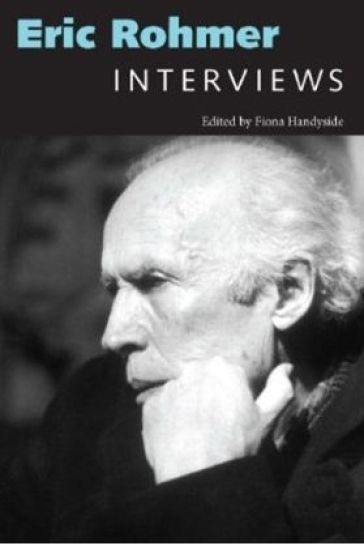
The 1969 film Ma Nuit chez Maud catapulted its shy academic film director Eric Rohmer (1920-2010) into the limelight, selling over a million tickets in France and earning a nomination for an Academy Award. Ma Nuit chez Maud remains his most famous film, the highlight of an impressive range of films examining the sexual, romantic, and artistic mores of contemporary France, the temptations of desire, the small joys of everyday life, and sometimes, the vicissitudes of history and politics. Yet Rohmer was almost fifty years old when Maud was released and had already had a career as the editor of Cahiers du Cinéma, a position he lost in a political takeover in 1963. The interviews in this book offer a range of insights into the theoretical, critical, and practical circumstances of Rohmer's remarkably coherent body of films, but also allow Rohmer to act as his own critic, providing us with an array of readings concerning his interest in setting, season, color, and narrative.Alongside the application of a theoretical rigor to his own films, Rohmer's interviews also discuss directors as varied as Godard, Carné, Renoir, and Hitchcock, and the relations of film to painting, architecture, and music. This book reproduces little-known interviews, such as a debate Rohmer undertakes with Women and Film concerning feminism, alongside detailed discussions from Cahiers and Positif, many produced in English here for the first time.
Eric Rohmer

Eric Rohmer

University Press of Mississippi
2013
sidottu
The 1969 film Ma Nuit chez Maud catapulted its shy academic film director Eric Rohmer (1920-2010) into the limelight, selling over a million tickets in France and earning a nomination for an Academy Award. Ma Nuit chez Maud remains his most famous film, the highlight of an impressive range of films examining the sexual, romantic, and artistic mores of contemporary France, the temptations of desire, the small joys of everyday life, and sometimes, the vicissitudes of history and politics. Yet Rohmer was almost fifty years old when Maud was released and had already had a career as the editor of Cahiers du Cinéma, a position he lost in a political takeover in 1963. The interviews in this book offer a range of insights into the theoretical, critical, and practical circumstances of Rohmer's remarkably coherent body of films, but also allow Rohmer to act as his own critic, providing us with an array of readings concerning his interest in setting, season, color, and narrative.Alongside the application of a theoretical rigor to his own films, Rohmer's interviews also discuss directors as varied as Godard, Carné, Renoir, and Hitchcock, and the relations of film to painting, architecture, and music. This book reproduces little-known interviews, such as a debate Rohmer undertakes with Women and Film concerning feminism, alongside detailed discussions from Cahiers and Positif, many produced in English here for the first time.
Eric Rohmer's Film Theory (1948-1953)

Eric Rohmer's Film Theory (1948-1953)

Marco Grosoli

Amsterdam University Press
2018
nidottu
In the 1950s, a group of critics writing for Cahiers du Cinéma launched one of the most successful and influential trends in the history of film criticism: auteur theory. Though these days it is frequently usually viewed as limited and a bit old-fashioned, a closer inspection of the hundreds of little-read articles by these critics reveals that the movement rested upon a much more layered and intriguing aesthetics of cinema. This book is a first step toward a serious reassessment of the mostly unspoken theoretical and aesthetic premises underlying auteur theory, built around a reconstruction of Eric Rohmer's early but decisive leadership of the group, whereby he laid down the foundations for the eventual emergence of their full-fledged auteurism.
The Films of Eric Rohmer

The Films of Eric Rohmer

Palgrave Macmillan
2014
sidottu
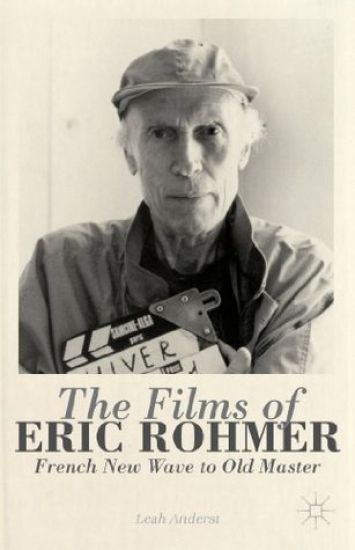
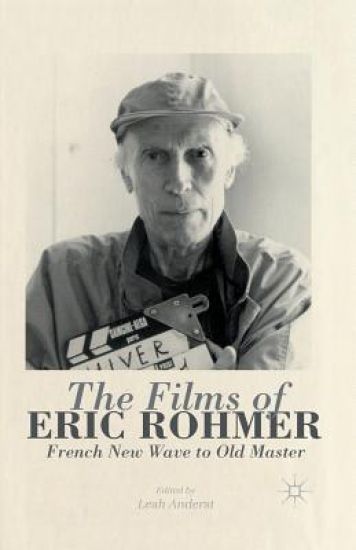
Eric Rohmer was a key figure in French New Wave cinema. Contributors to this volume revisit, complicate, and upend accepted readings and interpretations of perennial Rohmerian topics including the important role of language in his films, the influence of the arts, depictions of gender and class, and the roles played by space and place in his films.
The Films of Eric Rohmer

The Films of Eric Rohmer

Palgrave Macmillan
2014
nidottu
Eric Rohmer was a key figure in French New Wave cinema. Contributors to this volume revisit, complicate, and upend accepted readings and interpretations of perennial Rohmerian topics including the important role of language in his films, the influence of the arts, depictions of gender and class, and the roles played by space and place in his films.
The Cinema of Eric Rohmer

The Cinema of Eric Rohmer

Jacob Leigh

Continuum Publishing Corporation
2012
sidottu
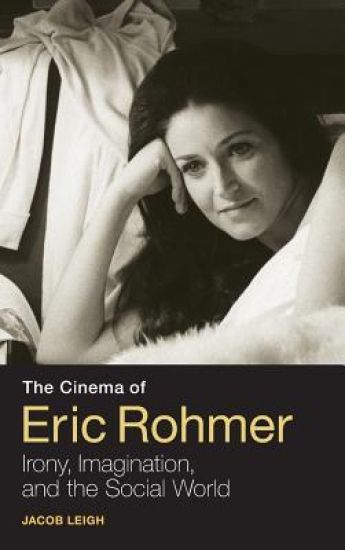
Since the death of the French film director Eric Rohmer in 2010, interest in his work has reignited. Known as the last of the established directors in the French New Wave, Rohmer took complete control over all his films, acting as his own producer throughout his career, and writing the scripts. He also made his mark by taking the lead in casting and location scouting - as French seaside resorts with beautiful young people are some of the elements present in most of his films. Combining history and criticism, Jacob Leigh pens the first chronological survey of this understudied filmmaker in order to give readers clear insights into how Rohmer's films came about and what he intended them to be. The book provides in-depth analysis of the themes and ideas of Rohmer's twenty-three feature films, and illustrates the complexity of their cinematic style. Leigh's study is the perfect introduction to the work of this great filmmaker, for both students and the general reader.
The Cinema of Eric Rohmer

The Cinema of Eric Rohmer

Jacob Leigh

Continuum Publishing Corporation
2012
nidottu
Since the death of the French film director Eric Rohmer in 2010, interest in his work has reignited. Known as the last of the established directors in the French New Wave, Rohmer took complete control over all his films, acting as his own producer throughout his career, and writing the scripts. He also made his mark by taking the lead in casting and location scouting - as French seaside resorts with beautiful young people are some of the elements present in most of his films. Combining history and criticism, Jacob Leigh pens the first chronological survey of this understudied filmmaker in order to give readers clear insights into how Rohmer's films came about and what he intended them to be. The book provides in-depth analysis of the themes and ideas of Rohmer's twenty-three feature films, and illustrates the complexity of their cinematic style. Leigh's study is the perfect introduction to the work of this great filmmaker, for both students and the general reader.
The Taste for Beauty

The Taste for Beauty

Eric Rohmer

Cambridge University Press
1990
pokkari
The Taste for Beauty is a collection of essays by the film-maker and critic Eric Rohmer which were originally written for the French Film review Cahiers du Cinema between 1948-1979. Rohmer, one of the founding members of the French ‘New Wave’ cinema, was also one of the journal’s original critics and served as its editor. Divided into four sections, the essays deal with fundamental and theoretical questions of film-making from a single theoretical viewpoint. Rohmer, a film-maker of great eloquence and erudition, writes in depth on the issues most fundamental to film: what the camera best portrays; the role of sound and colour; the use of drama and comedy; the role of speech; and the problem of literary adaptation; he also includes a personal defence of his films. The final section is devoted entirely to the film-maker Jean Renoir. The Taste for Beauty will be appreciated by students and critics of film, as well as those who love French cinema in general.
Elisabeth

Elisabeth

Eric Rohmer; Andre Aciman

McNally Jackson Books
2026
nidottu
Witty banter, lust, ennui, and an undercurrent of violence percolate beneath a seemingly paradisiacal summer on the eve of World War II, in this landmark translation of the first and only novel by Éric Rohmer, the French New Wave’s most prolific and beloved filmmaker. Fifteen years before completing his first feature film—and ten before beginning a transformative editorial stint at Cahiers du cinéma that would usher the journal, and French cinema, into a new era—the man who would become known worldwide as Éric Rohmer published a single novel. Released by Éditions Gallimard alongside the early works of Claude Simon and Marguérite Duras, Élisabeth was part of the first flowering of what would come to be known as the nouveau roman—and was also the “matrix,” as Rohmer himself later put it, of the images, ideas, and formal concerns of his first sequence of films, Six Moral Tales. Set in the sunstruck countryside east of Paris during the summer of 1939, a year ahead of the German invasion, where the upper-middle-class Roby family and its eponymous matriarch are spending a listless summer, Élisabeth is a war-novel awaiting a war. While the teenage Roby children and their friends swim, flirt, and lie to one another among the baking fields and icy meanders of the Marne, the novel becomes the scene of an anticipatory haunting. The simmering paranoia, calculated blankness, and potential violence of the coming Occupation are already present—as it were, in mufti. With a cool, kaleidoscopic eye, Rohmer lays out his protagonists and their precarious peace—their restlessness, their desperate boredom, their petty romantic agonies—with the unsettling chilliness and the sinister exactitude of details on a tactical map.