Kirjojen hintavertailu. Mukana 11 342 296 kirjaa ja 12 kauppaa.

Kirjahaku

Etsi kirjoja tekijän nimen, kirjan nimen tai ISBN:n perusteella.

591 tulosta hakusanalla "Ernest Hemingway"

Ernest Hemingway

Ernest Hemingway

L. Wagner-Martin

Palgrave Macmillan
2007
nidottu
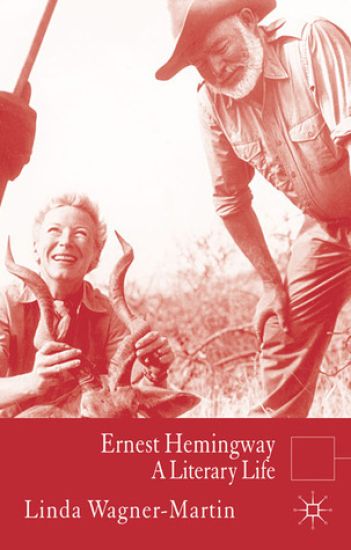
Linda Wagner-Martin brings a wealth of new information to this detailed portrait of Hemingway and his world, concentrating particularly on his friendships with women and the history of his four marriages.
Ernest Hemingway

Ernest Hemingway

James M. Hutchisson

Pennsylvania State University Press
2016
sidottu
To many, the life of Ernest Hemingway has taken on mythic proportions. From his romantic entanglements to his legendary bravado, the elements of Papa’s persona have fascinated readers, turning Hemingway into such an outsized figure that it is almost impossible to imagine him as a real person. James Hutchisson’s biography reclaims Hemingway from the sensationalism, revealing the life of a man who was often bookish and introverted, an outdoor enthusiast who revered the natural world, and a generous spirit with an enviable work ethic.This is an examination of the writer through a new lens—one that more accurately captures Hemingway’s virtues as well as his flaws. Hutchisson situates Hemingway’s life and art in the defining contexts of the women he loved and lost, the places he held dear, and the specter of mental illness that haunted his family. This balanced portrait examines for the first time in full detail the legendary writer’s complex medical history and his struggle against clinical depression. The first major biography of Hemingway in over twenty years, this monumental achievement provides readers with a fresh, comprehensive look at one of the most acclaimed authors of the twentieth century.
Ernest Hemingway

Ernest Hemingway

Mark Cirino

University of Wisconsin Press
2012
nidottu
Ernest Hemingway's groundbreaking prose style and examination of timeless themes made him one of the most important American writers of the twentieth century. Yet in Ernest Hemingway: Thought in Action, Mark Cirino observes, 'Literary criticism has accused Hemingway of many things but thinking too deeply is not one of them.' Although much has been written about the author's love of action--hunting, fishing, drinking, bullfighting, boxing, travel, and the moveable feast--Cirino looks at Hemingway's focus on the modern mind, paralleling the interest in consciousness of such predecessors and contemporaries as Proust, Joyce, Woolf, Faulkner, and Henry James. Hemmingway, Cirino demonstrates, probes the ways his character's minds respond when placed in urgent situations or when damaged by past traumas. In Cirino's analysis of Hemingway's work through this lens--including such celebrated classics as A Farewell to Arms, The Old Man and the Sea, and 'Big Two-Hearted River' and less-appreciated works including Islands in the Stream and 'Because I Think Deeper'--an entirely different Hemingway hero emerges: intelligent, introspective, and ruminative.
Ernest Hemingway
This set comprises 40 volumes covering nineteenth and twentieth century European and American authors. These volumes will be available as a complete set, mini boxed sets (by theme) or as individual volumes. This second set compliments the first 68 volume set of Critical Heritage published by Routledge in October 1995.
Ernest Hemingway
Few twentieth-century American writers have been as influential as Ernest Hemingway (1899–1961). Whilst contemporaries such as F. Scott Fitzgerald and William Faulkner may be as widely taught and studied as Hemingway, neither had an influence on other writers—or indeed, the cognate arts—as great as that of Hemingway. For example, the ‘hard-boiled’ school of detective fiction extending from the novels of Raymond Chandler and Dashiell Hammett to those of James Ellroy and Robert Parker is more or less inconceivable without Hemingway’s stylistic influence. Arguably, film noir is also Hemingwayesque in its laconic detachment. And quite independently of his creative writings, Hemingway’s life continues to exert a profound fascination for both student and the general reader.Hemingway was the subject of extensive enquiry before his death and since then he has generated interpretative and critical commentary on a vast and bewildering scale, in part aided by the continuing publication of works left unpublished at his death (most notably The Garden of Eden in 1987). The dizzying quantity (and variable quality) of Hemingway criticism makes it difficult to discriminate the useful from the tendentious, superficial, and otiose. That is why this new Routledge title is so urgently needed. In four volumes, the collection meets the need for an authoritative reference work to allow researchers and students to make sense of a vast literature and the continuing explosion in research output. Users will now be able easily and rapidly to locate the best and most influential critical scholarship, work that is otherwise often inaccessible or scattered throughout a variety of specialist journals and books. With material gathered into one easy-to-use set, researchers and students can now spend more of their time with the key journal articles, book chapters, and other pieces, rather than on time-consuming (and sometimes fruitless) archival searches.Fully indexed and with a comprehensive introduction newly written by the editor, which places the collected material in its historical and intellectual context, Ernest Hemingway is an essential reference work and is destined to be valued as a vital research resource.
Ernest Hemingway
This set comprises 40 volumes covering nineteenth and twentieth century European and American authors. These volumes will be available as a complete set, mini boxed sets (by theme) or as individual volumes. This second set compliments the first 68 volume set of Critical Heritage published by Routledge in October 1995.
The Letters of Ernest Hemingway: Volume 1, 1907–1922

The Letters of Ernest Hemingway: Volume 1, 1907–1922

Ernest Hemingway

Cambridge University Press
2011
sidottu
With the first publication, in this edition, of all the surviving letters of Ernest Hemingway (1899–1961), readers will for the first time be able to follow the thoughts, ideas and actions of one of the great literary figures of the twentieth century in his own words. This first volume encompasses his youth, his experience in World War I and his arrival in Paris. The letters reveal a more complex person than Hemingway's tough guy public persona would suggest: devoted son, affectionate brother, infatuated lover, adoring husband, spirited friend and disciplined writer. Unguarded and never intended for publication, the letters record experiences that inspired his art, afford insight into his creative process and express his candid assessments of his own work and that of his contemporaries. The letters present immediate accounts of events and relationships that profoundly shaped his life and work. A detailed introduction, notes, chronology, illustrations and index are included.
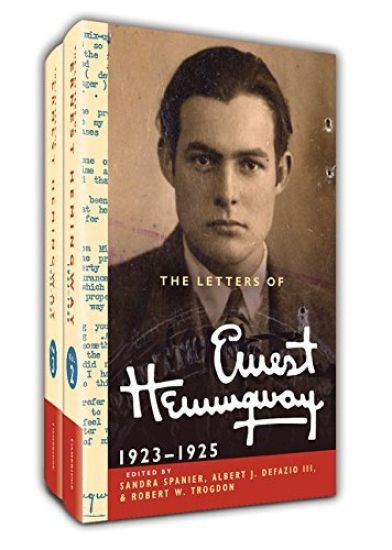
The Letters of Ernest Hemingway: Volume 2, 1923–1925

The Letters of Ernest Hemingway: Volume 2, 1923–1925

Ernest Hemingway

Cambridge University Press
2013
sidottu
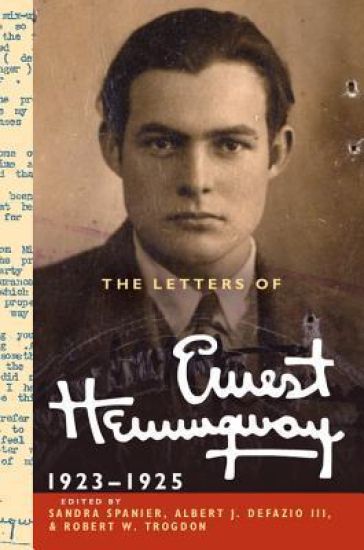
The Letters of Ernest Hemingway documents the life and creative development of a gifted artist and outsized personality whose work would both reflect and transform his times. Volume 2 (1923–1925) illuminates Hemingway's literary apprenticeship in the legendary milieu of expatriate Paris in the 1920s. We witness the development of his friendships with the likes of Sylvia Beach, F. Scott Fitzgerald, and John Dos Passos. Striving to 'make it new', he emerges from the tutelage of Ezra Pound and Gertrude Stein to forge a new style, gaining recognition as one of the most formidable talents of his generation. In this period, Hemingway publishes his first three books, including In Our Time (1925), and discovers a lifelong passion for Spain and the bullfight, quickly transforming his experiences into fiction as The Sun Also Rises (1926). The volume features many previously unpublished letters and a humorous sketch that was rejected by Vanity Fair.
The Letters of Ernest Hemingway: Volume 3, 1926–1929

The Letters of Ernest Hemingway: Volume 3, 1926–1929

Ernest Hemingway

Cambridge University Press
2015
sidottu
The Letters of Ernest Hemingway, Volume 3: 1926–1929, featuring many previously unpublished letters, follows a rising star as he emerges from the literary Left Bank of Paris and moves into the American mainstream. Maxwell Perkins, legendary editor at Scribner's, nurtured the young Hemingway's talent, accepting his satirical novel Torrents of Spring (1926) in order to publish what would become a signature work of the twentieth century: The Sun Also Rises (1926). By early 1929 Hemingway had completed A Farewell to Arms. Hemingway's letters of this period also reflect landmark events in his personal life, including the dissolution of his first marriage, his remarriage, the birth of his second son, and the suicide of his father. As the volume ends in April 1929, Hemingway is setting off from Key West to return to Paris and standing on the cusp of celebrity as one of the major writers of his time.
The Letters of Ernest Hemingway: Volume 4, 1929–1931

The Letters of Ernest Hemingway: Volume 4, 1929–1931

Ernest Hemingway

Cambridge University Press
2017
sidottu
The Letters of Ernest Hemingway, Volume 4, spanning April 1929 through 1931, featuring many previously unpublished letters, records the establishment of Ernest Hemingway as an author of international renown following the publication of A Farewell to Arms. Breaking new artistic ground in 1930, Hemingway embarks upon his first and greatest non-fiction work, his treatise on bullfighting, Death in the Afternoon. Hemingway, now a professional writer, demonstrates a growing awareness of the literary marketplace, successfully negotiating with publishers and agents and responding to fan mail. In private we see Hemingway's generosity as he provides for his family, offers support to friends and colleagues, orchestrates fishing and hunting expeditions, and sees the birth of his third son. Despite suffering injuries to his writing arm in a car accident in November 1930, Hemingway writes and dictates an avalanche of letters that record in colorful and eloquent prose the eventful life and achievements of an enormous personality.
The Letters of Ernest Hemingway: Volume 5, 1932–1934

The Letters of Ernest Hemingway: Volume 5, 1932–1934

Ernest Hemingway

Cambridge University Press
2020
sidottu
The Letters of Ernest Hemingway, Volume 5, spanning 1932 through May 1934, traces the completion and publication of Death in the Afternoon and Winner Take Nothing. During this intensely active period, Hemingway hunts in Arkansas and Wyoming, fishes the waters off Key West and Cuba, revisits Madrid and Paris, and undertakes a long-anticipated African safari. He witnesses transitions at home and abroad: the deepening Great Depression, Prohibition-era rumrunning, revolution in Cuba, and political unrest in Spain. His readership and celebrity continue to expand as he begins writing for the new men's magazine Esquire. As the volume ends, Hemingway has just acquired his beloved boat, Pilar. The letters detail these events as well as his relationships with his family, friends, publishers, critics and literary contemporaries including editor Maxwell Perkins, Archibald MacLeish, John Dos Passos, Ezra Pound, and F. Scott Fitzgerald. Together the letters paint an intimate self-portrait of this multi-faceted, self-confident, energetic artist in his prime.
The Letters of Ernest Hemingway: Volume 6, 1934–1936

The Letters of Ernest Hemingway: Volume 6, 1934–1936

Ernest Hemingway

Cambridge University Press
2024
sidottu
The Letters of Ernest Hemingway, Volume 6 (June 1934–June 1936) traces the completion and publication of Hemingway's experimental nonfiction book Green Hills of Africa and work on stories including 'The Short Happy Life of Francis Macomber' and 'The Snows of Kilimanjaro.' In more than twenty pieces in Esquire, he relates his hunting and fishing exploits, discusses writing and writers, and becomes more politically vocal, addressing topical concerns. During this period he immerses himself in big game fishing off Key West, Cuba, and Bimini, gathering specimens for scientific study and making record catches, as well as taking on boxing challengers. He maintains longstanding literary friendships, advises and helps aspiring writers and contemporary artists, and makes public his disdain of critics. Volume 6 also features for the first time an Appendix of Earlier Letters (1918–1934) that have come to light since publication of previous volumes. Writing his epistolary autobiography, Hemingway himself reveals the many and sometimes contradictory facets of his wide-ranging genius.
Ernest Hemingway

Ernest Hemingway

Audre Hanneman

Princeton University Press
2015
pokkari
This bibliography of Hemingway's writings and related materials includes, for the first time, all of his books, pamphlets, stories, articles, newspaper contributions, juvenilia, library holdings of his letters and manuscripts, items written about Hemingway between 1918 and 1965, and short excerpts from reviews of each of Hemingway's novels. It is the first bibliography of Hemingway published since 1931, and includes much material never before assembled: thirty-eight contributions to his high school newspaper, Trapeze, twenty-eight Spanish Civil War dispatches, and first editions published in some thirty foreign languages. First editions of books and pamphlets, both American and English with bibliographic descriptions, are given. Originally published in 1967. The Princeton Legacy Library uses the latest print-on-demand technology to again make available previously out-of-print books from the distinguished backlist of Princeton University Press. These editions preserve the original texts of these important books while presenting them in durable paperback and hardcover editions. The goal of the Princeton Legacy Library is to vastly increase access to the rich scholarly heritage found in the thousands of books published by Princeton University Press since its founding in 1905.
Ernest Hemingway

Ernest Hemingway

Audre Hanneman

Princeton University Press
2016
sidottu
This bibliography of Hemingway's writings and related materials includes, for the first time, all of his books, pamphlets, stories, articles, newspaper contributions, juvenilia, library holdings of his letters and manuscripts, items written about Hemingway between 1918 and 1965, and short excerpts from reviews of each of Hemingway's novels. It is the first bibliography of Hemingway published since 1931, and includes much material never before assembled: thirty-eight contributions to his high school newspaper, Trapeze, twenty-eight Spanish Civil War dispatches, and first editions published in some thirty foreign languages. First editions of books and pamphlets, both American and English with bibliographic descriptions, are given. Originally published in 1967. The Princeton Legacy Library uses the latest print-on-demand technology to again make available previously out-of-print books from the distinguished backlist of Princeton University Press. These editions preserve the original texts of these important books while presenting them in durable paperback and hardcover editions. The goal of the Princeton Legacy Library is to vastly increase access to the rich scholarly heritage found in the thousands of books published by Princeton University Press since its founding in 1905.
Ernest Hemingway

Ernest Hemingway

The University of Alabama Press
1996
nidottu
Ernest Hemingway: The Oak Park Legacy is the first extensive examination of the relationship of Hemingway to his hometown, Oak Park, Illinois, and the influence its people, places, and underlying values had on his early work. In this volume, 11 leading Hemingway scholars explore various aspects of these issues, from the migration of the Hemingway family from Connecticut to Illinois in the 1850s, to Hemingway's high-school stories and the dramatic breakthrough of In Our Time and The Sun Also Rises. With these books, Hemingway suddenly became one of the most influential writers of the 20th century. The essays in this collection explore the social and family background that provided the material and sensibility for these literary masterpieces. In these essays, James Nagel provides the first account ever published of the move of the Hemingway family from Connecticut to Illinois. Writing his account after the discovery of a lost diary by one of Hemingway's ancestors, Nagel explores dates and places, the motivation for the move to the Midwest, and the tragedies that awaited the family there, including the death of two young men in the Civil War. Michael Reynolds, the premiere biographer of Ernest Hemingway, describes the culture of the village of Oak Park at the turn of the century, and Larry E. Grimes presents an important new assessment of the religious training the Hemingway children received. David Marut discusses the short stories Hemingway published while still a highschool student, and Carlos Azevedo, Mary Anne O'Neal, Abby H. P. Werlock, and George Monteiro examine the early stories about Nick Adams. In an insightful afterword, Morris Buske, the Historian of the Ernest Hemingway Foundation of Oak Park, reflects on the differing values of Ernest Hemingway's parents, the artistic, cultured Hall family as opposed to the scientific, more practical Hemingways, charting the influence the two traditions had on the young Ernest.
The Letters of Ernest Hemingway Hardback Set Volumes 2 and 3: Volume 2-3
The Letters of Ernest Hemingway document the life and creative development of a gifted artist and legendary personality whose work would both reflect and transform his times. Volume 2 (1923–1925) follows Hemingway's literary apprenticeship in expatriate Paris and the experiences that forged his earliest works, including the landmark novel The Sun also Rises (1926). It features a never-before-published short story that was rejected by Vanity Fair. Volume 3 (1926–1929) shows a rising star as he emerges from the literary Left Bank of Paris and moves into the American mainstream. As this collection of volumes ends, Hemingway is setting off from Key West to return to Paris and standing on the cusp of celebrity as one of the major writers of his time.
The Letters of Ernest Hemingway Hardback Set Volumes 1-3: Volume 1-3
The Letters of Ernest Hemingway document the life and creative development of a gifted artist and legendary personality whose work would both reflect and transform his times. Volume 1 (1907–1922) encompasses his youth, his experience in World War I and his arrival in Paris. Volume 2 (1923–1925) follows Hemingway's literary apprenticeship in expatriate Paris and the experiences that forged his earliest works, including the landmark novel The Sun Also Rises (1926). It features a never-before-published short story that was rejected by Vanity Fair. Volume 3 (1926–1929) shows a rising star as he emerges from the literary Left Bank of Paris and moves into the American mainstream. As this collection of volumes ends, Hemingway is setting off from Key West to return to Paris and standing on the cusp of celebrity as one of the major writers of his time.
The Letters of Ernest Hemingway: Volume 2, 1923–1925

The Letters of Ernest Hemingway: Volume 2, 1923–1925

Ernest Hemingway

Cambridge University Press
2013
erikoissidos
The Letters of Ernest Hemingway documents the life and creative development of a gifted artist and outsized personality whose work would both reflect and transform his times. Volume 2 (1923–1925) illuminates Hemingway's literary apprenticeship in the legendary milieu of expatriate Paris in the 1920s. We witness the development of his friendships with the likes of Sylvia Beach, F. Scott Fitzgerald, and John Dos Passos. Striving to 'make it new', he emerges from the tutelage of Ezra Pound and Gertrude Stein to forge a new style, gaining recognition as one of the most formidable talents of his generation. In this period, Hemingway publishes his first three books, including In Our Time (1925), and discovers a lifelong passion for Spain and the bullfight, quickly transforming his experiences into fiction as The Sun Also Rises (1926). The volume features many previously unpublished letters and a humorous sketch that was rejected by Vanity Fair.