Kirjojen hintavertailu. Mukana 11 244 527 kirjaa ja 12 kauppaa.

Kirjahaku

Etsi kirjoja tekijän nimen, kirjan nimen tai ISBN:n perusteella.

8 tulosta hakusanalla "Eva Hesse"

Eva Hesse

Eva Hesse

MIT Press
2002
pokkari
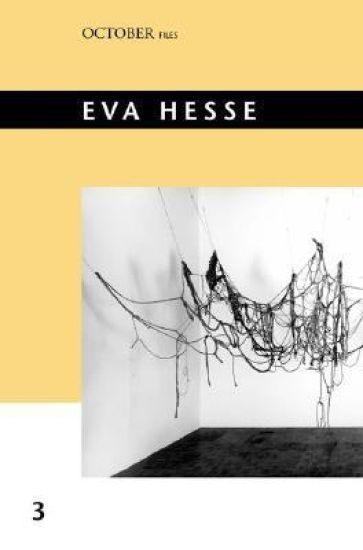
A critical primer on the work of artist Eva Hesse.Eva Hesse's distinctive process-based art exerted a powerful influence on minimalist artists of the 1960s and continues to inspire artists today. Using industrial materials such as latex and fiberglass, she exploited their flexibility to produce works with an unsettling psychic and corporeal resonance. Hesse, who was born in Germany in 1936 and raised in New York City, died of cancer in New York in 1970. Eva Hesse focuses on the body of criticism that has developed since the last major retrospective of Hesse's work, at the Yale University Art Gallery in 1992. The book's publication coincides with a major exhibition organized jointly by the San Francisco Museum of Art and the Wiesbaden Museum. Eva Hesse contains a 1970 interview by Cindy Nemser, a discussion between Mel Bochner and Joan Simon, and essays by Briony Fer, Rosalind Krauss, Mignon Nixon, and Anne M. Wagner.
Eva Hesse

Eva Hesse

Fer Briony

Yale University Press
2009
sidottu
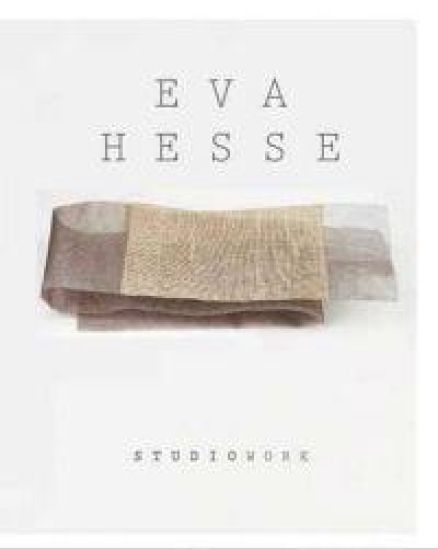
Throughout her career, Eva Hesse (1936-1970) produced a significant number of small, experimental works alongside her large-scale sculpture. These so-called 'test-pieces' were made in a wide range of materials, including latex, wire-mesh, sculp-metal, wax, and cheesecloth. Rather than considering them simply technical explorations, the art historian Briony Fer renames these small objects studiowork and argues that they put in question conventional notions of what sculpture is. The book contains a comprehensive catalogue of the studiowork, including many new works that have never before been seen in public. Although previously these small works were considered peripheral to the major sculptures, this fascinating new study argues that they force us to ask fundamental questions, not just about what an artwork is, but about the work that art does in our culture.
Eva Hesse

Eva Hesse

Corby Vanessa

I.B. Tauris
2010
nidottu
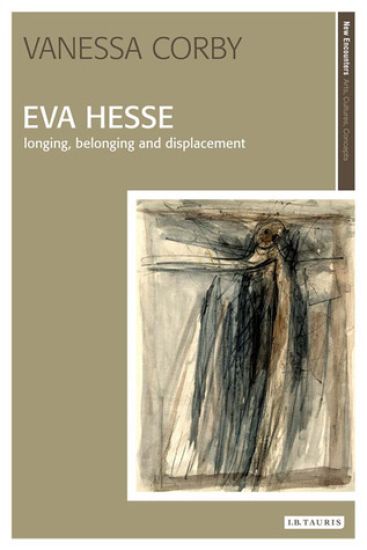
Here is an important new examination of the work of American German Jewish artist Eva Hesse, one of the most significant figures in twentieth century art. Using exciting new feminist approaches and taking as her starting point two key works, Corby reveals the way in which Hesse has been constructed as a 'woman artist' and explores the overlooked legacy of the Holocaust and refugee life in her art practice. Considering creativity and the feminine, trauma and historiography, and providing a reassessment of Hesse's relationship with her mother and its impact on her work, the book also confirms the importance of drawing practice within Hesse's wider oeuvre.
Eva Hesse: Diaries

Eva Hesse: Diaries

Eva Hesse

Hauser Wirth
2020
nidottu
An insight into the life and mind of an icon of American art through the diaries of sculptor Eva Hesse.‘I open my new book. What will you tell for the next year. To bring forth a new chapter of wisdom, hopes, joys fears. I shall be honest with myself; and therewith SUCCEED.’ These lines open Eva Hesse’s 1955 diary and lay out the task of her writing. In between weekly to-do lists and personal musings, Hesse used her diaries as a space to process her experience of the world and to reckon with what it means to be an artist.In this extensive collection of Hesse’s diaries, recorded from 1955 to 1970, readers are given an intimate glimpse into the mind of one of contemporary sculpture’s most prominent figures. Despite personal tragedies and the difficulties she faced as one of the few female artists in the male-dominated postminimalist movement, Hesse remained intrepid in both her life and craft. Composed of twisted ropes and delicate plastic among other unconventional materials, Hesse’s sculptures defy traditional notions of form; her deeply thoughtful practice as a sculptor and a painter are revealed at length in her writing.
Eva Hesse Spectres 1960

Eva Hesse Spectres 1960

E. Luanne McKinnon

Yale University Press
2010
sidottu
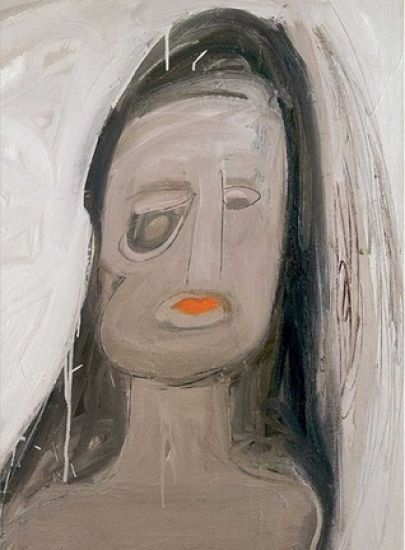
A new examination of a fascinating group of paintings from a pioneering mid-century artist In 1960 Eva Hesse (1936–1970) created an unusual group of oil paintings that, when considered in contrast to her sculptural assemblages from 1965 to 1970, foretell her desire to embody emotional states in abstract form. Contrary to existing scholarship, which suggests that these works represent a form of self-deprecation, this book seeks to consider these “spectre” paintings as manifestations of a private, haunted interiority in the context of the artist’s burgeoning maturity.The paintings in the spectre campaign comprise two distinct categories. The first, a selection of small-scale oil on Masonite paintings, depicts two or three loosely rendered figures positioned in vacant pictorial spaces. These gaunt forms portray an apparent disconnection between one body and another; and yet, the pictorial drama of the works would be incomplete without the presence of each figure. The second group of paintings imbues a more perplexing psychological state, as characters alternately take on the forms of alien-like creatures or as close resemblances to the artist herself. Through an enlightening assessment of these underappreciated works, readers will gain new insight into their pivotal role in Hesse’s oeuvre.Published in association with the University of New Mexico Art Museum, AlbuquerqueExhibition Schedule:Hammer Museum, Los Angeles09/25/10-01/03/11University of New Mexico Art Museum(03/25/11-07/24/11)Brooklyn Museum of Art(09/16/11-01/08/12)
Eva Hesse and Hannah Wilke

Eva Hesse and Hannah Wilke

Eleanor Nairne

Rizzoli International Publications
2020
sidottu
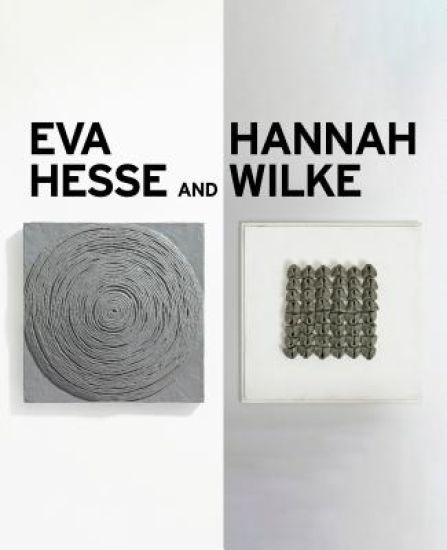
This exhibition and accompanying book offers the first opportunity to appreciate the resonances between the studio practices of Eva Hesse and Hannah Wilke. Growing up in Jewish emigre homes, both artists found themselves drawn to unconventional materials, such as latex, plastics, erasers, and laundry lint, which they used to make work that was viscerally related to the body. They shared an interest in repetition to amplify the absurdity of their work. These repeated forms--whether Hesse's spiraling breast or Wilke's labial fold--sought to confront the phallo-centricism of twentieth-century sculpture with a texture that might capture a more intimate, psychologically charged experience. Eleanor Nairne, the curator of the exhibition, writes the lead essay, followed by texts by Jo Applin and Anne Wagner. An extensive chronology by Amy Tobin includes primary-source materials, which bring a new history of how both artists' work sits in relation to the wider New York scene. Also included are excerpts of both artists' writing.
Eva Hesse: Oberlin Drawings

Eva Hesse: Oberlin Drawings

Helen Hesse Charash; Andria Derstine

Hauser Wirth
2019
sidottu
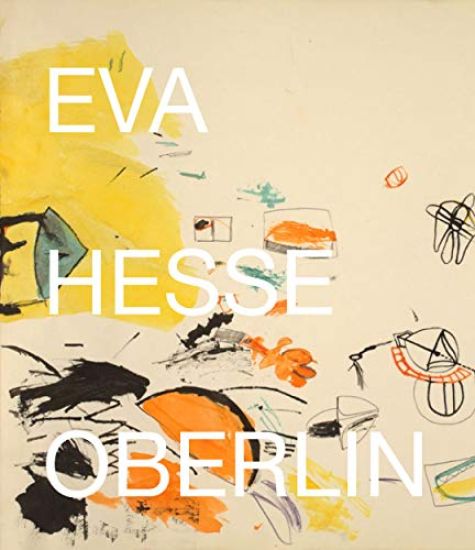
A New York Times critics' pick Best Art Books 2020, this collection of previously unreleased drawings by Eva Hesse offers insight into the highly influential practice of a visionary artist.Oberlin Drawings’ reproduces for the first time Eva Hesse’s drawings held in the home of her archive at the Allen Memorial Art Museum, Oberlin College, Ohio. Edited by Barry Rosen and designed by An Art Service, the book accompanies a 2019 – 2020 exhibition that travels to Museum Wiesbaden, mumok, Vienna, Hauser & Wirth New York, and the Allen Memorial Art Museum. Extensively illustrated, the publication features essays by Briony Fer, Gioia Timpanelli, Manuela Ammer (mumok), Jörg Daur (Museum Wiesbaden), and Andrea Gyorody (Allen Memorial Art Museum).
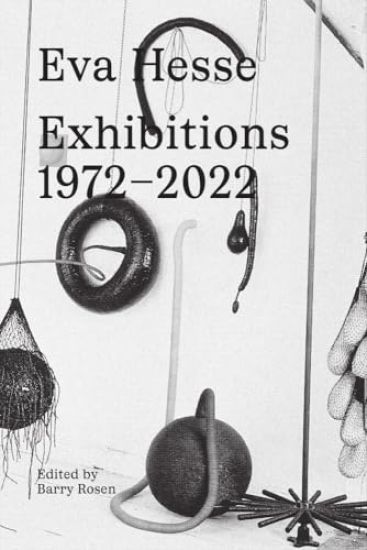
Eva Hesse: Exhibitions, 1972–2022
Fifteen museum curators chronicle Eva Hesse's landmark exhibitions over the last half-century while offering a glimpse into the personal dimension of crafting an exhibition.This volume provides a historical account of Eva Hesse’s landmark institutional exhibitions. Contributions from the museum curators involved in organizing these shows reflect the personal dimension of crafting an exhibition, its intent, and reception. Accompanied by extensive installation views, archival material, exhibition-related ephemera, and snapshots, Eva Hesse: Exhibitions, 1972–2022 brings these exhibitions to life.