Kirjojen hintavertailu. Mukana 11 244 527 kirjaa ja 12 kauppaa.

Kirjahaku

Etsi kirjoja tekijän nimen, kirjan nimen tai ISBN:n perusteella.

79 tulosta hakusanalla "FAVELA"

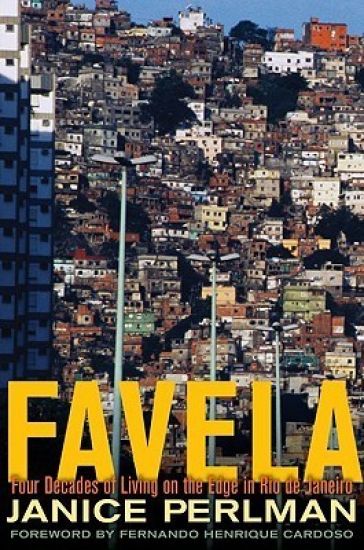
Favela

Favela

Janice Perlman

Oxford University Press Inc
2010
sidottu
A billion people, roughly half of all city dwellers in the developing world, live in squatter settlements. The most famous of these settlements are the favelas of Rio de Janeiro, which have existed for more than half a century and continue to outpace the rest of the city in growth. Janice Perlman's award-winning The Myth of Marginality was the first in-depth account of life in the favelas, and it is considered one of the most important books in global urban studies in the last 30 years. Now, in Favela, Perlman carries that story forward to the present. Re-interviewing many longtime favela residents whom she had first met in 1969--as well as their children and grandchildren--Perlman offers the only long-term perspective available on the favelados as they struggle for a better life. Perlman discovers that much has changed in three decades, but while educational levels have risen, democracy has replaced dictatorship, and material conditions have improved, many residents feel marginalized more than ever. The greatest change is the explosion of drug and arms trade and the high incidence of fatal violence that has resulted. Almost one in five people report that a member of their family has been a victim of homicide. Yet the greatest challenge of all is job creation--decent work for decent pay. If unemployment and under-paid employment are not addressed, she argues, all other efforts--from housing to policing to community development--will fail to resolve the fundamental issues. A revealing study of the giant slums of Rio de Janeiro and of the vibrant communities of migrants who have risked everything to come to the city to provide more opportunities for their children, this book yields insights that apply to the entire global South, from Mexico City to Cairo, and from Mumbai to Lagos. Favela offers a powerful, long-term look at one of the great challenges facing the modern world--perhaps the major challenge of the twenty-first century.
Favela

Favela

Janice Perlman

Oxford University Press Inc
2011
nidottu
Janice Perlman wrote the first in-depth account of life in the favelas, a book hailed as one of the most important works in global urban studies in the last 30 years. Now, in Favela, Perlman carries that story forward to the present. Re-interviewing many longtime favela residents whom she had first met in 1969--as well as their children and grandchildren--Perlman offers the only long-term perspective available on the favelados as they struggle for a better life. Perlman discovers that while educational levels have risen, democracy has replaced dictatorship, and material conditions have improved, many residents feel more marginalized than ever. The greatest change is the explosion of drug and arms trade and the high incidence of fatal violence that has resulted. Yet the greatest challenge of all is job creation--decent work for decent pay. If unemployment and under-paid employment are not addressed, she argues, all other efforts will fail to resolve the fundamental issues. Foreign Affairs praised Perlman for writing "with compassion, artistry, and intelligence, using stirring personal stories to illustrate larger points substantiated with statistical analysis."
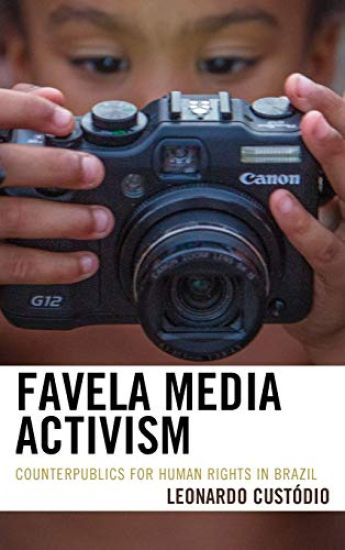
Favela Media Activism

Favela Media Activism

Leonardo Custódio

Lexington Books
2017
sidottu
What explains the engagement of low-income young people in media initiatives for political mobilization and social change in everyday life? Favela Media Activism: Counterpublics for Human Rights in Brazil responds to this question using an in-depth ethnographic and interdisciplinary study about the trajectories in media activism among young residents of low-income and violence-ridden favelas in socially unequal Rio de Janeiro. Leonardo Custódio provides multifaceted analyses of how favela youth engage in individual and collective media activist initiatives despite social class constraints and neoliberal imperatives in their everyday life. This book details processes experienced by young favela residents while becoming individuals who act to challenge and change patterns of discrimination, governmental neglect and drug-related violence. It is an important resource for scholars interested in the nuances of political engagement among marginalized youth in today’s world of hyper-connectivity, information abundance, and the persistence of racial and social inequalities.
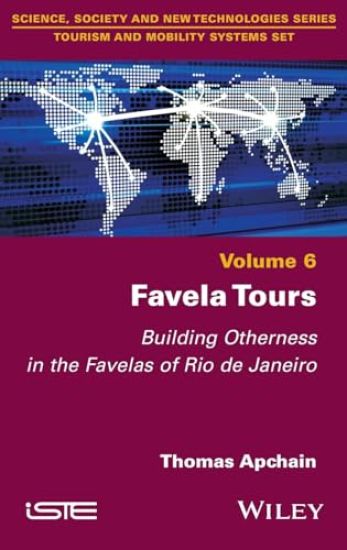
Favela Tours

Favela Tours

Thomas Apchain

ISTE LTD AND JOHN WILEY SONS INC
2023
sidottu
For a long time, favelas were a source of fear for tourists visiting Rio de Janeiro. Now that they are more appealing, some have become popular tourist destinations even though they are still regarded as an "off the beaten track" activity. Favela Tours analyzes the factors behind the emergence of tourism in the favelas, places of otherness and authenticity for visitors who come mainly from Western Europe and North America. Based on ethnography of those involved in these practices (guides, residents and tourists), this book describes how the local and global forces are converging to make favelas part of the western tourism system: a mechanism for fabricating and assimilating otherness.
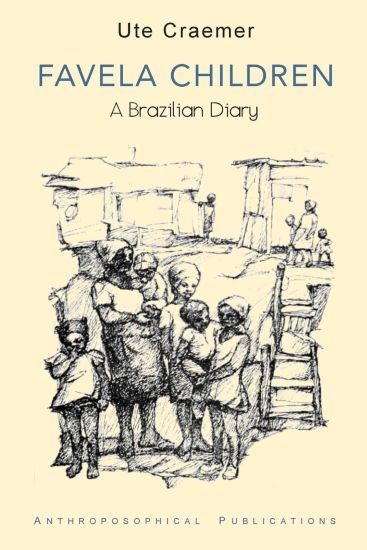
Favela Children

Favela Children

Ute Craemer

Anthroposophical Publications
2022
pokkari
Ute Craemer is an educator and social worker who has dedicated over fifty years of her life to teaching and nurturing the poor children of the favelas (slums) in Brazil. As an experienced Waldorf teacher, she has been able to understand the needs of the children and their families and provide them with the spiritual nourishment they cry out for. Favela Children is a moving and informative account of Ute's Craemer's work in the favelas and of her personal development. Everyone interested in education and social development will want to read this book. It was originally published in German and went through several editions. It is published here for the first time in English. Translated and with an introduction by Frank Thomas Smith.
Family and Favela

Family and Favela

Julio Pino

Praeger Publishers Inc
1997
sidottu
As a history of family life in the squatter settlements of Rio de Janeiro from the 1940s to the 1960s, this study shatters the myth of household disorganization said to be the norm among the urban poor. Using quantitative evidence, field reports by social workers, newspaper accounts, and the recollections of the squatters themselves, the study dissects household structure, economic activity, living standards, and political participation among the one million favelados (squatters) living in Rio by 1960, singling out three favelas for comparative analysis. Favelados prized family life, and most succeeded in holding their households together against daunting odds. Shantytowns provided residence close to the workplace, and some were erected literally in the shadow of the construction projects where the squatters worked. Indeed, the location and economic activity of the surrounding neighborhood largely determined the ability of the favela to survive. As squatters became an important part of the city work force, they mobilized to put pressure on the authorities to provide collective services like water and electricity.
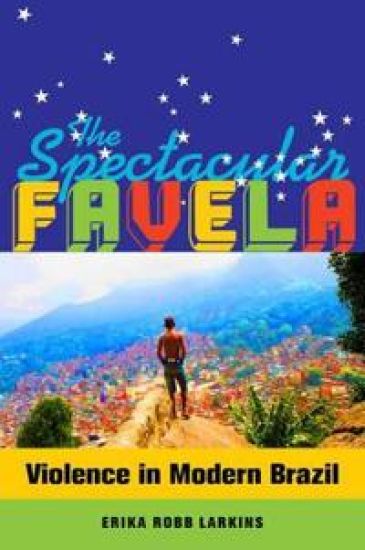
The Spectacular Favela

The Spectacular Favela

Erika Mary Robb Larkins

University of California Press
2015
sidottu
In Rio de Janeiro's favelas, traffickers assert power through conspicuous displays of wealth and force, brandishing high-powered guns, gold jewelry, and piles of cash and narcotics. Police, for their part, conduct raids reminiscent of action films or video games, wearing masks and riding in enormous armored cars called big skulls. Images of these spectacles circulate constantly in local, national, and global media, masking everyday forms of violence, prejudice, and inequality. The Spectacular Favela offers a rich ethnographic examination of the political economy of spectacular violence in Rocinha, Rio's largest favela. Based on more than two years of residence in the community, the book explores how entangled forms of violence shape everyday life and how that violence is, in turn, connected to the market economy. Erika Robb Larkins shows how favela violence is produced as a marketable global brand. While this violence is projected in disembodied form through media, the favela is also sold as an embodied experience through the popular practice of favela tourism. The commodification of the favela becomes a form of violence itself; favela violence is transformed into a commercially viable byproduct of a profit driven war on drugs, which serves to keep the poor marginalized. This book tells the story of how traffickers, police, cameras, tourists, and even anthropologists come together to create what the author calls the spectacular favela.
The Spectacular Favela

The Spectacular Favela

Erika Mary Robb Larkins

University of California Press
2015
pokkari
In Rio de Janeiro's favelas, traffickers assert power through conspicuous displays of wealth and force, brandishing high-powered guns, gold jewelry, and piles of cash and narcotics. Police, for their part, conduct raids reminiscent of action films or video games, wearing masks and riding in enormous armored cars called big skulls. Images of these spectacles circulate constantly in local, national, and global media, masking everyday forms of violence, prejudice, and inequality. The Spectacular Favela offers a rich ethnographic examination of the political economy of spectacular violence in Rocinha, Rio's largest favela. Based on more than two years of residence in the community, the book explores how entangled forms of violence shape everyday life and how that violence is, in turn, connected to the market economy. Erika Robb Larkins shows how favela violence is produced as a marketable global brand. While this violence is projected in disembodied form through media, the favela is also sold as an embodied experience through the popular practice of favela tourism. The commodification of the favela becomes a form of violence itself; favela violence is transformed into a commercially viable byproduct of a profit driven war on drugs, which serves to keep the poor marginalized. This book tells the story of how traffickers, police, cameras, tourists, and even anthropologists come together to create what the author calls the spectacular favela.
A Voice for Maria Favela

A Voice for Maria Favela

Antonio Leal

BLOOMSBURY PUBLISHING PLC
2022
sidottu
This open access book, originally published in Portuguese in 1988 and now available in English for the first time, describes the Brazilian educator, Antonio Leal's, experiences teaching so-called “unteachable” children in Rio de Janeiro’s favelas. A Voice for Maria Favela tells the story of how Leal considers what the children bring to the class, gradually engaging them in developing a narrative about Maria Favela, a single mother and housemaid. Leal uses the sounds within the story to draw out the students’ abilities to see enunciation and articulation as a process of becoming literatized. A contemporary and admirer of Paulo Freire, Leal nevertheless recognised that his students’ needs could not be theorized along Freirean lines of oppressor/oppressed. He devised an emancipatory approach that is more focussed on the individual child and their capacity for self-expression than those often found in critical pedagogy. The book puts forward a unique type of radical pedagogy and philosophy of education, developed through direct classroom observation. The book includes a substantial introduction written by the translator Alexis Gibbs (University of Winchester, UK) and preface by Inny Accioly (Fluminense Federal University, Brazil). The ebook editions of this book are available open access under a CC BY-NC-ND 4.0 licence on bloomsburycollections.com.