Kirjojen hintavertailu. Mukana 12 390 323 kirjaa ja 12 kauppaa.

Kirjahaku

Etsi kirjoja tekijän nimen, kirjan nimen tai ISBN:n perusteella.

33 tulosta hakusanalla "Federico Fellini"

Federico Fellini

Federico Fellini

University of Toronto Press
2002
sidottu
Federico Fellini remains the best known of the postwar Italian directors. This collection of essays brings Fellini criticism up to date, employing a range of recent critical filters, including semiotic, psychoanalytical, feminist and deconstructionist. Accordingly, a number of important themes arise - the reception of fascism, the crisis of the subject, the question of agency, homo-eroticism, feminism, and constructions of gender. Since the early 1970s, a slide in critical and theoretical attention to Fellini's work has corresponded with an assumption that his films are self-indulgent and lacking in political value. This volume moves the discussion towards a politics of signification, contending that Fellini's evolving self-reflexivity is not mere solipsism but rather a critique of both aesthetics and signification. The essays presented here are almost all new - the two exceptions being important signifiers in Fellini studies. The first, Frank Burke's "Federico Fellini: Reality/Representation/Signification" laid the foundation in the late 1980s for considering Fellini's work in the light of postmodernism. The second, Marguerite Waller's "Whose Dolce Vita is this Anyway?: The Language of Fellini's Cinema" (1990), provides a contemporary re-reading of Fellini's most successful film. This lively and ambitious collection brings a new critical language to bear on Fellini's films, offering fresh insights into their underlying issues and meaning. In bringing Fellini criticism up to date, it will have a significant impact on film studies, reclaiming this important director for a contemporary audience.
Federico Fellini

Federico Fellini

University of Toronto Press
2002
pokkari
Federico Fellini remains the best known of the postwar Italian directors. This collection of essays brings Fellini criticism up to date, employing a range of recent critical filters, including semiotic, psychoanalytical, feminist and deconstructionist. Accordingly, a number of important themes arise - the reception of fascism, the crisis of the subject, the question of agency, homo-eroticism, feminism, and constructions of gender. Since the early 1970s, a slide in critical and theoretical attention to Fellini's work has corresponded with an assumption that his films are self-indulgent and lacking in political value. This volume moves the discussion towards a politics of signification, contending that Fellini's evolving self-reflexivity is not mere solipsism but rather a critique of both aesthetics and signification. The essays presented here are almost all new - the two exceptions being important signifiers in Fellini studies. The first, Frank Burke's "Federico Fellini: Reality/Representation/Signification" laid the foundation in the late 1980s for considering Fellini's work in the light of postmodernism. The second, Marguerite Waller's "Whose Dolce Vita is this Anyway?: The Language of Fellini's Cinema" (1990), provides a contemporary re-reading of Fellini's most successful film. This lively and ambitious collection brings a new critical language to bear on Fellini's films, offering fresh insights into their underlying issues and meaning. In bringing Fellini criticism up to date, it will have a significant impact on film studies, reclaiming this important director for a contemporary audience.
Federico Fellini

Federico Fellini

Hava Aldouby

University of Toronto Press
2013
pokkari
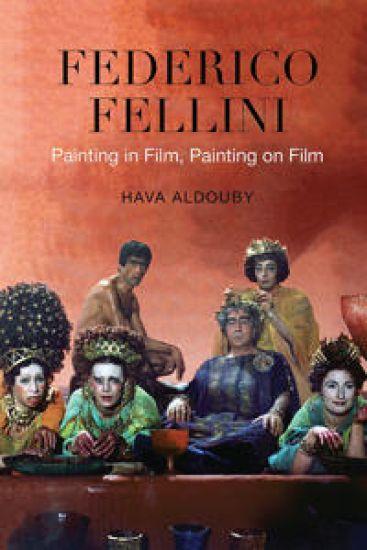
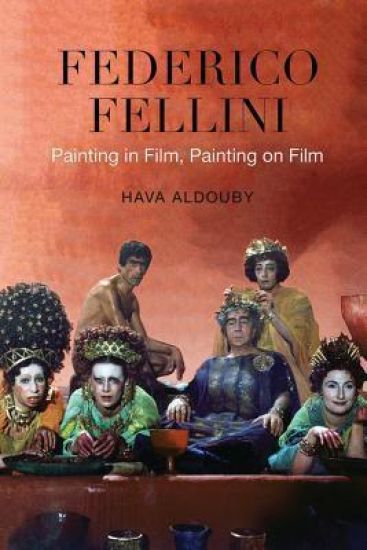
Federico Fellini professed a desire to create “an entire film made of immobile pictures.” In this study, Hava Aldouby uses this quotation as a launching point to analyze Fellini’s films as sequences of “pictures” that draw extensively on art history, and particularly painting, as a reservoir of visual imagery. Aldouby employs an innovative pictorial approach that allows her to uncover a wealth of visual evocations overlooked by Fellini scholars over the years. Federico Fellini: Painting in Film, Painting on Film sheds light on the intertextual links between Fellini’s films and the works of various artists, from Velazquez to Francis Bacon, by identifying references to specific paintings in his films. Using new archival evidence from Fellini’s private library, brought to light for the first time here, Aldouby draws out Fellini’s in-depth knowledge of art history and his systematic employment of art-historical allusions.
Federico Fellini

Federico Fellini

Hava Aldouby

University of Toronto Press
2013
sidottu
Federico Fellini professed a desire to create “an entire film made of immobile pictures.” In this study, Hava Aldouby uses this quotation as a launching point to analyze Fellini’s films as sequences of “pictures” that draw extensively on art history, and particularly painting, as a reservoir of visual imagery. Aldouby employs an innovative pictorial approach that allows her to uncover a wealth of visual evocations overlooked by Fellini scholars over the years. Federico Fellini: Painting in Film, Painting on Film sheds light on the intertextual links between Fellini’s films and the works of various artists, from Velazquez to Francis Bacon, by identifying references to specific paintings in his films. Using new archival evidence from Fellini’s private library, brought to light for the first time here, Aldouby draws out Fellini’s in-depth knowledge of art history and his systematic employment of art-historical allusions.
Federico Fellini

Federico Fellini

UNIVERSITY OF TORONTO PRESS
2024
sidottu
A complex and at times controversial film-maker whose career spanned the second half of the twentieth century, Federico Fellini (1920–1993) remains central to the Italian cultural imagery and the object of ongoing debates and critical scrutiny at home and abroad. Images from his films – Gelsomina’s tears, Marcello’s sunglasses – have become global signifiers not only for Fellini and Italian cinema but for Italy itself, as steadily lodged in the world’s collective unconscious as the Colosseum’s arches and Venice’s gondolas. Marking the centenary of Fellini’s birth, Federico Fellini: Centenary Essays reassesses the film-maker’s legacy with diverse contributions from established and emerging Fellini scholars as well as renowned Canadian film-makers. From literary influences to pictorial references, from artistic collaborations to politics, and from exhibition history to revivals, the collection covers the pivotal aspects of Fellini’s poetics through contemporary methodological tools and features a wide array of scholarly approaches. With complexity and nuance, the book takes stock of the enormous cultural legacy of one of the most celebrated directors in cinema history and is essential reading for scholars and cinephiles alike.
Federico Fellini

Federico Fellini

Kezich Tullio

I.B. Tauris
2007
nidottu
In 1963, with the revolutionary "8 1/2", Federico Fellini put his deepest desires and anxieties before the lens - and changed the art of cinema. Now, more than forty years later, film critic and Fellini's long-time friend Tullio Kezich has written the work against which all other biographies of the filmmaker will be measured. In this moving and intimately revealing account of a lifetime spent in pictures, Kezich utilises his friendship with Fellini to step outside the mythologies that surround him - many of which are of the director's own making. A great lover of women and a meticulous observer of dreams, Fellini, perhaps more than any other director of the twentieth century, created films that embodied a thoroughly modern sensibility, eschewing traditional narrative along with religious and moral precepts. His is the art of delicate pathos, of episodic films that directly address the intersection of reality, fantasy, and desire that existed as a product of mid-century Italy - a country that was reeling from a Fascist regime as it struggled with an outmoded Catholic national identity. As Kezich reveals, the dilemmas Fellini presents in his movies reflect not only his personal battles but also those of Italian society. The result is a biography that explores both the machinations of cinema and the man who most grandly embraced the full spectrum of its possibilities.
Federico Fellini

Federico Fellini

Viktor Witte

Grin Verlag
2009
pokkari
Studienarbeit aus dem Jahr 2009 im Fachbereich Filmwissenschaft, Note: 2,0, Freie Universit t Berlin (Theaterwissenschaft), Veranstaltung: Seminar f r Filmwissenschaft, Sprache: Deutsch, Abstract: Obwohl er anf nglich eher als Misserfolg angesehen worden war, gilt der Film Der wei e Scheich (1952) heute als Klassiker der italienischen Kom die. Der Film basiert auf einer Vorlage von Michelangelo Antonioni, der sich mit seinem Dokumentarfilm L amorosa menzogna (1949) einige wenige Jahre zuvor bereits mit der Beliebtheit der fumetti besch ftigt hatte, den popul ren Fotoromanen f r meist weibliche Erwachsene, in denen romantische Abenteuergeschichten anhand mit Sprechblasen versehener Fotos erz hlt wurden. In seinem ersten Spielfilm als allein verantwortlicher Regisseur erz hlt Federico Fellini die Geschichte eines frisch verm hlten Paares aus der italienischen Provinz, das sich in den Flitterwochen in Rom befindet. Das Ziel der vorliegenden Arbeit ist die Untersuchung zweier unterschiedlicher Interpretationsversuche, die jeweils einen anderen Schwerpunkt in der Betrachtung der beiden Hauptfiguren haben. Das Hauptaugenmerk soll hierbei auf den Arbeiten Peter Bondanellas ruhen, der in dem Film Der Wei e Scheich das stetige Aufeinanderprallen der Welt der Illusionen mit der Welt des Realen als das entscheidende Thema versteht. Beide Welten sieht Bondanella in den jeweiligen Charakteren der Hauptfiguren verk rpert. Zum Beweis seiner These verweist er auf die zwei strikt getrennten und doch so kunstvoll verkn pften Erz hlstr nge in der Narration der Geschichte, die es in dieser Arbeit nachzuvollziehen gilt. Der Untersuchung Bondanellas These schlie t sich die Darstellung einer Arbeit von Frank Burke an, der ganz im Gegensatz zu Bondanella nicht die Unterschiede sondern vielmehr die Gleichheit der Figuren in einem ihnen allen gemeinsamen Mangel und Bed rfnis betont.
Federico Fellini

Federico Fellini

Finn Skårderud

Svein Sandnes Bokforlag
2020
nidottu
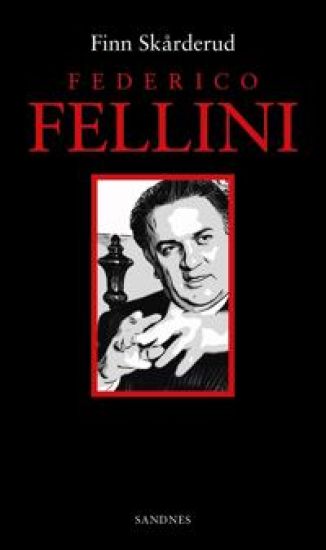
Federico Fellini (1920-1993) ble tidlig i sin karriere mer enn en filmregissør, skriver Skårderud. Filmene sprengte seg ut av kinolokalene og ble myteproduserende. Fellini ble myten Fellini. Nå markeres 100-årsdagen for Fellinis fødsel over hele verden. Også på Cinemateket i Oslo. Da denne boka kom ut første gang i Ariadne-serien på Gyldendal i 1999, skrev Per Haddal i Aftenposten: "En fest av en filmbok, som iderikt reiser i "et moderne selv". Allerede overskriften på forordet røper psykiateren Finn Skårderuds diagnose av filmkunsteren Federico Fellini: Om å skape (seg)."
Federico Fellini

Federico Fellini

Sergio Toffetti

Mondadori Electa
2020
sidottu
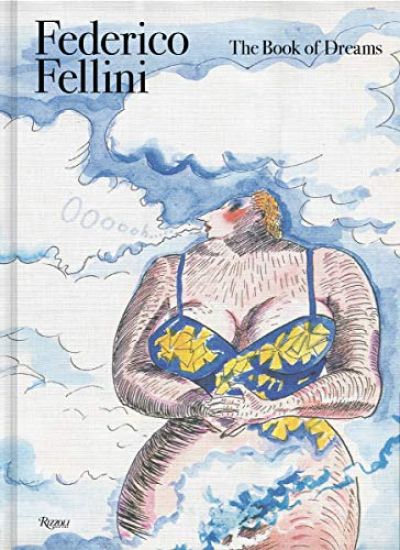
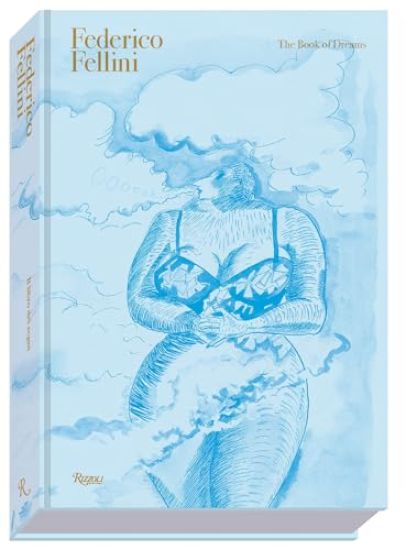
A highly colorful journey into the boundless territory of a genius s imagination, this is a work that added a fundamental element to the study of Federico Fellini and his creative experience. From the late 1960s until 1990, the great director used this diary to represent his nocturnal visions in the form of drawings or, as he himself described them, scribbles, rushed and ungrammatical notes. Currently out of print, this new edition will include a critical introduction, as well as updated graphic design. It will be published in collaboration with the Municipality of Rimini as well as the Museo Nazionale del Cinema, the Centro Sperimentale di Cinematografia, and the Cineteca di Bologna (the three main Italian institutions in the field of cinema). The volume will be released to coincide with the centenary of Federico Fellini s birth (January 2020), which will be celebrated in Italy with a traveling exhibition on the director that will start its journey from Milan in December 2019.
Federico Fellini

Federico Fellini

Lauri Timonen

Rosebud
2021
nidottu
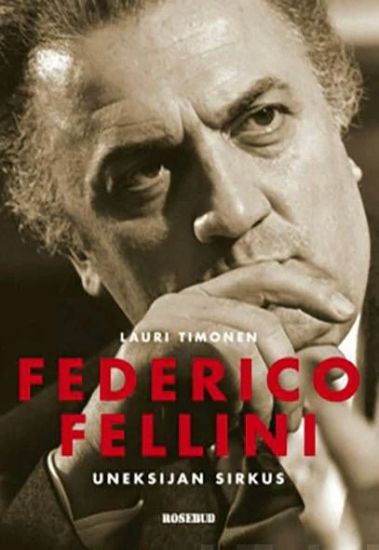
”Olen keksinyt kaiken itsessäni - lapsuuteni, persoonallisuuteni, kaipuuni, uneni, muistoni- voidakseni kertoa.”- Federico Fellini1900-luvun merkittävimpiin taiteilijoihin kuulunut Federico Fellini (1920-1993) aloittiuransa pilapiirtäjänä ja lehtimiehenä, kohosi Roberto Rossellinin luotetuksi oppilaaksi,eteni ohjaajaksi ja päätyi ammattikuntansa symbolihahmoksi ja supertähdeksi. Julkisenelämän koettelemukset, jatkuvat tuottajariidat ja monimutkainen avioliitto GiuliettaMasinan kanssa heijastuivat työhön suoraan ja intiimisti. Matkaa klassisesta moderniintehnyt visionääri vertasi itseään klovniin, kurkotti korkeuksiin ja kieltäytyi turvaverkoista.Uneksijan sirkus maalaa kokonaiskuvan totuuttaan etsivästä ihmisestä ja italialaisenelokuvan historiasta, käy läpi Fellinin teokset ja elämänvaiheet, ja sisältää runsaasti sekätärkeimpien yhteistyökumppanien ja kilpailijoiden esittelyjä, että läheisimpiennäyttelijöiden pienoismuotokuvia. Painajaisilla, politiikalla, psykoanalyysilla, taikauskolla,muistoilla, myyteillä, hirtehisellä feminismillä ja kaikkialla väreilevällä erotiikalla lastattutietoteos kuljettaa lukijansa takaisin Riminin rannoille ja Rooman syrjäkujille, ViaVeneton dekadenttiin hehkuun ja Cinecittan studiohallien euforiseen ihmisvilinään -aikaan, jolloin elokuva oli voimissaan ja Fellini oman taiteenlajinsa ylistetyinkapellimestari.Lauri Timonen (s. 1980) on kirjailija, ohjaaja, muusikko ja Filmihullu-lehdenpäätoimittaja. Hän on julkaissut teokset Aki Kaurismäestä (2006), Matti Pellonpäästä(2009), Matti Ijäksestä (2013), Jean Sebergistä (2018) ja Rainer Werner Fassbinderistä(2019). Uneksijan sirkus jatkaa ”eurooppalaisen elokuvan trilogiaa”, jonka vuonna 2022ilmestyvän päätösosan aiheena on Robert Bresson.
Federico Fellini

Federico Fellini

VDM Publishing House
2010
nidottu
Observera att förlaget som ger ut denna produkt baserar innehållet i sina produkter på fria källor som Wikipedia. Boken är med stor sannolikhet endast ett utdrag ur dessa informationskällor, alltså inte en vanlig bok i den bemärkelsen.
Federico Fellini as Auteur

Federico Fellini as Auteur

John C. Stubbs

Southern Illinois University Press
2015
sidottu
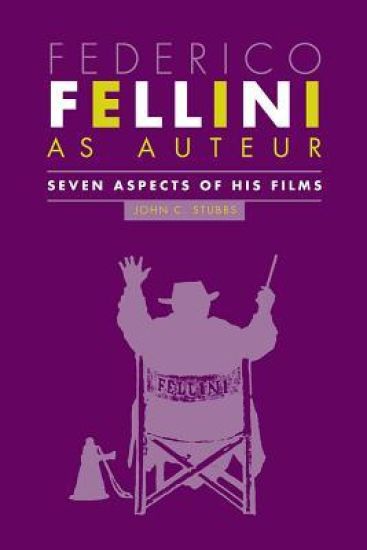
Federico Fellini as Auteur: Seven Aspects of His Films offers a comprehensive auteurist study of the renowned Italian director. Film scholar John C. Stubbs dispenses with a traditional filmcareer review of the man, focusing instead on the key elements of the filmmaker’s style, the influence of Carl Jung and dreams, the autobiographical depiction of childhood and adolescence, the portrait of the artist, the filmmaker’s working relationship with his wife, Fellini’s comic strategies, and his adaptation of works by others. Each of the aspects is fully contextualized. This examination of the critical elements in Fellini films offers a better understanding of the artistry that is uniquely Fellini.
Federico Fellini: His Life and Work

Federico Fellini: His Life and Work

Tullio Kezich

Farrar, Straus and Giroux
2007
nidottu
"Trenchant in its critical analysis, absorbing and sympathetic in its account of his private life, Kezich's Fellini is a revelation. It effaces virtually everything written to date about the Italian maestro . . . This engrossing biography mirrors its subject. It's affectionate, garrulous and often rambling, and in sudden flashes of brilliance it offers a penetrating view of Fellini's life and art." --Peter Cowie, The Nation "Few writers are able to approach Fellini with the privilege of intimate experience and friendship . . . Kezich fills the pages of this biography with uncommon detail and artistry, presenting a chronicle that weaves life with film, fact with fantasy, in a style reminiscent of the great director's avant-garde style . . . For the aficionado of Fellini's works, this narrative of his life provides a sea of subtle, precious anecdotes. To those yet unacquainted with the Italian master, the book is an introduction not only to the man's life, but his art, also. It's a captivating read." --Karoun Demirjian, The Christian Science Monitor "Kezich's forty-year friendship with the maestro allows him to offer up an intimate and lively portrait of Fellini filled with revealing anecdotes and psychological insight." --Michel Ciment, author of Kubrick and Kazan on Kazan
The Italian Director Series: Federico Fellini The Film Guide
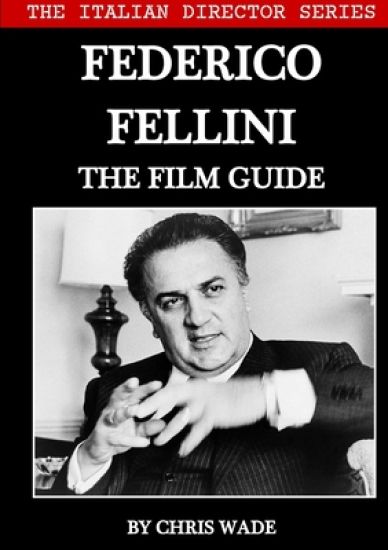
This edition of the Italian Director Series focuses on the filmography of Federico Fellini, one of the most acclaimed and influential filmmakers of all time. Fellini's rich, bold, surreal and daring style of cinema produced such classics as 8 1/2, La Dolce Vita and Juliet of the Spirits. This book explores his whole oeuvre, from his early neorealist classics to his final undervalued masterpieces. Other films reviewed include Amarcord, Roma, City of Women and La Strada.
The Films of Federico Fellini

The Films of Federico Fellini

Peter Bondanella

Cambridge University Press
2002
pokkari
The Films of Federico Fellini examines the career of one of Italy’s most renowned filmmakers through close analysis of five masterpieces that span his career: La Strada, La Dolce Vita, 8 1/2, Amarcord and Interview. Providing an overview of Fellini’s early career as a cartoonist and scriptwriter for neorealist directors such as Roberto Rossellini, this study traces the development of Fellini’s unique and personal cinematic vision as it transcends Italian neorealism. Rejecting an overtly ideological approach to Fellini’s cinema, Bondanella emphasizes the director’s interest in fantasy, the irrational and individualism.