Kirjojen hintavertailu. Mukana 11 627 367 kirjaa ja 12 kauppaa.

Kirjahaku

Etsi kirjoja tekijän nimen, kirjan nimen tai ISBN:n perusteella.

56 tulosta hakusanalla "G Protein Coupled Receptors"

G Protein Coupled Receptors
This new volume of Methods in Enzymology continues the legacy of this premier serial by containing quality chapters authored by leaders in the field. This volume covers G protein coupled receptors and includes chapters on such topics as post-translation modification of GPCR in relationship to biased agonism, structure-based virtual screening, and GPCR oligomerization in the brain.
G Protein Coupled Receptors
This new volume of Methods in Enzymology continues the legacy of this premier serial by containing quality chapters authored by leaders in the field. This volume covers G protein coupled receptors and includes chapters on such topics as G protein-coupled receptor trafficking motifs, structure-based virtual screening, and automation-friendly high throughput assays for identification of pharmacoperone drugs.
G Protein Coupled Receptors
This new volume of Methods in Enzymology continues the legacy of this premier serial with quality chapters authored by leaders in the field. This volume covers G protein coupled receptors, and includes chapters on such topics as GPCR modelling, interactions with other molecules, virtual screening and GPCR activation.
G Protein-Coupled Receptors
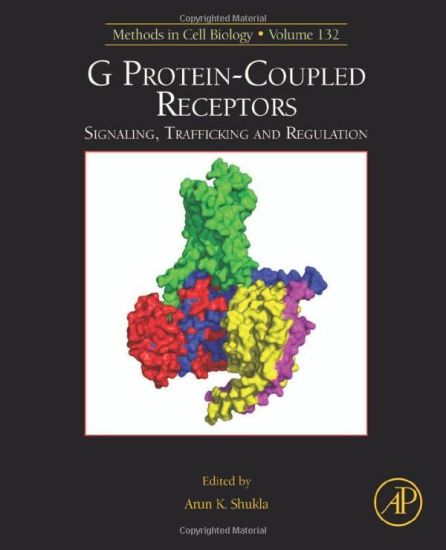
G-Protein-Coupled Receptors: Signaling, Trafficking, and Regulation, a new volume in the Methods in Cell Biology series continues the legacy of this premier serial with quality chapters authored by leaders in the field. This volume covers research methods in G-Protein-Coupled Receptors, and includes sections on such topics signaling, trafficking and regulation.
G Protein-Coupled Receptors
This book provides a broad base of knowledge of G-protein-coupled receptors. Useful at both the university and industrial levels, this book is of particular interest to those who are developing therapeutic approaches to diseases using drugs that influence receptor activation.
G Protein-Coupled Receptors
Covering recently developed methods in membrane-bound receptors, this book emphasizes receptor structure and function, knowledge of which is essential to the study of signal transduction. G Protein-Coupled Receptors has culled contributors from domestic and international sources, providing a broad base of knowledge. Some topics covered are the regulation of receptors; phosphorylation of G-protein-coupled receptors and ion channel receptors; desensitization studies using electrophysiological or confocal microscopic methods and the search for endogenous ligands for orphan receptors. This volume is useful at both the university and industrial levels, and is of particular interest to those who are developing therapeutic approaches to diseases using drugs that influence receptor activation.
G Protein-coupled Receptors

G Protein-coupled Receptors

Georges Vauquelin; Bengt von Mentzer

John Wiley Sons Inc
2007
sidottu
G protein-coupled receptors (GPCRs) are membrane proteins that transduce a vast array of extracellular signals into intracellular reactions ranging from cell-cell communication processes to physiological responses. They play an important role in a variety of diseases from cancer and diabetes, to neurodegenerative, inflammatory and respiratory disorders. GPCRs are therefore of utmost interest in drug development: over half of all prescription drugs currently on the market act by targeting these receptors directly or indirectly. G Protein-coupled Receptors: Molecular Pharmacology provides a clear summary of the current knowledge in this fast-evolving field. The book sets out with an introduction to signalling molecules and their receptors, and an overview of the technical approaches used to investigate these interactions. Structural, functional and especially pharmacological aspects of GPCRs are then discussed in more detail and much attention is devoted to the analysis and interpretation of experimental data. The now widespread use of recombinant cell lies, receptor mutants and related artifices in drug research is critically evaluated. Special attention is also devoted to topical but often poorly understood concepts, such as insurmountable antagonism, inverse agonism and allosteric interactions. By combining general information with the major state-of-the-art concepts in GPCR-research, this outstanding book equips the reader with the necessary background for understanding and critically evaluating the current literature. Written by two experts from academia and industry, G Protein-coupled Receptors: Molecular Pharmacology offers a unique view of academic and applied approaches aiming to reveal new ideas in pharmaceutical research. The book is of interest to anyone involved in drug development and preclinical research and those who need to function within multi-disciplinary teams in the pharmaceutical industry: from investigators to product managers or clinicians who seek to have a broad mechanistic understanding of drug-receptor interactions. It is also an invaluable resource for final year undergraduate and postgraduate students in pharmacology and cell and molecular biology.
G Protein-Coupled Receptors

G Protein-Coupled Receptors

John Wiley Sons Inc
2010
sidottu
G-Protein Coupled Receptors (GPCRs) are not only the largest protein family in the human genome but are also the single biggest target for therapeutic agents. Research into GPCRs is therefore growing at a fast pace and the range of techniques that can be applied to GPCRs is vast and continues to grow. This book provides an invaluable bench-side guide into the best and most up-to-date techniques for current and future research on GPCRs. With contributions from leading international authorities, this book equips readers with clear and detailed protocols for both well-known and up-and-coming techniques along with hints and tips for success. All the methods have been tried and tested by leading international research labs and are presented in easy-to-follow stages along with a useful overview of each technique. This book is an essential resource for all researchers in molecular biology, biochemistry, pharmacology and for graduate students.
G Protein-Coupled Receptors

G Protein-Coupled Receptors

Cambridge University Press
2010
sidottu
Provides a comprehensive overview of recent discoveries and current understandings of G protein-coupled receptors (GPCRs). Recent advances include the first mammalian non-rhodopsin GPCR structures and reconstitution of purified GPCRs into membrane discs for defined studies, novel signaling features including oligomerization, and advances in understanding the complex ligand pharmacology and physiology of GPCRs, in new assay technologies and drug targeting. The authors take time to detail the importance of the pathophysiological function and drug targeting of GPCRs, specifically ß-adrenoceptors in cardiovascular and respiratory diseases, metabotropic glutamate receptors in CNS disorders, S1P receptors in the immune system, and Wnt/Frizzled receptors in osteoporosis. This book will be invaluable to researchers and graduate students in academia and industry who are interested in the GPCR field.
G Protein-Coupled Receptors
This book provides a broad base of knowledge of G-protein-coupled receptors. Useful at both the university and industrial levels, this book is of particular interest to those who are developing therapeutic approaches to diseases using drugs that influence receptor activation.
G Protein-Coupled Receptors
Covering recently developed methods in membrane-bound receptors, this book emphasizes receptor structure and function, knowledge of which is essential to the study of signal transduction. G Protein-Coupled Receptors has culled contributors from domestic and international sources, providing a broad base of knowledge. Some topics covered are the regulation of receptors; phosphorylation of G-protein-coupled receptors and ion channel receptors; desensitization studies using electrophysiological or confocal microscopic methods and the search for endogenous ligands for orphan receptors. This volume is useful at both the university and industrial levels, and is of particular interest to those who are developing therapeutic approaches to diseases using drugs that influence receptor activation.
G Protein-Coupled Receptors

G Protein-Coupled Receptors

Royal Society of Chemistry
2011
sidottu
G protein-coupled receptors (GPCRs) are the largest family of cell-surface receptors, with more than 800 members identified thus far in the human genome. They regulate the function of most cells in the body, and represent approximately 3% of the genes in the human genome. These receptors respond to a wide variety of structurally diverse ligands, ranging from small molecules, such as biogenic amines, nucleotides and ions, to lipids, peptides, proteins, and even light. Ligands (agonists and antagonists) acting on GPCRs are important in the treatment of numerous diseases, including cardiovascular and mental disorders, retinal degeneration, cancer, and AIDS. It is estimated that these receptors represent about one third of the actual identified targets of clinically used drugs. The determination of rhodopsin crystal structure and, more recently, of opsin, 1 and 2 adrenergic and A2A adenosine receptors provides both academia and industry with extremely valuable data for a better understanding of the molecular determinants of receptor function and a more reliable rationale for drug design. GPCR structure and function constitutes a hot topic. The book, which lies between the fields of chemical biology, molecular pharmacology and medicinal chemistry, is divided into three parts. The first part considers what receptor structures tell us about the mechanism of receptor activation. Part II focuses on receptor function. It discusses what the data from biophysical and mutational studies, and the analysis of the interactions of the receptor with ligands and regulator proteins, tell us about the process of signal transduction. The final part, on modelling and simulation, details new insights on the link between structure and mechanism and their implications in drug design.
G Protein-Coupled Receptors

G Protein-Coupled Receptors

Tiina P. Iismaa; Trevor J. Biden; John Shine

Springer-Verlag Berlin and Heidelberg GmbH Co. K
2013
nidottu
This book is about the recent advances in the structural and functional characterization of receptors that influence intracellular signalling events through interaction with intracellular GTP-binding proteins (G proteins). Molecular cloning of members of the G protein-coupled receptor superfamily has complemented pharmacological investigations in providing a realization of the structural and functional diversity of these receptors. An increased understanding of the involvement of particular receptor subtypes in normal and pathophysiological processes represents exciting possibilities for the development of highly specific and effective therapeutic agents.
G Protein-Coupled Receptors

G Protein-Coupled Receptors

Xinfeng Zhao; Qian Li; Jing Wang; Qi Liang; Jia Quan

SPRINGER VERLAG, SINGAPORE
2023
nidottu
This book summarizes the progress made to functional immobilize G protein-coupled receptors (GPCRs) through site-specific or orientated recognition in both non-covalent and covalent manners. The last decade is the dawn of the “post-structural biology” era for G protein-coupled receptor research. As an emerging approach for state-of-the-art immobilization, this book discusses efforts to explore the elegance of naturally-occurring biochemical reactions by using their high specificity and robust reactivity in the complex system, such as site-specific conjugation by covalent recognition between enzymes and their substrates. With the perspective of protein-drug interactions, this book also reviews the applications of protein immobilization, with an emphasis on G protein-coupled receptors, in drug discovery and protein-ligand interaction analysis. In addition, the merits, opportunities and disadvantages are analyzed for different immobilization methods, and a perspective for future directions is presented. Given its scope, this book appeals to a broad readership, particularly researchers engaged in the field of analytical chemistry, bioconjugate chemistry, and chemical biology, and other related field, as well as teachers of relevant majors in colleges and universities.
G Protein-Coupled Receptors in Health and Disease, Part B
G protein-coupled receptors (GPCRs) transduce signals from a diverse array of endogenous ligands, including ions, amino acids, nucleotides, lipids, peptides, and large glycoprotein hormones. They are also responsible for our sensing of exogenous stimuli, including photons and odorants. GPCRs regulate almost every aspect of our physiological functions. It is estimated that 40% to 50% of currently used therapeutic drugs target GPCRs directly or indirectly. Because the current drugs target only a small portion of the GPCRs, opportunities for targeting the remaining GPCRs is enormous. This volume reviews the latest developments in this rapidly advancing field.
G Protein-Coupled Receptors in Energy Homeostasis and Obesity Pathogenesis
Obesity is an epidemic with enormous health, economic and social burdens. Current drugs for obesity treatment are far from ideal in terms of efficacy and side effects. Reviews in this volume of Progress in Molecular Biology and Translational Science summarize current status in studies of a number of G protein-coupled receptors that were shown to be promising targets for obesity treatments. Some of these receptors also cause monogenic obesity in humans.
G Protein-Coupled Receptors in Immune Response and Regulation
G Protein-Coupled Receptors in Immune Response and Regulation, Volume 136 presents emerging concepts related to the role of GPCRs in immune response and regulation. Users will find updated chapters on a variety of topics, including Beta-adrenergic signaling in the onset and progression of asthma, the Emerging roles of Regulators of G protein signaling (RGS) proteins in the immune system, information on Kinin receptors in immune response and pathogenic infections, and sections on GPCR signaling in C. elegans and its implications in immune response, GPCR Kinases in Inflammatory response and signaling, and GRK2 in Inflammation: Regulation of T cell receptors and IgE signaling. Chapters in this book discuss not only the well-known aspects of GPCR signaling in immunology, but also presents many emerging paradigms that have not yet been reported in classical textbooks. Each chapter presents a forward-looking discussion, providing a glimpse of the tremendous potential associated with the specific receptor systems discussed.
G Protein-Coupled Receptors Part A
G Protein Coupled Receptors, Second Edition, Volume 143, a new volume in the Methods in Cell Biology series, continues the legacy of this premier serial with quality chapters authored by leaders in the field. It contains a wide array of topics about the G protein coupled receptors, as well as updates of chapters from the first edition.
G Protein-Coupled Receptors: Emerging Paradigms in Activation, Signaling and Regulation Part A
G Protein-Coupled Receptors: Emerging Paradigms in Activation, Signaling and Regulation, Part A, Volume 337 in the International Review of Cell and Molecular Biology series, reviews and details current advances in cell and molecular biology. The IRCMB series has a worldwide readership, maintaining a high standard by publishing invited articles on important and timely topics that are authored by prominent cell and molecular biologists. This new release includes comprehensive sections on the classical paradigms of GCPR signaling and regulation, the family of small GTPases: Beyond heterotrimeric G proteins, GPCR endocytosis: Arrestins, arrestin-like proteins, signaling from internalized G Protein-Coupled Receptors, GPCR kinases, and more.
G Protein-Coupled Receptors: Emerging Paradigms in Activation, Signaling and Regulation Part B
International Review of Cell and Molecular Biology reviews and details current advances in cell and molecular biology. The IRCMB series has a worldwide readership, maintaining a high standard by publishing invited articles on important and timely topics that are authored by prominent cell and molecular biologists. The articles published in IRCMB have a high impact and an average cited half-life of 9 years. This great resource ranks high amongst scientific journals dealing with cell biology.