Kirjojen hintavertailu. Mukana 11 342 296 kirjaa ja 12 kauppaa.

Kirjahaku

Etsi kirjoja tekijän nimen, kirjan nimen tai ISBN:n perusteella.

292 tulosta hakusanalla "Gayatri"

Gayatri

Gayatri

Inayat Khan

Albion-Andalus Books
2024
sidottu
Gayatri is a prayer book designed for use by the family of Sufi lineages descending from Hazrat Pir-o-Murshid Inayat Khan (1882-1927). Included within are all prayers of the "Gayatri" sections of the Gayan and Vadan, as well as other prayers and remembrances, composed by Hazrat Inayat Khan, held and honored in the tradition of Inayati Sufism. Additionally, there is a section of universalist prayers and remembrances of the Inayati-Maimuni Sufi community composed by Pir Netanel Miles-Y pez and Hazrat Pir-o-Murshid Zalman Sulayman Schachter-Shalomi, for the use of that community. For this volume, the original prayers & remembrances have been edited and adapted for clarity in modern English and made gender inclusive. Notes have also been added in the back to explain context, non-English vocabulary, and the origins of various prayers.
Gayatri Chakravorty Spivak

Gayatri Chakravorty Spivak

Stephen Morton

Routledge
2002
sidottu
Gayatri Chakravorty Spivak offers an overtly political challenge to the way we think about literature and culture. As she highlights the many legacies of colonialism, she re-defines the ethical horizons of contemporary critical thought. This volume focuses on her key theoretical concepts, intellectual context and critical reception, providing an accessible introduction to one of the most important thinkers of our time. Stephen Morton introduces Spivak's crucial work through an analysis of such issues as: * methodology and Spivak's 'difficult' style * deconstructive strategies * third world women, the concept of the 'subaltern' and the critique of western feminism * re-reading Marx for the global capitalist era * Spivak's contribution to colonial discourse studies and postcolonial theory. Having examined the ways in which Spivak has transformed contemporary cultural theory, and in particular feminist and postcolonial thought, Morton concludes with a guide to reading Spivak's work and that of her critics. Essential for students of literature or cultural studies, this volume is the ideal companion for a first encounter with Spivak's remarkable texts.
Gayatri Chakravorty Spivak

Gayatri Chakravorty Spivak

Stephen Morton

Routledge
2002
nidottu
Gayatri Chakravorty Spivak offers an overtly political challenge to the way we think about literature and culture. As she highlights the many legacies of colonialism, she re-defines the ethical horizons of contemporary critical thought. This volume focuses on her key theoretical concepts, intellectual context and critical reception, providing an accessible introduction to one of the most important thinkers of our time. Stephen Morton introduces Spivak's crucial work through an analysis of such issues as: * methodology and Spivak's 'difficult' style * deconstructive strategies * third world women, the concept of the 'subaltern' and the critique of western feminism * re-reading Marx for the global capitalist era * Spivak's contribution to colonial discourse studies and postcolonial theory. Having examined the ways in which Spivak has transformed contemporary cultural theory, and in particular feminist and postcolonial thought, Morton concludes with a guide to reading Spivak's work and that of her critics. Essential for students of literature or cultural studies, this volume is the ideal companion for a first encounter with Spivak's remarkable texts.
Gayatri Spivak

Gayatri Spivak

Stephen Morton

Polity Press
2006
nidottu
Gayatri Chakravorty Spivaks seminal contribution to contemporary thought defies disciplinary boundaries. From her early translations of Derrida to her subsequent engagement with Marxism, feminism and postcolonial studies and her recent work on human rights, the war on terror and globalization, she has proved to be one of the most vital of present-day thinkers. In this book Stephen Morton offers a wide-ranging introduction to and critique of Spivaks work. He examines her engagements with philosophers and other thinkers from Kant to Paul de Man, feminists from Cixous to Helie-Lucas and literary texts by Charlotte Bronte, J. M. Coetzee, Mahasweta Devi and Jean Rhys. Spivaks thought is also situated in relation to subaltern studies. Throughout the book, Morton interrogates the materialist basis of Spivaks thought and demonstrates the ethical and political commitment which lies at the heart of her work. Stephen Morton provides an ideal introduction to the work of this complex and increasingly important thinker.
Gayatri Chakravorty Spivak: Live Theory

Gayatri Chakravorty Spivak: Live Theory

Mark Sanders

Continuum International Publishing Group Ltd.
2006
sidottu
This is an introductory guide to the work of a major contemporary theorist that includes an interview with Spivak herself. "Gayatri Chakravorty Spivak: Live Theory" offers a concise, comprehensive and accessible introduction to the themes central to the thought of one of the world's most provocative and original theorists. The book concentrates on Spivak's engagement, in theory and practice, with deconstruction, Marxism, feminism, and issues of postcoloniality and globalization, and makes clear the extent of her impact in the fields of postcolonial and literary theory. In this engaging and stimulating book, Mark Sanders explores the questions Spivak has posed with increasing regularity in recent years: What is the responsibility in today's world of the literary reader? What specifically does a training in the literary habit of reading bring to political and intellectual responsibility? Can reading lead to a responsible form of global or transnational literacy? The book includes a new interview with Spivak herself, in which she discusses the key themes in her work as well as future writing plans. "Gayatri Chakravorty Spivak: Live Theory" is a key resource for anyone studying this pioneering thinker.
Gayatri Chakravorty Spivak: Live Theory

Gayatri Chakravorty Spivak: Live Theory

Mark Sanders

Continuum International Publishing Group Ltd.
2006
nidottu
This is an introductory guide to the work of a major contemporary theorist that includes an interview with Spivak herself. "Gayatri Chakravorty Spivak: Live Theory" offers a concise, comprehensive and accessible introduction to the themes central to the thought of one of the world's most provocative and original theorists. The book concentrates on Spivak's engagement, in theory and practice, with deconstruction, Marxism, feminism, and issues of postcoloniality and globalization, and makes clear the extent of her impact in the fields of postcolonial and literary theory. In this engaging and stimulating book, Mark Sanders explores the questions Spivak has posed with increasing regularity in recent years: What is the responsibility in today's world of the literary reader? What specifically does a training in the literary habit of reading bring to political and intellectual responsibility? Can reading lead to a responsible form of global or transnational literacy? The book includes a new interview with Spivak herself, in which she discusses the key themes in her work as well as future writing plans. "Gayatri Chakravorty Spivak: Live Theory" is a key resource for anyone studying this pioneering thinker.
Gayatri Chakravorty Spivak

Gayatri Chakravorty Spivak

Sangeeta Ray

Wiley-Blackwell (an imprint of John Wiley Sons Ltd)
2009
nidottu
This book introduces and discusses the works of leading feminist postcolonialist Gayatri Chakravorty Spivak, by exploring the key concepts and themes to emerge from them. Focuses on the key themes to emerge from Spivak’s work, such as ethics, literature, feminism, pedagogy, postcoloniality, violence, and war Assesses Spivak’s often contentious relationship with feminist and postcolonial studies Considers the significance of her work for other fields, such as ethnography, history, cultural studies and philosophy
Gayatri Sahasranam

Gayatri Sahasranam

Swami Satyananda Saraswati; Shree Maa

Temple of the Divine Mother, Inc.
2003
pokkari
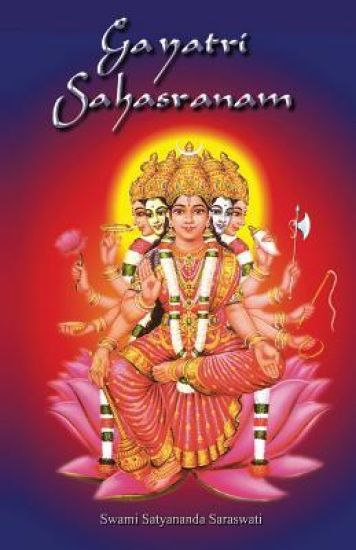
Gayatri is the vibration with which we greet the rising Sun in the morning, and therefore She signifies beginnings. She also is a meter, 24 syllables to the verse. She is the incessant and relentless pursuit of wisdom. She is the feminine expression of the light of the Sun. The Thousand Names of Gayatri shares the most succinct philosophies, the most subtle ethics, the greatest ideals of spiritual perfection, expressed in alphabetical order, with rhymes and musical tones in harmonic convergence, and rhythms in orders of mathematical perfection, all in one composition. One has to bow in awe and reverence at the majesty of thought presented by the rsis
Gayatri Chakravorty Spivak

Gayatri Chakravorty Spivak

Constanze Lemmerich

Grin Verlag
2010
pokkari
Seminar paper from the year 2008 in the subject Pedagogy - Science, Theory, Anthropology, grade: 1,3, University of Mnster (Institut fr Erziehungswissenschaften), course: Basic Texts in Postcolonial Studies, language: English, abstract: Ursprnglich aus den Literaturwissenschaften kommend, ist Spivaks Einfluss in den letzten Jahrzehnten in der Auseinandersetzung im Bereich der Cultural Studies, Postkolonialer und kritischer Theorie wesentlich. Gerade ihr Versuch, zum Teil als antagonistisch und sich ausschlieend gesehene Theorien wie die der Dekonstruktion, marxistische und feministische Theorie miteinander zu verknpfen und dadurch Raum fr neue Auseinandersetzung und auch praktische Anknpfungspunkte zu schaffen, lieen sie neben Homi Bhabba und Eward Said zu einen der Hauptfiguren Postkolonialer Theorie werden. Neben der Erklrung wesentlicher, fr Spivaks Werke relevanter Begrifflichkeiten, wird ein Abriss und Einblick in zahlreiche Werke der Wissenschaftlerin gegeben. Hierbei wird sowohl auf Spivaks Kritik an globalen sozio-konomischen Ungleichheiten und politischen Abhngigkeiten in Form einer - auch vergeschlechtlichen- internationalen Arbeitsteilung und post-und neokolonialer Kontinuitten innerhalb derzeitiger globaler Gesellschaftsstrukturen eingegangen, wie auch Formen der Macht sowohl im wissenschaftlichen Diskurs, Praktiken und Denkmuster verwiesen, welche fr Spivak mit diesen Strukturen verflochten sind.
Kaivalya Gayatri: The Yoga of Detached Awareness

Kaivalya Gayatri: The Yoga of Detached Awareness

Philip Hamilton

Createspace Independent Publishing Platform
2020
nidottu
Kaivalya Gayatri, The Yoga of Detached Awareness is a thread of teachings, told through the guru-disciple relationship of Rishi/Sage Vishwamithra and his student, Ashty Hozan. The story describes the aspiring student's frustration at routines and reactions followed by his emergence into disciplined choices and a sense of meaning. Through a course of weekly Gayatri mantra lessons they explore Ashty's moments of clarity, confusion and crisis as necessary steps toward "kaivalya" which is radical freedom based in detachment. The teacher offers discourses with practical applications in the context of Kriya Yoga, logical analysis, awareness training, and devotional practice. Vishwamithra presents these as necessary ways of "becoming human." The human must willingly practice those disciplines that can assure harmonious existence within a world of creatures guided by instinct. The guru and disciple demonstrate the challenges of urban society as opportunities to become free beings, aware and purposeful, even while experiencing difficulty. The reader will discover the Sanskrit Gayatri mantra line by line, with word by word interpretations and explanations. Vishwamithra draws associations with human personality and its distortions, yogic disciplines, and the way toward clarity in relationships along a journey of transformation.
An Analysis of Gayatri Chakravorty Spivak's Can the Subaltern Speak?
A critical analysis of Spivak's classic 1988 postcolonial studies essay, in which she argues that a core problem for the poorest and most marginalized in society (the subalterns) is that they have no platform to express their concerns and no voice to affect policy debates or demand a fairer share of society’s goods. A key theme of Gayatri Spivak's work is agency: the ability of the individual to make their own decisions. While Spivak's main aim is to consider ways in which "subalterns" – her term for the indigenous dispossessed in colonial societies – were able to achieve agency, this paper concentrates specifically on describing the ways in which western scholars inadvertently reproduce hegemonic structures in their work. Spivak is herself a scholar, and she remains acutely aware of the difficulty and dangers of presuming to "speak" for the subalterns she writes about. As such, her work can be seen as predominantly a delicate exercise in the critical thinking skill of interpretation; she looks in detail at issues of meaning, specifically at the real meaning of the available evidence, and her paper is an attempt not only to highlight problems of definition, but to clarify them. What makes this one of the key works of interpretation in the Macat library is, of course, the underlying significance of this work. Interpretation, in this case, is a matter of the difference between allowing subalterns to speak for themselves, and of imposing a mode of "speaking" on them that – however well-intentioned – can be as damaging in the postcolonial world as the agency-stifling political structures of the colonial world itself. By clearing away the detritus of scholarly attempts at interpretation, Spivak takes a stand against a specifically intellectual form of oppression and marginalization.
An Analysis of Gayatri Chakravorty Spivak's Can the Subaltern Speak?
A critical analysis of Spivak's classic 1988 postcolonial studies essay, in which she argues that a core problem for the poorest and most marginalized in society (the subalterns) is that they have no platform to express their concerns and no voice to affect policy debates or demand a fairer share of society’s goods. A key theme of Gayatri Spivak's work is agency: the ability of the individual to make their own decisions. While Spivak's main aim is to consider ways in which "subalterns" – her term for the indigenous dispossessed in colonial societies – were able to achieve agency, this paper concentrates specifically on describing the ways in which western scholars inadvertently reproduce hegemonic structures in their work. Spivak is herself a scholar, and she remains acutely aware of the difficulty and dangers of presuming to "speak" for the subalterns she writes about. As such, her work can be seen as predominantly a delicate exercise in the critical thinking skill of interpretation; she looks in detail at issues of meaning, specifically at the real meaning of the available evidence, and her paper is an attempt not only to highlight problems of definition, but to clarify them. What makes this one of the key works of interpretation in the Macat library is, of course, the underlying significance of this work. Interpretation, in this case, is a matter of the difference between allowing subalterns to speak for themselves, and of imposing a mode of "speaking" on them that – however well-intentioned – can be as damaging in the postcolonial world as the agency-stifling political structures of the colonial world itself. By clearing away the detritus of scholarly attempts at interpretation, Spivak takes a stand against a specifically intellectual form of oppression and marginalization.
Beneficial Effects of Gayatri Mantra

Beneficial Effects of Gayatri Mantra

Swaroop Satpathy; Prashant Tiwari; Pratap Kumar Sahu

LAP Lambert Academic Publishing
2020
pokkari
Today's youth suffer from different diseases and disorders either intentionally (drug addiction, using cell phones) or unintentionally (environmental factors, life style changes) which drastically change their life span. The purpose of the present study is to evaluate the effects of gayatri mantra on cognition and cardiovascular parameters in young students. The effect of chanting, writing and listening gayatri mantra daily on cognitive and cardiovascular parameters was studied. Thirty-six healthy undergraduate students were randomly selected. The participants (age 21 3 years) were divided into four (chanting, writing, listening and control) groups (n=9). The different groups performed different tasks like chanting, writing and listening gayatri mantra every day for 108 times in the early morning at 6 am, for seven weeks. The control group was not doing any kind of mantra chanting, writing or listening. The parameters like stroop test, spatial memory, verbal memory, blood oxygen levels, heart rate and blood pressure were measured. Data was collected at day 0 and at the end of every week for 7 weeks. Gayatri mantra in all forms like chanting, writing and listening affects cognitive
What's my name? GAYATRI

What's my name? GAYATRI

Tiina Walsh

Createspace Independent Publishing Platform
2018
nidottu
A personalised storybook for girls called GAYATRI. The story is based on the letters of the child's own name. All books are different from one another. The girl wakes up but can't remember her name. Magic Mouse knows how to solve the problem. They go on a wonderful adventure in the Magic Bus Translated and adapted by the author from the top-selling Finnish language children's namebook series "Tytt /Poika, joka unohti nimens ". The beautiful hand-drawn pictures will delight both the young and the young-at-heart Looking for a namebook "What's my name?" but couldn't find a book for the name you are looking for? Please don't hesitate to contact me with your name request -Tiina Walsh Author fb.me/whatsmynamestorybooks for more details about the storybooks