Kirjojen hintavertailu. Mukana 12 399 340 kirjaa ja 12 kauppaa.

Kirjahaku

Etsi kirjoja tekijän nimen, kirjan nimen tai ISBN:n perusteella.

93 tulosta hakusanalla "Gerhard Richter"

Gerhard Richter

Gerhard Richter

Dietmar Elger

University of Chicago Press
2010
sidottu
Gerhard Richter is one of the most important and popular artists of the postwar era. For decades he has sought innovative ways to make painting more relevant, often through a multifaceted dialogue with photography. Today Richter is most widely recognized for the photo-paintings he made during the 1960s that rely on images culled from mass media and pop culture. Always fascinated with the limits and uncertainties of representation, he has since then produced landscapes, abstractions, glass and mirror constructions, prints, sculptures, and installations. Though Richter has been known in the United States for quite some time, the highly successful retrospective of his work at the MOMA in 2002 catapulted him to unprecedented fame. Enter noted curator Dietmar Elger, who here presents the first biography of this contemporary artist. Written with full access to Richter and his archives, this fascinating book offers unprecedented insight into his life and work. Elger explores Richter's childhood in Nazi Germany; his years as a student and mural painter in communist East Germany; his time in the West during the turbulent 1960s and '70s, when student protests, political strife, and violence tore the Federal Republic of Germany apart; and, his rise to international acclaim during the 1980s and beyond. Richter has always been a difficult personality to parse, and the seemingly contradictory strands of his artistic practice have frustrated and sometimes confounded critics. But the extensive interviews on which this book is based disclose a Richter who is far more candid and vivid than ever before. The result is a book that will be the foundational portrait of this artist and his profoundly influential oeuvre.
Gerhard Richter
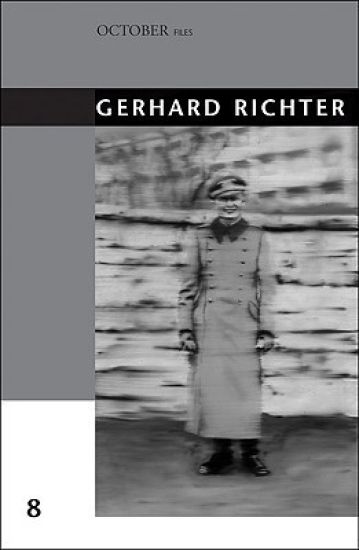
The first collection of essays on Gerhard Richter, who has been called "the greatest modern painter."The contemporary painter Gerhard Richter (born in 1932) has been heralded both as modernity's last painter and as painting's modern savior, seen to represent both the end of painting and its resurrection. Richter works in a dizzying variety of styles, from abstraction to a German cool pop that combines painterly technique and appropriation; his work includes photo paintings, large abstract canvases, and stained glass windows. This collection features writing by prominent critics, including Hal Foster, Gertrud Koch, and Thomas Crow; an essay by Rachel Haidu on Richter's family pictures that is published here for the first time; and an essay and two interviews with the artist by Benjamin H. D. Buchloh, Richter's "longtime sparring partner" (as the curator Robert Storr has called him). These writings examine Richter's work as a whole, from October 18, 1977, his dreamlike series of paintings depicting the dead Baader-Meinhof gang, to his abstract trio Abstract Paintings; from his unsettling portrait of "Uncle Rudi" in Nazi garb to his late series of portraits of his wife and young child. This addition to the October Files series will be an essential handbook to one of the most enigmatic figures in contemporary artContents Gerhard Richter and Benjamin H. D. Buchloh Interview (1986) Gertrud Koch The Richter-Scale of Blur (1992) Thomas Crow Hand-Made Photographs and Homeless Representation (1992) Birgit Pelzer The Tragic Desire (1993) Benjamin H. D. Buchloh Divided Memory and Post-Traditional Identity: Gerhard Richter's Work of Mourning (1996) Peter Osborne Abstract Images: Sign, Image, and Aesthetic in Gerhard Richter's Painting (1998) Hal Foster Semblance According to Gerhard Richter (2003) Johannes Meinhardt Illusionism in Painting and the Punctum of Photography (2005) Rachel Haidu Arrogant Texts: Gerhard Richter's Family Pictures (2007) Gerhard Richter and Benjamin H. D. Buchloh Interview (2004)
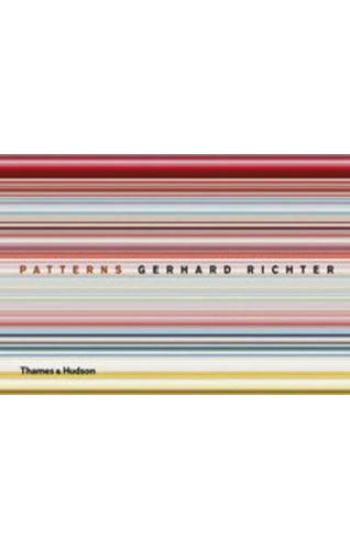
Gerhard Richter Patterns

Gerhard Richter Patterns

Gerhard Richter

Thames Hudson Ltd
2012
sidottu
Documents the author's experiment of taking an image of an original abstract painting and dividing it vertically into two. In this book, each divided part is divided again, mirrored and repeated, producing ever narrower strips, which results in patterns. It includes a total of 238 selected patterns.
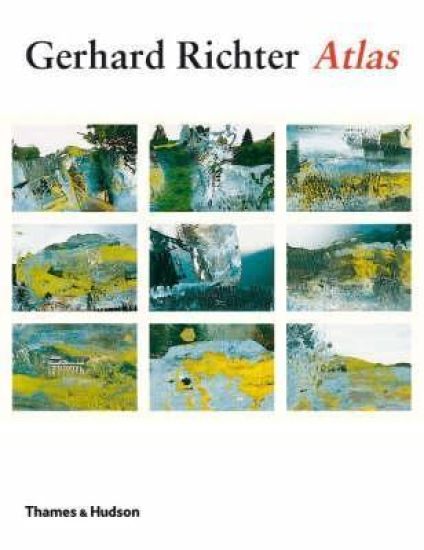
Gerhard Richter

Gerhard Richter

Thames Hudson Ltd
2007
sidottu
Maps the ideas, processes, life and times of one of the most important painters at work in the world today - Includes 733 full page, multi-panel, colour images. Richter himself devised the books concept and oversaw its creation. Can also be read as a reflection of recent German history.
Gerhard Richter

Gerhard Richter

Sheena Wagstaff; Benjamin H. D. Buchloh

Metropolitan Museum of Art
2020
sidottu
A lavishly illustrated monograph that spans the entire career of Gerhard Richter, one of the most celebrated contemporary artists "Spans the contemporary German artist's six-decade career. . . . [A] stirring exhibition in [its] own right."—New York Times"[A] weighty catalogue... illuminat[es] some less-visited corners of Richter's oeuvre."—New York Review of Books Over the course of his acclaimed 60-year career, Gerhard Richter (b. 1932) has employed both representation and abstraction as a means of reckoning with the legacy, collective memory, and national sensibility of post–Second World War Germany, in both broad and very personal terms. This handsomely designed book features approximately 100 of his key canvases, from photo paintings created in the early 1960s to portraits and later large-scale abstract series, as well as select works in glass. New essays by eminent scholars address a variety of themes: Sheena Wagstaff evaluates the conceptual import of the artist’s technique; Benjamin H. D. Buchloh discusses the poignant Birkenau paintings (2014); Peter Geimer explores the artist’s enduring interest in photographic imagery; Briony Fer looks at Richter’s family pictures against traditional painting genres and conventions; Brinda Kumar investigates the artist’s engagement with landscape as a site of memory; André Rottmann considers the impact of randomization and chance on Richter’s abstract works; and Hal Foster examines the glass and mirror works. As this book demonstrates, Richter’s rich and varied oeuvre is a testament to the continued relevance of painting in contemporary art.Published by The Metropolitan Museum of Art/Distributed by Yale University PressExhibition Schedule:The Met Breuer, New York (March 4–July 5, 2020)Museum of Contemporary Art, Los Angeles (August 14, 2020–January 19, 2021)
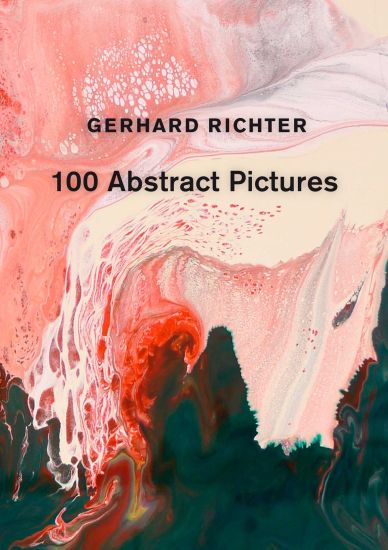
Gerhard Richter: 100 Abstract Pictures

Gerhard Richter: 100 Abstract Pictures

Gerhard Richter

David Zwirner
2023
sidottu
With a career spanning more than sixty years, the renowned painter Gerhard Richter is one of the greatest artists of the twentieth and twenty-first centuries. This book celebrates the artist’s continued dedication to experimentation and innovation.The Abstract Pictures were created when Richter, a few years ago, poured colored enamel paints onto a glass plate and allowed them to flow into one another in order to take shapes. He then captured these ephemeral moments with his camera and selected 100 of these “pictures” for inclusion in the book alongside equally abstract texts formed by randomly generated letter combinations.An artwork of its own, this intimate volume inspires both close looking and a beautiful interpretation of abstraction.
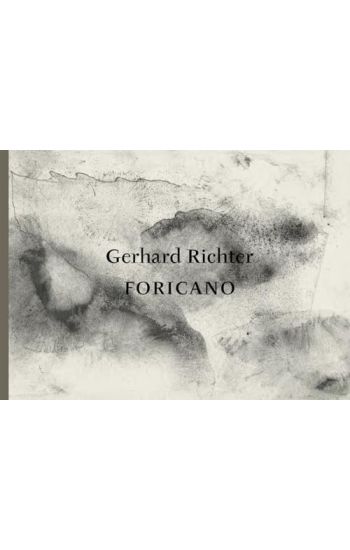
Gerhard Richter: FORICANO, 26 Drawings

Gerhard Richter: FORICANO, 26 Drawings

Gerhard Richter

David Zwirner
2024
sidottu
Gerhard Richter’s newest facsimile-like artist’s book is focused on a single work comprising twenty-six drawings in pencil and ink.“[Richter’s drawings] are of stringent individuality and recognizably by Richter’s hand, not based on their signature style but rather because they make their theme the act of drawing itself, gauging the conditions of drawing.” —Dieter SchwarzIn this new body of work, Richter combines various elements from a limited set of forms and techniques—including meandering lines, broad tonal planes applied with angled strokes of graphite, and passages of smudging, hatching, and erasure—thereby uniting choice and chance through this infinitely generative process. The resulting works on paper serve as condensed expressions, encapsulating and refining the fundamental principles that have consistently defined Richter's artistic journey. Reproduced at actual size, the drawings encourage in-depth observation as well as inspire compelling reimagining of abstraction.
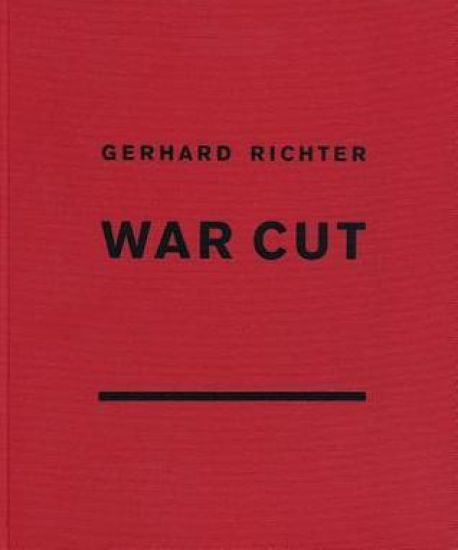
Gerhard Richter: War Cut (English Edition)

Gerhard Richter: War Cut (English Edition)

Gerhard Richter

Distributed Art Publishers (DAP)
2013
sidottu
In 1988, Gerhard Richter created one of the most controversial and fascinating political painting-cycles of all time, with his Baader-Meinhof series. In 2002, he returned to the theme of media and political truth with his artist's book War Cut. For this project, Richter photographed 216 details of his abstract painting "No. 648-2" (1987), and, working on a long table over a period of several weeks, combined these 4 x 6-inch details with 165 texts on the Iraq war, published in the German Frankfurter Allgemeine Zeitung newspaper on the dates of the war's outbreak (March 20 and 21, 2003). "My method was to attach a number of texts to a number of images without having to think about whether something would be better positioned to the left or the right, above or below," Richter told an interviewer, for a New York Times feature on the publication. "I placed these images so that a connection develops in terms of colors, structures and other characteristics. . . . Some images match the cruelty and the madness described in the texts shockingly well. And others can even serve as illustrations when the texts speak of deserts and other landscapes." Originally published only in German in 2004, this long-awaited English version of this important artist's book presents Richter's powerful attempt to accommodate the extremity of war. For this edition, Richter applied the same process of text selection to The New York Times, using the same dates of the war's outbreak.
Gerhard Richter

Gerhard Richter

VERLAG DER BUCHHANDLUNG WALTHER KONIG
2021
nidottu
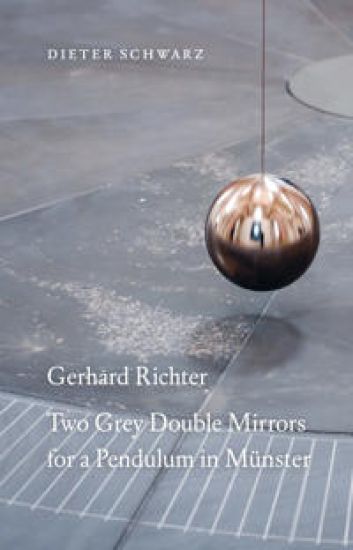
On Richter's monumental, enigmatic installation in a Baroque churchIn this volume, the acclaimed German curator and author Dieter Schwarz (born 1953) chronicles in minute detail an impressive installation by Gerhard Richter (born 1932), from its genesis as a concept through various drafts to its completion. Foucault's Pendulum, installed in the Baroque Dominican church in M nster, is made of a 105-pound reflective metal sphere hanging on a 94-foot wire above a graduated disk made of 380-million-year-old stone. Four panes of glass, enameled in grey on the back and reflective on the front, are mounted on the sides of the crossing in two pairs at a slight angle. The book presents Richter's installation as a Gesamtkunstwerk in which space and light, stillness and movement, architecture and reflected images, past and present, aesthetic experience and scientific research are brought into relation with each other.
Gerhard Richter: Catalogue Raisonn , Volume 5
The second installment in Dietmar Elger's ambitious six-volume Gerhard Richter publishing project The oeuvre of Gerhard Richter (born 1932) embraces in excess of 3,000 individual works. Over a period of five decades he has created a stylistically heterogeneous, complex body of work that testifies to his status as the most important living artist of our time. Dietmar Elger, director of the Gerhard Richter Archive at the Staatliche Kunstsammlungen Dresden, has spent years researching and preparing the six-volume catalogue raisonn' that will be published through 2020. This second volume encompasses the works that Richter assigned numbers 199 to 388, covering the years 1968 to 1976. A total of over 500 paintings and sculptures are listed. Aside from the richly colored illustrations (many of them full-page), it includes full technical details, information about the artist's handwritten notes and the provenance, bibliography and exhibitions of each individual work. This information is supplemented by commentary, quotes and comparison images.
Gerhard Richter

Gerhard Richter

Hubertus Butin; Cathérine Hug; Ann Cotten; T. J. Demos; Matias Faldbakken; Martha Stutteregger

Hatje Cantz
2020
sidottu
Gerhard Richter is one of the most famous painters of our time, worldwide. His fascinating visual spheres are characterized by a unique originality and quality, in which the abstract and the figural intertwine and permeate each other. This extensive volume of pictures concentrates entirely upon the theme of landscape in Richter’s oeuvre. Through this genre, to which Richter has remained loyal for more than sixty years, it is possible to see more than a development in the artist’s painting style. There is also a perceptible, genuine independence in many of the works, which makes him one of the most remarkable artists of our day. This book adds to the understanding of the significance and pictorial essence of Richter’s art, opening up current insights into the theme of nature and landscape in the twenty-first century.
Gerhard Richter

Gerhard Richter

Stephan Berg; Martin Germann

Hirmer Verlag
2017
nidottu
Gerhard Richter (*1932) is an exceptional personality – not because his pictures are world famous, but because he has demonstrated a new approach to painting. His art masterfully moves between abstraction and representation, sensuousness and denial – ambiv alent attitudes which he demonstrated even in his early work. Gerhard Richter’s oeuvre overcomes the division between abstract and representational art. His pictures neither cultivate a modest interplay of colours and forms nor do they deliver an intact p icture of reality. Richter is a sceptical artist who questions the reality of his art even when the prime subject of his paintings is the tangible. This applies in particular to his door, curtain and window pictures of the 1960s, which form the central foc us of this volume. They stage a playful examination of the illusory nature of art, which always questions what painting shows or conceals. This lavishly appointed volume is published to mark the artist’s 85th birthday.
Gerhard Richter
This publication is the first to focus solely on the abstract strategies and processes contained in Gerhard Richter’s body of work. In the early 1960s, the artist began to call painting into question, an exploration that continues to occupy him to this day. In the 1970s, he responded to the rejection of painting by creating a series of monochrome works in gray. Moreover, he viewed the colour gray as a means of addressing political themes without depicting them in an idealized manner. In his Inpainting series of the 1970s, Richter made brushstrokes and the application of paint his subject. In other works, he photographed small details from his palette and transferred them onto large canvases in a photorealistic manner. In his colour charts, he subjected painting to an objective process by leaving the arrangement of the colours to chance. Since 1976, Richter has created a series of abstract works by applying paint with a brush, scraper, and palette knife, alternating between conscious decision-making and random processes.
Gerhard Richter

Gerhard Richter

Armin Zweite

Prestel
2020
sidottu
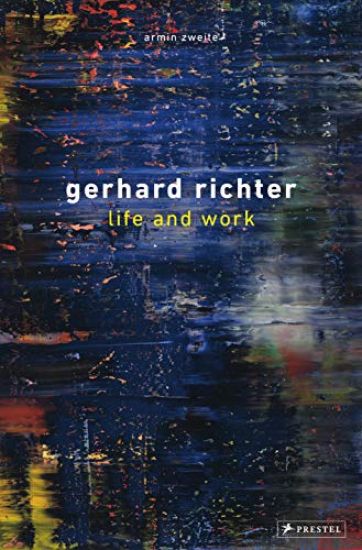
One of the world’s most revered visual artists, Gerhard Richter embraces many concepts in his work and continually thwarts categorisation. In this expansive and authoritative overview, Armin Zweite leads readers through every phase of Richter’s celebrated career including his early artistic education in East Germany and his later prolific output in West Germany: the black and white photo paintings, the brilliantly conceived colour charts and lush, inscrutable grey paintings, installations with glass and mirrors, his landscapes, portraits, and still lifes, and his monumental abstract paintings, which broke records at auction. Also included are selections from Richter’s larger-scale thematic works, such as Atlas, his ongoing collection of photographs and newspaper clippings, and October 18, 1977, a series of paintings commemorating the lives and deaths of members of a German left-wing terrorist group. The beautiful plates sections feature exquisite reproductions of more than 250 of his most famous works, including Ten Large Colour-charts (1966), Annunciation after Titian (1973), Faust (1980), Skull with Candle (1983), Funeral (1988), Strip (2012), and Double Gray (2014). Throughout, Zweite’s clear-eyed commentary offers an expert appraisal of the breadth of Richter’s oeuvre. This six-decade monograph of Richter’s work is a visually stunning and articulate appreciation by one of the world’s foremost experts on the artist and his life.
Gerhard Richter

Gerhard Richter

Richter Gerhard

Verlag der Buchhandlung Walther Konig
2013
sidottu
In 1988, Gerhard Richter created one of the most controversial and fascinating political painting-cycles of all time, with his Baader-Meinhof series. In 2002, he returned to the theme of media and political truth with his artist’s book War Cut. For this project, Richter photographed 216 details of his abstract painting ‘No. 648-2’ (1987), and, working on a long table over a period of several weeks, combined these 4 x 6-inch details with 165 texts on the Iraq war, published in the German Frankfurter Allgemeine Zeitung newspaper on the dates of the war’s outbreak (20 and 21 March 2003). ‘My method was to attach a number of texts to a number of images without having to think about whether something would be better positioned to the left or the right, above or below,’ Richter told an interviewer, for a New York Times feature on the publication. ‘I placed these images so that a connection develops in terms of colours, structures and other characteristics. . . . Some images match the cruelty and the madness described in the texts shockingly well. And others can even serve as illustrations when the texts speak of deserts and other landscapes.’ Originally published only in German in 2004, this long-awaited English version of this important artist’s book presents Richter’s powerful attempt to accommodate the extremity of war. For this edition, Richter applied the same process of text selection to The New York Times, using the same dates of the war’s outbreak.