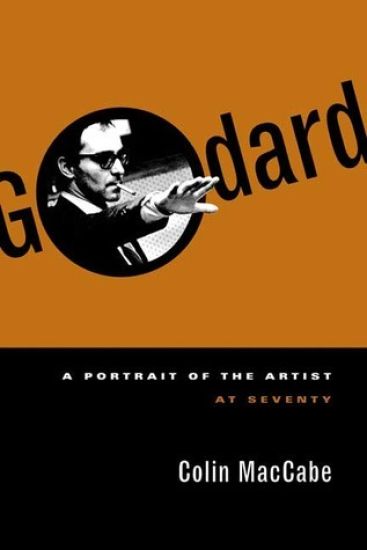
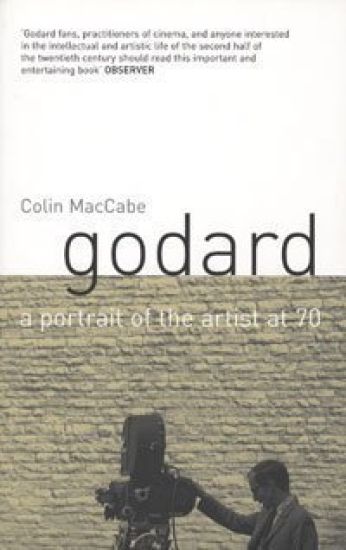
Jean-Luc Godard's early films revolutionised the language of cinema for everyone, from the "Superbrats of Hollywood" to the political cinema of the Third World. Yet in 1968, he abandoned one of the most brilliant careers in French cinema to pursue his investigations into sound and image on the periphery of the industry he had rejected. Following a protected childhood in Switzerland in the Second World War, the post-war years saw Godard as a troubled adolescent in Paris, where the prescribed courses of the Sorbonne were ignored in favour of the extraordinary teaching of Andre Bazin, the greatest of film critics. In the pages of "Cahiers du Cinema", Godard - together with Truffaut, Rohmer, Rivette and Chabrol - hammered out an aesthetic that would take the world by storm as the young critics swapped pens for cameras at the end of the 1950s to create the cinema of the nouvelle vague. Hugely prolific in his first 10 years - "A Bout de Souffle", "Le Petit Soldat", "Le Mepris," "Pierrot Le Fou", "Alphaville", "Made in USA" and many others all appeared in the 1960s - Godard became and remains one of the most adventurous and enigmatic film-directors at work in the world today.
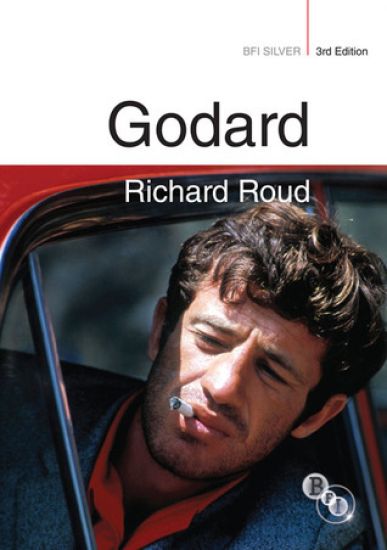
Richard Roud's Godard, first published in 1967 as 'Number One' in the seminal Cinema One series, was the first monograph on the great film-maker to be published in English, and one that reveals a unique intimacy between the author and his subject. Roud's provocative and far-reaching analysis shows an intuitive understanding of the aesthetic, intellectual and political context in which Godard worked, paying particular attention to his 'political' cinema, including the ferocious masterpiece Weekend (1967).In his foreword to this reissue, Michael Temple provides an overview of film criticism on Godard, arguing that, more than forty years since its publication, Roud's book remains at the forefront of writings on the director. Temple pinpoints how Roud was uniquely placed as a contemporary of Godard's to follow the film-maker's career from one explosive film to the next, charting the course of the Godardian star even as Roud's own career as a critic and festival programmer was unfolding. He contends that Roud's study was 'a pure product – and a faithful reflection – of a certain tendency in British film culture at the end of the 1960s: cinéphile, progressive, European, intellectual, metropolitan.' For Temple, Roud's work remains a lucid summary of what Godard had already achieved by the end of the 1960s, and provides a suggestive model of cultural criticism with which to approach subsequent aspects of Godard's multimedia artistic adventure.
Richard Roud's Godard, first published in 1967 as 'Number One' in the seminal Cinema One series, was the first monograph on the great film-maker to be published in English, and one that reveals a unique intimacy between the author and his subject. Roud's provocative and far-reaching analysis shows an intuitive understanding of the aesthetic, intellectual and political context in which Godard worked, paying particular attention to his 'political' cinema, including the ferocious masterpiece Weekend (1967).In his foreword to this reissue, Michael Temple provides an overview of film criticism on Godard, arguing that, more than forty years since its publication, Roud's book remains at the forefront of writings on the director. Temple pinpoints how Roud was uniquely placed as a contemporary of Godard's to follow the film-maker's career from one explosive film to the next, charting the course of the Godardian star even as Roud's own career as a critic and festival programmer was unfolding. He contends that Roud's study was 'a pure product – and a faithful reflection – of a certain tendency in British film culture at the end of the 1960s: cinéphile, progressive, European, intellectual, metropolitan.' For Temple, Roud's work remains a lucid summary of what Godard had already achieved by the end of the 1960s, and provides a suggestive model of cultural criticism with which to approach subsequent aspects of Godard's multimedia artistic adventure.
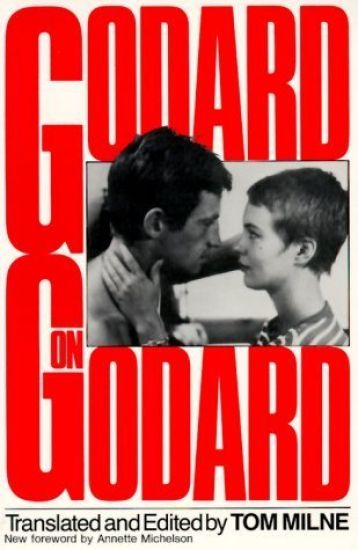
Jean-Luc Godard, like many of his European contemporaries, came to filmmaking through film criticism. This collection of essays and interviews, ranging from his early efforts for La Gazette du Cinéma to his later writings for Cahiers du Cinéma, reflects his dazzling intelligence, biting wit, maddening judgments, and complete unpredictability. In writing about Hitchcock, Welles, Bergman, Truffaut, Bresson, and Renoir, Godard is also writing about himself,his own experiments, obsessions, discoveries. This book offers evidence that he may be even more original as a thinker about film than as a director. Covering the period of 1950-1967, the years of Breathless, A Woman Is a Woman, My Life to Live, Alphaville, La Chinoise, and Weekend, this book of writings is an important document and a fascinating study of a vital stage in Godard's career. With commentary by Tom Milne and Richard Roud, and an extensive new foreword by Annette Michelson that reassesses Godard in light of his later films, here is an outrageous self-portrait by a director who, even now, continues to amaze and bedevil, and to chart new directions for cinema and for critical thought about its history.
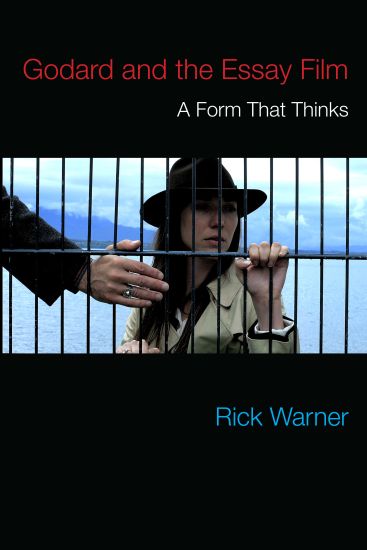
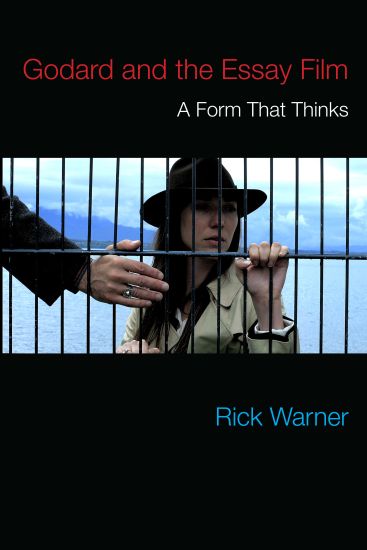
Godard and the Essay Film offers a history and analysis of the essay film, one of the most significant forms of intellectual filmmaking since the end of World War II. Warner incisively reconsiders the defining traits and legacies of this still-evolving genre through a groundbreaking examination of the vast and formidable oeuvre of Jean-Luc Godard.The essay film has often been understood by scholars as an eccentric development within documentary, but Warner shows how an essayistic process of thinking can materialize just as potently within narrative fiction films, through self-critical investigations into the aesthetic, political, and philosophical resources of the medium. Studying examples by Godard and other directors, such as Orson Welles, Chris Marker, Agnès Varda, and Harun Farocki, Warner elaborates a fresh account of essayistic reflection that turns on the imaginative, constructive role of the viewer.Through fine-grained analyses, this book contributes the most nuanced description yet of the relational interface between viewer and screen in the context of the essay film. Shedding new light on Godard's work, from the 1960s to the 2010s, in film, television, video, and digital stereoscopy, Warner distills an understanding of essayistic cinema as a shared exercise of critical rumination and perceptual discovery.
Godard and the Essay Film offers a history and analysis of the essay film, one of the most significant forms of intellectual filmmaking since the end of World War II. Warner incisively reconsiders the defining traits and legacies of this still-evolving genre through a groundbreaking examination of the vast and formidable oeuvre of Jean-Luc Godard.The essay film has often been understood by scholars as an eccentric development within documentary, but Warner shows how an essayistic process of thinking can materialize just as potently within narrative fiction films, through self-critical investigations into the aesthetic, political, and philosophical resources of the medium. Studying examples by Godard and other directors, such as Orson Welles, Chris Marker, Agnès Varda, and Harun Farocki, Warner elaborates a fresh account of essayistic reflection that turns on the imaginative, constructive role of the viewer.Through fine-grained analyses, this book contributes the most nuanced description yet of the relational interface between viewer and screen in the context of the essay film. Shedding new light on Godard's work, from the 1960s to the 2010s, in film, television, video, and digital stereoscopy, Warner distils an understanding of essayistic cinema as a shared exercise of critical rumination and perceptual discovery.
The overarching argument of the book is that Godard's conception and practice of cinematic language opens new, important possibilities for thinking about radical alterity. This book reads a series of Godard films as interventions in contemporary debate about the language of difference. Godard has something he wants both to preserve (singularity) and destroy (visual and aural totalitarianism). How is it possible to speak about the Other? How is it possible for the Other to speak? Does all speaking about or by the Other render that speaking common, thereby rendering what is different identical? These questions gather together a number of issues that cross and intersect disciplinary boundaries: signification, representation, ethics, politics.The problematics with which Drabinski is concerned begin in the debate between Levinas and Derrida, then later in dialogue with Blanchot and Irigaray. To this extent, Godard is particularly well-suited as an interlocutor. Godard's work, especially in the 1970s, is itself a self-conscious form of philosophy. His films theorize themselves, produce a reflexive sound-image language, and so in many ways match the very essence of philosophy: thought thinking thought.Still, the medium of sound and image complicates any rendering of Godard's work as philosophy. Godard produces a philosophically significant cinematic language rather than simply narrating or representing philosophical ideas in the medium of film. And this language must be taken seriously in the context of the problem of difference. For, if difference is concerned with signification as such, then the visual and aural retain equal rights with writing (and all questions obtaining therein).The nature of the debate in this project - how the language of alterity is possible or impossible - immediately breaks disciplinary borders between philosophy, literary theory, film studies and cultural studies. What it means to engage with film in this context, however, is complicated. To wit, there are two standard treatments of film in philosophy. Film is typically either an example of a philosophical position or philosophy is used to interpret motifs, characters, plot lines, etc. In neither case is film engaged as a form of philosophizing itself,that is, as a language engaged with philosophical problems. The aim of the project is to read Godard's work as primary texts, with all the attention due the idiosyncratic language of those texts. Framed by the debate about difference and signification, these primary texts register and resonate as transformative interventions.
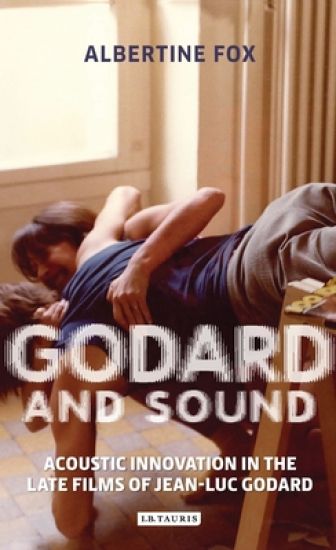
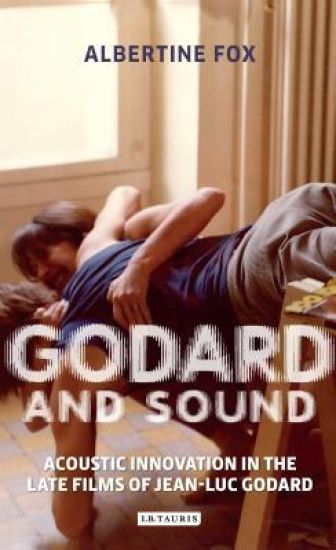
What happens when we listen to a film? How can we describe the relationship of sound to vision in cinema, and in turn our relationship as spectators with the audio-visual? Jean-Luc Godard understood the importance of the soundtrack in cinema and relied heavily on the impact of carefully constructed sound to produce innovative effects. For the first time, this book brings together his post-1979 multimedia works, and an analysis of their rich soundscapes.The book provides detailed critical discussions of feature-length films, shorts and videos, delving into Godard's inventive experiments with the cinematic soundtrack and offering new insights into his latest 3D films. By detailing the production contexts and philosophy behind Godard's idiosyncratic sound design, it provides an accessible route to understanding his complex use of music, speech and environmental sound, alongside the distorting effects of speed alteration and auditory excess. The book is framed by the concept of 'acoustic spectatorship': a way of cultivating active listening in the viewer.It also draws on ideas by leading sound theorists, philosophers, musicians, and poets, giving particular emphasis to the pioneering thought of French sound engineer and theorist, Pierre Schaeffer.Softening the boundaries between film studies, sound studies and musicology, Godard and Sound re-evaluates Godard's work from a sonic perspective, and will prove essential reading for those wishing to rebalance the importance of sound for the study of cinema.
This book reads a series of Godard films as interventions in contemporary debate about the language of difference. Godard has something he wants both to preserve (singularity) and destroy (visual and aural totalitarianism). How is it possible to speak about the Other? How is it possible for the Other to speak? Does all speaking about or by the Other render that speaking common, thereby rendering what is different identical? These questions gather together a number of issues that cross and intersect disciplinary boundaries: signification, representation, ethics, politics, and so on. The problematics with which Drabinski is concerned begin in the debate between Levinas and Derrida, then later in dialogue with Blanchot and Irigaray. To this extent, Godard is particularly well-suited as an interlocutor. Godard's work, especially in the 1970s, is itself a self-conscious form of philosophy. His films theorize themselves, produce a reflexive sound-image language, and so in many ways match the very essence of philosophy: thought thinking thought. Still, the medium of sound and image complicates any rendering of Godard's work as philosophy. Godard produces a philosophically significant cinematic language, rather than simply narrating or representing philosophical ideas in the medium of film. And this language must be taken seriously in the context of the problem of difference. For, if difference is concerned with signification as such, then the visual and aural retain equal rights with writing (and all questions obtaining therein). Indeed, if part of the problem of speaking about or by the Other is how such speaking traffics in inscription, then cinematic language is certainly an important - and authentically complex - intervention in that problem. The nature of the debate in this project - how the language of alterity is possible or impossible - immediately breaks disciplinary borders between philosophy, literary theory, film studies, and cultural studies. What it means to engage with film in this context, however, is complicated. To wit, there are two standard treatments of film in philosophy. Film is typically either an example of a philosophical position or philosophy is used to interpret motifs, characters, plot lines, etc. In neither case is film engaged as a form of philosophizing itself, that is, as a language engaged with philosophical problematics. It is articulating exactly this engagement that this book takes as its primary task. The aim of the project is to read Godard's work as primary texts, with all the attention due the idiosyncratic language of those texts. Framed by the debate about difference and signification, these primary texts register and resonate as transformative interventions. The overarching argument of the book is that Godard's conception and practice of cinematic language opens new, important possibilities for thinking about radical alterity.
Combining work from established film critics and the very freshest of voices, this collection brings to bear a wide range of cultural and disciplinary backgrounds on one of the most intriguing films of the twentieth century. Features contributions from a wide range of cultural and disciplinary backgroundsEssays are brought together to form the basis of a new analysis of one of the most intriguing films of the twentieth centuryIncorporates essays from students studying in the London Consortium, a partnership of five institutions including the Architectural Association, Birkbeck, University of London, the Institute of Contemporary Arts, the Science Museum, and the TateContains an introduction and post-script from the editors
What happens when we listen to a film? How can we describe the relationship of sound to vision in cinema, and in turn our relationship as spectators with the audio-visual? Jean-Luc Godard understood the importance of the soundtrack in cinema and relied heavily on the impact of carefully constructed sound to produce innovative effects. For the first time, this book brings together his post-1979 multimedia works, and an analysis of their rich soundscapes.The book provides detailed critical discussions of feature-length films, shorts and videos, delving into Godard's inventive experiments with the cinematic soundtrack and offering new insights into his latest 3D films. By detailing the production contexts and philosophy behind Godard's idiosyncratic sound design, it provides an accessible route to understanding his complex use of music, speech and environmental sound, alongside the distorting effects of speed alteration and auditory excess. The book is framed by the concept of 'acoustic spectatorship': a way of cultivating active listening in the viewer.It also draws on ideas by leading sound theorists, philosophers, musicians, and poets, giving particular emphasis to the pioneering thought of French sound engineer and theorist, Pierre Schaeffer. Softening the boundaries between film studies, sound studies and musicology, Godard and Sound re-evaluates Godard's work from a sonic perspective, and will prove essential reading for those wishing to rebalance the importance of sound for the study of cinema.
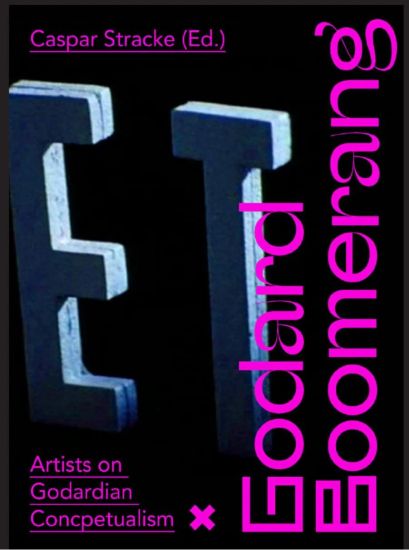
This publication is the late outcome of a small symposium that took place in 2013 at the subject area time and space arts at the Academy of Fine Arts at Uniarts Helsinki. It presented research and analysis of conceptual traces in Godard's oeuvre and its relation to contemporary art practices. Beyond the invited contributors from this symposium, the project expanded into a larger collection of writings by contemporary artists and curators on Godardian references, influences and (re-)discoveries, centering around a particular phenomenon – what we call the “Godard Boomerang” is a set conceptual strategies deeply rooted in 20th century art cinema, propelling towards the future practices in moving image art. Contributors: Francois Bucher, Chto Delat, Lee Ellickson, Irmgard Emmelhainz, Mike Hoolboom, Gareth James, Nimetöna Nolla, Constanze Ruhm, David Rych, Gabriële Schleijpen, Amie Siegel, Jason Simon, Caspar Stracke, Maija Timonen, Kari Yli-Annala and Florian Zeyfang.
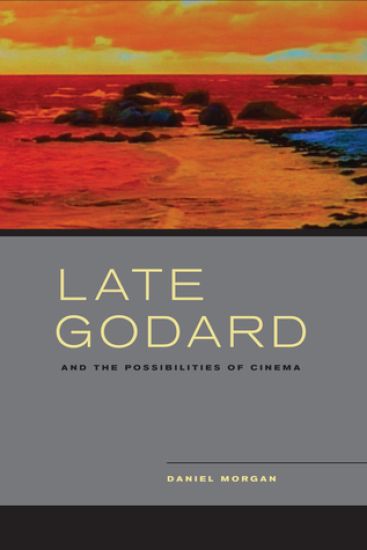
With "Late Godard and the Possibilities of Cinema", Daniel Morgan makes a significant contribution to scholarship on Jean-Luc Godard, especially his films and videos since the late 1980s, some of the most notoriously difficult works in contemporary cinema. Through detailed analyses of extended sequences, technical innovations, and formal experiments, Morgan provides an original interpretation of a series of several internally related films - "Soigne ta droite" ("Keep Your Right Up", 1987), "Nouvelle vague" ("New Wave", 1990), and "Allemagne 90 neuf zero" ("Germany 90 Nine Zero", 1991) - and the monumental late video work, "Histoire(s) du cinema" (1988-1998). Taking up a range of topics, including the role of nature and natural beauty, the relation between history and cinema, and the interactions between film and video, the book provides a distinctive account of the cinematic and intellectual ambitions of Godard's late work. At the same time, "Late Godard and the Possibilities of Cinema" provides a new direction for the fields of film and philosophy by drawing on the idealist and romantic tradition of philosophical aesthetics, which rarely finds an articulation within film studies. In using the tradition of aesthetics to illuminate Godard's late films and videos, Morgan shows that these works transform the basic terms and categories of aesthetics in and for the cinema.