

Kirjahaku
Etsi kirjoja tekijän nimen, kirjan nimen tai ISBN:n perusteella.
110 tulosta hakusanalla "Henry Irving"

Henry Irving
CRC Press Inc
2017
sidottu
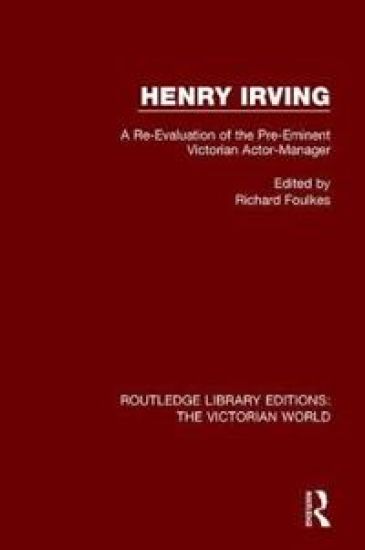
Henry Irving (1838-1905), the first actor to be knighted, dominated the theatre in Britain and beyond for over a quarter of a century. As an actor, he was strikingly different with his idiosyncratic pronunciation, his somewhat ungainly physique, and his brilliant psychological portrayals of virtue and villainy. As a director of spectacular, and commercially driven, entertainments, Irving anticipated Hollywood directors from D.W. Griffith to Stephen Spielberg. And as manager of the Lyceum Theatre, where audiences included the leading public figures of the day, he controlled every aspect of the performance. This collection of essays by leading theatre scholars explores each element of Irving's art: his acting, his contribution to the plays he commissioned, his flair for the stage picture, and his ear for incidental music. Like Wagner, Irving was a proponent of a holistic approach to the stage, that is, blending together acting, painting, music, and architecture to create harmonious, balanced, and artistic theatre. Irving emerges not only as the peer of such eminent contemporaries as Tennyson, Sullivan, Shaw, and Burne-Jones, but also as a powerful influence on the twentieth-century theatre.

Henry Irving
Routledge
2021
nidottu
Henry Irving (1838-1905), the first actor to be knighted, dominated the theatre in Britain and beyond for over a quarter of a century. As an actor, he was strikingly different with his idiosyncratic pronunciation, his somewhat ungainly physique, and his brilliant psychological portrayals of virtue and villainy. As a director of spectacular, and commercially driven, entertainments, Irving anticipated Hollywood directors from D.W. Griffith to Stephen Spielberg. And as manager of the Lyceum Theatre, where audiences included the leading public figures of the day, he controlled every aspect of the performance. This collection of essays by leading theatre scholars explores each element of Irving's art: his acting, his contribution to the plays he commissioned, his flair for the stage picture, and his ear for incidental music. Like Wagner, Irving was a proponent of a holistic approach to the stage, that is, blending together acting, painting, music, and architecture to create harmonious, balanced, and artistic theatre. Irving emerges not only as the peer of such eminent contemporaries as Tennyson, Sullivan, Shaw, and Burne-Jones, but also as a powerful influence on the twentieth-century theatre.
Henry Irving
Routledge
2016
sidottu
Henry Irving (1838-1905), the first actor to be knighted, dominated the theatre in Britain and beyond for over a quarter of a century. As an actor, he was strikingly different with his idiosyncratic pronunciation, his somewhat ungainly physique, and his brilliant psychological portrayals of virtue and villainy. He was also the director of spectacular, and commercially driven, entertainments and as the manager of the Lyceum theatre, he controlled every aspect of the performance. First published in 2008, this collection of essays by leading theatre scholars explores each element of Irving’s art: his acting, his contribution to the plays he commissioned, his flair for the stage picture, and his ear for incidental music. This book will be of interest to those studying the history of theatre.

Henry Irving
Routledge
2017
nidottu
Henry Irving (1838-1905), the first actor to be knighted, dominated the theatre in Britain and beyond for over a quarter of a century. As an actor, he was strikingly different with his idiosyncratic pronunciation, his somewhat ungainly physique, and his brilliant psychological portrayals of virtue and villainy. He was also the director of spectacular, and commercially driven, entertainments and as the manager of the Lyceum theatre, he controlled every aspect of the performance. First published in 2008, this collection of essays by leading theatre scholars explores each element of Irving’s art: his acting, his contribution to the plays he commissioned, his flair for the stage picture, and his ear for incidental music. This book will be of interest to those studying the history of theatre.

This work has been selected by scholars as being culturally important, and is part of the knowledge base of civilization as we know it. This work was reproduced from the original artifact, and remains as true to the original work as possible. Therefore, you will see the original copyright references, library stamps (as most of these works have been housed in our most important libraries around the world), and other notations in the work.This work is in the public domain in the United States of America, and possibly other nations. Within the United States, you may freely copy and distribute this work, as no entity (individual or corporate) has a copyright on the body of the work.As a reproduction of a historical artifact, this work may contain missing or blurred pages, poor pictures, errant marks, etc. Scholars believe, and we concur, that this work is important enough to be preserved, reproduced, and made generally available to the public. We appreciate your support of the preservation process, and thank you for being an important part of keeping this knowledge alive and relevant.
Henry Irving
Creative Media Partners, LLC
2026
sidottu

Henry Irving
Creative Media Partners, LLC
2026
sidottu
In this creative study of history and popular culture, W. D. King ingeniously illustrates how a long-forgotten instance in theatre history can reveal the very process of historical change itself. Late in the nineteenth century, Henry Irving, the leading actor-manager of the English stage, was scathingly attacked by George Bernard Shaw for his popular performance in Conan Doyle's play, A Story of Waterloo. Shaw's review was one of the first onslaughts in a war against the old guard of the English stage, against Victorianism, against England and Empire itself. King's depiction of this event and its aftermath illuminates the period's crucial values and cultural issues, and is presented in a manner that is both convincing and highly entertaining. This title is part of UC Press's Voices Revived program, which commemorates University of California Press’s mission to seek out and cultivate the brightest minds and give them voice, reach, and impact. Drawing on a backlist dating to 1893, Voices Revived makes high-quality, peer-reviewed scholarship accessible once again using print-on-demand technology. This title was originally published in 1993.

In this creative study of history and popular culture, W. D. King ingeniously illustrates how a long-forgotten instance in theatre history can reveal the very process of historical change itself. Late in the nineteenth century, Henry Irving, the leading actor-manager of the English stage, was scathingly attacked by George Bernard Shaw for his popular performance in Conan Doyle's play, A Story of Waterloo. Shaw's review was one of the first onslaughts in a war against the old guard of the English stage, against Victorianism, against England and Empire itself. King's depiction of this event and its aftermath illuminates the period's crucial values and cultural issues, and is presented in a manner that is both convincing and highly entertaining. This title is part of UC Press's Voices Revived program, which commemorates University of California Press’s mission to seek out and cultivate the brightest minds and give them voice, reach, and impact. Drawing on a backlist dating to 1893, Voices Revived makes high-quality, peer-reviewed scholarship accessible once again using print-on-demand technology. This title was originally published in 1993.


Originally published in 1978. Henry Irving achieved an astounding success in Britain and America as an actor; yet he lacked good looks, had spindly legs, and did not have a good voice. He said so himself. Today Irving is regarded as the archetype of the old-time actor, but in his own time he was regarded as a great theatrical innovator. Even Bernard Shaw, who attacked him pitilessly, even unto death, called him ‘modern’ when he first saw him act. Irving, the man, with his tenacious, obsessive talent, his human limitations and weaknesses, and his ephemeral glory is brought most sympathetically to life in this biography. It is written from contemporary sources, and from criticisms, lampoons, caricatures and gossip columns.If Irving reflected certain aspects of his age, this book underlines the Victorian ethic to which he appealed and the backcloths against which it was set – the extraordinary lavishness of the Lyceum productions and the incredible extravagance of social entertaining. Not the least absorbing aspect of this biography is the fascinating account of the long partnership between Irving and Ellen Terry, still in many respects an enigmatic one, but here portrayed with lively insight into character combined with understanding and deep knowledge of the social and theatrical context of the Victorian age.
Originally published in 1978. Henry Irving achieved an astounding success in Britain and America as an actor; yet he lacked good looks, had spindly legs, and did not have a good voice. He said so himself. Today Irving is regarded as the archetype of the old-time actor, but in his own time he was regarded as a great theatrical innovator. Even Bernard Shaw, who attacked him pitilessly, even unto death, called him ‘modern’ when he first saw him act. Irving, the man, with his tenacious, obsessive talent, his human limitations and weaknesses, and his ephemeral glory is brought most sympathetically to life in this biography. It is written from contemporary sources, and from criticisms, lampoons, caricatures and gossip columns.If Irving reflected certain aspects of his age, this book underlines the Victorian ethic to which he appealed and the backcloths against which it was set – the extraordinary lavishness of the Lyceum productions and the incredible extravagance of social entertaining. Not the least absorbing aspect of this biography is the fascinating account of the long partnership between Irving and Ellen Terry, still in many respects an enigmatic one, but here portrayed with lively insight into character combined with understanding and deep knowledge of the social and theatrical context of the Victorian age.