Kirjojen hintavertailu. Mukana 11 213 693 kirjaa ja 12 kauppaa.

Kirjahaku

Etsi kirjoja tekijän nimen, kirjan nimen tai ISBN:n perusteella.

55 tulosta hakusanalla "Human-Robot Interaction"

Human-Robot Interaction
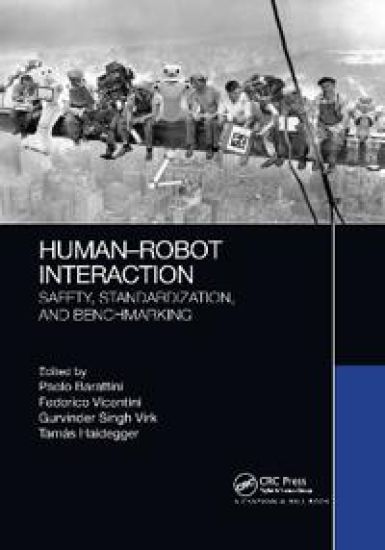
Human-Robot Interaction: Safety, Standardization, and Benchmarking provides a comprehensive introduction to the new scenarios emerging where humans and robots interact in various environments and applications on a daily basis. The focus is on the current status and foreseeable implications of robot safety, approaching these issues from the standardization and benchmarking perspectives. Featuring contributions from leading experts, the book presents state-of-the-art research, and includes real-world applications and use cases. It explores the key leading sectors—robotics, service robotics, and medical robotics—and elaborates on the safety approaches that are being developed for effective human-robot interaction, including physical robot-human contacts, collaboration in task execution, workspace sharing, human-aware motion planning, and exploring the landscape of relevant standards and guidelines.Features Presenting a comprehensive introduction to human-robot interaction in a number of domains, including industrial robotics, medical robotics, and service robotics Focusing on robot safety standards and benchmarking Providing insight into current developments in international standards Featuring contributions from leading experts, actively pursuing new robot development
Human-robot Interaction
This special issue is made up of five articles which cover the emerging area of human-robot interaction. The first paper offers a theoretical ecological framework for the design of personal service robots in homes of elderly people. Next, a field study of two robots that visited a children's elementary school in Japan for two weeks, with the purpose of teaching children English, is presented. The third article reports on an opportunistic field study of search and rescue robots used as part of a night rescue training exercise. A different perspective on human-computer interaction for search and rescue robots is discussed in the fourth paper. Finally, an experimental laboratory study is presented that explores how people who have to work closely with professional service robots will perceive and work with them. Taken as a whole, these articles represent some of the first systematic empirical research in human-robot interaction.
Human-Robot Interaction

Human-Robot Interaction

Christoph Bartneck; Tony Belpaeme; Friederike Eyssel; Takayuki Kanda; Merel Keijsers; Selma Šabanovic

Cambridge University Press
2024
pokkari
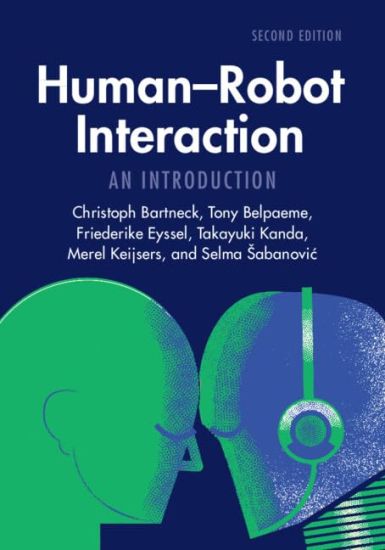
The role of robots in society keeps expanding and diversifying, bringing with it a host of issues surrounding the relationship between robots and humans. This introduction to human–robot interaction (HRI) by leading researchers in this developing field is the first to provide a broad overview of the multidisciplinary topics central to modern HRI research. Written for students and researchers from robotics, artificial intelligence, psychology, sociology, and design, it presents the basics of how robots work, how to design them, and how to evaluate their performance. Self-contained chapters discuss a wide range of topics, including speech and language, nonverbal communication, and processing emotions, plus an array of applications and the ethical issues surrounding them. This revised and expanded second edition includes a new chapter on how people perceive robots, coverage of recent developments in robotic hardware, software, and artificial intelligence, and exercises for readers to test their knowledge.
Human-Robot Interaction

Human-Robot Interaction

Christoph Bartneck; Tony Belpaeme; Friederike Eyssel; Takayuki Kanda; Merel Keijsers; Selma Šabanovic

Cambridge University Press
2020
pokkari
The role of robots in society keeps expanding and diversifying, bringing with it a host of issues surrounding the relationship between robots and humans. This introduction to human-robot interaction (HRI), written by leading researchers in this developing field, is the first to provide a broad overview of the multidisciplinary topics central to modern HRI research. Students and researchers from robotics, artificial intelligence, psychology, sociology, and design will find it a concise and accessible guide to the current state of the field. Written for students from diverse backgrounds, it presents relevant background concepts, describing how robots work, how to design them, and how to evaluate their performance. Self-contained chapters discuss a wide range of topics, including the different communication modalities such as speech and language, non-verbal communication and the processing of emotions, as well as ethical issues around the application of robots today and in the context of our future society.
Human-Robot Interaction
Human-Robot Interaction: Safety, Standardization, and Benchmarking provides a comprehensive introduction to the new scenarios emerging where humans and robots interact in various environments and applications on a daily basis. The focus is on the current status and foreseeable implications of robot safety, approaching these issues from the standardization and benchmarking perspectives. Featuring contributions from leading experts, the book presents state-of-the-art research, and includes real-world applications and use cases. It explores the key leading sectors—robotics, service robotics, and medical robotics—and elaborates on the safety approaches that are being developed for effective human-robot interaction, including physical robot-human contacts, collaboration in task execution, workspace sharing, human-aware motion planning, and exploring the landscape of relevant standards and guidelines.Features Presenting a comprehensive introduction to human-robot interaction in a number of domains, including industrial robotics, medical robotics, and service robotics Focusing on robot safety standards and benchmarking Providing insight into current developments in international standards Featuring contributions from leading experts, actively pursuing new robot development
Human-Robot Interaction

Human-Robot Interaction

Michael A. Goodrich; Alan C. Schultz

now publishers Inc
2008
nidottu
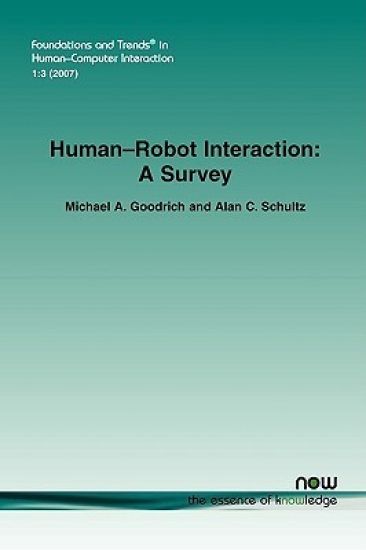
Human-Robot Interaction presents a unified treatment of HRI-related issues, identifies key themes, and discusses challenge problems that are likely to shape the field in the near future. The authors describe the HRI story from multiple perspectives with an eye toward identifying themes that cross applications. The survey includes research results from a cross section of the universities, government efforts, industry labs, and countries that contribute to HRI, and a cross section of the disciplines that contribute to the field, such as human factors, robotics, cognitive psychology and design.The book starts out by tracing the early history of robotics and human-machine interaction and the emergence of HRI as a field in its own right. It goes on to discuss what defines an HRI problem and to survey the kinds of problems encountered. The final two sections focus on the accepted practices, challenge problems and solution themes that have emerged as the field has matured. It concludes with a section on how HRI research ties in with work in other scientific fields.This is both an ideal tutorial for people outside the field and a timely addition to the current literature within the field which is intended to promote discussion of a unified vision of HRI.
Human-Robot Interaction
This book takes the vocal and visual modalities and human-robot interaction applications into account by considering three main aspects, namely, social and affective robotics, robot navigation, and risk event recognition. This book can be a very good starting point for the scientists who are about to start their research work in the field of human-robot interaction.
Human-Robot Interaction
The book Human-Robot Interaction - Perspectives and Applications highlights the latest developments and obstacles in the field of human-machine interaction, including collaborative and humanoid robots, symbiosis between humans and robots, human-human collaboration, and robotics. Human-robot interaction has immense potential in areas like healthcare, education, manufacturing, military, and space exploration. This volume consists of several chapters that explore various topics such as the use of robotic wheelchairs, deep neural networks for robot grasp recognition, materials and sensors required for human-robot interaction, the use of drone technology in agriculture, healthcare robots in smart hospitals, and more.
Human-Robot Interaction

Human-Robot Interaction

Springer Nature Switzerland AG
2020
sidottu
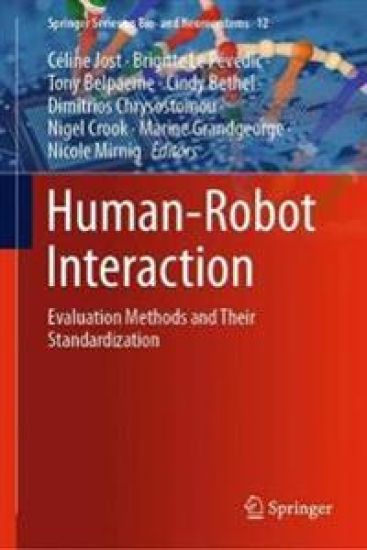
This book offers the first comprehensive yet critical overview of methods used to evaluate interaction between humans and social robots. It reviews commonly used evaluation methods, and shows that they are not always suitable for this purpose. Using representative case studies, the book identifies good and bad practices for evaluating human-robot interactions and proposes new standardized processes as well as recommendations, carefully developed on the basis of intensive discussions between specialists in various HRI-related disciplines, e.g. psychology, ethology, ergonomics, sociology, ethnography, robotics, and computer science. The book is the result of a close, long-standing collaboration between the editors and the invited contributors, including, but not limited to, their inspiring discussions at the workshop on Evaluation Methods Standardization for Human-Robot Interaction (EMSHRI), which have been organized yearly since 2015. By highlighting and weighing good and bad practices in evaluation design for HRI, the book will stimulate the scientific community to search for better solutions, take advantages of interdisciplinary collaborations, and encourage the development of new standards to accommodate the growing presence of robots in the day-to-day and social lives of human beings.
Human-Robot Interaction

Human-Robot Interaction

Springer Nature Switzerland AG
2021
nidottu
This book offers the first comprehensive yet critical overview of methods used to evaluate interaction between humans and social robots. It reviews commonly used evaluation methods, and shows that they are not always suitable for this purpose. Using representative case studies, the book identifies good and bad practices for evaluating human-robot interactions and proposes new standardized processes as well as recommendations, carefully developed on the basis of intensive discussions between specialists in various HRI-related disciplines, e.g. psychology, ethology, ergonomics, sociology, ethnography, robotics, and computer science. The book is the result of a close, long-standing collaboration between the editors and the invited contributors, including, but not limited to, their inspiring discussions at the workshop on Evaluation Methods Standardization for Human-Robot Interaction (EMSHRI), which have been organized yearly since 2015. By highlighting and weighing good and bad practices in evaluation design for HRI, the book will stimulate the scientific community to search for better solutions, take advantages of interdisciplinary collaborations, and encourage the development of new standards to accommodate the growing presence of robots in the day-to-day and social lives of human beings.
Human-Robot Interaction
Human-robot interaction (HRI) is the study of interactions between people (users) and robots. HRI is multidisciplinary with contributions from the fields of human-computer interaction, artificial intelligence, robotics, speech recognition, and social sciences (psychology, cognitive science, anthropology, and human factors). There has been a great deal of work done in the area of human-robot interaction to understand how a human interacts with a computer. However, there has been very little work done in understanding how people interact with robots. For robots becoming our friends, these studies will be required more and more.
Human–Robot Interaction in Law and Its Narratives
Robots are with us, but law and legal systems are not ready. This book identifies the issues posed by human-robot interactions in substantive law, procedural law, and law's narratives, and suggests how to address them. When human-robot interaction results in harm, who or what is responsible? Part I addresses substantive law, including the issues raised by attempts to impose criminal liability on different actors. And when robots perceive aspects of an alleged crime, can they be called as a sort of witness? Part II addresses procedural issues raised by human-robot interactions, including evidentiary problems arising out of data generated by robots monitoring humans, and issues of reliability and privacy. Beyond the standard fare of substantive and procedural law, and in view of the conceptual quandaries posed by robots, Part III offers chapters on narrative and rhetoric, suggesting different ways to understand human-robot interactions, and how to develop coherent frameworks to do that. This title is also available as Open Access on Cambridge Core.
Human–Robot Interaction in Law and Its Narratives
Robots are with us, but law and legal systems are not ready. This book identifies the issues posed by human-robot interactions in substantive law, procedural law, and law's narratives, and suggests how to address them. When human-robot interaction results in harm, who or what is responsible? Part I addresses substantive law, including the issues raised by attempts to impose criminal liability on different actors. And when robots perceive aspects of an alleged crime, can they be called as a sort of witness? Part II addresses procedural issues raised by human-robot interactions, including evidentiary problems arising out of data generated by robots monitoring humans, and issues of reliability and privacy. Beyond the standard fare of substantive and procedural law, and in view of the conceptual quandaries posed by robots, Part III offers chapters on narrative and rhetoric, suggesting different ways to understand human-robot interactions, and how to develop coherent frameworks to do that. This title is also available as Open Access on Cambridge Core.
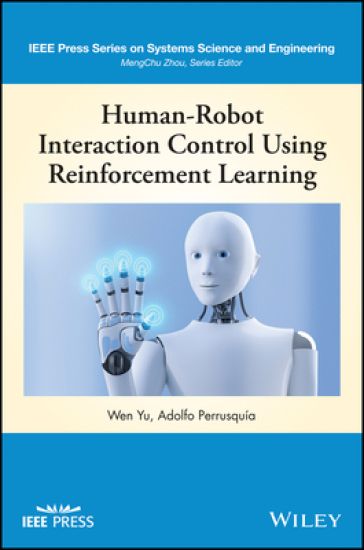
Human-Robot Interaction Control Using Reinforcement Learning

Human-Robot Interaction Control Using Reinforcement Learning

Wen Yu; Adolfo Perrusquia

Wiley-Blackwell
2021
sidottu
A comprehensive exploration of the control schemes of human-robot interactions In Human-Robot Interaction Control Using Reinforcement Learning, an expert team of authors delivers a concise overview of human-robot interaction control schemes and insightful presentations of novel, model-free and reinforcement learning controllers. The book begins with a brief introduction to state-of-the-art human-robot interaction control and reinforcement learning before moving on to describe the typical environment model. The authors also describe some of the most famous identification techniques for parameter estimation. Human-Robot Interaction Control Using Reinforcement Learning offers rigorous mathematical treatments and demonstrations that facilitate the understanding of control schemes and algorithms. It also describes stability and convergence analysis of human-robot interaction control and reinforcement learning based control. The authors also discuss advanced and cutting-edge topics, like inverse and velocity kinematics solutions, H2 neural control, and likely upcoming developments in the field of robotics. Readers will also enjoy: A thorough introduction to model-based human-robot interaction control Comprehensive explorations of model-free human-robot interaction control and human-in-the-loop control using Euler angles Practical discussions of reinforcement learning for robot position and force control, as well as continuous time reinforcement learning for robot force control In-depth examinations of robot control in worst-case uncertainty using reinforcement learning and the control of redundant robots using multi-agent reinforcement learning Perfect for senior undergraduate and graduate students, academic researchers, and industrial practitioners studying and working in the fields of robotics, learning control systems, neural networks, and computational intelligence, Human-Robot Interaction Control Using Reinforcement Learning is also an indispensable resource for students and professionals studying reinforcement learning.
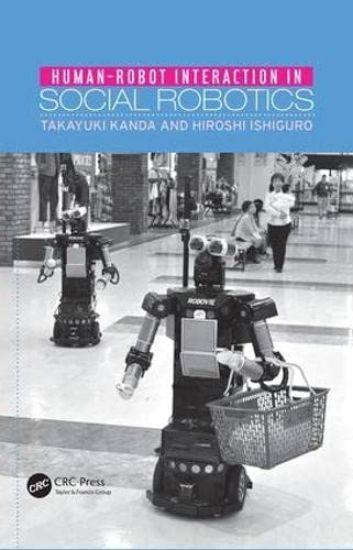
Human-Robot Interaction in Social Robotics

Human-Robot Interaction in Social Robotics

Takayuki Kanda; Hiroshi Ishiguro

CRC Press
2017
nidottu
Human–Robot Interaction in Social Robotics explores important issues in designing a robot system that works with people in everyday environments. Edited by leading figures in the field of social robotics, it draws on contributions by researchers working on the Robovie project at the ATR Intelligent Robotics and Communication Laboratories, a world leader in humanoid interactive robotics. The book brings together, in one volume, technical and empirical research that was previously scattered throughout the literature.Taking a networked robot approach, the book examines how robots work in cooperation with ubiquitous sensors and people over telecommunication networks. It considers the use of social robots in daily life, grounding the work in field studies conducted at a school, train station, shopping mall, and science museum. Critical in the development of network robots, these usability studies allow researchers to discover real issues that need to be solved and to understand what kinds of services are possible.The book tackles key areas where development is needed, namely, in sensor networks for tracking humans and robots, humanoids that can work in everyday environments, and functions for interacting with people. It introduces a sensor network developed by the authors and discusses innovations in the Robovie humanoid, including several interactive behaviors and design policies. Exploring how humans interact with robots in daily life settings, this book offers valuable insight into how robots may be used in the future. The combination of engineering, empirical, and field studies provides readers with rich information to guide in developing practical interactive robots.
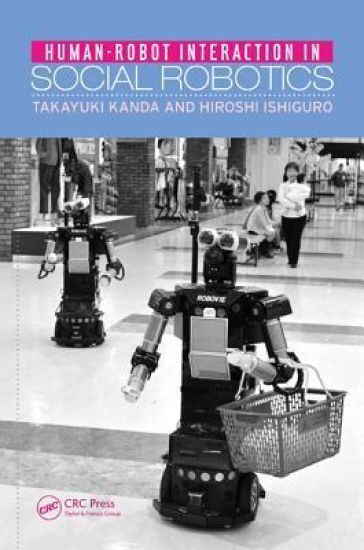
Human-Robot Interaction in Social Robotics

Human-Robot Interaction in Social Robotics

Takayuki Kanda; Hiroshi Ishiguro

CRC Press Inc
2012
sidottu
Human–Robot Interaction in Social Robotics explores important issues in designing a robot system that works with people in everyday environments. Edited by leading figures in the field of social robotics, it draws on contributions by researchers working on the Robovie project at the ATR Intelligent Robotics and Communication Laboratories, a world leader in humanoid interactive robotics. The book brings together, in one volume, technical and empirical research that was previously scattered throughout the literature.Taking a networked robot approach, the book examines how robots work in cooperation with ubiquitous sensors and people over telecommunication networks. It considers the use of social robots in daily life, grounding the work in field studies conducted at a school, train station, shopping mall, and science museum. Critical in the development of network robots, these usability studies allow researchers to discover real issues that need to be solved and to understand what kinds of services are possible.The book tackles key areas where development is needed, namely, in sensor networks for tracking humans and robots, humanoids that can work in everyday environments, and functions for interacting with people. It introduces a sensor network developed by the authors and discusses innovations in the Robovie humanoid, including several interactive behaviors and design policies. Exploring how humans interact with robots in daily life settings, this book offers valuable insight into how robots may be used in the future. The combination of engineering, empirical, and field studies provides readers with rich information to guide in developing practical interactive robots.
Human-Robot Interaction Strategies for Walker-Assisted Locomotion

Human-Robot Interaction Strategies for Walker-Assisted Locomotion

Carlos A. Cifuentes; Anselmo Frizera

Springer International Publishing AG
2016
sidottu
This book presents the development of a new multimodal human-robot interface for testing and validating control strategies applied to robotic walkers for assisting human mobility and gait rehabilitation. The aim is to achieve a closer interaction between the robotic device and the individual, empowering the rehabilitation potential of such devices in clinical applications. A new multimodal human-robot interface for testing and validating control strategies applied to robotic walkers for assisting human mobility and gait rehabilitation is presented. Trends and opportunities for future advances in the field of assistive locomotion via the development of hybrid solutions based on the combination of smart walkers and biomechatronic exoskeletons are also discussed.
Human-Robot Interaction Strategies for Walker-Assisted Locomotion

Human-Robot Interaction Strategies for Walker-Assisted Locomotion

Carlos A. Cifuentes; Anselmo Frizera

Springer International Publishing AG
2018
nidottu
This book presents the development of a new multimodal human-robot interface for testing and validating control strategies applied to robotic walkers for assisting human mobility and gait rehabilitation. The aim is to achieve a closer interaction between the robotic device and the individual, empowering the rehabilitation potential of such devices in clinical applications. A new multimodal human-robot interface for testing and validating control strategies applied to robotic walkers for assisting human mobility and gait rehabilitation is presented. Trends and opportunities for future advances in the field of assistive locomotion via the development of hybrid solutions based on the combination of smart walkers and biomechatronic exoskeletons are also discussed.