Kirjojen hintavertailu. Mukana 11 342 296 kirjaa ja 12 kauppaa.

Kirjahaku

Etsi kirjoja tekijän nimen, kirjan nimen tai ISBN:n perusteella.

20 tulosta hakusanalla "J.S. Mill"

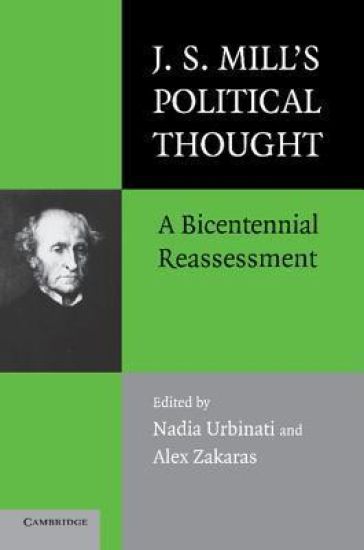
J.S. Mill's Political Thought

J.S. Mill's Political Thought

Cambridge University Press
2007
pokkari
The year 2006 marked the two hundredth anniversary of John Stuart Mill's birth. Though his philosophical reputation has varied greatly, it is now clear that Mill ranks among the most influential modern political thinkers. Despite his enduring influence, the breadth and complexity of Mill's political thought is often underappreciated. While his writings remain a touchstone for debates over liberty and liberalism, many other important dimensions of his political philosophy have until recently been ignored. This book aims to correct such neglect, by illustrating the breadth and depth of Mill's political writings, by drawing together a collection of essays whose authors explore underappreciated elements of Mill's political philosophy. The book shows how Mill's thinking remains pertinent to our own political life in three broad areas - democratic institutions and culture, liberalism, and international politics - and offers a critical reassessment of Mill's political philosophy in light of recent political developments and transformations.
J.S. Mill's Political Thought

J.S. Mill's Political Thought

Cambridge University Press
2007
sidottu
The year 2006 marked the two hundredth anniversary of John Stuart Mill's birth. Though his philosophical reputation has varied greatly, it is now clear that Mill ranks among the most influential modern political thinkers. Despite his enduring influence, the breadth and complexity of Mill's political thought is often underappreciated. While his writings remain a touchstone for debates over liberty and liberalism, many other important dimensions of his political philosophy have until recently been ignored. This book aims to correct such neglect, by illustrating the breadth and depth of Mill's political writings, by drawing together a collection of essays whose authors explore underappreciated elements of Mill's political philosophy. The book shows how Mill's thinking remains pertinent to our own political life in three broad areas - democratic institutions and culture, liberalism, and international politics - and offers a critical reassessment of Mill's political philosophy in light of recent political developments and transformations.
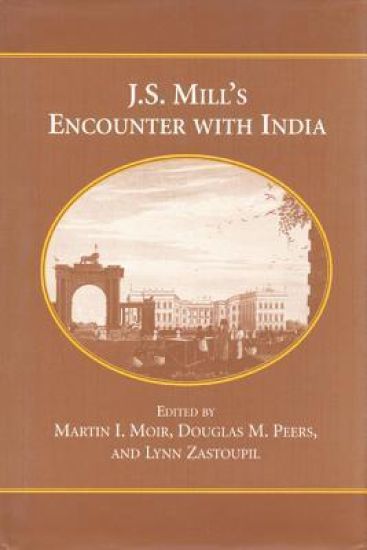
J.S. Mill's Encounter with India

J.S. Mill's Encounter with India

University of Toronto Press
1999
sidottu
John Stuart Mill worked for the East India Company in London for thirty-five years (1823-58), drafting many hundreds of dispatches for the guidance of British administrators in India. Historians have long been aware of Mill's involvement in British Indian government. This comprehensive effort brings together different strands of scholarship on Mill to determine the character of his role based on analyses of his draft despatches and comparisons of their practical and theoretical concerns with the broad themes of Mill's major writings on political philosophy and economics. The essays in this collection explore specific aspects of Mill's approach to Indian issues, including religion, law, education, and security, and also place him within the broader currents of utilitarianism. The contributors present different perspectives on the ideology in Mill's pragmatic work for the Company and his personal philosophy.
J.S. Mill's On Liberty in Focus
This volume brings together J.S. Mills On Liberty and a selection of important essays by such eminent scholars as Isaiah Berlin, Alan Ryan, John Rees, C.L. Ten and Richard Wollheim. As well as providing authoritative commentary upon On Liberty, the essays reflect a broader debate about the philosophical foundations of Mill's liberalism, particularly the question of the connection betweenMill's professed utilitarianism and his commitment to individual liberty. Introduced and edited by John Gray and G.W. Smith, the book will be of interest to students of Mill, to ethical and political philosophers and to anyone interested in the contemporary status of liberalism.
J.S. Mill (Routledge Revivals)
First published in 1974. As logician, economist, political theorist, practical politician and active champion of social freedom, John Stuart Mill is a figure of continuing importance. In this book the author does full justice to the range of Mill’s achievements, providing an introductory guide to his most important and best known writings including Autobiography, A System of Logic, Utilitarianism, Liberty, and The Subjugation of Women. In their treatment of his works, the author seeks to emphasise Mill’s approach to those issues — education, the conflict between social order and individual freedom, the unresolved state of the social sciences, rights and duties of citizens in a democratic state — which remain most alive to us today. At the same time Mill is seen as part of his own age, responding to the anxieties that beset his contemporaries. This book will be of interest to students of politics and philosophy.
J.S. Mill (Routledge Revivals)
First published in 1974. As logician, economist, political theorist, practical politician and active champion of social freedom, John Stuart Mill is a figure of continuing importance. In this book the author does full justice to the range of Mill’s achievements, providing an introductory guide to his most important and best known writings including Autobiography, A System of Logic, Utilitarianism, Liberty, and The Subjugation of Women. In their treatment of his works, the author seeks to emphasise Mill’s approach to those issues — education, the conflict between social order and individual freedom, the unresolved state of the social sciences, rights and duties of citizens in a democratic state — which remain most alive to us today. At the same time Mill is seen as part of his own age, responding to the anxieties that beset his contemporaries. This book will be of interest to students of politics and philosophy.
J.S. Mill Revisited

J.S. Mill Revisited

B. Kinzer

Palgrave Macmillan
2015
nidottu
Bruce Kinzer offers a rich examination of personal and political themes in the life of the most influential liberal thinker of the Nineteenth century. He investigates young Mill's formative period and his relations with his father, Harriet Taylor, and Thomas Carlyle. Kinzer explores issues that bear upon our understanding of Mill as an engaged political thinker and actor and offers a complex portrait of Mill's life and politics.
J.S. Mill Revisited

J.S. Mill Revisited

B. Kinzer

Palgrave Macmillan
2007
sidottu
Bruce Kinzer offers a rich examination of personal and political themes in the life of the most influential liberal thinker of the Nineteenth century. He investigates young Mill's formative period and his relations with his father, Harriet Taylor, and Thomas Carlyle. Kinzer explores issues that bear upon our understanding of Mill as an engaged political thinker and actor and offers a complex portrait of Mill's life and politics.
J.S. Mill's Encounter with India

J.S. Mill's Encounter with India

UNIVERSITY OF TORONTO PRESS
2023
pokkari
John Stuart Mill worked for the East India Company in London for thirty-five years (1823-58), drafting many hundreds of dispatches for the guidance of British administrators in India. Historians have long been aware of Mill's involvement in British Indian government. This comprehensive effort brings together different strands of scholarship on Mill to determine the character of his role based on analyses of his draft despatches and comparisons of their practical and theoretical concerns with the broad themes of Mill's major writings on political philosophy and economics. The essays in this collection explore specific aspects of Mill's approach to Indian issues, including religion, law, education, and security, and also place him within the broader currents of utilitarianism. The contributors present different perspectives on the ideology in Mill's pragmatic work for the Company and his personal philosophy.
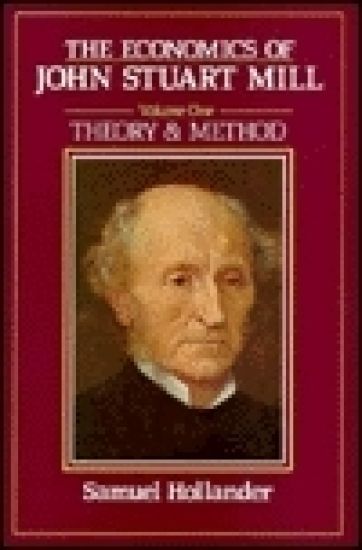
Economics of J S Mill

Economics of J S Mill

Samuel Hollander

University of Toronto Press
1985
sidottu
J.S. Mill plays a central role in the development of classical political economy in the nineteenth century. Hollander follows the course of that development over fifty years of Mill's career, from the death of David Ricardo in 1823 to Mill's own death in 1873. As in Hollander's acclaimed works on Adam Smith and David Ricardo, this studey emphasizes economic methodology and social philosophy, examined in light of Mill's own preoccupations. He argues that Mill's methodological principle and practice are consistent from 1830 onwards, a position that disputes currently held opinion. He also demonstrates that Mill denied the predictive ability of economic science, and thereby dismisses as irrelevant the charges of some critics that Mill championed 'scientism.' Throughout his study, Hollander places Mill within appropriate intellectual contexts. He identifies Mill's debts to Ricardo and to James Mill, examines his reactions to the Cambridge inductivist critics of orthodoxy and to the later 'historical' school writers, and his attitude towards the beginnings of mathematical economics. The central chapters on theory focus on allocation (including international trade) and economic growth, and the connection between the two. Hollander analyses Mill's remarkable investigation of the process of price formation under competitive and non-competitive conditions and his qualifications to the law of markers and the quantity theory. Other chapters deal with the roles of governments and economic organization, monetary policy, and social philosophy. Hollander has produced a study that will stand for many years on the economic thought of John Stuart Mill.
Rereading Power and Freedom in J.S. Mill

Rereading Power and Freedom in J.S. Mill

Bruce Baum

University of Toronto Press
2000
pokkari
In his canonical text, "On Liberty", the English philosopher and social reformer John Stuart Mill (1806-73) looked at the limits imposed by society and the state on individual freedom. Over one hundred years later, Bruce Baum, in "Rereading Power and Freedom in J.S. Mill," shows how important aspects of Mill's theory of freedom have been misinterpreted. The author recovers lost dimensions of Mill's thought, and in so doing, contributes to a critical sociology of freedom for our time. Drawing on Mill's thoughts on liberty and power scattered throughout his numerous texts on related subjects, Baum moves beyond what Mill has to say about freedom in "On Liberty." Baum discovers a consistent purpose behind Mill's advocacy of women's rights, universal suffrage, parliamentary and educational reforms, and workers' co-operatives. Whereas Mill is commonly interpreted as an advocate of negative liberty, Baum argues that Mill possesses a complex theory of freedom that unifies the pursuit of personal autonomy with the quest for collective self-determination through an egalitarian, genuinely participatory democratic politics. This insightful work traces new connections between Mill's liberalism and the later revisionist liberalisms of theorists such as T.H. Green and John Dewey, as well as between the liberal and socialist traditions. Not only does it break new ground in its demonstration of the complementary relationship between freedom and power, it is the first comprehensive study of Mill's social and political thought that seriously engages his feminism.