Kirjojen hintavertailu. Mukana 12 459 402 kirjaa ja 12 kauppaa.

Kirjahaku

Etsi kirjoja tekijän nimen, kirjan nimen tai ISBN:n perusteella.

31 tulosta hakusanalla "Jan van Eyck"

Jan Van Eyck

Jan Van Eyck

Harbison Craig

REAKTION BOOKS
1995
nidottu
Van Eyck's surviving work comprises a series of painstaking detailed oil-paintings of great verisimilitude. Aiming to recover the neglected human dimension present in these works, this book investigates the personal histories of the worldly participants of some of Van Eyck's masterpieces.
Jan van Eyck

Jan van Eyck

Craig Harbison

Reaktion Books
2011
nidottu
Jan van Eyck (1395-41) was the foremost artist of the Early Netherlandish School. Although Court painter to Duke Philip the Good of Burgundy, van Eyck’s surviving work was not executed for the Duke, but for rising Court bureaucrats, Italian merchants and members of the secular clergy, for whom he created a series of painstakingly detailed oil paintings of astonishing verisimilitude. Most explanations of the meanings behind these paintings have been grounded in the disguised religious symbolism critics have insisted are uppermost in them. Van Eyck, it is said, followed traditional theology in this respect – albeit in sophisticated ways; his realist art displayed in iconic and allusive forms the conventional symbols of Church teaching and popular piety.But in Jan van Eyck: The Play of Realism, such approaches to the art of this Netherlandish master are set aside. In a fascinating recovery of the neglected human dimension that is present in these works, Craig Harbison interrogates the personal histories of the worldly participants of such masterpieces as the Virgin and Child with George van der Paele, the Arnolfini Double Portrait and the Virgin and Child with Nicolis Rolin. In addition to exploring the domestic and financial circumstances of the sitters, the author reveals the remarkable degree to which they were caught up in the wider social and spiritual concerns of the early fifteenth century, including the increasing abuse of indulgences and benefices, the rise of religious scepticism and the spread of popular, anti-clerical private prayer.Since Jan van Eyck’s patrons sought to have themselves portrayed as both worldly and devout, the artist set out to satisfy this demand, but in a form of realism that contained within itself a playful, even, ironic, attitude towards the relations existing between individuals, society, religion – and, of course, the various forms of representation then available. As the author demonstrates – with the aid of abundant visual evidence in colour and in black and white – the artful mesh of pictured aspirations and ambivalences making up the painted world van Eyck invented are found always to be constructed along particular artistic and psychological fault-lines. By tracing these out for the reader, Harbison reveals how van Eyck presented his contemporaries with a more subtle and complex view of the value of appearances as a route to understanding the meaning of life.
Jan Van Eyck

Jan Van Eyck

50Minutes.com (NL)
2023
pokkari
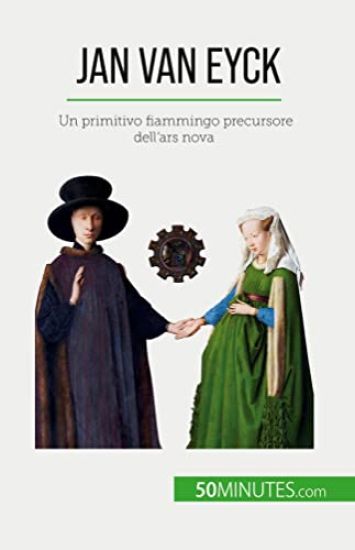
Jan Van Eyck heeft zich gevestigd als een emblematische figuur van de Vlaamse primitieve beweging. Als nauwgezet en perfectionist gebruikte hij de innovatieve techniek van het olieverfschilderen tot in de perfectie, waarbij hij flirtte met de gotiek en de renaissance en mensen centraal stelde in de compositie. Hij dankt zijn bekendheid aan het altaarstuk Het Lam Gods, maar ook aan het opvallende realisme van zijn portretten. De gezichten die hij schildert, gezien vanaf driekwart hoogte, met ogen die de toeschouwer aanstaren, halen de codes van die tijd onderuit. Duik in 50 minuten in het leven van deze voorloper van de ars nova, ontdek zijn biografie, maar ook zijn vernieuwende techniek en zijn hybride stijl die hem tot een meester van het portret maken.
Jan Van Eyck

Jan Van Eyck

50Minutes.com (IT)
2023
pokkari
Jan Van Eyck si afferm come figura emblematica del movimento primitivo fiammingo. Meticoloso e perfezionista, utilizz alla perfezione l'innovativa tecnica della pittura a olio, flirtando con il gotico e il rinascimentale e mettendo le persone al centro della composizione. Deve la sua fama alla pala d'altare L'agnello di Dio, ma anche al sorprendente realismo dei suoi ritratti. I volti che dipinge, visti di tre quarti, con gli occhi che fissano lo spettatore, ribaltano i codici dell'epoca. In 50 minuti, immergetevi nella vita di questo precursore dell'ars nova, scoprite la sua biografia, la sua tecnica innovativa e il suo stile ibrido che lo rendono un maestro del ritratto.
Jan Van Eyck

Jan Van Eyck

Céline Muller

50Minutes.com (PT)
2023
pokkari
Jan Van Eyck estabeleceu-se como uma figura emblem tica do movimento primitivo flamengo. Meticuloso e perfeccionista, utilizou a t cnica inovadora da pintura a leo na perfei o, flertando com o g tico e o renascentista e colocando as pessoas no centro da composi o. Deve a sua fama ao ret bulo O Cordeiro de Deus, mas tamb m ao realismo marcante dos seus retratos. Os rostos que ele pinta, vistos de tr s quartos de altura, com os olhos a olhar para o espectador, invertem os c digos da poca. Em 50 minutos, mergulhe na vida deste precursor de ars nova, descubra a sua biografia, assim como a sua t cnica inovadora e o seu estilo h brido que o tornam um mestre do retrato.
Jan Van Eyck

Jan Van Eyck

50Minutes.com (PL)
2023
pokkari
Jan Van Eyck stal się emblematyczną postacią flamandzkiego ruchu prymitywnego. Skrupulatny i perfekcjonista, do perfekcji wykorzystal nowatorską technikę malarstwa olejnego, flirtując z gotykiem i renesansem, stawiając ludzi w centrum kompozycji. Swoją slawę zawdzięcza oltarzowi Baranek Boży, ale także uderzającemu realizmowi swoich portret w. Malowane przez niego twarze, widziane z trzech czwartych wysokości, z oczami wpatrzonymi w widza, obalają wczesne kody. W ciągu 50 minut zanurz się w życie tego prekursora ars nova, odkryj jego biografię, a także jego innowacyjną technikę i hybrydowy styl, kt re czynią go mistrzem portretu.
Jan Van Eyck's Arnolfini Portrait

Jan Van Eyck's Arnolfini Portrait

Seidel Linda

Cambridge University Press
1995
pokkari
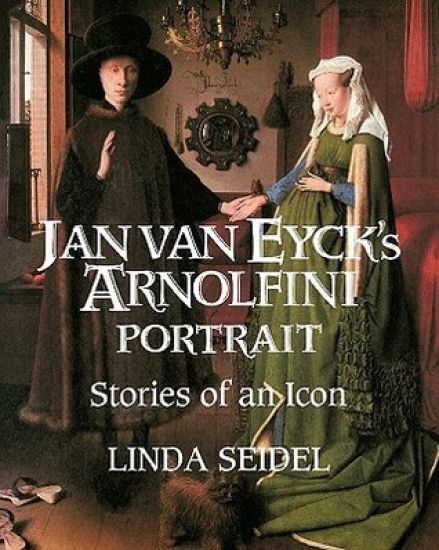
First published in 1993, Jan van Eyck's Arnolfini Portrait: Stories of an Icon examines one of the earliest and most celebrated paintings in the history of European art from a variety of perspectives. In her lucid analysis, Linda Seidel considers this famous double portrait as social record, legal document, material object, and poetic fiction. Each chapter of her study represents a distinct mode of inquiry and each situates the painting within a different discursive tradition. In this way, Seidel explores a variety of historical practices to illuminate the portrait's painted narrative. Through the implementation of a variety of interpretive strategies and in consultation with different types and categories of information, Stories of an Icon informs the viewer about the function and nature of early European painting, and invites the reader to reflect on the many ways in which works of art can be examined and reconfigured centuries after their creation.
Jan van Eyck within His Art

Jan van Eyck within His Art

Alfred Acres

REAKTION BOOKS
2023
sidottu
Jan van Eyck was one of the most inventive and influential artists in the entire European tradition. The phenomenal realism of his paintings, now six centuries old, still astounds observers in a world accustomed to high-resolution images. But other dimensions of his work are just as original and absorbing. Unlike any earlier artist, Van Eyck infused his paintings with himself. In addition to portraying, reflecting and implying his own presence in a variety of works, he also introduced his voice, hand and mind in an array of inscriptions, signatures and even a personal motto. Incorporating a wealth of new research and recent discoveries within a fresh exploration of the paintings themselves, this book reveals how profoundly Jan van Eyck transformed the very idea of what an artist could be.
Jan van Eyck and Portugal 's "Illustrious Generation"
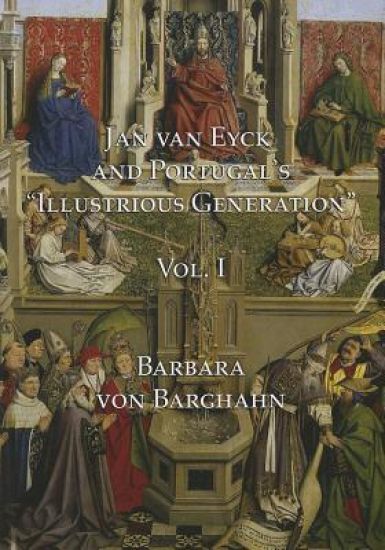
Barbara von Barghahn is Professor of Art History at George Washington University and a specialist in the art history of Portugal, Spain, and their colonial dominions, as well as Flanders (1400-1800). In 1993, she was conferred O Grão Comendador in the Portuguese Order of Prince Henry the Navigator. She has spent nearly a decade completing research about Jan van Eyck's diplomatic visits to the Iberian Peninsula. This manuscript investigates Van Eyck's patronage by the Crown of Portugal and his role as diplomat-painter of the Duchy of Burgundy following his first voyage to Lisbon in 1428-1429 when he painted two portraits of Infanta Isabella, who became the third wife of Philip the Good in 1430. New portrait identifications are provided in the Ghent Altarpiece (1432) and its iconographical prototype, the lost Fountain of Life. These altarpieces are analyzed with regard to King João I's conquest of Ceuta, achieved by his sons who were hailed as an"illustrious generation." Strong family ties between the dynastic houses of Avis and Lancaster explain Lusitania 's sustained fascination with Arthurian lore and the Grail quest. Several chapters of this book are overlaid with a chivalric veneer. A second "secret mission" to Portugal in 1437 by Jan van Eyck is postulated and this diplomatic visit is related to Prince Henrique the Navigator's expedition to Tangier and King Duarte's attempts to forge an alliance with Alfonso V of Aragon. Late Eyckian commissions are reviewed in light of this ill-fated crusade and additional new portraits are identified. The most significant artist of Renaissance Flanders appears to have been patronized as much by the House of Avis as by the Duchy of Burgundy.
Jan van Eyck and Portugal's "Illustrious Generation"
Barbara von Barghahn is Professor of Art History at George Washington University and a specialist in the art history of Portugal, Spain, and their colonial dominions, as well as Flanders (1400-1800). In 1993, she was conferred O Grão Comendador in the Portuguese Order of Prince Henry the Navigator. She has spent nearly a decade completing research about Jan van Eyck's diplomatic visits to the Iberian Peninsula. This manuscript investigates Van Eyck's patronage by the Crown of Portugal and his role as diplomat-painter of the Duchy of Burgundy following his first voyage to Lisbon in 1428-1429 when he painted two portraits of Infanta Isabella, who became the third wife of Philip the Good in 1430. New portrait identifications are provided in the Ghent Altarpiece (1432) and its iconographical prototype, the lost Fountain of Life. These altarpieces are analyzed with regard to King João I's conquest of Ceuta, achieved by his sons who were hailed as an"illustrious generation." Strong family ties between the dynastic houses of Avis and Lancaster explain Lusitania 's sustained fascination with Arthurian lore and the Grail quest. Several chapters of this book are overlaid with a chivalric veneer. A second "secret mission" to Portugal in 1437 by Jan van Eyck is postulated and this diplomatic visit is related to Prince Henrique the Navigator's expedition to Tangier and King Duarte's attempts to forge an alliance with Alfonso V of Aragon. Late Eyckian commissions are reviewed in light of this ill-fated crusade and additional new portraits are identified. The most significant artist of Renaissance Flanders appears to have been patronized as much by the House of Avis as by the Duchy of Burgundy.
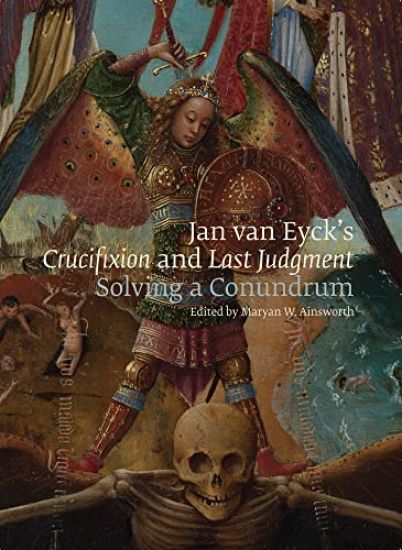
Jan Van Eyck's Crucifixion and Last Judgment
Among the most intriguing and confounding works of Jan van Eyck's oeuvre are the Crucifixion and Last Judgment in New York's Metropolitan Museum of Art. Although acquired in 1933 as a diptych, questions have remained about their initial configuration, and how these paintings functioned. The recent technical investigations of the paintings and their original frames added further complexities to these inquiries when a fragmentary text in Middle Dutch was discovered through X-radiography on the frames surrounding the two paintings. The many facets of the ensuing investigation necessitated an interdisciplinary collaboration of researchers involving an art historian, paintings conservator, and museum scientist - namely, Maryan Ainsworth, Sophie Scully, and Silvia Centeno. Moreover, the new discovery of the formerly hidden text called for the enrichment of the interdisciplinary team by a paleographer and a classical philologist, Marc Smith and Christina Meckelnborg. This book relates the unfolding story of the investigations from in-depth technical research, facilitating the conservation treatment of the frames, to the art historical study that connected these findings to the religious, political, and social contexts of the times. Through considerable interdisciplinary detective work, it was possible to reach a new understanding about the original form and function of the Crucifixion and Last Judgment and their pivotal role concerning devotions to a cherished relic, the Miraculous Bleeding Host, housed in the then collegiate church of Saint Michael and Saint Gudula in Brussels. The implications of these discoveries also shed new light on the relationship between The Met Crucifixion and Van Eyck's metalpoint drawing of the same theme in the Museum Boijmans Van Beuningen, Rotterdam. Finally, the study of the Crucifixion and the Last Judgment draws attention to commissions Van Eyck received that are somewhat outside of the canon of works usually associated with this esteemed artist.
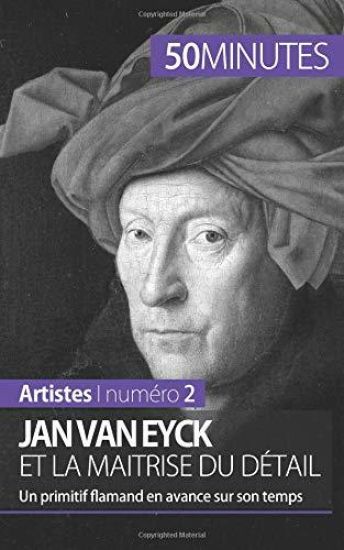
Jan Van Eyck et la maîtrise du détail
D cryptez l'art de Jan Van Eyck en moins d'une heure Gr ce la technique novatrice de la peinture l'huile et la minutie dont il fait preuve dans ses toiles, Jan Van Eyck a su s'imposer comme une figure embl matique de la peinture flamande du XVe si cle. Son oeuvre, flirtant la fois avec le gothique et le style renaissant, place l'homme au coeur de la composition. Il r volutionne ainsi l'univers pictural de son poque en signant des portraits au r alisme saisissant qui a fait toute sa renomm e. L'artiste Lucas d'Heere ne dit-il pas des oeuvres de Van Eyck qu'elles sont des miroirs, et non des sc nes peintes Ce livre vous permettra d'en savoir plus sur: - Le contexte conomique et culturel dans lequel Jan Van Eyck s'inscrit- La vie du peintre et son parcours- Les caract ristiques et sp cificit s de son art- Une s lection d'oeuvres-cl s de Jan Van Eyck- L'impact de l'artiste dans l'histoire de l'art Le mot de l' diteur: Dans ce num ro de la s rie "50MINUTES Artistes", C line Muller aborde le si cle, la vie et l'oeuvre de Jan Van Eyck, de ses d buts, malheureusement peu document s, la cr ation de son atelier brugeois, sans oublier son passage la cour de Bourgogne. Nous avons accord une attention toute particuli re aux r alisations artistiques de Jan Van Eyck, en particulier L'Agneau mystique, souvent consid r comme l'oeuvre europ enne la plus convoit e de ce dernier si cle. St phanie Felten PROPOS DE LA S RIE 50MINUTES ArtistesLa s rie Artistes de la collection 50MINUTES aborde plus de cinquante artistes qui ont profond ment marqu l'histoire de l'art, du Moyen ge nos jours. Chaque livre a t con u la fois pour les passionn s d'art et pour les amateurs curieux d'en savoir davantage en peu de temps. Nos auteurs analysent avec pr cision les oeuvres des plus grands artistes tout en laissant place toutes les interpr tations.
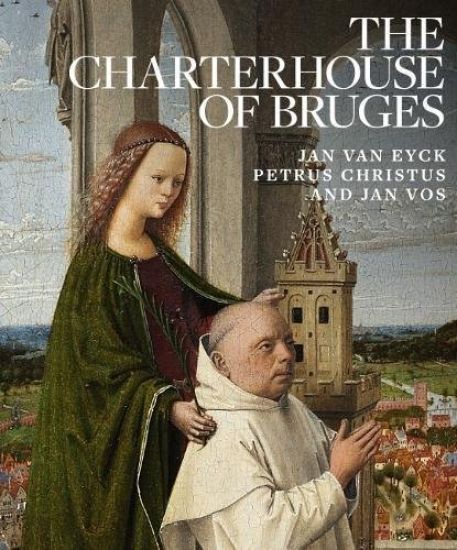
Charterhouse of Bruges: Jan Van Eyck, Petrus Christus and Jan Vos
A visually exciting, focused exploration of two of the great masterpieces of early Netherlandish painting. This book celebrates the reunion, for the first time in twenty-four years and only the second time in their history, of two masterpieces of early Netherlandish painting commissioned by the Carthusian monk Jan Vos during his tenure as prior of the Charterhouse of Bruges in the 1440s: the Frick Collection's Virgin and Child with St. Barbara, St. Elizabeth, and Jan Vos (commissioned from Jan van Eyck and completed by his workshop) and the Gemaldegalerie's Virgin and Child with St. Barbara and Jan Vos (painted by Petrus Christus). These works are examined with a selection of objects that place them in the rich Carthusian context for which they were created. Drawing on a recent campaign of technical examination and new archival research, this lavishly illustrated, scholarly volume explores the works' creation, patronage, function, and reception, offering a focused look at devotional and artistic practices in Bruges during the mid-fifteenth century. This is a significant contribution to the body of published knowledge of the role played by images in shaping monastic life and funerary strategies in late medieval Europe. AUTHOR: Emma Capron is the 2016?18 Anne L. Poulet Curatorial Fellow. A doctoral candidate at the Courtauld Institute of Art, her dissertation focuses on the patronage of altarpieces in late medieval Avignon, while her broader research interest covers every aspect of Northern Renaissance art. SELLING POINTS: . Celebrates the reunion, for the first time in twenty-four years and only the second time in their history, of two masterpieces of early Netherlandish painting commisioned by the Carthusian monk Jan Vos . A significant contribution to the body of published knowledge of the role played by images in shaping monastic life and funerary strategies in late medieval Europe . A lavishly illustrated, scholarly volume 85 colour images