Kirjahaku
Etsi kirjoja tekijän nimen, kirjan nimen tai ISBN:n perusteella.
70 tulosta hakusanalla "Jean Rhys"
Jean Rhys' writings are examined through the frames of feminist criticism and literary theory, providing close readings of the texts and their language. The book explores the various forms of feminine dissent at work in Jean Rhys' fiction. She is shown to develop an ethics of subversion through resistance to closure, irony, parody and her daring rewriting of Jane Eyre. Each novel is treated as a complete aesthetic whole, with substantial references to the short stories, for a more penetrating insight into Jean Rhys' fictional universe.
Jean Rhys has long been central to debates in feminist, modernist, Caribbean, British and postcolonial writing. Elaine Savory's study, first published in 1999, incorporates and modifies previous critical approaches and is a critical reading of Rhys's entire oeuvre, including the stories and autobiography, and is informed by Rhys's own manuscripts. Designed both for the serious scholar on Rhys and those unfamiliar with her writing, Savory's book insists on the importance of a Caribbean-centred approach to Rhys, and shows how this context profoundly affects her literary style. Informed by contemporary arguments on race, gender, class and nationality, Savory explores Rhys's stylistic innovations - her use of colours, her exploitation of the trope of performance, her experiments with creative non-fiction and her incorporation of the metaphysical into her texts. This study offers a comprehensive account of the life and work of this most complex and enigmatic of writers.
'An acute literary intelligence ... the reader comes to trust instinctively Angier's assessments.' New York TimesJean Rhys (1890-1979) had a long life of great difficulty. So inept was she in its management that her authority as the writer of five beautifully shaped and controlled novels appears mysterious: how could someone so bad at living be so good at writing about it?Carole Angier answers this question. Jean Rhys never denied that she used her own experience in her writings, but no one hitherto has understood so well the nature of, and reasons for, this use.On her way to understanding, Carole Angier discovered more about the life than seemed possible. Jean Rhys's childhood, her momentous first love affair, her three marriages, the disasters which befell her husbands, her drinking and its consequences: all are shown with unsparing clarity. Equally clearly, and more importantly, we see the dynamics of her personality as it underwent, and sometimes provoked, these experiences. Sometimes what is revealed is shocking; but Carole Angier's sympathy and compassion dispel dismay, and her brilliant demonstrations of how art was made of events and emotions restores admiration on foundations which are stronger than ever.Jean Rhys did not want anyone to write about her, but this first full biography put beyond question her standing as a great writer of our time, written with an intensity and clarity which mirrors her own. It is a work of exceptional intimacy, sensitivity and power.'Remarkable, the definitive biography. It is deeply researched, subtle, sympathetic.'Claire Tomalin Independent on Sunday'Mesmerising.' Washington Post
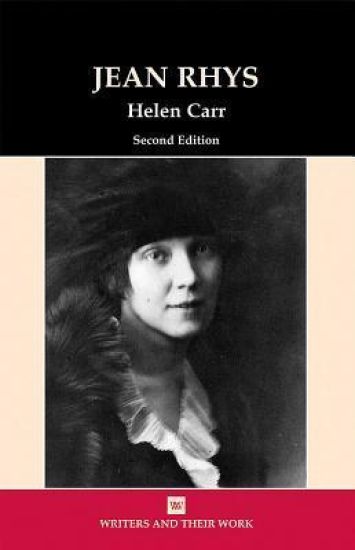
Neglected and forgotten for many years, the arresting, elliptical novels written by Dominican-born Jean Rhys are now widely acclaimed. Her last and most famous novel, Wide Sargasso Sea, her retelling of Jane Eyre, is a central text for the imaginative re-examination of gender and colonial power relations. Helen Carr’s account draws on both recent feminism and postcolonial theory, and places Rhys’s work in relation to modernist and postmodernist writing. First published in 1996, Helen Carr’s revised edition takes full cognizance of the wide critical attention paid to Rhys since that date.
Jean Rhys
TAYLOR FRANCIS LTD
2023
sidottu
Jean Rhys' position upon the literary map of the 20th century remains unstable, even after Wide Sargasso Sea (1966). She shunned public exposure and yet, desperately sought acknowledgement by her own peers; she stood away from the modernist circles of Montparnasse, in Paris, and yet, explored a radically avant-garde writing which retrospectively makes her rank among them, while her always problematic authority places her in the marginalized position of the postcolonial author.'Writing precariously', in the case of Jean Rhys, reaches far beyond a mere posture of submission or a necessity to cope with a lack of money or a 'room of one’s own'. Rather, it becomes an ethical and political stance that engages with forms of minimal resistance to forms of subjection just as the very precariousness of her writing thwarts any efforts to 'place' her or her work, to frame her characters or label her style. With Jean Rhys, precariousness is the site where voices silenced and bodies dismissed by a gendered or imperialistic power may be retrieved, until their vulnerability becomes a dislodging force that makes the power structures precarious in turn.This book reassesses the precariousness of Jean Rhys as a distinct positionality eliciting an isolated voice which insists and persists. It was originally published as a special issue of the journal, Women: A Cultural Review.
Jean Rhys
TAYLOR FRANCIS LTD
2024
nidottu
Jean Rhys' position upon the literary map of the 20th century remains unstable, even after Wide Sargasso Sea (1966). She shunned public exposure and yet, desperately sought acknowledgement by her own peers; she stood away from the modernist circles of Montparnasse, in Paris, and yet, explored a radically avant-garde writing which retrospectively makes her rank among them, while her always problematic authority places her in the marginalized position of the postcolonial author.'Writing precariously', in the case of Jean Rhys, reaches far beyond a mere posture of submission or a necessity to cope with a lack of money or a 'room of one’s own'. Rather, it becomes an ethical and political stance that engages with forms of minimal resistance to forms of subjection just as the very precariousness of her writing thwarts any efforts to 'place' her or her work, to frame her characters or label her style. With Jean Rhys, precariousness is the site where voices silenced and bodies dismissed by a gendered or imperialistic power may be retrieved, until their vulnerability becomes a dislodging force that makes the power structures precarious in turn.This book reassesses the precariousness of Jean Rhys as a distinct positionality eliciting an isolated voice which insists and persists. It was originally published as a special issue of the journal, Women: A Cultural Review.
Jean Rhys
Edinburgh University Press
2015
sidottu
Presents new critical perspectives on Jean Rhys in relation to modernism, postcolonialism, and theories of affect. The 11 newly commissioned essays collected in this volume demonstrate Jean Rhys's centrality to modernism and to postcolonial literature alike by addressing her stories and novels from the 1920s and 1930s, including Voyage in the Dark, Quartet, After Leaving Mr. Mackenzie, and Good Morning, Midnight, as well as her later bestseller, Wide Sargasso Sea (1966). The volume establishes Rhys as a major author with relevance to a number of different critical discourses, and includes a path breaking section on affect theory that shows how contemporary interest in Rhys correlates with the recent 'affective turn' in the social sciences and humanities. As this collection shows, strangely haunting and deeply unsettling, Rhys's portraits of dispossessed women living in the early and late 20th century continue to trouble easy conceptualisations and critical categories. New and original work on Jean Rhys's fiction and short stories, highlighting key areas of her work; contributors are leading scholars on Jean Rhys from the US, the UK, and Australia, including Mary Lou Emery, Elaine Savory, John J. Su, Maroula Joannou, H. Adlai Murdoch, Rishona Zimring, Carine Mardorossian, Patricia Moran, Erica L. Johnson, and Sue Thomas and organised around 3 important themes: Rhys and modernism, the postcolonial Rhys, and Rhys and affect theory.
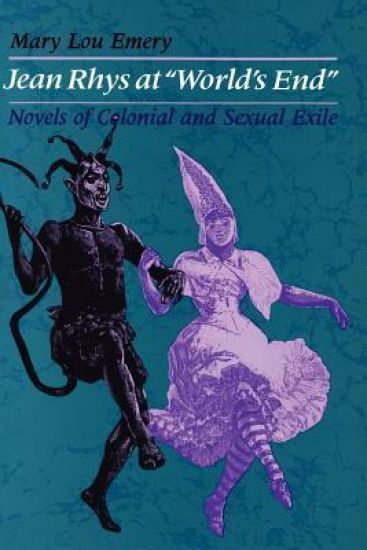
The Caribbean Islands have long been an uneasy meeting place among indigenous peoples, white European colonists, and black slave populations. Tense oppositions in Caribbean culture-colonial vs. native, white vs. black, male conqueror vs. female subject-supply powerful themes and spark complex narrative experiments in the fiction of Dominica-born novelist Jean Rhys. In this pathfinding study, Mary Lou Emery focuses on Rhys's handling of these oppositions, using a Caribbean cultural perspective to replace the mainly European aesthetic, moral, and psychological standards that have served to misread and sometimes devalue Rhys's writing.Emery considers all five Rhys novels, beginning with Wide Sargasso Sea as the most explicitly Caribbean in its setting, in its participation in the culminating decades of a West Indian literary naissance, and most importantly, in its subversive transformation of European concepts of character. From a sociocultural perspective, she argues persuasively that the earlier novels-Voyage in the Dark, Quartet, After Leaving Mr. Mackenzie, and Good Morning, Midnight-should be read as emergent Caribbean fiction, written in tense dialogue with European modernism. Building on this thesis, she reveals how the apparent passivity, masochism, or silence of Rhys's female protagonists results from their doubly marginalized status as women and as subject peoples. Also, she explores how Rhys's women seek out alternative identities in dreamed of, magically realized, or chosen communities.These discoveries offer important insights on literary modernism, Caribbean fiction, and the formation of female identity.
Jean Rhys's Historical Imagination
Gregg Veronica Marie
The University of North Carolina Press
1995
nidottu
As the foremost white West Indian writer of this century and author of the widely acclaimed novel Wide Sargasso Sea , Jean Rhys (1890-1979) has attracted much critical attention, most often from the perspective of gender analysis. Veronica Gregg extends our critical appreciation of Rhys by analyzing the complex relationship between Rhys's identity and the structures of her fiction, and she reveals the ways in which this relationship is connected to the history of British colonization of the West Indies. Gregg focuses on Rhys as a writer--a Creole woman analyzing the question of identity through literary investigations of race, gender, and colonialism. Arguing that history itself can be a site where different narratives collide and compete, she explores Rhys's rewriting of the historical discourses of the West Indies and of European canonical texts, such as Rhys's treatment of Jane Eyre in Wide Sargasso Sea . Gregg's analysis also reveals the precision with which Rhys crafted her work and her preoccupation with writing as performance.
Jean Rhys and the Novel As Women's Text
The University of North Carolina Press
2009
nidottu
Is a woman's writing different from a man's? Many scholars -- and readers -- think so, even thought here has been little examination of the way women's novels enact the theories that women theorists have posited. In Jean Rhys and the Novel as Women's Text, Nancy Harrison makes an important contribution to the exchange of ideas on the writing practice of women and to the scholarship on Jean Rhys.Harrison determines what the form of a well-made women's novel discloses about the conditions of women's communication and the literary production that emerges from them. Devoting the first part of her book to theory and general commentary on Rhys's approach to writing, she then offers perceptive readings of Voyage in the Dark, an early Rhys novel, and Wide Sargasso Sea, Rhys's masterpiece written twenty-seven years later. She shows how Rhys uses the terms of a man's discourse, then introduces a woman's (or several women's) discourse as a compelling counterpoint that, in time, becomes prominent and gives each novel its thematic impact. In presenting a continuing dialogue with the dominant language and at the same time making explicit the place of a woman's own language, Rhys gives us a paradigm for a new and basically moral text.A UNC Press Enduring Edition -- UNC Press Enduring Editions use the latest in digital technology to make available again books from our distinguished backlist that were previously out of print. These editions are published unaltered from the original, and are presented in affordable paperback formats, bringing readers both historical and cultural value.
Jean Rhys's Modernist Bearings and Experimental Aesthetics
Sue Thomas
BLOOMSBURY PUBLISHING PLC
2022
sidottu
Addressing Jean Rhys’s composition and positioning of her fiction, this book invites and challenges us to read the tacit, silent and explicit textual bearings she offers and reveals new insights about the formation, scope and complexity of Rhys’s experimental aesthetics.Tracing the distinctive and shifting evolution of Rhys’s experimental aesthetics over her career, Sue Thomas explores Rhys’s practices of composition in her fiction and drafts, as well as her self-reflective comment on her writing. The author examines patterns of interrelation, intertextuality, intermediality and allusion, both diachronic and synchronic, as well as the cultural histories entwined within them. Through close analysis of these, this book reveals new experimental, thematic, generic and political reaches of Rhys’s fiction and sharpens our insight into her complex writerly affiliations and lineages.
Jean Rhys's Modernist Bearings and Experimental Aesthetics
Sue Thomas
BLOOMSBURY PUBLISHING PLC
2023
nidottu
Addressing Jean Rhys’s composition and positioning of her fiction, this book invites and challenges us to read the tacit, silent and explicit textual bearings she offers and reveals new insights about the formation, scope and complexity of Rhys’s experimental aesthetics.Tracing the distinctive and shifting evolution of Rhys’s experimental aesthetics over her career, Sue Thomas explores Rhys’s practices of composition in her fiction and drafts, as well as her self-reflective comment on her writing. The author examines patterns of interrelation, intertextuality, intermediality and allusion, both diachronic and synchronic, as well as the cultural histories entwined within them. Through close analysis of these, this book reveals new experimental, thematic, generic and political reaches of Rhys’s fiction and sharpens our insight into her complex writerly affiliations and lineages.
Transnational Jean Rhys
Bloomsbury Academic USA
2020
sidottu
This volume investigates the frameworks that can be applied to reading Caribbean author Jean Rhys. While Wide Sargasso Sea famously displays overt forms of literary influences, Jean Rhys’s entire oeuvre is so fraught with connections to other texts and textual practices across geographical boundaries that her classification as a cosmopolitan modernist writer is due for reassessment.Transnational Jean Rhys argues against the relative isolationism that is sometimes associated with Rhys's writing by demonstrating both how she was influenced by a wide range of foreign – especially French – authors and how her influence was in turn disseminated in myriad directions. Including an interview with Black Atlantic novelist Caryl Phillips, this collection charts new territories in the influences on/of an author known for her dislike of literary coteries, but whose literary communality has been underestimated.
Transnational Jean Rhys
BLOOMSBURY PUBLISHING PLC
2022
nidottu
This volume investigates the frameworks that can be applied to reading Caribbean author Jean Rhys. While Wide Sargasso Sea famously displays overt forms of literary influences, Jean Rhys’s entire oeuvre is so fraught with connections to other texts and textual practices across geographical boundaries that her classification as a cosmopolitan modernist writer is due for reassessment.Transnational Jean Rhys argues against the relative isolationism that is sometimes associated with Rhys's writing by demonstrating both how she was influenced by a wide range of foreign – especially French – authors and how her influence was in turn disseminated in myriad directions. Including an interview with Black Atlantic novelist Caryl Phillips, this collection charts new territories in the influences on/of an author known for her dislike of literary coteries, but whose literary communality has been underestimated.
Best known as the author of Wide Sargasso Sea, Jean Rhys continues to draw growing amounts of popular and scholarly attention. This book explores Rhys's sense of world, the cross-cultural and the international in her novels, stories, and autobiographical writing. The volume situates Rhys's writing in relation to the Dominican cultural production with which she was familiar, to Rhys's family's history on the island, and to European ethnographic discourses about white creole people. Special attention is given to the political and ethical locations of Rhys's authorial and narrative voices with respect to discourses of empire, gender, sex, race, class, ethnicity, and desire. The book demonstrates that an historical reading of Rhys's work poses questions for a number of current theoretical approaches. Where and how does Jean Rhys write herself, her fiction, and her characters into history? To address this question, Sue Thomas has conducted wide-ranging primary and original research to elucidate Rhys's sense of world, the cross-cultural and the international in her novels, stories, and autobiographical writing. She situates Rhys's writing in relation to the Dominican cultural production and traffic with which she was familiar, to Rhys's family's history on the island, and to European ethnographic discourses about white creole people. In her reading of Rhys's fiction and autobiographical texts she analyzes the political and ethical locations of Rhys's authorial and narrative voices with respect to discourses of empire, gender, sex, race, class, ethnicity, and desire that shaped Rhys's sense of the materiality of the world. In doing so, Thomas draws out new dimensions of the racial, ethnic, and sexual formation of Rhys's modernism. As a result, she demonstrates that an historical reading of Rhys's work poses questions for a number of current theoretical approaches.
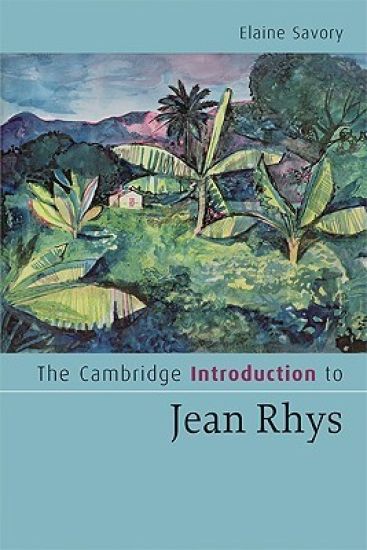
Since her death in 1979, Jean Rhys's reputation as an important modernist author has grown. Her finely crafted prose fiction lends itself to multiple interpretations from radically different critical perspectives; formalism, feminism, and postcolonial studies among them. This Introduction offers a reliable and stimulating account of her life, work, contexts and critical reception. Her masterpiece, Wide Sargasso Sea, is analyzed together with her other novels, including Quartet and After Leaving Mr Mackenzie, and her short stories. Through close readings of the works, Elaine Savory reveals their common themes and connects these to different critical approaches. The book maps Rhys's fictional use of the actual geography of Paris, London and the Caribbean, showing how key understanding her relationships with the metropolitan and colonial spheres is to reading her texts. In this invaluable introduction for students, Savory explains the significance of Rhys as a writer both in her lifetime and today.