Kirjojen hintavertailu. Mukana 12 595 353 kirjaa ja 12 kauppaa.

Kirjahaku

Etsi kirjoja tekijän nimen, kirjan nimen tai ISBN:n perusteella.

140 tulosta hakusanalla "John Clare"

The Early Poems of John Clare 1804-1822: Volume I
For the first time all Clare's early poems are brought together with all known variants, and with Clare's characteristic vocabulary, grammar, spelling, and punctuation preserved. Through this collection, ranging from juvenilia to the published poems that first established his reputation with Poems Descriptive of Rural Life and Scenery and The Village Minstrel, it becomes clear how many more poems Clare composed in these early years than have previously seen the light of day. Strenuous efforts have been made to recover poems obliterated in some of Clare's first manuscripts, and the complete text of The Parish, his major satirical poem, is included. A glossary is provided for both volumes, together with extensive annotation. Clare's own dating of his first poems is employed and every attempt has been made to establish a reliable chronology. This edition provides the first reliable basis for a new assessment of Clare's poetic growth, allowing his increasing assurance as a poet writing in a characteristic idiom of his own to be traced, and demonstrating how surprisingly early his individuality as a poet emerged.
The Early Poems of John Clare 1804-1822
For the first time all Clare's early poems are brought together with all known variants, and with Clare's characteristic vocabulary, grammar, spelling, and punctuation preserved. Through this collection, ranging from juvenilia to the published poems that first established his reputation with Poems Descriptive of Rural Life and Scenery and The Village Minstrel, it becomes clear how many more poems Clare composed in these early years than have previously seen the light of day. Strenuous efforts have been made to recover poems obliterated in some of Clare's first manuscripts, and the complete text of The Parish, his major satirical poem, is included. A glossary is provided for both volumes, together with extensive annotation. Clare's own dating of his first poems is employed and every attempt has been made to establish a reliable chronology. This edition provides the first reliable basis for a new assessment of Clare's poetic growth, allowing his increasing assurance as a poet writing in a characteristic idiom of his own to be traced, and demonstrating how surprisingly early his individuality as a poet emerged.
John Clare: Poems of the Middle Period, 1822-1837
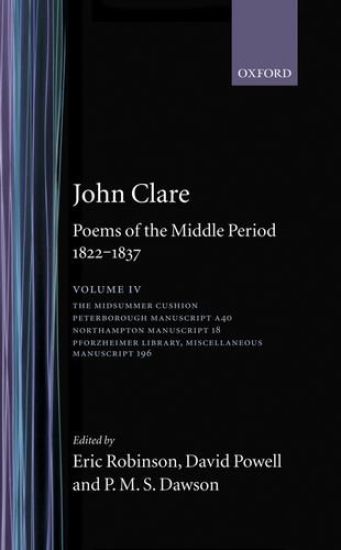
These volumes represent the third and fourth of five volumes devoted to Clare's 'middle period', between 1822 and 1837, arguably the years of his finest creativity. The poems contained in these volumes range from examples of Clare's satirical and political verse, in 'The Summons' and 'The Hue & Cry', to a telling expression of his philosophy of nature, in 'The Eternity of Nature', and probably the most important statement of Clare's poetic objectives in 'To the Rural Muse'. If there is any lingering belief in the 'sameness' of Clare's verse, these volumes ought surely to dispel it.
John Clare: Poems of the Middle Period, 1822-1837
These volumes represent the third and fourth of five volumes devoted to Clare's 'middle period', between 1822 and 1837, arguably the years of his finest creativity. The poems contained in these volumes range from examples of Clare's satirical and political verse, in 'The Summons' and 'The Hue & Cry', to a telling expression of his philosophy of nature, in 'The Eternity of Nature', and probably the most important statement of Clare's poetic objectives in 'To the Rural Muse'. If there is any lingering belief in the 'sameness' of Clare's verse, these volumes ought surely to dispel it.
John Clare: Poems of the Middle Period, 1822-1837

John Clare: Poems of the Middle Period, 1822-1837

John Clare

Oxford University Press
2003
sidottu
Completing the influential Oxford edition of Clare's collected poems, this volume presents the poems of the Northborough period of Clare's creativity. As with other volumes in the edition, many of the poems have never before been published, and Clare's spelling, punctuation, grammar, and vocabulary have all been carefully preserved. This final volume also includes corrections to the texts, variants, and notes in previously-published volumes in the series, along with a cumulative glossary and cumulative indices of first-lines and titles that will assist readers in their use of the edition as a whole. Clare's poetry deals not only with his own countryside, but also with its ceremonies and celebrations, its customs and games, its political, economic, and religious concerns, its proverbs, tales, and songs - indeed, with all aspects of its popular culture. The poems of the Northborough period are some of Clare's best work, demonstrating a particularly concise vision of Clare's experience of Nature.
John Clare

John Clare

Simon Kövesi

Palgrave Macmillan
2017
sidottu
This book investigates what it is that makes John Clare’s poetic vision so unique, and asks how we use Clare for contemporary ends. It explores much of the criticism that has appeared in response to his life and work, and asks hard questions about the modes and motivations of critics and editors. Clare is increasingly regarded as having been an environmentalist long before the word appeared; this book investigates whether this ‘green’ rush to place him as a radical proto-ecologist does any disservice to his complex positions in relation to social class, work, agriculture, poverty and women. This book attempts to unlock Clare’s own theorisations and practices of what we might now call an ‘ecological consciousness’, and works out how his ‘ecocentric’ mode might relate to that of other Romantic poets. Finally, this book asks how we might treat Clare as our contemporary while still being attentive to the peculiarities of his unique historical circumstances.
John Clare

John Clare

Jonathan Bate

Picador
2004
pokkari
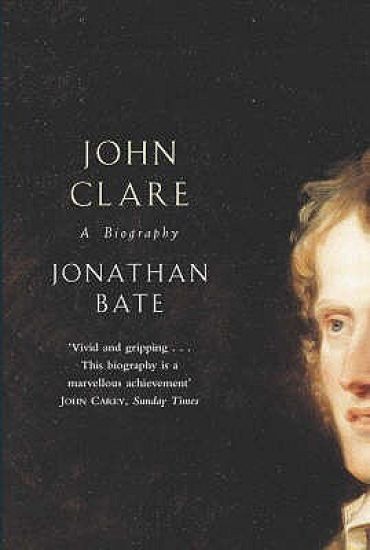
‘What distinguished Clare is an unspectacular joy and a love for the inexorable one-thing-after-anotherness of the world’ Seamus Heaney John Clare (1793-1864) was a great Romantic poet, with a name to rival that of Blake, Byron, Wordsworth or Shelley – and a life to match. The ‘poet’s poet’, he has a place in the national pantheon and, more tangibly, a plaque in Westminster Abbey’s Poets’ Corner, unveiled in 1989. Here at last is Clare’s full story, from his birth in poverty and employment as an agricultural labourer, via his burgeoning promise as a writer – cultivated under the gaze of rival patrons – and moment of fame, in the company of John Keats, as the toast of literary London, to his final decline into mental illness and the last years of his life, confined in asylums. Clare’s ringing voice – quick-witted, passionate, vulnerable, courageous – emerges through extracts from his letters, journals, autobiographical writings and poems, as Jonathan Bate brings this complex man, his revered work and his ribald world, vividly to life.
John Clare

John Clare

R. Sales

Palgrave Macmillan
2001
sidottu
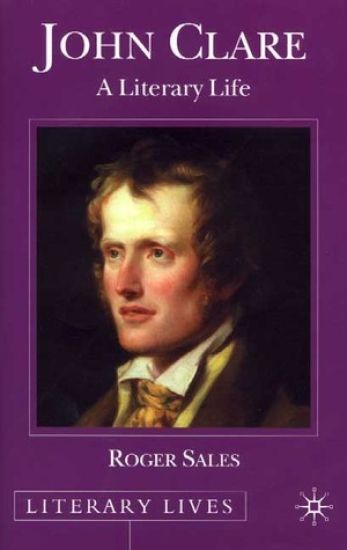
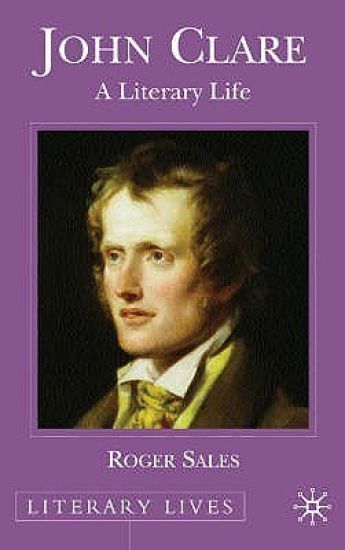
This book situates John Clare's long, prolific but often badly neglected literary life within the wider cultural histories of the Regency and earlier Victorian periods. The first half considers the construction of the Regency peasant-poet and how Clare performed this role on stages such as the London Magazine. It also looks at the way in which it went out of fashion as Regency mentalities were replaced by early Victorian ones. The second half recreates asylum culture and places Clare's performances as Regency boxers and Lord Byron within this bleak new world.
John Clare

John Clare

R. Sales

Palgrave Macmillan
2001
nidottu
This book situates John Clare's long, prolific but often badly neglected literary life within the wider cultural histories of the Regency and earlier Victorian periods. The first half considers the construction of the Regency peasant-poet and how Clare performed this role on stages such as the London Magazine. It also looks at the way in which it went out of fashion as Regency mentalities were replaced by early Victorian ones. The second half recreates asylum culture and places Clare's performances as Regency boxers and Lord Byron within this bleak new world.
John Clare

John Clare

Routledge
1995
sidottu
The Critical Heritage gathers together a large body of critical sources on major figures in literature. Each volume presents contemporary responses to a writer's work, enabling students and researchers to read for themselves, for example, comments on early performances of Shakespeare's plays, or reactions to the first publication of Jane Austen's novels.The carefully selected sources range from landmark essays in the history of criticism to journalism and contemporary opinion, and little published documentary material such as letters and diaries. Significant pieces of criticism from later periods are also included, in order to demonstrate the fluctuations in an author's reputation.Each volume contains an introduction to the writer's published works, a selected bibliography, and an index of works, authors and subjects.
John Clare

John Clare

Routledge
2013
nidottu
The Critical Heritage gathers together a large body of critical sources on major figures in literature. Each volume presents contemporary responses to a writer's work, enabling students and researchers to read for themselves, for example, comments on early performances of Shakespeare's plays, or reactions to the first publication of Jane Austen's novels. The carefully selected sources range from landmark essays in the history of criticism to journalism and contemporary opinion, and little published documentary material such as letters and diaries. Significant pieces of criticism from later periods are also included, in order to demonstrate the fluctuations in an author's reputation. Each volume contains an introduction to the writer's published works, a selected bibliography, and an index of works, authors and subjects.
John Clare

John Clare

John Clare

Routledge
1986
nidottu
This book presents Clare's poetry exactly as he wrote it, and includes selections from his `mad' poems as well as his earlier descriptions of birds, animals and village life.
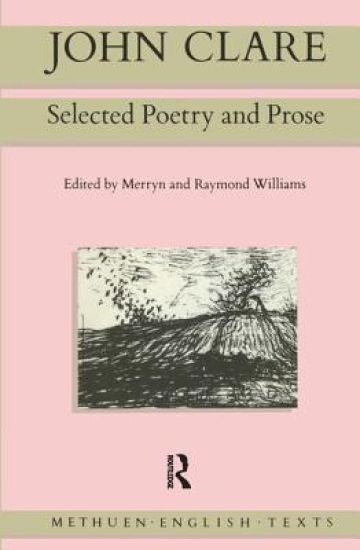
Selected Poetry of John Clare

Selected Poetry of John Clare

John Clare

Faber Faber
2004
pokkari
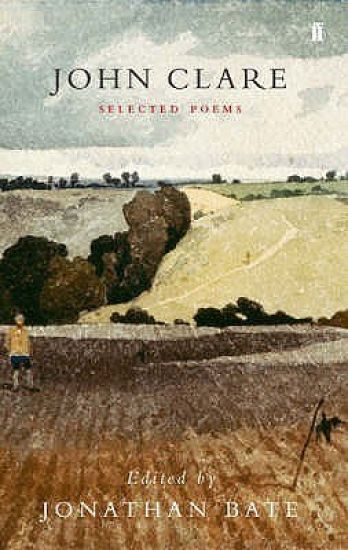
This is the first selection of the great Romantic 'peasant poet' John Clare to make available the full range of his accomplishment - as the chronicler of nature and childhood, the champion of folkways in the face of enclosure and oppression, the love poet, the political satirist and solitary visionary, confined in his maturity to lunatic asylums.'Clare grabs hold of you - no, he doesn't grab hold of you, he is already there, talking to you before you've arrived on the scene, telling you about himself, about the things that are closest and dearest to him, and it would no more occur to him to do otherwise than it would occur to Whitman to stop singing you his song of himself.' John Ashbery'It is what Lawrence calls the poetry of the living present.' Seamus Heaney
John Clare

John Clare

John Clare

Faber Faber
2007
nidottu
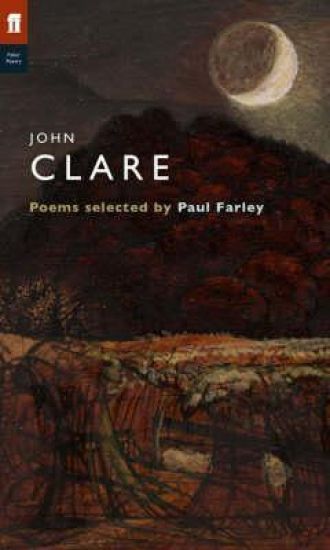
John Clare (1793-1864), the 'peasant poet', worked as an agricultural labourer in Northamptonshire until a deterioration in his mental health saw him committed to an insane asylum. He published four volumes of verse, including Poems, Descriptive of Rural Life and Scenery (1820), and The Shepherd's Calendar (1827).In this series, a contemporary poet selects and introduces a poet of the past. By their choice of poems and by the personal and critical reactions they express in their prefaces, the editors offer insights into their own work as well as providing an accessible and passionate introduction to some of the greatest poets of our literature.
John Clare

John Clare

John Clare

FABER FABER
2016
sidottu
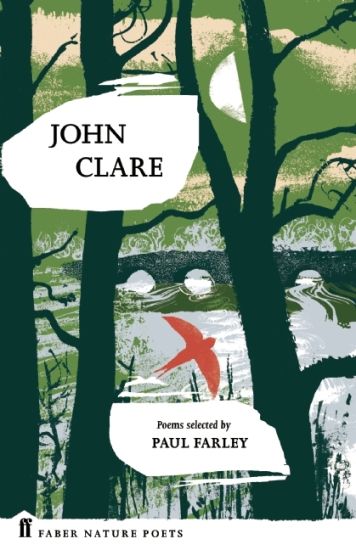
In this series, a contemporary poet selects and introduces a poet of the past. By their choice of poems and by the personal and critical reactions they express in their prefaces, the editors offer insights into their own work as well as providing an accessible and passionate introduction to the most important poets in our literature.The birds are gone to bed; the cows are still,And sheep lie panting on each old mole hill,And underneath the willow's grey-green bough --Like toil a resting -- lies the fallow plough.-- Hares at Play
John Clare

John Clare

John Lucas

Northcote House Publishers Ltd
1994
nidottu
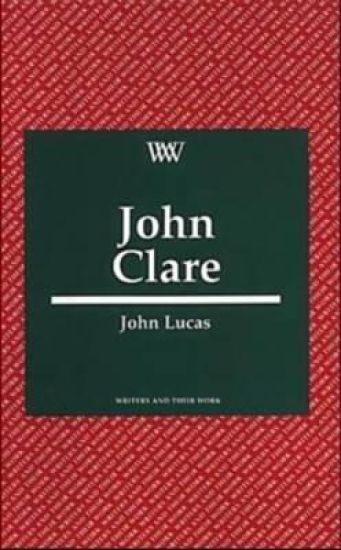
The four volumes of John Clare’s poetry that were published during his tragic life were so brutally edited, and sometimes even wilfully censored for political reasons that his work invited mainly curiosity and condescension from the literary world. Now that readers have a chance to re-evaluate Clare’s poetry, the “peasant poet”, “illiterate”, “quaint” and “rustic” is emerging as a radical thinker and writer. John Lucas’s unique volume reveals a knowing and articulate poet writing as an essentially oral artist – out of a subtle tradition of song as much as of poetry. Lucas champions Clare’s art in a vital and fascinating book which tells of the collision between the cultural orthodoxy of print and the poet whose work was demeaned and damaged by the forces of the literary establishment.
John Clare

John Clare

John Clare

Routledge
2016
sidottu
This book presents Clare's poetry exactly as he wrote it, and includes selections from his `mad' poems as well as his earlier descriptions of birds, animals and village life.
John Clare's Guide to Media Handling

John Clare's Guide to Media Handling

John Clare

TAYLOR FRANCIS LTD
2019
nidottu
This title was first published in 2003. The media is an important influence on how a company or organization is perceived. This is an insider's guide to media handling, showing readers what needs to be done to achieve media success and offering them the tools to do it. John Clare is a former ITN and "Daily Mail" journalist who is now a media and crisis consultant, and here he shares his experience. He offers an in-depth examination of the different media sectors - TV, radio and print - and how to make your stories relevant to them. There is a detailed explanation of how a newsroom works, based on different desks and deadlines and how to take advantage of these. The different types of editorial pieces - news and features - are analyzed, along with the circumstances in which you should target each. The book includes coverage of the use of the Internet as a vehicle for news.