Kirjojen hintavertailu. Mukana 12 373 634 kirjaa ja 12 kauppaa.

Kirjahaku

Etsi kirjoja tekijän nimen, kirjan nimen tai ISBN:n perusteella.

9 tulosta hakusanalla "John G. Gunnell"

John G. Gunnell

John G. Gunnell

Taylor Francis Ltd
2021
nidottu
John Gunnell has compelled political theorists to rethink their relation to political science, the history of political thought, the philosophy of social science and political reality. His thinking has been shaped by encounters with Heidegger and Plato, Wittgenstein and Austin, the Berkeley School and émigrés such as Strauss and Arendt. His writings have challenged the idealist assumptions behind the idea of a Great Tradition of Political Thought and the philosophical claims about mind and language. Gunnell has engaged and challenged colleagues in political theory, political science and the philosophy of social science on a range of issues from political action, time, pluralism, ideology, concepts, conventions, "the political" and democracy to the roles of philosophy, science, literary theory, cognitive science, mind, and history on the enterprise of theorizing today.The book focuses on his work in three key areas:Political Theory and Political Science Gunnell’s work has often focused on the historical emergence of the study of political theory as a subdiscipline of political science, and its critical relation to and alienation from political science from the postwar era. His argument has been consistent: political theory self-identified as an interpretative social science and mode of historical reflection is an invention of political science. Political theory divorced from political science weakens both activities in their ties to, concerns with and relevance to political society and the contemporary university.Interpretation and ActionGunnell has been particularly interested in the nature of concepts and how they change. These investigations begin with analysis of theory and theorizing as they are constituted and practiced in historiography, the philosophy of social sciences, the philosophy of science, political science and metatheory. He engages with thinkers whose positions inform and oppose his own and explores concepts such as: democracy, justice, time, pluralism, science, liberalism, and action.Theorists, Philosophers, and Political LifeGunnell’s work has developed through a series of encounters with theorists and philosophers. He has rejected attempts to present politics as a stable and essential set of phenomena. There are common themes that guide conversations with the German émigrés, ordinary language philosophers, and theorists from the history of political thought. This book includes works that focus on Max Weber, Leo Strauss and Eric Voegelin, Gilbert Ryle, J.L. Austin and Ludwig Wittgenstein.
John G. Gunnell
John Gunnell has compelled political theorists to rethink their relation to political science, the history of political thought, the philosophy of social science and political reality. His thinking has been shaped by encounters with Heidegger and Plato, Wittgenstein and Austin, the Berkeley School and émigrés such as Strauss and Arendt. His writings have challenged the idealist assumptions behind the idea of a Great Tradition of Political Thought and the philosophical claims about mind and language. Gunnell has engaged and challenged colleagues in political theory, political science and the philosophy of social science on a range of issues from political action, time, pluralism, ideology, concepts, conventions, "the political" and democracy to the roles of philosophy, science, literary theory, cognitive science, mind, and history on the enterprise of theorizing today.The book focuses on his work in three key areas:Political Theory and Political Science Gunnell’s work has often focused on the historical emergence of the study of political theory as a subdiscipline of political science, and its critical relation to and alienation from political science from the postwar era. His argument has been consistent: political theory self-identified as an interpretative social science and mode of historical reflection is an invention of political science. Political theory divorced from political science weakens both activities in their ties to, concerns with and relevance to political society and the contemporary university.Interpretation and ActionGunnell has been particularly interested in the nature of concepts and how they change. These investigations begin with analysis of theory and theorizing as they are constituted and practiced in historiography, the philosophy of social sciences, the philosophy of science, political science and metatheory. He engages with thinkers whose positions inform and oppose his own and explores concepts such as: democracy, justice, time, pluralism, science, liberalism, and action.Theorists, Philosophers, and Political LifeGunnell’s work has developed through a series of encounters with theorists and philosophers. He has rejected attempts to present politics as a stable and essential set of phenomena. There are common themes that guide conversations with the German émigrés, ordinary language philosophers, and theorists from the history of political thought. This book includes works that focus on Max Weber, Leo Strauss and Eric Voegelin, Gilbert Ryle, J.L. Austin and Ludwig Wittgenstein.
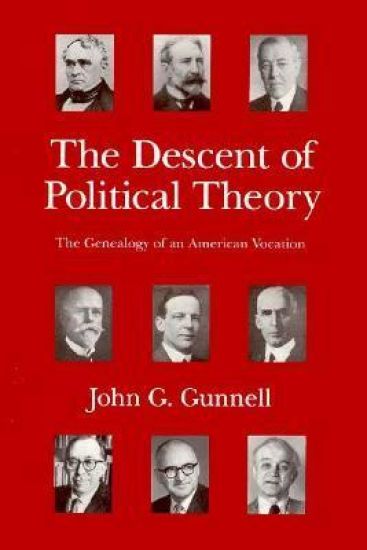
The Descent of Political Theory

The Descent of Political Theory

John G. Gunnell

University of Chicago Press
1993
nidottu
This work reveals the origins and development of political theory as it is presently understood - and misunderstood. Tracing the evolution of the field from the 19th century to the present, John G. Gunnell shows how controversies, like those over liberalism or the relationship of theory to practice, are actually the unresolved legacy of a forgotten past. Gunnell reconstructs the evolution of the field by locating it within the development of American social science. During the behavioural revolution of the 1950s, political theory was relegated to the margins of an increasingly empirical political science. Gunnell demonstrates that the estrangement of political theory is rooted in a much older quarrel: the authority of knowledge versus political authority, academic versus public discourse.
Social Inquiry After Wittgenstein and Kuhn

Social Inquiry After Wittgenstein and Kuhn

John G. Gunnell

Columbia University Press
2014
sidottu
A distinctive feature of Ludwig Wittgenstein's work after 1930 was his turn to a conception of philosophy as a form of social inquiry, John G. Gunnell argues, and Thomas Kuhn's approach to the philosophy of science exemplified this conception. In this book, Gunnell shows how these philosophers address foundational issues in the social and human sciences, particularly the vision of social inquiry as an interpretive endeavor and the distinctive cognitive and practical relationship between social inquiry and its subject matter. Gunnell speaks directly to philosophers and practitioners of the social and human sciences. He tackles the demarcation between natural and social science; the nature of social phenomena; the concept and method of interpretation; the relationship between language and thought; the problem of knowledge of other minds; and the character of descriptive and normative judgments about practices that are the object of inquiry. Though Wittgenstein and Kuhn are often criticized as initiating a modern descent into relativism, this book shows that the true effect of their work was to undermine the basic assumptions of contemporary social and human science practice. It also problematized the authority of philosophy and other forms of social inquiry to specify the criteria for judging such matters as truth and justice. When Wittgenstein stated that "philosophy leaves everything as it is," he did not mean that philosophy would be left as it was or that philosophy would have no impact on what it studied, but rather that the activity of inquiry did not, simply by virtue of its performance, transform the object of inquiry.
The Orders of Discourse

The Orders of Discourse

John G. Gunnell

Rowman Littlefield
1998
nidottu
In this insightful book, distinguished political scientist John G. Gunnell explores the relationship between social science and philosophy, and the range of problems that have attended this relationship. Gunnell argues that social science has turned to philosophy, especially to areas such as the philosophy of science and other sites of philosophical foundationalism, in search of cognitive identity and the grounds for normative and empirical judgment. Gunnell's emphasis is on political and social theory and the theoretical constitution of social phenomena. The Orders of Discourse will be of interest to political theorists, political philosophers, and social scientists.
Imagining the American Polity

Imagining the American Polity

John G. Gunnell

STATE UNIVERSITY OF NEW YORK PRESS
2024
sidottu
Traces the history of the concept of democracy in the United States.Americans have long prided themselves on living in a country that serves as a beacon of democracy to the world, but from the time of the founding they have also engaged in debates over what the criteria for democracy are as they seek to validate their faith in the United States as a democratic regime. In this book John G. Gunnell shows how the academic discipline of political science has contributed in a major way to this ongoing dialogue, thereby playing a significant role in political education and the formulation of popular conceptions of American democracy. Gunnell traces the dynamics of conceptual change and continuity as American political science evolved from a focus in the nineteenth century on the idea of the state, through the emergence of a pluralist theory of democracy in the 1920s and its transfiguration into liberalism in the mid- 1930s, up to the rearticulation of pluralist theory in the 1950s and its resurgence, yet again, in the 1990s. Along the way he explores how political scientists have grappled with a fundamental question about popular sovereignty: Does democracy require a people and a national democratic community, or can the requisites of democracy be achieved through fortuitous social configurations coupled with the design of certain institutional mechanisms?
Imagining the American Polity

Imagining the American Polity

John G. Gunnell

STATE UNIVERSITY OF NEW YORK PRESS
2024
pokkari
Traces the history of the concept of democracy in the United States.Americans have long prided themselves on living in a country that serves as a beacon of democracy to the world, but from the time of the founding they have also engaged in debates over what the criteria for democracy are as they seek to validate their faith in the United States as a democratic regime. In this book John G. Gunnell shows how the academic discipline of political science has contributed in a major way to this ongoing dialogue, thereby playing a significant role in political education and the formulation of popular conceptions of American democracy. Gunnell traces the dynamics of conceptual change and continuity as American political science evolved from a focus in the nineteenth century on the idea of the state, through the emergence of a pluralist theory of democracy in the 1920s and its transfiguration into liberalism in the mid- 1930s, up to the rearticulation of pluralist theory in the 1950s and its resurgence, yet again, in the 1990s. Along the way he explores how political scientists have grappled with a fundamental question about popular sovereignty: Does democracy require a people and a national democratic community, or can the requisites of democracy be achieved through fortuitous social configurations coupled with the design of certain institutional mechanisms?
Conventional Realism and Political Inquiry

Conventional Realism and Political Inquiry

John G Gunnell

University of Chicago Press
2019
sidottu
When social scientists and social theorists turn to the work of philosophers for intellectual and practical authority, they typically assume that truth, reality, and meaning are to be found outside rather than within our conventional discursive practices. John G. Gunnell argues for conventional realism as a theory of social phenomena and an approach to the study of politics. Drawing on Wittgenstein's critique of "mentalism" and traditional realism, Gunnell argues that everything we designate as "real" is rendered conventionally, which entails a rejection of the widely accepted distinction between what is natural and what is conventional. The terms "reality" and "world" have no meaning outside the contexts of specific claims and assumptions about what exists and how it behaves. And rather than a mysterious source and repository of prelinguistic meaning, the "mind" is simply our linguistic capacities. Taking readers through contemporary forms of mentalism and realism in both philosophy and American political science and theory, Gunnell also analyzes the philosophical challenges to these positions mounted by Wittgenstein and those who can be construed has his successors.