Kirjojen hintavertailu. Mukana 12 418 709 kirjaa ja 12 kauppaa.

Kirjahaku

Etsi kirjoja tekijän nimen, kirjan nimen tai ISBN:n perusteella.

241 tulosta hakusanalla "John Rawls"

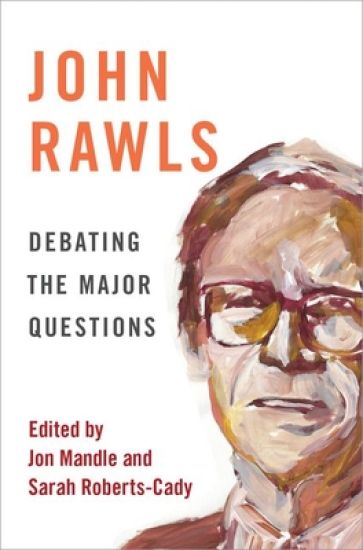
John Rawls

John Rawls

Oxford University Press Inc
2020
nidottu
John Rawls is widely considered one of the most important political philosophers of the 20th century, and his highly original and influential works play a central role in contemporary philosophical debates. This collection of original essays explores the outpouring of scholarship and debate inspired by Rawls's political philosophy. Given the vastness of this scholarship, this volume aims to provide inroads to its central themes and preoccupations. The volume is divided into ten parts, exploring ten distinct questions, for example: Can Rawls's conception of public reason offer determinate answers to major questions of justice? Is ideal theory useful or relevant to resolving issues of justice in the nonideal world? Are libertarians correct to criticize Rawls's work for failing to prioritize economic liberty? When institutions aim at equality, what is it that they should seek to equalize--primary goods, capabilities, or welfare? For each question, there is an introductory essay, providing an overview of the relevant arguments from Rawls's work and the historical contours of the debate that ensued. Each introductory essay is followed by two essays written by scholars who take opposing positions, which move the discussion forward in a fruitful way. This volume provides readers with clear and in-depth explication of Rawls's arguments, the most important critical dialogue generated in response to those arguments, and the dialogue's significance to contemporary politics.
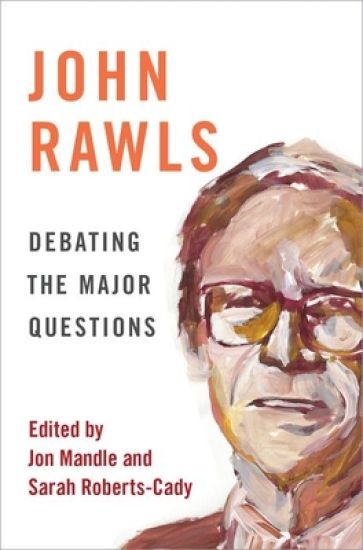
John Rawls

John Rawls

Oxford University Press Inc
2020
sidottu
John Rawls is widely considered one of the most important political philosophers of the 20th century, and his highly original and influential works play a central role in contemporary philosophical debates. This collection of original essays explores the outpouring of scholarship and debate inspired by Rawls's political philosophy. Given the vastness of this scholarship, this volume aims to provide inroads to its central themes and preoccupations. The volume is divided into ten parts, exploring ten distinct questions, for example: Can Rawls's conception of public reason offer determinate answers to major questions of justice? Is ideal theory useful or relevant to resolving issues of justice in the nonideal world? Are libertarians correct to criticize Rawls's work for failing to prioritize economic liberty? When institutions aim at equality, what is it that they should seek to equalize--primary goods, capabilities, or welfare? For each question, there is an introductory essay, providing an overview of the relevant arguments from Rawls's work and the historical contours of the debate that ensued. Each introductory essay is followed by two essays written by scholars who take opposing positions, which move the discussion forward in a fruitful way. This volume provides readers with clear and in-depth explication of Rawls's arguments, the most important critical dialogue generated in response to those arguments, and the dialogue's significance to contemporary politics.
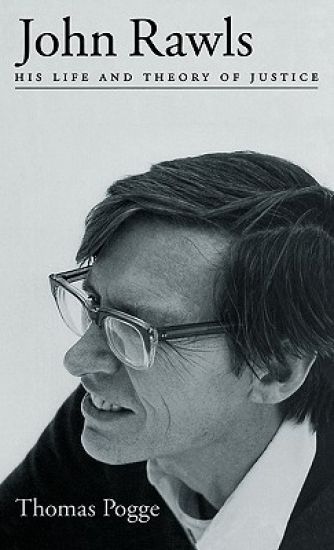
John Rawls

John Rawls

Thomas Pogge

Oxford University Press Inc
2007
sidottu
John Rawls was one of the most important political philosophers of our time, and promises to be an enduring figure over the coming decades. His Theory of Justice (1971) has had a profound impact across philosophy, politics, law, and economics. Nonetheless Rawlsian theory is not easy to understand, particularly for beginners, and his writing can be dense and forbidding. Thomas Pogge's short introduction (originally published in German) gives a thorough and concise presentation of the main outlines of Rawls's theory, introduces biographical information when necessary, and draws links between the Rawlsian enterprise and other important positions in moral and political philosophy.
John Rawls

John Rawls

Thomas Pogge

Oxford University Press Inc
2007
nidottu
John Rawls was one of the most important political philosophers of our time, and promises to be an enduring figure over the coming decades. His Theory of Justice (1971) has had a profound impact across philosophy, politics, law, and economics. Nonetheless Rawlsian theory is not easy to understand, particularly for beginners, and his writing can be dense and forbidding. Thomas Pogge's short introduction (originally published in German) gives a thorough and concise presentation of the main outlines of Rawls's theory, introduces biographical information when necessary, and draws links between the Rawlsian enterprise and other important positions in moral and political philosophy.
John Rawls
John Rawls (1921-2002) is, arguably, the most important political philosopher of our time. It is commonly observed that the publication in 1971 of his treatise A Theory of Justice initiated a return to political questions among Anglo-American philosophers and is largely responsible for the vigorous health of contemporary political philosophy. Rawls' ideas and approach have transformed philosophical inquiry in this area, and political theorists nowadays are obliged to make clear where they stand in relation to Rawls if they wish to be involved in mainstream discussions. Yet Rawls' influence has also extended beyond philosophy and has had a substantial impact on work in law, economics, and political science. Since the publication of A Theory of Justice, Rawls has written two other major works: Political Liberalism (1993) and The Law of Peoples (1999) and also issued a collection of his essays: Collected Papers (1999).This collection provides a thorough analysis of Rawls' work. In addition to a general introduction, the set includes introductions to each volume which help guide the reader through the material.
John Rawls

John Rawls

Percy B. Lehning

Cambridge University Press
2009
pokkari
What is a just political order? What does justice require of us? These are perennial questions of political philosophy. John Rawls, generally acknowledged to be one of the most influential political philosophers of the twentieth century, answered them in a way that has drawn widespread attention, not only from political philosophers, but from political scientists, economists, those in the field of public policy, and experts in jurisprudence. It is not only academics who have been inspired by Rawls' ideas; they have also influenced the theory of government and continue to play a role in actual public political debates. This introduction outlines Rawls' work on the theory of justice. Focusing on Rawls' own writings, from his first publication in 1951 to his final ones some fifty years later, Percy B. Lehning demonstrates how and why they can be considered as one consistent and coherent body of work.
John Rawls

John Rawls

Percy B. Lehning

Cambridge University Press
2009
sidottu
What is a just political order? What does justice require of us? These are perennial questions of political philosophy. John Rawls, generally acknowledged to be one of the most influential political philosophers of the twentieth century, answered them in a way that has drawn widespread attention, not only from political philosophers, but from political scientists, economists, those in the field of public policy, and experts in jurisprudence. It is not only academics who have been inspired by Rawls' ideas; they have also influenced the theory of government and continue to play a role in actual public political debates. This introduction outlines Rawls' work on the theory of justice. Focusing on Rawls' own writings, from his first publication in 1951 to his final ones some fifty years later, Percy B. Lehning demonstrates how and why they can be considered as one consistent and coherent body of work.
John Rawls

John Rawls

Andrius Gališanka

Harvard University Press
2019
sidottu
An engaging account of the titan of political philosophy and the development of his most important work, A Theory of Justice, coming at a moment when its ideas are sorely needed.It is hard to overestimate the influence of John Rawls on political philosophy and theory over the last half-century. His books have sold millions of copies worldwide, and he is one of the few philosophers whose work is known in the corridors of power as well as in the halls of academe. Rawls is most famous for the development of his view of “justice as fairness,” articulated most forcefully in his best-known work, A Theory of Justice. In it he develops a liberalism focused on improving the fate of the least advantaged, and attempts to demonstrate that, despite our differences, agreement on basic political institutions is both possible and achievable.Critics have maintained that Rawls’s view is unrealistic and ultimately undemocratic. In this incisive new intellectual biography, Andrius Gališanka argues that in misunderstanding the origins and development of Rawls’s central argument, previous narratives fail to explain the novelty of his philosophical approach and so misunderstand the political vision he made prevalent. Gališanka draws on newly available archives of Rawls’s unpublished essays and personal papers to clarify the justifications Rawls offered for his assumption of basic moral agreement. Gališanka’s intellectual-historical approach reveals a philosopher struggling toward humbler claims than critics allege.To engage with Rawls’s search for agreement is particularly valuable at this political juncture. By providing insight into the origins, aims, and arguments of A Theory of Justice, Gališanka’s John Rawls will allow us to consider the philosopher’s most important and influential work with fresh eyes.
John Rawls

John Rawls

Patrick Hayden

University of Wales Press
2002
nidottu
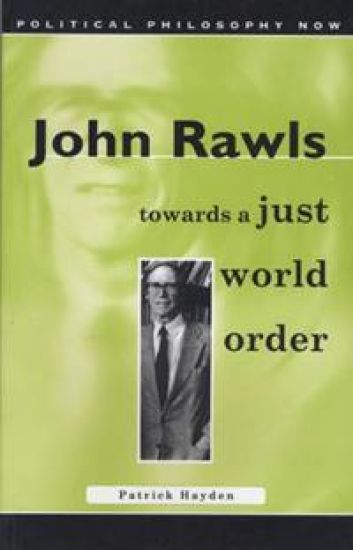
'John Rawls: Towards a Just World Order' is a concise and detailed analysis of one of the foremost political philosophers of our time that demonstrates the importance of Rawls's work for contemporary debates regarding international relations, world politics and human rights.
John Rawls

John Rawls

Patrick Hayden

UNIVERSITY OF WALES PRESS
2002
sidottu
Patrick Hayden presents an account of John Rawls's views regarding the nature of social justice among states and the international law and morality he considers necessary in order to secure universal human rights and political stability among individuals and states.
John Rawls

John Rawls

Ashgate Publishing Limited
2008
sidottu
Taken together, the articles collected in this volume offer readers a reliable, illuminating, up-to-date and comprehensive introduction to both the political philosophy of John Rawls and the most significant of the scholarly debates it has generated and is likely to generate in coming years. Thoughtfully selected and introduced by David Reidy, they establish the structure, depth, fecundity and appeal, as well as the potentially significant defects, of Rawls' thought. The volume represents an invaluable resource for both students and scholars of Rawls or contemporary political philosophy.
John Rawls

John Rawls

J. Donald Moon

Rowman Littlefield
2014
sidottu
Donald Moon’s John Rawls: Liberalism and the Challenges of Late Modernity is distinguished not only by the originality of its contribution to the literature on one of the most important political philosophers of the 20th century, but for an argument that will be accessible to students as well as scholars of justice and its complex array of controversial issues at the heart of our hyper-modern globalized world. Rawls’s work is often viewed primarily through the lens of liberal theories of social justice focusing on issues of income distribution and economic inequality. Moon allows for a more complete understanding of Rawls’ legacy by setting his account of social justice in the context of modern and increasingly pluralistic democracies. Moon’s reading of Rawls shows how his work breaks with political theory’s traditional aspiration to provide a general theory of politics, including a theory of justice, which can be rationally vindicated. Instead, Rawls views theorizing as itself a practical, political form of engagement, which offers a specifically political conception of justice and political principles more generally that speak to the conditions of modern, democratic citizens.
John Rawls

John Rawls

Catherine Audard

Acumen Publishing Ltd
2006
sidottu
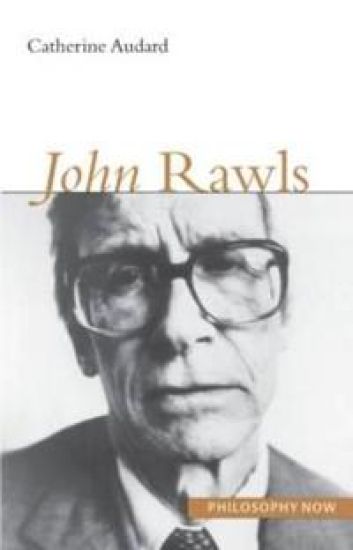
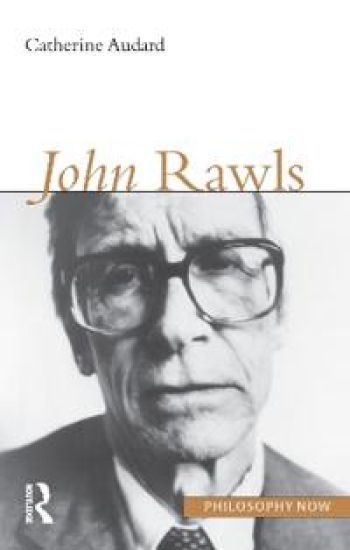
John Rawls (1921-2002) is one of the most influential thinkers of the twentieth century. Contemporary political philosophy has been reshaped by his seminal ideas and most current work in the discipline is a response to them. This book introduces his central ideas and examines their contribution to contemporary political thought. In the first part of the book Catherine Audard focuses on Rawls' conception of political and social justice and its justification as presented in his groundbreaking A Theory of Justice. This includes sustained examination of Rawls' moral philosophy and its core thesis, the primacy of justice, the complex relation between Rawls' views and utilitarianism, and his most famous concept, the Original Position Device. In the second half of the book, Audard explores Rawls' more practical concerns for stability and political consensus, citizenship and international justice, and shows the continuity between these concerns and his earlier work. Throughout, Audard contextualizes Rawls' ideas by giving a sense of their historical development, which underlines the intellectual cohesion of his thought. The move between ethics and politics so characteristic of Rawls' work, and which makes for the richness of his philosophy, is shown to also create for it significant problems. John Rawls combines clear exposition with insightful analysis and provides an interpretative and critical framework that will help shape ongoing debates surrounding Rawls' work.
John Rawls

John Rawls

Catherine Audard

Acumen Publishing Ltd
2006
nidottu
John Rawls (1921-2002) is one of the most influential thinkers of the twentieth century. Contemporary political philosophy has been reshaped by his seminal ideas and most current work in the discipline is a response to them. This book introduces his central ideas and examines their contribution to contemporary political thought. In the first part of the book Catherine Audard focuses on Rawls' conception of political and social justice and its justification as presented in his groundbreaking A Theory of Justice. This includes sustained examination of Rawls' moral philosophy and its core thesis, the primacy of justice, the complex relation between Rawls' views and utilitarianism, and his most famous concept, the Original Position Device. In the second half of the book, Audard explores Rawls' more practical concerns for stability and political consensus, citizenship and international justice, and shows the continuity between these concerns and his earlier work. Throughout, Audard contextualizes Rawls' ideas by giving a sense of their historical development, which underlines the intellectual cohesion of his thought. The move between ethics and politics so characteristic of Rawls' work, and which makes for the richness of his philosophy, is shown to also create for it significant problems. John Rawls combines clear exposition with insightful analysis and provides an interpretative and critical framework that will help shape ongoing debates surrounding Rawls' work.
John Rawls

John Rawls

Otfried (EDT) Hoffe

Walter de Gruyter
2015
pokkari
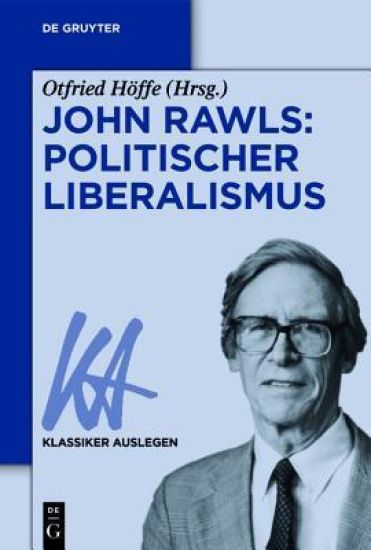
John Rawls s second major work, Political Liberalism (1993), is devoted to the question of how a liberal society can arrive at a consensus regarding questions of justice given its societal pluralism. The essays provide systematic interpretations of the work by internationally renowned researchers and, at the same time, examine the broad scope of Rawls s arguments as well as their limitations."
John Rawls

John Rawls

Tatjana Stuhlmann

Grin Publishing
2012
pokkari
Studienarbeit aus dem Jahr 2012 im Fachbereich Philosophie - Praktische (Ethik, sthetik, Kultur, Natur, Recht, ...), Note: 2,0, Ruhr-Universit t Bochum (Philosophisches Institut), Veranstaltung: Verteilungsgerechtigkeit, Sprache: Deutsch, Abstract: Die von John Rawls in seinem 1971 erschienenen Werk "A Theory of Justice" pr sentierte Gerechtigkeitstheorie schlie t an die Tradition der Vertragstheorien von Locke, Rousseau und Kant an. Sie versucht aber diese herk mmlichen Vertragstheorien zu verallgemeinern und auf eine h here Abstraktionsstufe zu heben. Es handelt sich bei Rawls Gerechtigkeitstheorie um ein Gedankenexperiment: Die Vertragspartner werden in einen fiktiven Urzustand versetzt, in dem sie gemeinsam ber die Gerechtigkeitsgrunds tze entscheiden, die der Gesellschaftsordnung zugrunde liegen sollen. Ich werde mich in der vorliegenden Arbeit mit der Konzeption des Urzustandes besch ftigen und herausarbeiten, welche bestimmten Bedingungen er nach Rawls erf llen muss. Anschlie end werde ich darstellen, wie aus dem Urzustand die Gerechtigkeitsgrunds tze hergeleitet werden. Zun chst sollen aber knapp die zentralen Gedanken der Rawlschen Gerechtigkeitstheorie dargelegt werden. Hierbei scheint es vor allem wichtig, den Rawlschen Gerechtigkeitsbegriff zu definieren, da dies f r eine korrekte Darlegung unentbehrlich erscheint und zudem einf hrenden Charakter hat.