Kirjojen hintavertailu. Mukana 11 244 527 kirjaa ja 12 kauppaa.

Kirjahaku

Etsi kirjoja tekijän nimen, kirjan nimen tai ISBN:n perusteella.

40 tulosta hakusanalla "John Selden"

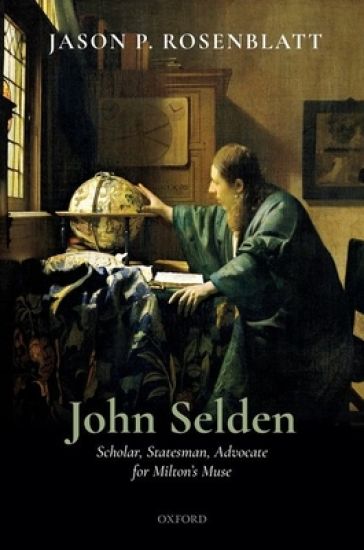
John Selden

John Selden

Jason P. Rosenblatt

Oxford University Press
2021
sidottu
The life of John Selden (1584-1654) was both contemplative and active. Seventeenth-century England's most learned person, he was also one of the few survivors who continued in the Long Parliament of the 1640s his vigorous opposition, begun in the 1620s, to abuses of power, whether by Charles I or, later, by the Presbyterian-controlled Westminster Assembly. His gift for finding analogies among different cultures--Greco-Roman, Christian, Jewish, and Islamic--helped to transform both the poetry and prose of the century's greatest poet, John Milton. Regarding family law, the two might have influenced one another. Milton cites Selden, and Selden owned two of Milton's treatises on divorce, published in 1645, both of them presumably acquired while he was writing Uxor Ebraica (1646). Selden accepted the non-biblically rabbinic, externally imposed, coercive Adamic/Noachide precepts as universal laws of perpetual obligation, rejecting his predecessor Hugo Grotius' view of natural law as the innate result of right reason. He employed rhetorical strategies in De Jure Naturali et Gentium (The Law of Nature and of Nations) to prepare his readers for what might otherwise have shocked them. Although Selden was very active in the Long Parliament, his only surviving debates from that decade were as a lay member of the Westminster Assembly of Divines. The Assembly's scribe left so many gaps that the transcript is sometimes indecipherable. This book fills in the gaps and makes the speeches coherent by finding their contexts in Selden's printed works, both the scholarly, as in the massive De Synedriis, but also in the witty and informal Table Talk.
The Discourse of John Selden, Esq. (Table Talk)

The Discourse of John Selden, Esq. (Table Talk)

John Selden

Oxford University Press
2025
sidottu
This is the first fully annotated edition of The Discourse of John Selden, Esq. (previously known as Table Talk) since 1892, the very first based on a critical scrutiny of twenty-one surviving manuscripts, fifteen more than any previous editor knew existed. This expanded census of manuscripts demonstrates robust scribal publication. Selden's extraordinary talent for lucidly expressed analogy and his mordant wit and wise opinions on 155 topics earned him praise from Dr. Johnson and Coleridge. The work, composed in the 1650s, was considered so irreverent that it remained in manuscript for more than thirty years before it could be printed. A long-serving member of Parliament and a minority lay member of the Westminster Assembly of Divines, Selden provides intimate access to the political and religious debates of mid-seventeenth-century England, but he also addresses its high and low culture. Some of the topics are complex and require extensive contextual annotation, but the paragraphs that provide the greatest pleasure are the timeless and still timely ones that require only light annotation or none at all.
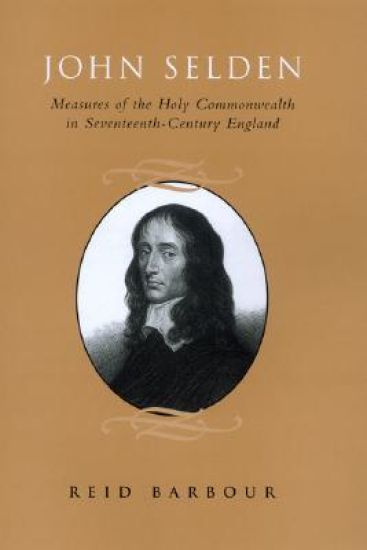
John Selden

John Selden

Reid Barbour

University of Toronto Press
2003
sidottu
John Selden: Measures of the Holy Commonwealth in Seventeenth-Century England is the first text in over a century to examine the whole of Selden's works and thought. Reid Barbour brings a new perspective to Selden studies by stressing Selden's strong commitment to a 'religious society,' by taking a closer and more sustained look at his poetic interests, and by systematically examining his Latin publications (particularly those using Jewish sources). Offering critical close readings of Selden's oeuvre, Barbour posits that the overriding aim of Selden's career was to bolster religious society in the face of its imminent demise. He argues that Selden's scholarly career was committed to resolving an essentially religious question about how best to establish the holy commonwealth in both lawfulness and spiritual abundance. Perhaps the greatest strength of Barbour's analysis emerges from his overall interpretation of Selden's corpus within the context of what the author calls a "religious society"; this approach emphasizes the religious commitments of Selden and subverts earlier readings of him as a cynical, skeptical, secular thinker who attacked, rather than upheld, a Judeo-Christian model of society. Engaging in style and substantive in analysis, Barbour's John Selden will add considerably to the limited body of work on this important seventeenth-century savant.
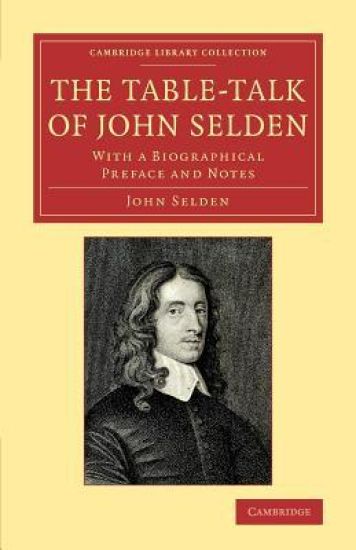
The Table-Talk of John Selden

The Table-Talk of John Selden

John Selden

Cambridge University Press
2015
pokkari
The lawyer, politician and antiquarian John Selden (1584–1654) made his name as an expert on the ancient laws of England, though he was equally at home with classical and Judaic studies: Grotius described him as 'the glory of the English nation', and his advice was sought on all manner of legal and moral problems from tithes to cross-dressing. This collection of his remarks on many topics was compiled by his amanuensis Richard Milward and first published in 1689. Reissued here is a version annotated and with a biographical preface by the literary scholar Samuel Weller Singer (1783–1858) and published in 1847. The topics of Selden's discourse are arranged alphabetically, from 'abbies' to 'zelots', via Christmas, juggling, marriage, and witches. As Singer says of the book, 'it is impossible to open it without finding some important fact or discussion, something practically useful and applicable to the business of life'.
The Dissertation of John Selden, Annexed to Fleta. Translated, With Notes. By the Editor of Britton
The 18th century was a wealth of knowledge, exploration and rapidly growing technology and expanding record-keeping made possible by advances in the printing press. In its determination to preserve the century of revolution, Gale initiated a revolution of its own: digitization of epic proportions to preserve these invaluable works in the largest archive of its kind. Now for the first time these high-quality digital copies of original 18th century manuscripts are available in print, making them highly accessible to libraries, undergraduate students, and independent scholars.This collection reveals the history of English common law and Empire law in a vastly changing world of British expansion. Dominating the legal field is the Commentaries of the Law of England by Sir William Blackstone, which first appeared in 1765. Reference works such as almanacs and catalogues continue to educate us by revealing the day-to-day workings of society.++++The below data was compiled from various identification fields in the bibliographic record of this title. This data is provided as an additional tool in helping to insure edition identification: ++++British LibraryT112668The editor of 'Britton' = Robert Kelham. p.255 misnumbered 25. 'Fleta' is a commentary on English law. Pages 58 and 59 omitted from pagination. Text and register continuous despite pagination.London: sold by J. Worrall, and B. Tovey, 1771. 2], xii,276 i.e.274]p.; 8
Seldeniana; or, the Table Talk of John Selden, Esq

Seldeniana; or, the Table Talk of John Selden, Esq

John Selden

Gale Ecco, Print Editions
2018
sidottu
The 18th century was a wealth of knowledge, exploration and rapidly growing technology and expanding record-keeping made possible by advances in the printing press. In its determination to preserve the century of revolution, Gale initiated a revolution of its own: digitization of epic proportions to preserve these invaluable works in the largest archive of its kind. Now for the first time these high-quality digital copies of original 18th century manuscripts are available in print, making them highly accessible to libraries, undergraduate students, and independent scholars.The Age of Enlightenment profoundly enriched religious and philosophical understanding and continues to influence present-day thinking. Works collected here include masterpieces by David Hume, Immanuel Kant, and Jean-Jacques Rousseau, as well as religious sermons and moral debates on the issues of the day, such as the slave trade. The Age of Reason saw conflict between Protestantism and Catholicism transformed into one between faith and logic -- a debate that continues in the twenty-first century.++++The below data was compiled from various identification fields in the bibliographic record of this title. This data is provided as an additional tool in helping to insure edition identification: ++++Bodleian Library (Oxford)T181114The dedication to Charles James Fox is printed in red, and dated August 30, 1789.London: printed for E. Jeffery, 1789. xx,163, 1]p., plate; 12
The Table Talk of John Selden

The Table Talk of John Selden

John Selden

Hansebooks
2017
pokkari
The Table Talk of John Selden is an unchanged, high-quality reprint of the original edition of 1892. Hansebooks is editor of the literature on different topic areas such as research and science, travel and expeditions, cooking and nutrition, medicine, and other genres. As a publisher we focus on the preservation of historical literature. Many works of historical writers and scientists are available today as antiques only. Hansebooks newly publishes these books and contributes to the preservation of literature which has become rare and historical knowledge for the future.
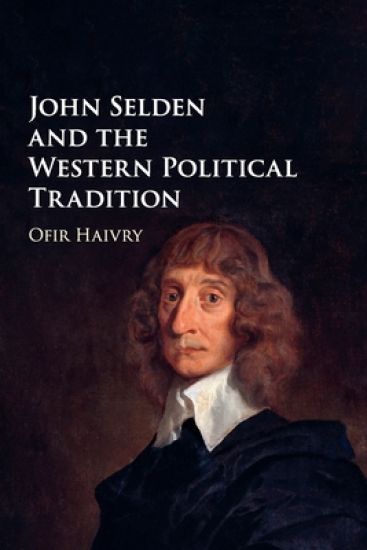
John Selden and the Western Political Tradition

John Selden and the Western Political Tradition

Ofir Haivry

Cambridge University Press
2017
sidottu
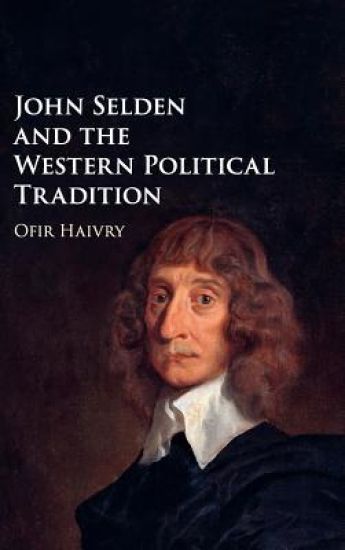
Legal and political theorist, common lawyer and parliamentary leader, historian and polyglot, John Selden (1584–1654) was a formidable figure in Renaissance England, whose real importance and influence are now being recognized once again. John Selden and the Western Political Tradition highlights his important role in the development of such early modern political ideas as modern natural law and natural rights, national identity and tradition, the political integration of church and state, and the effect of Jewish ideas on Western political thought. Selden's political ideas are analysed in the context of his contemporaries Grotius, Hobbes and Filmer. The book demonstrates how these ideas informed and influenced more familiar works of later thinkers like Burke.
John Selden and the Western Political Tradition

John Selden and the Western Political Tradition

Ofir Haivry

Cambridge University Press
2021
pokkari
Legal and political theorist, common lawyer and parliamentary leader, historian and polyglot, John Selden (1584–1654) was a formidable figure in Renaissance England, whose real importance and influence are now being recognized once again. John Selden and the Western Political Tradition highlights his important role in the development of such early modern political ideas as modern natural law and natural rights, national identity and tradition, the political integration of church and state, and the effect of Jewish ideas on Western political thought. Selden's political ideas are analysed in the context of his contemporaries Grotius, Hobbes and Filmer. The book demonstrates how these ideas informed and influenced more familiar works of later thinkers like Burke.