Kirjojen hintavertailu. Mukana 11 627 362 kirjaa ja 12 kauppaa.

Kirjahaku

Etsi kirjoja tekijän nimen, kirjan nimen tai ISBN:n perusteella.

13 tulosta hakusanalla "Jonas Mekas"

Jonas Mekas

Jonas Mekas

Yale University Press
2022
sidottu
Exploring the life and work of avant-garde film’s most influential and intriguing figure Between 1950 and his death, the artist and impresario Jonas Mekas (1922–2019) made more than one hundred radically innovative, often diaristic films and video works. He also founded film festivals, cooperatives, archives, and magazines and wrote film criticism and poetry. Jonas Mekas: The Camera Was Always Running is the first major publication in English on this pivotal member of the New York avant-garde scene, presenting an extensively illustrated, in-depth exploration of his radical art and restless life. Born in rural Lithuania, Mekas made his way to New York, where he became a central figure in the overlapping realms of experimental theater, music, poetry, performance, and film. This book brings his work alive on the page with sequences of stills from film and video, photographic series and installations, and archival documents. Leading scholars examine his work and influence, and a timeline expands our understanding of his life.Published in association with the Jewish Museum, New York, and the Lithuanian National Museum of Art, VilniusPublished in association with the Jewish Museum, New York, and the Lithuanian National Museum of Art, VilniusExhibition Schedule:Lithuanian National Museum of Art, Vilnius (November 19, 2021–February 27, 2022) Jewish Museum, New York (February 18–June 5, 2022)
Jonas Mekas

Jonas Mekas

University Press of Mississippi
2020
sidottu
A refugee from post-World War II Europe who emigrated to the US in 1949, Jonas Mekas (1922-2019) became one of America's foremost champions of independent cinema and one of its most innovative filmmakers. An admired poet in his native Lithuania, Mekas began recording his life on film shortly after his arrival in New York. Through his work as the author of the Village Voice's "Movie Journal" column, editor of Film Culture magazine, and founder of Anthology Film Archives and the Film-Makers' Cooperative, Mekas played a vital role in the promotion of avant-garde and independent films. His early films, Guns of the Trees and The Brig, challenged the structure of traditional narrative filmmaking. He is best known for his "diary films," including Walden (Diaries, Notes, and Sketches); Reminiscences of a Journey to Lithuania; and As I Was Moving Ahead Occasionally I Saw Brief Glimpses of Beauty. His films, writings, and the institutions he built have influenced generations of filmmakers, poets, artists, musicians, critics, and scholars. In Jonas Mekas: Interviews, volume editor Gregory R. Smulewicz-Zucker collects eighteen interviews covering almost sixty years of the filmmaker's career. Mekas discusses his remarkable life as a refugee from Nazi- and Soviet-occupied Lithuania, his role as one of the major figures in the development of the American avant-garde, and his thoughts about his own work. In conversation with scholars, journalists, and other prominent artists, Mekas speaks of his passion for artistic expression and uncompromising vision for a liberated cinema. These interviews preserve Mekas's voice so that it might speak to future generations of artists and intellectuals.
Jonas Mekas

Jonas Mekas

University Press of Mississippi
2020
pokkari
A refugee from post-World War II Europe who emigrated to the US in 1949, Jonas Mekas (1922-2019) became one of America's foremost champions of independent cinema and one of its most innovative filmmakers. An admired poet in his native Lithuania, Mekas began recording his life on film shortly after his arrival in New York. Through his work as the author of the Village Voice's "Movie Journal" column, editor of Film Culture magazine, and founder of Anthology Film Archives and the Film-Makers' Cooperative, Mekas played a vital role in the promotion of avant-garde and independent films. His early films, Guns of the Trees and The Brig, challenged the structure of traditional narrative filmmaking. He is best known for his "diary films," including Walden (Diaries, Notes, and Sketches); Reminiscences of a Journey to Lithuania; and As I Was Moving Ahead Occasionally I Saw Brief Glimpses of Beauty. His films, writings, and the institutions he built have influenced generations of filmmakers, poets, artists, musicians, critics, and scholars. In Jonas Mekas: Interviews, volume editor Gregory R. Smulewicz-Zucker collects eighteen interviews covering almost sixty years of the filmmaker's career. Mekas discusses his remarkable life as a refugee from Nazi- and Soviet-occupied Lithuania, his role as one of the major figures in the development of the American avant-garde, and his thoughts about his own work. In conversation with scholars, journalists, and other prominent artists, Mekas speaks of his passion for artistic expression and uncompromising vision for a liberated cinema. These interviews preserve Mekas's voice so that it might speak to future generations of artists and intellectuals.
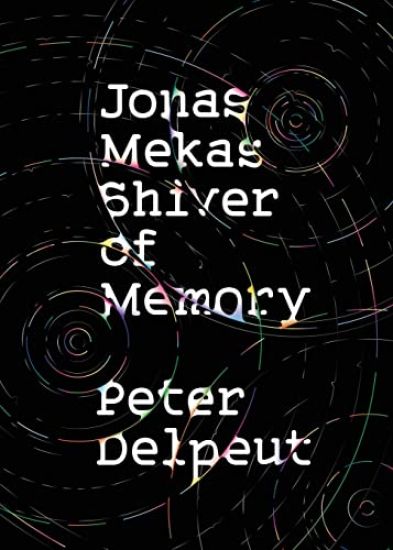
Jonas Mekas, Shiver of Memory

Jonas Mekas, Shiver of Memory

Peter Delpeut

Doppelhouse Press
2022
pokkari
The texture of memory and the ability of art and film to bear witness to traumatic events are delicately approached in this book-length essay by a Mekas cinephile. For years, filmmaker Peter Delpeut has had Jonas Mekas's Movie Journal within easy reach of his desk. Since his student days, he has been a great admirer of the Lithuanian-American ‘Godfather of avant-garde cinema’. Until he was startled in June 2018 by an article in The New York Review of Books. Historian Michael Casper claimed that Mekas had deliberately forgotten or misrepresented certain events during World War II. Seeded by this controversy over Mekas’s memories of his Lithuanian youth and Mekas’s pain over his subsequent exile, Delpeut’s essayistic and self-reflective book flowers into an inquiry about memory and forgetting; the moral compass of the future that cannot find its bearing in the past; the abilities of art to witness; and the roles we all must play in writing the adequate history of events too traumatic for a just accounting. Although there is little doubt that Mekas himself never participated in the horrors of the Holocaust in Lithuania, his silence about the fate of his Jewish countrymen and neighbors could be said to enable a rewriting of history, at the sacrifice of witness testimonies. As Delpeut follows Mekas through films, diaries, his public performances, his speeches, and finally his testimony given to the United States Holocaust Memorial Museum (USHMM), he encounters an impasse for which he was not prepared.
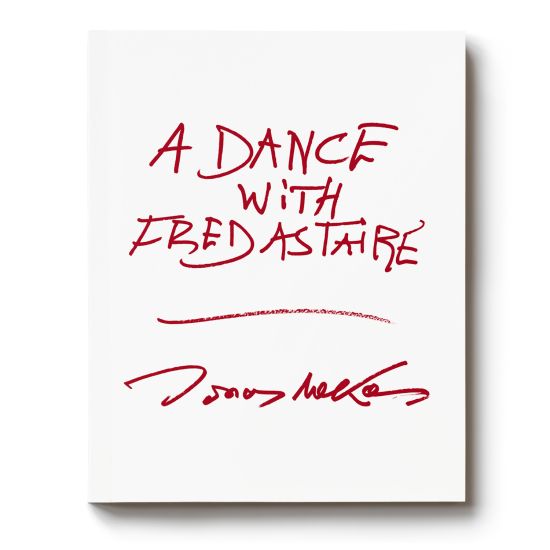
A Dance with Fred Astaire

A Dance with Fred Astaire

Jonas Mekas

Anthology Editions
2017
nidottu
A Dance with Fred Astaire is an extraordinary collection of anecdotes and rare ephemera featuring a dizzying cast of cultural icons both underground and mainstream, both obscure and celebrated. Memories and diary entries, conversations and insights into his work sit alongside collages of beautifully reproduced postcards, newspaper cuttings, film negatives, lists, posters and photographs, envelopes and letters, book covers, telegrams, cartoons and doodles. Mekas has kept and archived the artifacts of his life as a cultural touchstone down to the minutiae, all of which is brought together here in the form of a unique and fascinating scrapbook of a life lived with the highest artistic commitment. Guided by Mekas’s distinctive prose and suffused with warmth, A Dance with Fred Astaire is rhapsodic, poetic and funny as all get out. A revealing visual autobiography of a genuine culture hero.
Movie Journal

Movie Journal

Jonas Mekas; Peter Bogdanovich

Columbia University Press
2016
sidottu
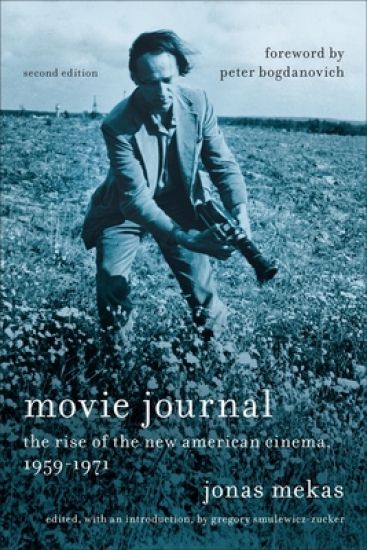
In his Village Voice "Movie Journal" columns, Jonas Mekas captured the makings of an exciting movement in 1960s American filmmaking. Works by Andy Warhol, Gregory J. Markapoulos, Stan Brakhage, Jack Smith, Robert Breer, and others echoed experiments already underway elsewhere, yet they belonged to a nascent tradition that only a true visionary could identify. Mekas incorporated the most essential characteristics of these films into a unique conception of American filmmaking's next phase. He simplified complex aesthetic strategies for unfamiliar audiences and appreciated the subversive genius of films that many dismissed as trash. This new edition presents Mekas's original critiques in full, with additional material on the filmmakers, film studies scholars, and popular and avant-garde critics whom he inspired and transformed.
Movie Journal

Movie Journal

Jonas Mekas; Peter Bogdanovich

Columbia University Press
2016
pokkari
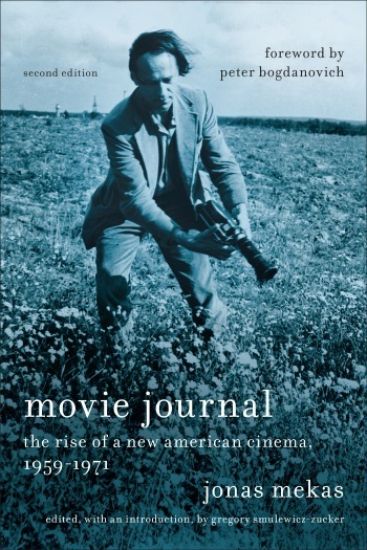
In his Village Voice "Movie Journal" columns, Jonas Mekas captured the makings of an exciting movement in 1960s American filmmaking. Works by Andy Warhol, Gregory J. Markapoulos, Stan Brakhage, Jack Smith, Robert Breer, and others echoed experiments already underway elsewhere, yet they belonged to a nascent tradition that only a true visionary could identify. Mekas incorporated the most essential characteristics of these films into a unique conception of American filmmaking's next phase. He simplified complex aesthetic strategies for unfamiliar audiences and appreciated the subversive genius of films that many dismissed as trash. This new edition presents Mekas's original critiques in full, with additional material on the filmmakers, film studies scholars, and popular and avant-garde critics whom he inspired and transformed.