Kirjojen hintavertailu. Mukana 11 244 527 kirjaa ja 12 kauppaa.

Kirjahaku

Etsi kirjoja tekijän nimen, kirjan nimen tai ISBN:n perusteella.

694 tulosta hakusanalla "Judd"

Judd

Judd

Erica Cooke; Wouter Davidts; Tamar Margalit; Courtney Martin; Christine Mehring; James Meyer; Annie Ochmanek; Yasmil Raymond; Jeffrey Weiss

Museum of Modern Art
2020
sidottu
Judd

Judd

J D Toombs; Erika Schulze

J. D. Toombs
2021
pokkari
Comet Cove is a city where everyone gets their own special powers when they come of age. Everyone, that is, except for Samael Judd. Ordinary in a world of extraordinaries, Sam faces the possibility of exile, should his powerlessness be discovered. When a Fragment doesn't accept themselves, their Aura doesn't give them the powers they're promised, making them a Blank. But a solution exists: If Sam can confront the part of himself that he would rather stay buried, he just might be in the clear. That is, until he finds out he's revealed his secret to the wrong person.
Life and character of the Rev. Sylvester Judd. By: Hall, Arethusa, 1802-1891. and Judd, Sylvester, 1813-1853

Life and character of the Rev. Sylvester Judd. By: Hall, Arethusa, 1802-1891. and Judd, Sylvester, 1813-1853

Judd Sylvester; Hall Arethusa

Createspace Independent Publishing Platform
2017
nidottu
Sylvester Judd III was born on July 23, 1813, in Westhampton, Massachusetts to Sylvester Judd II and Apphia Hall, a daughter of Aaron Hall of Norwich, a veteran of the Revolutionary War, one-year attendee at Harvard and later modest Justice of the Peace. His great-grandfather was Rev. Jonathan Judd (1719-1803), clergyman of Southampton, while his grandfather ran the family store. His father, after working in the store in his boyhood, went to Boston for several years, where, according to Judd's sister's biography, he became a voracious reader, returning to the family business, but then becoming editor of The Hampshire Gazette. Sylvester Judd III studied at Hopkins Academy in Hadley, Massachusetts, where he was president of the Literary Society and delivered the valedictorian address. He graduated from Yale College in 1836, and from Harvard Divinity School in 1840. His dissertation was entitled The Uses of Intellectual Philosophy to the Preacher. While a student, on April 4, 1838, Judd traveled to Concord, Massachusetts to meet Ralph Waldo Emerson after reading his essay "Epic Poetry". Emerson was pleased by Judd's interest in seeking a mystical identification with Christ.Judd may have been in the audience on August 31, 1837, and heard Emerson's commencement speech to the Phi Beta Kappa Society known as "The American Scholar."
Donald Judd

Donald Judd

Annie Ochmanek; Alex Kitnick

MIT Press
2021
nidottu
Donald Judd (1928-1994) is one of the most influential American artists of the postwar era. Beginning in the 1960s, he developed new ideas about art-in both his works and writings-that challenged many of modernism's core tenets by resisting the categories of painting and sculpture. Judd described this work as "specific objects." Critics labeled it minimalism. Perhaps because Judd's own critical writings provide a discursive framework for his work, some of the monographic essays on his work are not widely known. This volume collects critical and scholarly writings on Judd, examining his work as both artist and critic.
Donald Judd

Donald Judd

David Raskin

Yale University Press
2017
pokkari
This pioneering book, the first monograph devoted to Donald Judd, addresses the whole breadth of Judd’s practices. Drawing on documents found in nearly twenty archives, David Raskin explains why some of Judd’s works of art seem startlingly ephemeral while others remain insistently physical. In the process of answering this previously perplexing question, Raskin traces Judd’s principles from his beginnings as an art critic through his fabulous installations and designs in Marfa, Texas. He discusses Judd’s early important paintings and idiosyncratic red objects, as well as the three-dimensional works that are celebrated throughout the world. He also examines Judd’s commitment to empirical values and his political activism, and concludes by considering the importance of Judd’s example for recent art. Ultimately, Raskin develops a picture of Judd as never before seen: he shows us an artist who asserted his individuality with spare designs; who found spiritual values in plywood, Plexiglas, and industrial production; who refused to distinguish between thinking and feeling while asserting that science marked the limits of knowledge; who claimed that his art provided intuitions of morality but not a specific set of tenets; and who worked for political causes that were neither left nor right.
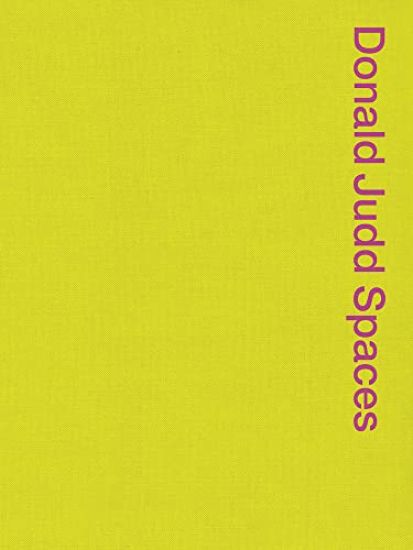
Donald Judd Spaces

Donald Judd Spaces

Judd Foundation
2023
sidottu
The landmark survey of Judd’s iconic spaces, featuring new drawing details, archival materials and more This second expanded edition presents an unprecedented visual survey of the living and working spaces of the artist Donald Judd in New York and Texas. Filled with newly commissioned and archival photographs alongside five essays by the artist, this book provides an opportunity to explore Judd's personal spaces, which are a crucial part of this revered artist's oeuvre. From a 19th-century cast-iron building in Manhattan to an extensive ranch in the mountains of western Texas, this book details the interiors, exteriors and land surrounding the buildings that comprise Judd's extant living and working spaces. Readers will discover how Judd developed the concept of permanent installation at Spring Street in New York City, with artworks, furniture and decorative objects striking a balance between the building's historical qualities and his own architectural innovations. His buildings in Marfa, Texas, demonstrate how Judd reiterated his concept of integrative living on a larger scale, extending to the reaches of the Chinati Mountains at Ayala de Chinati, his 33,000-acre ranch south of the town. Each of the spaces was thoroughly considered by Judd with resolute attention to function and design. From furniture to utilitarian structures that Judd designed himself, these residences reflect Judd's consistent aesthetic. His spaces underscore his deep interest in the preservation of buildings and his deliberate interventions within existing architecture. Donald Judd (1928–94) was born in Excelsior Springs, Missouri. After serving in the United States Army, he attended the College of William and Mary in Williamsburg, Virginia; the Art Students League of New York; and Columbia University in New York, where he completed a BS in philosophy in 1953. Judd was a prolific critic for magazines including Arts, Art International and Art News; he continued to write throughout his career, addressing the relationship of art practice to architecture, design, political action and lived experience in letters and published essays. As an artist, he started out as a painter before turning to three-dimensional work. His radical work and thinking helped shape the art of the late 20th century and continues to influence artists, architects and designers.
Ramsey Judd

Ramsey Judd

Tina Spencer; Cindy Hiday

Cindy E Hiday
2021
pokkari
The Civil War robbed him of his identity and self-respect. Now he's ready to reclaim them both.Twenty years ago, Union Soldier Ramsey Judd ran away in the middle of battle. He was forced to keep running under an assumed name to avoid being apprehended and charged with desertion. Pushing old age and faced with his own mortality, he finally starts the long journey home. Along the way, he stops in a little place in Idaho to pay his respects to the girl he left behind.But a lot has changed in his absence. Instead of a warm welcome, Ramsey finds himself at the center of a conflict between revenge and greed. He has one last chance to make things right - unless his failing health, or the law, catches up with him first.Discover the north central Idaho Territory circa 1884, as a saddle tramp with a price on his head sets out to clear his past.
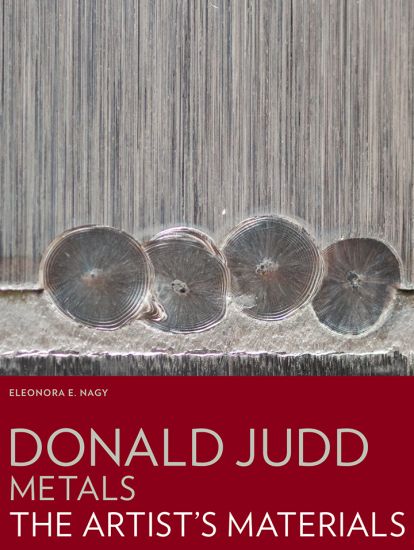
Donald Judd:Metals – The Artist's Materials

Donald Judd:Metals – The Artist's Materials

Eleonora E. Nagy

Getty Publications
2020
nidottu
A leading figure in the Minimalist movement in the visual arts, Donald Judd (1928-1994) pioneered the use of industrial materials and techniques, avoiding traditional substances and the direct use of his own hands. While recent decades have witnessed a proliferation of art historical studies of the artist, to date there has been no thorough technical examination of his materials. This gap in the scholarship is particularly significant, as Judd's use of materials and techniques intended for industry and not for fine art has resulted in unexpected challenges in the preservation and display of his work. Damage and deterioration now threaten a number of iconic pieces. This next book in the Getty Conservation Institute's well-received "Artist's Materials" series, focuses on Judd's works in metal, arguably his signature material. These have received scant attention from technical specialists, which is surprising considering their importance and the urgent conservation efforts they require. An initial chapter provides an overview of Judd's life and art; subsequent chapters examine his formal innovations, investigate his use of ferrous and nonferrous metal alloys, and provide an account of his singular artistic process, including his use of assistants and fabricators and the ways in which qualities of the materials themselves have influenced the aesthetics of his art. Case studies and a discussion of conservation issues complete the volume, together with several technical appendices and a glossary.
Donald Judd Interviews

Donald Judd Interviews

Donald Judd

David Zwirner
2019
nidottu
Donald Judd Interviews presents more than sixty interviews with the artist over the course of four decades, and is the first compilation of its kind. It is the companion volume to the critically acclaimed and bestselling Donald Judd Writings.This collection of interviews engages a diverse range of topics, from philosophy and politics to Judd’s insightful critiques of his own work and the work of others such as Mark di Suvero, Edward Hopper, Yayoi Kusama, Barnett Newman, and Jackson Pollock. The opening discussion of the volume between Judd, Dan Flavin, and Frank Stella provides the foundation for many of the succeeding conversations, focusing on the nature and material conditions of the new art developing in the 1960s. The publication also gathers a substantial body of unpublished material across a range of mediums including extensive interviews with art historians Lucy R. Lippard and Barbara Rose.Judd’s contributions in interviews, panels, and extemporaneous conversations are marked by his forthright manner and rigorous thinking, whether in dialogue with art critics, art historians, or his contemporaries. In one of the last interviews, he was asked, “What kind of advice do you have for young artists and architects based on all the things you thought all these years?” Judd responded, “To remember that art and architecture are both real activities with their own integrity and that they are not basically commercial activities and you have to partly live with that. Certainly, it’s not hard to maintain the difference ... I think both activities, to repeat myself, have an integrity. They are each a particular activity, and if you don’t like that activity, don’t do it. Go do something else. If you really want to make a lot of money, go sell cars or something.”Donald Judd Interviews is co-published by Judd Foundation and David Zwirner Books. The interviews expand upon the artist’s thinking present in Donald Judd Writings (Judd Foundation/David Zwirner Books, 2016).
Donald Judd: Artworks 1970–1994

Donald Judd: Artworks 1970–1994

Donald Judd

David Zwirner
2022
sidottu
A sweeping selection of Donald Judd’s iconic and ambitious works alongside a diverse collection of newly commissioned writings. "One of the most significant American artists of the postwar period, Donald Judd rigorously experimented with color, form, material, and space. The works in this catalogue range from the artist’s expansive installations to self-contained single units, yielding valuable new insights into his process and approach. The survey includes one of the artist’s largest and most intricate installations of sixty-three wall-mounted plywood boxes, conceived in 1986. Other works include variations on some of Judd’s most recognizable forms, executed in materials such as Cor-ten steel, plexiglass, copper, plywood, brushed aluminum, and enameled aluminum. Brilliant and exacting reproductions bring these works to life on the page. Following the artist’s major retrospective at The Museum of Modern Art, New York, in 2020, this book serves as a companion volume. With contributions from a wide range of voices—art historians, critics, writers, and performers— this publication includes rich new writings on Judd’s oeuvre, art criticism, and enduring influence. Artworks: 1970–1994 is published on the occasion of the eponymous 2020 exhibition at David Zwirner, New York."