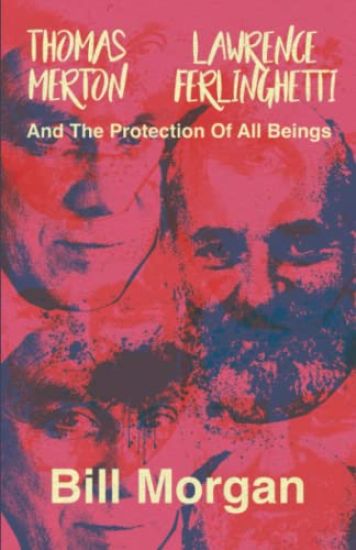
Lawrence Ferlinghetti, poet and Beat publisher, could hardly seem more different from Thomas Merton, the Trappist monk, yet the two men not only respected one another but were friends and collaborators over a period of a decade until Merton's untimely death.In Thomas Merton, Lawrence Ferlinghetti, and the Protection of All Beings, Bill Morgan examines their friendship and shares their correspondence for the first time. He looks into the poetic projects they pursued and details their final meeting, shortly before Merton's passing, shedding new light on two of the most important writers of the 20th century.
From the famed publisher and poet, author of the million-copy-selling collection A Coney Island of the Mind, his literary last will and testament -- part autobiography, part summing up, part Beat-inflected torrent of language and feeling, and all magical. "A volcanic explosion of personal memories, political rants, social commentary, environmental jeremiads and cultural analysis all tangled together in one breathless sentence that would make James Joyce proud. . ."--Ron Charles, The Washington Post In this unapologetically unclassifiable work Lawrence Ferlinghetti lets loose an exhilarating rush of language to craft what might be termed a closing statement about his highly significant and productive 99 years on this planet. The "Little Boy" of the title is Ferlinghetti himself as a child, shuffled from his overburdened mother to his French aunt to foster childhood with a rich Bronxville family. Service in World War Two (including the D-Day landing), graduate work, and a scholar gypsy's vagabond life in Paris followed. These biographical reminiscences are interweaved with Allen Ginsberg-esque high energy bursts of raw emotion, rumination, reflection, reminiscence and prognostication on what we may face as a species on Planet Earth in the future. Little Boy is a magical font of literary lore with allusions galore, a final repository of hard-earned and durable wisdom, a compositional high wire act without a net (or all that much punctuation) and just a gas and an inspiration to read.
'A brave man and a brave poet.' Bob Dylan'Utterly extraordinary.' Guardian'A torrent of textual splendor.' Los Angeles TimesFrom growing up as an orphan in 1920s New York, to serving in the Navy at the D-Day landings in Normandy, to a vagabond life drinking in Parisian cafes, to befriending America's greatest counter-cultural writers, Little Boy has seen it all. This is the story of one man's extraordinary life - a story steeped in the exhilarating energy of the Beats. It is a novel serving as the literary last will and testament of the iconic publisher and poet Lawrence Ferlinghetti: a meditation on his one hundred years on the planet, rich in wisdom, emotion and memories.
The title of this book is taken from Henry Miller's "Into the Night Life" and expresses the way Lawrence Ferlinghetti felt about these poems when he wrote them during a short period in the 1950's—as if they were, taken together, a kind of Coney Island of the mind, a kind of circus of the soul.
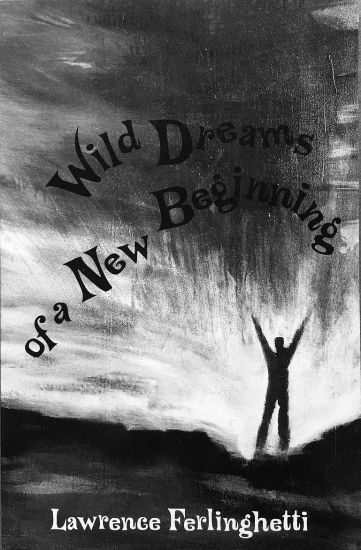
Wild Dreams of a New Beginning brings together two acclaimed poetry volumes by Lawrence Ferlinghetti, one of our "ageless radicals and true bards" (Booklist). Who Are We Now? (1976), the first half of Wild Dreams, takes a long poetic look at the cultural fallout of a more radical time. This probing of the changes in the American psyche through the 1970s is carried forward in the second part, Landscapes of Living & Dying (1979)—a work originally hailed by Library Journal as "Ferlinghetti's strongest work since his 1957 A Coney Island of the Mind. . . . [He] pursues his disheveled muse with the innocent passion of a young beatnik, hiding his authentic erudition behind a comfortable guise of spontaneous composition."
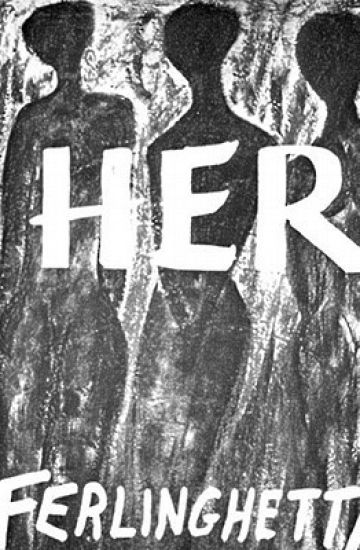
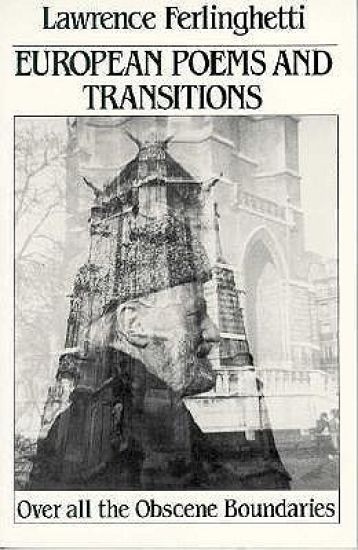
These poems on European themes by the author of Her (his Paris novel) and the enduring A Coney Island of the Mind were mostly written during the last seven years and, in the poet’s words, are “transformations and transitions looking westward to America and beyond.” Flowing from France to Italy to the Netherlands, on to Germany, back to France, and finally toward America, they follow Ferlinghetti’s own recent journeying. The poems progress geographically and chronologically with a cohesive development of ideas and themes. In part he plays off T. S. Eliot’s “summarizing the past by theft and allusion” but captures the present as well in fleeting incidents of daily experience, and, in his powerful concluding poem “History of the World: A TV Docu-drama,” envisions a possible nuclear future. It is a view of our time and of where we are in it, seen by an eagle eye, told in Ferlinghetti’s inimitable everyman’s voice.
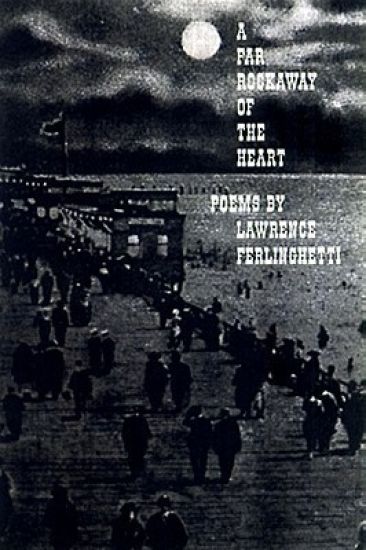
A sequence of one hundred and one poems with recurrent themes, it includes various sections on love, art, music, history, and literature, as well as confrontations with major figures in the avant-garde before the arrival of the Beat generation. This edition now includes eighteen new poems from Ferlinghetti's "Pictures of the Gone World" which he publishes under his City Lights imprint. A self-styled "stand-up tragedian," Ferlinghetti has been called "the foremost chronicler of our times." If A Coney Island of the Mind was a generations vibrant eye-opener, A Far Rockaway of the Heart is a wake-up call for a new age.
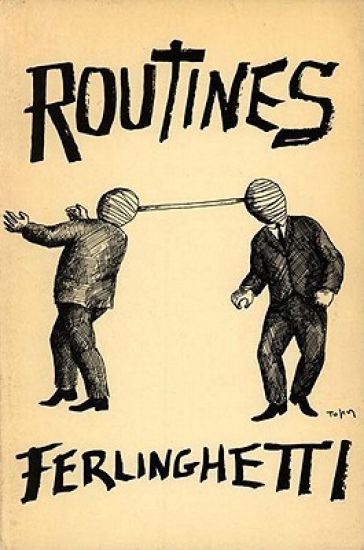
A reissue of Ferlinghetti's very short experimental plays (1965) with three new plays added to the original thirteen. In this collection Ferlinghetti takes a revolutionary look at modern theater and explores the area between old-style drama and spontaneous improvisation by supplying a blueprint for dramatic actionan outline from which director and actors may create and interpret freely. In one called '"Our Little Trip" two men in conservative suits wind themselves in and out of a long bandage while a questioner circles them seeking Meaning. "Servants of the People" puts on political podium hogs in torrents of cliches. "Bearded Lady 'Dies'" features the Second Coming all decked out for newspaper coverage.
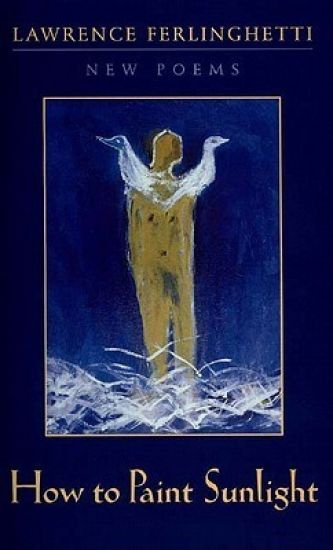
This collection of recent poems is graced with a short introduction by the poet in which he says, "All I ever wanted to do was to paint light on the walls of life." For more than fifty years Ferlinghetti has been doing just thatilluminating both the everyday and the unusual, all the while keeping true to his original dictum of speaking in a way accessible to everyone. He has been, and remains, "One of our ageless radicals and true bards" (Booklist) and his voice is well-known in many places around the world. He was one of the two American poets (the other being John Ashbery) chosen to participate in the 2001 Celebration of UNESCO's World Poetry Day in Delphi, Greece, where he along with his international confreres each poetically addressed the Oracle.
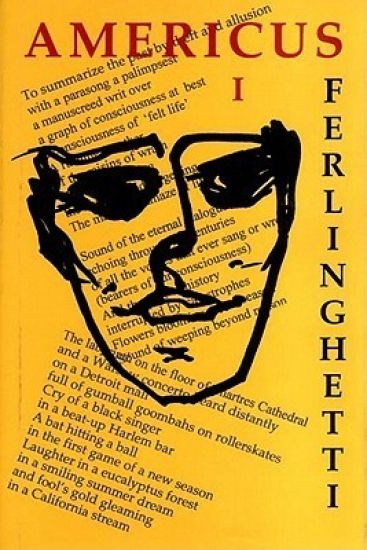
In less than a year, Lawrence Ferlinghetti won a lifetime achievement award from the Author's Guild, received the Frost Medal from the Poetry Society of America, was elected to the American Academy of Arts and Letters, and celebrated the 50th anniversary of his renowned City Lights Bookstore. Now, instead of resting on these many laurels, the elder statesman of American poetry "lights out for the territories" with Book I of his own born-in-the-USA narrative, Americus. Describing his work as "part documentary, part public pillow-talk, part personal epic....a descant, a canto unsung, a banal history, a true fiction, lyric and political...," Ferlinghetti merges "certain universal texts, snatches of song, words or phrases, murmuring of love or hate, from Lotte Lenya to the latest soul singer, sayings and shibboleths from Yogi Berra to the National Anthem and the Gettysburg Address or the Ginsberg Address, that haunt our nocturnal imagination...." This sit-up-and-take-notice work breaks new ground in the grand tradition of Whitman, Williams, Olson and Pound, as Ferlinghetti stalks our literary and political landscapes, past and present, to articulate the unique voice of America and create an autobiography of our collective American consciousness.
Lawrence Ferlinghetti lights out for the territories with Book I of his own born-in-the-U.S.A. epic, Americus. Describing Americus as "part documentary, part public pillow-talk, part personal epica descant, a canto unsung, a banal history, a true fiction, lyric and political," Ferlinghetti combines "universal texts, snatches of song, words or phrases, murmuring of love or hate, from Lotte Lenya to the latest soul singer, sayings and shibboleths from Yogi Berra to the National Anthem, the Gettysburg Address or the Ginsberg Address, that haunt our nocturnal imagination." This book is a wake-up call that breaks new ground in the grand tradition of Whitman, W.C. Williams, Charles Olson, and Ezra Pound, as Ferlinghetti cruises our literary and political landscapes, past and present, to create an autobiography of American consciousness.