Kirjojen hintavertailu. Mukana 12 402 804 kirjaa ja 12 kauppaa.

Kirjahaku

Etsi kirjoja tekijän nimen, kirjan nimen tai ISBN:n perusteella.

9 tulosta hakusanalla "Lee Krasner"

Lee Krasner

Lee Krasner

Gail Levin

Thames Hudson Ltd
2019
nidottu
The first full length account of Lee Krasner’s colourful lifeIn Gail Levin’s riveting biography, Lee Krasner emerges as a significant artist who richly deserves her place in the 20th century’s cultural lexicon. Drawing on new sources and numerous personal interviews – including with Krasner herself – Levin has created a dynamic and moving portrait of a brilliant woman, and in so doing recovers Krasner’s voice and allows us to understand how her life intersected with and informed her art.
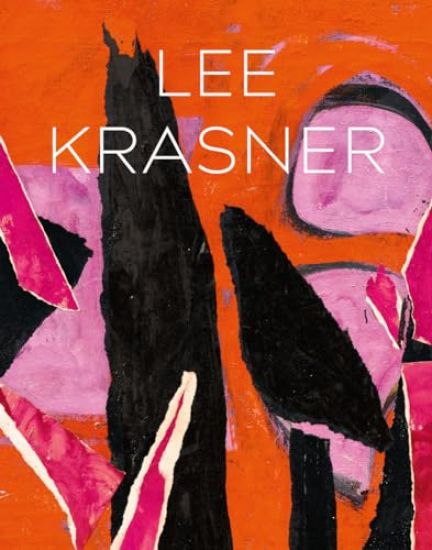
Lee Krasner

Lee Krasner

THAMES HUDSON LTD
2024
nidottu
A monograph on the life and work of an outstanding abstract expressionist painter, now emerging as one of the most important women artists of the 20th century. Lee Krasner, a pioneer of Abstract Expressionism, was one of the few female artists to be given a retrospective at the Museum of Modern Art, New York. This volume features a selection of the artist’s most important paintings, collages and works on paper; essays on her life and art by Eleanor Nairne, Katy Siegel, John Yau and Suzanne Hudson; an interview with her biographer, Gail Levin; and a fully illustrated chronology.
Lee Krasner

Lee Krasner

Robert Carleton Hobbs

Abbeville Press Inc.,U.S.
1993
nidottu
Many of Krasner's male colleagues - including her husband, Jackson Pollock - developed a unique "signature" style that identified them throughout their careers. Krasner, however, experimented with one style after another, from her early geometric abstractions (created while she was one of Hans Hofmann's most talented students), through her large-scale organic images of mid-career, to the hard-edge compositions of her late years. Certain elements recur throughout - most notably, her distinctive sense of colour, her affinity for swelling forms inspired by nature, and her fearlessness in experimenting with new techniques. Krasner's unwillingness to stick to one style, her readiness to put her career aside to focus on Pollock's, and her feuds with some of the period's most powerful critics all reduced her visibility in the art world. She has been the subject of exhibition catalogs, but this is the first monograph devoted to her work, and it brings to light all the intriguing complexities of her approach to making art. Dr. Robert Hobbs skillfully explores the twists and turns of her career, offering new information and insight about one of the most intriguing painters of the postwar era. About the Modern Masters series: With informative, enjoyable texts and over 100 illustrations - approximately 48 in full colour - this innovative series offers a fresh look at the most creative and influential artists of the postwar era. The authors are highly respected art historians and critics chosen for their ability to think clearly and write well. Each handsomely designed volume presents a thorough survey of the artist's life and work, as well as statements by the artist, an illustrated chapter on technique, a chronology, lists of exhibitions and public collections, an annotated bibliography, and an index. Every art lover, from the casual museumgoer to the serious student, teacher, critic, or curator, will be eager to collect these Modern Masters. And with such a low price, they can afford to collect them all.
Lee Krasner

Lee Krasner

Paul Kasmin Gallery
2020
nidottu
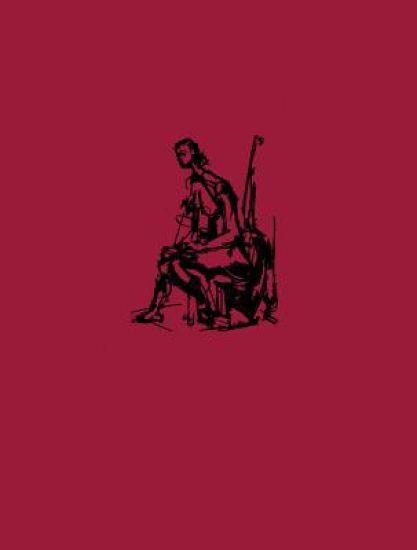
Charcoal Studies presents a series of figurative charcoals made by Lee Krasner (1908 84) from 1937 to 1940 under the tutelage of Hans Hofmann that would become seminal to the artist's career.In 1977, Krasner demonstrated the relevance of these charcoal works in a brilliant late series of collage paintings in which she repurposed a large number of her Hofmann School drawings. Fortunately, Krasner did not destroy all the drawings. Fifty of these are included in her 1995 catalogue raisonne; another portfolio with 20 more (including four previously unknown still lifes) has recently come to light.Charcoal Studies includes the never-before-published works as well as updated research and text to serve as a complete listing of all surviving Hofmann School charcoal sketches and as a definitive reference on this pivotal period within Krasner's oeuvre.
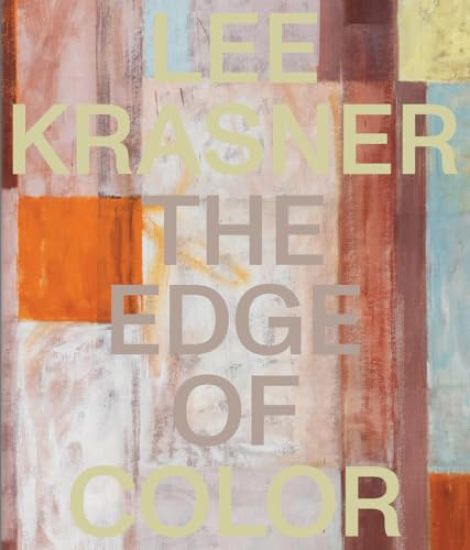
Lee Krasner: The Edge of Color
Two paintings from Krasner’s very first solo exhibition, reunited here after 70 years, provide a window into the artist’s rarely examined early geometric abstractions The early works of Abstract Expressionist pioneer Lee Krasner (1908–84), in her first solo exhibition in 1951, emphasized geometric relations. But during this same period, Krasner would often destroy or paint over her canvases to create new works. In a special and ambitious exhibition, Kasmin reunites the only two surviving paintings from her first solo show, displayed together for the first time in over 70 years. Replete with 18 color plates, related archival material and newly commissioned texts, The Edge of Color foregrounds a rarely examined chapter of Krasner’s five-decade career. Beyond the scope of an exhibition catalog, the book takes its reader behind Krasner’s paintings to provide never-before-published visual evidence regarding these early paintings. It positions these works, realized in the upstairs bedroom at the artist’s home in Springs, NY, in relation to Krasner’s contemporaries including Jackson Pollock and Piet Mondrian.
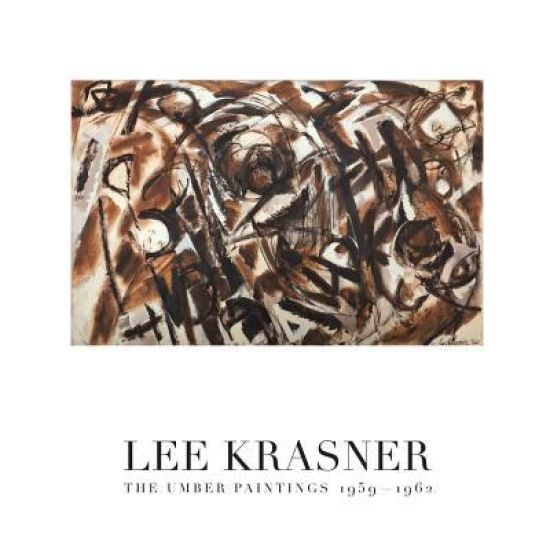
Lee Krasner: The Umber Paintings 1959–1962
This book focuses on the iconic Umber Paintings of Lee Krasner (1908–84), which consist of only 24 paintings. Painted between 1959 and 1962, the Umber Paintings were realized during one of Krasner’s most ambitious periods of cproduction following the sudden and tragic loss of her husband, Jackson Pollock. During this time of newfound solitude, Krasner moved into Pollock’s studio at their home in the Springs, East Hampton, which enabled her to experiment on large canvases for the first time. In addition to the increase in scale, this period was also characterized by a further commitment to %allover% compositions. By the end of the 1950s, Krasner’s emotional turmoil confined her to work only at night under artificial light. The Umber Paintings convey a distinctive rawness and intensity that was unprecedented in her oeuvre until this point, and remain lauded as the artist’s most psychologically evocative works.
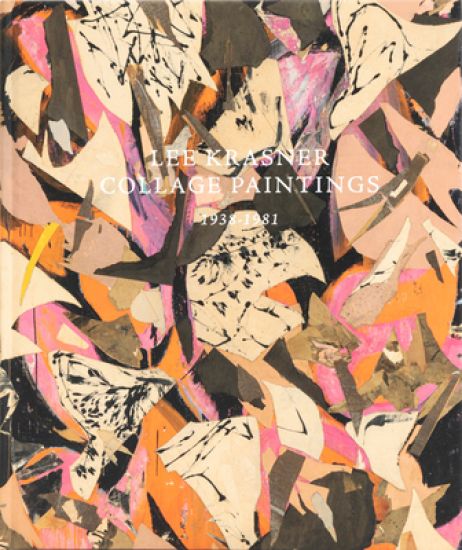
Lee Krasner: Collage Paintings 1938-1981
Painting, drawing and collage coexist in Krasner's dramatic compositionsThis fully illustrated catalog features several masterpieces from the 1955 debut of Lee Krasner's (1908-84) collage paintings at the Stable Gallery, as well as significant works from the artist's 2019-21 traveling European retrospective, and newly commissioned texts by author Siri Hustvedt and art historian Saskia Flower.
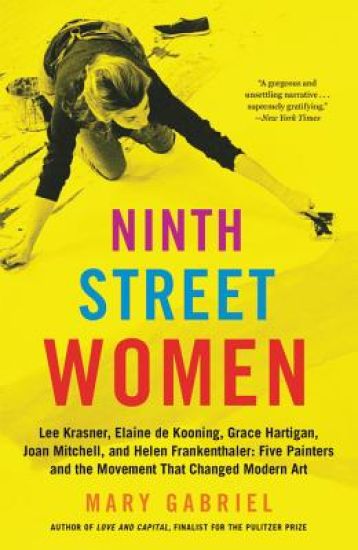
Ninth Street Women: Lee Krasner, Elaine de Kooning, Grace Hartigan, Joan Mitchell, and Helen Frankenthaler
Five women revolutionize the modern art world in postwar America in this "gratifying, generous, and lush" true story from a National Book Award and Pulitzer Prize finalist (Jennifer Szalai, New York Times).Set amid the most turbulent social and political period of modern times, Ninth Street Women is the impassioned, wild, sometimes tragic, always exhilarating chronicle of five women who dared to enter the male-dominated world of twentieth-century abstract painting -- not as muses but as artists. From their cold-water lofts, where they worked, drank, fought, and loved, these pioneers burst open the door to the art world for themselves and countless others to come.Gutsy and indomitable, Lee Krasner was a hell-raising leader among artists long before she became part of the modern art world's first celebrity couple by marrying Jackson Pollock. Elaine de Kooning, whose brilliant mind and peerless charm made her the emotional center of the New York School, used her work and words to build a bridge between the avant-garde and a public that scorned abstract art as a hoax. Grace Hartigan fearlessly abandoned life as a New Jersey housewife and mother to achieve stardom as one of the boldest painters of her generation. Joan Mitchell, whose notoriously tough exterior shielded a vulnerable artist within, escaped a privileged but emotionally damaging Chicago childhood to translate her fierce vision into magnificent canvases. And Helen Frankenthaler, the beautiful daughter of a prominent New York family, chose the difficult path of the creative life.Her gamble paid off: At twenty-three she created a work so original it launched a new school of painting. These women changed American art and society, tearing up the prevailing social code and replacing it with a doctrine of liberation. In Ninth Street Women, acclaimed author Mary Gabriel tells a remarkable and inspiring story of the power of art and artists in shaping not just postwar America but the future.