Kirjojen hintavertailu. Mukana 11 611 035 kirjaa ja 12 kauppaa.

Kirjahaku

Etsi kirjoja tekijän nimen, kirjan nimen tai ISBN:n perusteella.

120 tulosta hakusanalla "Lyotard"

Lyotard

Lyotard

Routledge
2000
sidottu
Following Lyotard's death in 1998, this book provides an exploration of the recurrent theme of education in his work. It brings to a wider audience the significance of a body of thought about education that is subtle, profound and still largely unexplored. This book also makes an important contribution to contemporary debates on postmoderism and education.
Lyotard

Lyotard

Routledge
2013
nidottu
Following Lyotard's death in 1998, this book provides an exploration of the recurrent theme of education in his work. It brings to a wider audience the significance of a body of thought about education that is subtle, profound and still largely unexplored. This book also makes an important contribution to contemporary debates on postmoderism and education.
Lyotard

Lyotard

Routledge
2002
sidottu
Jean-Franois Lyotard, the highly influential twentieth-century philosopher of the postmodern, has had an enormous impact on the course and commitment of contemporary philosophy. Lyotard: Philosophy, Politics, and the Sublime is a thoroughgoing reassessment of his extraordinary legacy and contribution to contemporary cultural, political, ethical, and aesthetic theory, and an indispenable guide to key issues in his philosophy. Fifteen distinguished scholars have contributed new, original essays examining the main themes in Lyotard's work with a focus on the special intersections of philosophy, psychoanalysis, politics, and the experience of the sublime in art. The volume includes an up-to-date bibliography of works by and about Lyotard, previously unpublished photographs of Lyotard, and an incisive essay by Lyotard himself on the philosophical significance of Freud's case of Emma.
Lyotard

Lyotard

Routledge
2002
nidottu
Jean-Franois Lyotard, the highly influential twentieth-century philosopher of the postmodern, has had an enormous impact on the course and commitment of contemporary philosophy. Lyotard: Philosophy, Politics, and the Sublime is a thoroughgoing reassessment of his extraordinary legacy and contribution to contemporary cultural, political, ethical, and aesthetic theory, and an indispenable guide to key issues in his philosophy. Fifteen distinguished scholars have contributed new, original essays examining the main themes in Lyotard's work with a focus on the special intersections of philosophy, psychoanalysis, politics, and the experience of the sublime in art. The volume includes an up-to-date bibliography of works by and about Lyotard, previously unpublished photographs of Lyotard, and an incisive essay by Lyotard himself on the philosophical significance of Freud's case of Emma.
Lyotard

Lyotard

James D. Williams

Polity Press
1998
sidottu
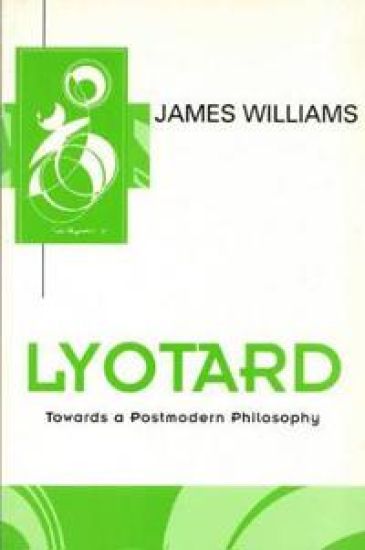
Jean-François Lyotard was one of the most influential European thinkers in recent decades. He was a leading participant in debates about post-modernism and the decline of Marxism, and he made important contributions to ethics, aesthetics and political philosophy. In this authoritative introduction, Williams tracks the development of Lyotard's thought from his early writings on the libidinal economy to his more recent work on the post-modern condition. Williams argues that despite the wide-ranging character of Lyotard's writings, they are animated by a long-standing concern to develop a new theory of political action. Lyotard's productive use of avant-garde art and the aesthetics of the sublime are interpreted within this context. In the final chapters some of the main criticisms that have been levelled at Lyotard's work are outlined and assessed. A challenging but also accessible book, it will be welcomed by students and researchers in continental philosophy, literary theory and the humanities generally.
Lyotard

Lyotard

James D. Williams

Polity Press
1998
nidottu
Jean-François Lyotard was one of the most influential European thinkers in recent decades. He was a leading participant in debates about post-modernism and the decline of Marxism, and he made important contributions to ethics, aesthetics and political philosophy. In this authoritative introduction, Williams tracks the development of Lyotard's thought from his early writings on the libidinal economy to his more recent work on the post-modern condition. Williams argues that despite the wide-ranging character of Lyotard's writings, they are animated by a long-standing concern to develop a new theory of political action. Lyotard's productive use of avant-garde art and the aesthetics of the sublime are interpreted within this context. In the final chapters some of the main criticisms that have been levelled at Lyotard's work are outlined and assessed. A challenging but also accessible book, it will be welcomed by students and researchers in continental philosophy, literary theory and the humanities generally.
Lyotard and the Political

Lyotard and the Political

James Williams

Routledge
1999
sidottu
Lyotard and the Political is the first book to consider the full range of the political thought of the French philosopher François Lyotard and its broader implications for an understanding of the political. James Williams clearly and carefully traces the development of Lyotard's thought from his early Marxist essays on the Algerian struggle for independence to his break with the thought of Marx and Freud. This is compared with Lyotard's later, highly influental writings on the politics of desire and his attempts to base a postmodern political discourse on the sublime. An indispensable work for all who are interested in modern continental philosophy, Lyotard and the Political offers the first systematic analysis of the political dimension of the work of one of the most controversial and influential philosophers of the twentieth century. Also available in this series: Lacan and the Political Pb: 0-415-17187-3: £12.99Heidegger and the Political Pb:0-415-13064-6: £12.99Derrida and the Political Pb: 0-415-10967-1: £13.99Nietzche and the Political Pb: 0-41510069-0: £12.99Foucault and the Political Pb: 0-415-10066-6: £12.99
Lyotard and the Political

Lyotard and the Political

James Williams

Routledge
1999
nidottu
Lyotard and the Political is the first book to consider the full range of the political thought of the French philosopher François Lyotard and its broader implications for an understanding of the political. James Williams clearly and carefully traces the development of Lyotard's thought from his early Marxist essays on the Algerian struggle for independence to his break with the thought of Marx and Freud. This is compared with Lyotard's later, highly influental writings on the politics of desire and his attempts to base a postmodern political discourse on the sublime. An indispensable work for all who are interested in modern continental philosophy, Lyotard and the Political offers the first systematic analysis of the political dimension of the work of one of the most controversial and influential philosophers of the twentieth century. Also available in this series: Lacan and the Political Pb: 0-415-17187-3: £12.99Heidegger and the Political Pb:0-415-13064-6: £12.99Derrida and the Political Pb: 0-415-10967-1: £13.99Nietzche and the Political Pb: 0-41510069-0: £12.99Foucault and the Political Pb: 0-415-10066-6: £12.99
Lyotard and Theology

Lyotard and Theology

Lieven Boeve

T. T.Clark Ltd
2014
nidottu
Lieven Boeve contextualises Lyotard's writings and approach with reference to his theological thought. By focusing on issues such as the nature of the differend within language, the sublime experience and our (in)ability to witness to the breakdowns of language and representation, Lyotard's thought provokes theology to reconsider its own foundations. Taking up issues such as a highly relevant critique of capitalism, itself vital to today's understanding of Christian praxis in a global world, Lyotard offers us a perspective by which to re-evaluate Christianity beyond its being a hegemonic discourse as it moves toward being a discourse concerned with love. Through exploring the Christian narrative as an 'open' one, Boeve aims to make use of new possibilities for theology through a renewed comprehension of Lyotard's significance for today.
Lyotard and the End of Grand Narratives

Lyotard and the End of Grand Narratives

Gary Browning

University of Wales Press
2000
nidottu
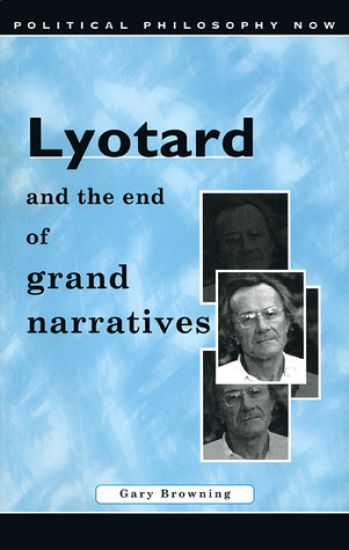
Lyotard's work challenges the presumption and orientation of modern political philosophy. In particular, he repudiates attempts to justify knowledge and society in terms of "grand" narratives of, for example, the liberation of mankind or the immanence of science. He argues that the totalising perspective of these meta-narratives is superseded by a post-modern acceptance of difference and variety and a scepticism towards unifying meta-theories. This study considers Lyotard's notion of a "grand" narraative and analyzes his critique of modernity. In the light of Lyotard's views, it goes on to examine the work of seven political thinkers whose ideas represent different stands of a distinctively modern perspective. The author concludes that, while their theories conform to Lyotard's conept of a metanarrative, they generate insights into the modern world which cannot be dismissed as lightly as their universalistic assumptions. Finally he comments on the plausibility and viability of Lyotard's repudiation of modernity.
Lyotard and the End of Grand Narratives

Lyotard and the End of Grand Narratives

Gary Browning

University of Wales Press
2000
sidottu
Lyotard's work challenges the presumption and orientation of modern political philosophy. In particular, he repudiates attempts to justify knowledge and society in terms of "grand" narratives of, for example, the liberation of mankind or the immanence of science. He argues that the totalising perspective of these meta-narratives is superseded by a post-modern acceptance of difference and variety and a scepticism towards unifying meta-theories. This study considers Lyotard's notion of a "grand" narraative and analyzes his critique of modernity. In the light of Lyotard's views, it goes on to examine the work of seven political thinkers whose ideas represent different stands of a distinctively modern perspective. The author concludes that, while their theories conform to Lyotard's conept of a metanarrative, they generate insights into the modern world which cannot be dismissed as lightly as their universalistic assumptions. Finally he comments on the plausibility and viability of Lyotard's repudiation of modernity.
Lyotard and the Inhuman Condition

Lyotard and the Inhuman Condition

Ashley Woodward

Edinburgh University Press
2016
sidottu
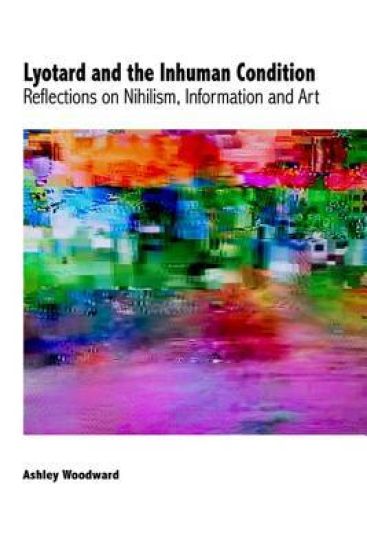
This book offers an incisive argument for the contemporary importance of Lyotard in light of posthuman trends. Jean Francois Lyotard was one of the leading French philosophers of his generation, whose wide ranging and highly original contributions to thought were overshadowed by his brief, unfortunate association with 'postmodernism.' This book demonstrates what a new generation of scholars are now discovering: that Lyotard's work is incisive and essential for current debates in the humanities, especially those concerning the 'posthuman'. Ashley Woodward presents a series of studies which explain Lyotard's specific interventions in areas such as information theory, new media arts, and the changing nature of the human, and assesses their relevance and impact in relation to other current positions. It brings to light a 'New Lyotard' by focussing on undiscovered themes and connections in his work. It shows Lyotard's relevance and importance for posthuman studies. It critically compares Lyotard's thought to contemporary philosophers and philosophies, such as Deleuze, Badiou, Stiegler, Meillassoux and the speculative realism movement.
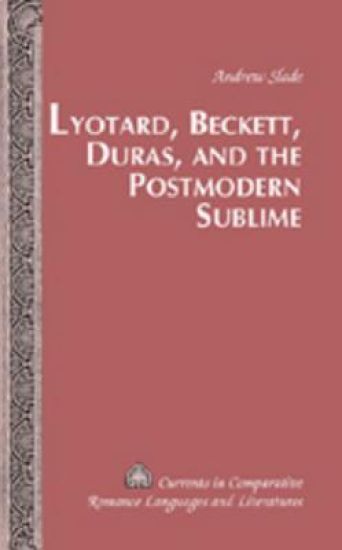
Lyotard, Beckett, Duras, and the Postmodern Sublime

Lyotard, Beckett, Duras, and the Postmodern Sublime

Andrew Slade

Peter Lang Publishing Inc
2007
sidottu
This daring work argues that the traumas of the twentieth century form the backdrop of a subjectivity marked by the drive for survival, and that sublime figurations are the aesthetic marker of that drive. Hence, the works of Jean Fran ois Lyotard, Samuel Beckett, and Marguerite Duras can be understood only with reference to the postmodern conception of the sublime. The sublime becomes a central modality for bearing witness to the terrors of history and to the possibilities of writing in their wake. This book will be of special value to those concerned with aesthetic and literary theory, trauma theory, and postmodernism.
Lyotard, Literature and the Trauma of the differend
This original study examines Jean-François Lyotard's philosophical concept of the differend and details its unexplored implications for literature. it provides a new framework with which to understand the discourse itself, from its Homeric beginnings to postmodern works by authors such as Michael Ondaatje and Jonathan Safran Foer.
Lyotard, Literature and the Trauma of the differend
This original study examines Jean-François Lyotard's philosophical concept of the differend and details its unexplored implications for literature. it provides a new framework with which to understand the discourse itself, from its Homeric beginnings to postmodern works by authors such as Michael Ondaatje and Jonathan Safran Foer.
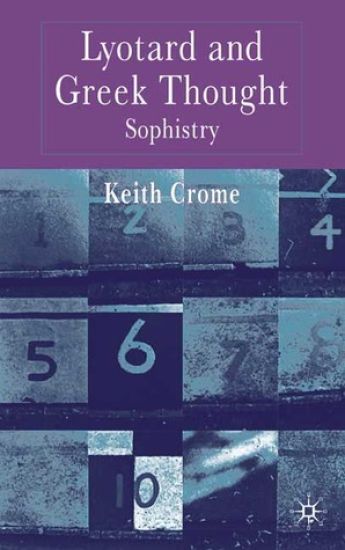
Lyotard and Greek Thought

Lyotard and Greek Thought

K. Crome

Palgrave Macmillan
2004
nidottu
In this original study, Keith Crome argues for the importance of Lyotard's analyzes of sophistry. In the first section, the author examines the accounts of sophistry given in the works of Plato, Hegel and Heidegger. Sensitive to the important differences between them Keith Crome nevertheless establishes their fundamental identity. In the second section, the book shows the radicality of Lyotard's analyzes in contrast to such traditional views. It examines Lyotard's complex and original readings of sophistical arguments, and offers a new interpretation of The Differend .
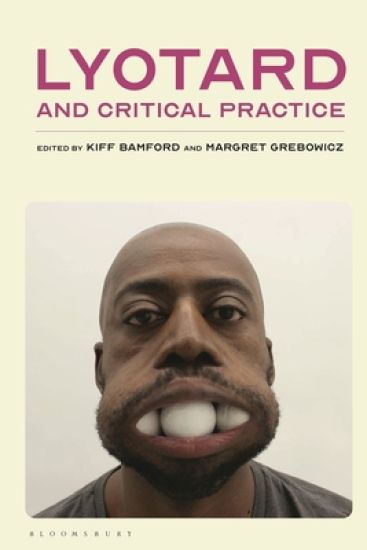
Lyotard and Critical Practice

Lyotard and Critical Practice

BLOOMSBURY PUBLISHING PLC
2022
sidottu
Jean-François Lyotard (1924-1998) was one of the previous century’s most provocative thinkers. Can his work help us address the crisis currently facing the humanities? The dominant economic discourse sees the humanities as “low-value,” an irritation at best. Lyotard helps us to think against this pervasive dismissal of creative activity, not by defending the honor of the humanities, but by inviting critical practices which aggravate this irritation. Critical practices trouble what counts as critique, embrace incertitude, and listen for silenced voices. Twelve essays by artists and researchers take up Lyotard's invitation and begin to develop the idea of critical practice in the contemporary context. Three sections titled “What resists thinking;” “Long views and distances” and “Why art practice?” address contemporary concerns like affectivity, aesthetics, economic imperatives, militarism, pedagogy, posthumanism, and the closure of what in Lyotard's time was called "the West." Four short pieces by Lyotard intervene in and buttress the discussion: “Apathy in Theory” and “Interview with Art Présent,” here published in English for the first time, and “Affect-phrase” and “The Other’s Rights” republished here to highlight his prescient concern for that which cannot be articulated.
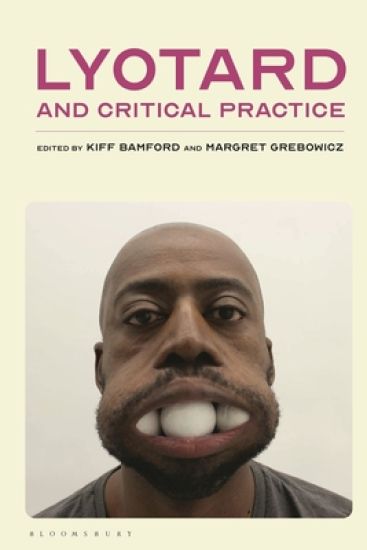
Lyotard and Critical Practice

Lyotard and Critical Practice

BLOOMSBURY PUBLISHING PLC
2024
nidottu
Jean-François Lyotard (1924-1998) was one of the previous century’s most provocative thinkers. Can his work help us address the crisis currently facing the humanities? The dominant economic discourse sees the humanities as “low-value,” an irritation at best. Lyotard helps us to think against this pervasive dismissal of creative activity, not by defending the honor of the humanities, but by inviting critical practices which aggravate this irritation. Critical practices trouble what counts as critique, embrace incertitude, and listen for silenced voices. Twelve essays by artists and researchers take up Lyotard's invitation and begin to develop the idea of critical practice in the contemporary context. Three sections titled “What resists thinking;” “Long views and distances” and “Why art practice?” address contemporary concerns like affectivity, aesthetics, economic imperatives, militarism, pedagogy, posthumanism, and the closure of what in Lyotard's time was called "the West." Four short pieces by Lyotard intervene in and buttress the discussion: “Apathy in Theory” and “Interview with Art Présent,” here published in English for the first time, and “Affect-phrase” and “The Other’s Rights” republished here to highlight his prescient concern for that which cannot be articulated.
Lyotard and Greek Thought

Lyotard and Greek Thought

K. Crome

Palgrave Macmillan
2004
sidottu
In this original study, Keith Crome argues for the importance of Lyotard's analyzes of sophistry. In the first section, the author examines the accounts of sophistry given in the works of Plato, Hegel and Heidegger. Sensitive to the important differences between them Keith Crome nevertheless establishes their fundamental identity. In the second section, the book shows the radicality of Lyotard's analyzes in contrast to such traditional views. It examines Lyotard's complex and original readings of sophistical arguments, and offers a new interpretation of The Differend .