Kirjojen hintavertailu. Mukana 11 627 220 kirjaa ja 12 kauppaa.

Kirjahaku

Etsi kirjoja tekijän nimen, kirjan nimen tai ISBN:n perusteella.

57 tulosta hakusanalla "Marcel Mauss"

Marcel Mauss

Marcel Mauss

Marcel Fournier

Princeton University Press
2015
pokkari
This book is the first intellectual biography of Marcel Mauss (1872-1950), the father of modern ethnology and a leading early figure in the French school of sociology. Mauss left a rich intellectual legacy in the social sciences, influencing the work of Claude Levi-Strauss and others. His masterpiece, the 1925 essay The Gift, on reciprocity and gift economies among archaic societies, remains required reading in anthropology, and his work more broadly resonates today with students and scholars in fields from the history of religion to sociology. Mauss taught the first generation of French field researchers in anthropology and helped secure the legacy of his uncle, emile Durkheim, the founder of modern sociology. In Marcel Mauss: A Biography, Marcel Fournier situates Mauss's ideas in their biographical context, focusing not only on the details of Mauss's life but also on the people and the academic milieus with which he was associated in early twentieth-century France. He shows how Mauss--through his writings, teaching, and socialist politics--found himself at the center of the intellectual and political life of his country and of Europe through two world wars. The book addresses, among other topics, the effect of the Dreyfus Affair and the First World War on Mauss's thought, and the inner dynamics of the group of scholars around Mauss and Durkheim at the journal they helped establish, Annee Sociologique. The fruit of vast research, Marcel Mauss: A Biography is the life story both of a legendary scholar and of the institutionalization of sociology and anthropology.
Marcel Mauss

Marcel Mauss

Berghahn Books, Incorporated
1999
sidottu
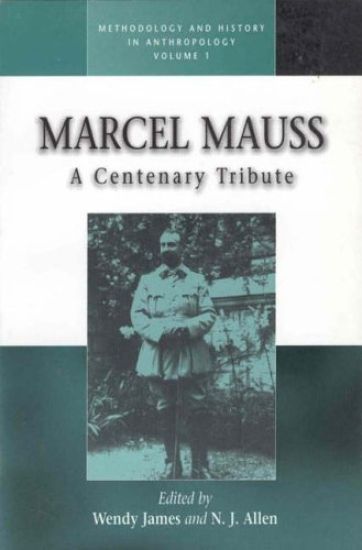
Marcel Mauss, successor of Emile Durkheim and one-time teacher of Claude Levi-Strauss, continues to inspire social scientists across various disciplines. Only selected texts of Mauss's work have been translated into English, but of these, some, as for instance his "Essay on the Gift," have proved of key significance for the development of anthropology internationally. Recently and starting in France, the interest in Mauss's work has increased noticeably as witnessed by several reassessments of its relevance to current social theory. This collection of original essays is the first to introduce the English-language reader to the current re-evaluation of his ideas in continental Europe. Themes include the post-structuralist appraisal of "exchange", the anthropology of the body, practical techniques, gesture systems, the notions of substance, materiality, and the social person. There are fresh insights into comparative politics and history, modern forms of charity, and new readings of some political and historical aspects of Mauss's work that bear on the analysis of regions such as Africa and the Middle East, relatively neglected by the Durkheimian school and by structuralism. This volume is a timely tribute to mark the centenary of Mauss' early work and confirms the continuing relevance of his ideas.
Marcel Mauss

Marcel Mauss

Berghahn Books, Incorporated
1998
pokkari
Marcel Mauss, successor of Emile Durkheim and one-time teacher of Claude Levi-Strauss, continues to inspire social scientists across various disciplines. Only selected texts of Mauss's work have been translated into English, but of these, some, as for instance his "Essay on the Gift," have proved of key significance for the development of anthropology internationally. Recently and starting in France, the interest in Mauss's work has increased noticeably as witnessed by several reassessments of its relevance to current social theory. This collection of original essays is the first to introduce the English-language reader to the current re-evaluation of his ideas in continental Europe. Themes include the post-structuralist appraisal of "exchange", the anthropology of the body, practical techniques, gesture systems, the notions of substance, materiality, and the social person. There are fresh insights into comparative politics and history, modern forms of charity, and new readings of some political and historical aspects of Mauss's work that bear on the analysis of regions such as Africa and the Middle East, relatively neglected by the Durkheimian school and by structuralism. This volume is a timely tribute to mark the centenary of Mauss' early work and confirms the continuing relevance of his ideas.
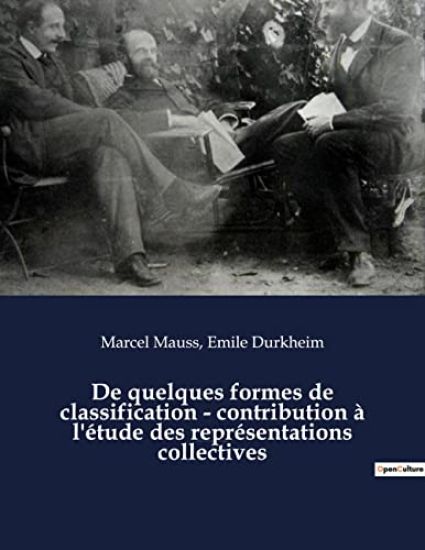
De quelques formes de classification - contribution à l'étude des représentations collectives: un essai de Marcel Mauss et Emile Durkheim paru dans L'
Dans ce classique de la sociologie de la connaissance, Mauss et Durkheim ne s'attaquent rien de moins qu'au projet de r crire la table kantienne des cat gories: la ma trise des jugements logiques qu'ils rendent possibles ne sont pas le fruit des seules forces de l'individu, mais ont une origine sociale. Cette hypoth se, ils la testent sur les concepts de genres et d'esp ces, et plus g n ralement sur l'activit scientifique de classes. Ils entendent ainsi tablir qu'en Am rique du Nord et chez les Aborig nes d'Australie, tout autant que dans le syst me divinatoire chinois, stratification sociale et genres naturels primitifs se font cho; on ne saurait classer les choses sans appartenir des soci t s structur es. On comprend le profit tirer de ce constat pour mieux appr hender les activit s scientifiques modernes.
Marcel Mauss und die Theorie der Gabe

Marcel Mauss und die Theorie der Gabe

Arndt Schmidt

Grin Publishing
2012
nidottu
Essay aus dem Jahr 2010 im Fachbereich Geschichte - Allgemeines, Note: 1,7, Universit t Bielefeld (Fakult t f r Geschichte), Veranstaltung: Lesarten der konomie, Sprache: Deutsch, Abstract: "Der homo oeconomicus steht nicht hinter uns, sondern vor uns - wie der moralische Mensch, der pflichtbewusste Mensch, der wissenschaftliche Mensch und der vern nftige Mensch. Lange Zeit war der Mensch etwas anderes; und es ist noch nicht sehr lange her, seit er eine Maschine geworden ist - und gar eine Rechenmaschine." Marcel Mauss beschlie t sein ber hmtes Werk "Die Gabe" mit einigen "Sozial- und national konomischen Schlussfolgerungen," in denen er Kritik bt an der Privilegierung materieller N tzlichkeit, der Verfolgung individueller Zwecke und der reinen Pro-fitmaximierung, die seiner Ansicht zufolge dem Rationalismus der Moderne geschuldet sind und "dem Frieden, des Ganzen, dem Rhythmus unserer Arbeit und unserer Freuden und damit letztlich dem Einzelnen selbst" schaden. Nach einem kurzen berblick zur Person Marcel Mauss sollen im Folgenden die Kernaspekte seiner Kulturtheorie der Gabe Erl uterung finden. Im Vordergrund ste-hen dabei seine Ausf hrungen zur konomie des Gabentausches in Polynesien und dem S dpazifik. Mauss' Lesart der konomie zeigt den kontingenten Charakter der Wirtschaftsordnungen auf, die unser gesellschaftliches Zusammenleben ma geblich bestimmen. Vor dem Hintergrund derzeitiger wirtschaftlicher Krisen gelesen verdeut-licht seine Kritik an einem essentialistischen Verst ndnis vom homo oeconomicus, dass eine Orientierung am Primat der Gewinnmaximierung weder naturgegeben noch ohne Alternativen sein muss.
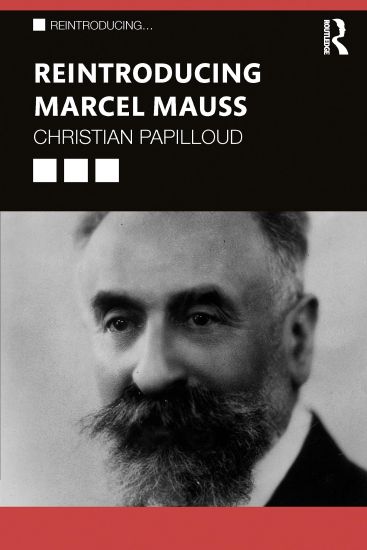
Reintroducing Marcel Mauss

Reintroducing Marcel Mauss

Christian Papilloud

TAYLOR FRANCIS LTD
2023
sidottu
This reintroduction to the life and work of Marcel Mauss highlights his coherent and original thought both as an academic and an engaged intellectual of his time. Since his work regained attention in social sciences in the later 20th century, Reintroducing Marcel Mauss also emphasises the progression of research on Mauss’s thought, bringing to light various neglected aspects of his scientific project, including his political commitment and writings. With a review of the contemporary research on Mauss’s legacy, it offers a fuller understanding of the questions with which he was concerned – questions which converged in the challenge of working out alternative ways for a social life that promotes a genuinely social society inspired by socialist and cooperative values. It will therefore appeal to scholars of sociology and anthropology with interests in the history and development of sociology, and the contemporary importance of classical social theory.
Reintroducing Marcel Mauss

Reintroducing Marcel Mauss

Christian Papilloud

TAYLOR FRANCIS LTD
2023
nidottu
This reintroduction to the life and work of Marcel Mauss highlights his coherent and original thought both as an academic and an engaged intellectual of his time. Since his work regained attention in social sciences in the later 20th century, Reintroducing Marcel Mauss also emphasises the progression of research on Mauss’s thought, bringing to light various neglected aspects of his scientific project, including his political commitment and writings. With a review of the contemporary research on Mauss’s legacy, it offers a fuller understanding of the questions with which he was concerned – questions which converged in the challenge of working out alternative ways for a social life that promotes a genuinely social society inspired by socialist and cooperative values. It will therefore appeal to scholars of sociology and anthropology with interests in the history and development of sociology, and the contemporary importance of classical social theory.
An Analysis of Marcel Mauss's The Gift

An Analysis of Marcel Mauss's The Gift

The Macat Team

Macat International Limited
2017
nidottu
Marcel Mauss’s 1925 essay The Gift is an enduring classic of sociological and anthropological analysis by a thinker who is one of the founding fathers of modern anthropology. The Gift exploits Mauss’s high-level analytical and interpretative skills to produce a brilliant investigation of the forms, meanings, and structures of gift-giving across a range of societies. Mauss, along with many others, had noted that in a wide range of societies – especially those without monetary exchange or legal structures – gift-giving and receiving was carried out according to strict customs and unwritten laws. What he sought to do in The Gift was to analyse the structures that governed how and when gifts were given, received, and reciprocated in order to grasp what implicit and unspoken reasons governed these structures. He also wanted to apply his interpretative skills to asking what such exchanges meant, in order to explore the implications his analysis might have for modern, western cultures. In Mauss’s investigations, it became clear that gift-giving is, in many cultures, a crucial structural force, binding people together in a web of reciprocal commitments generated by the laws of gifting. Indeed, he concluded, gifts can be seen as the ‘glue’ of society..
Zur Aktualität von Marcel Mauss

Zur Aktualität von Marcel Mauss

Christian Papilloud; Cécile Rol

Springer Fachmedien Wiesbaden
2024
nidottu
Ethnologe und Soziologe vom Beruf war Marcel Mauss (1872-1950) Philosoph, Philologe, Spezialist von alten Gesellschaften und der Neffe von Emile Durkheim, dem Gründervater der akademischen französischen Soziologie. Betrachtet man sein Leben und sein Werk, mag es zunächst so aussehen, als sei Mauss lediglich ein treuer Mitarbeiter seines Onkels gewesen, dem er dabei half, aus der Soziologie im Sinne Durkheims eine anerkannte akademische Disziplin zu machen. Mauss arbeitet an der Herausgabe von Durkheims berühmter Zeitschrift L'Année sociologique mit. Er trägt ebenfalls dazu bei, dass die Arbeit von Durkheims Mitarbeitern, den Durkheimianern, positiv wahrgenommen wird. Das, was später in der Literatur als die Französische Schule der Soziologie um die Gruppe von Personen bezeichnet wurde, die Mauss um Durkheim und seine Zeitschrift versammelte, spiegelt jedoch weder die Vielfalt der soziologischen Denkrichtungen in Frankreich noch die verschiedenen Bestrebungen von Durkheims Mitarbeitern wider. Mauss war in dieser Hinsicht keine Ausnahme. Dieser Band zur Aktualität von Marcel Mauss beschreibt seinen kohärenten und originellen Ansatz sowohl als Akademiker als auch als engagierter Intellektueller in seiner Zeit. Seitdem sein Werk Anfang der 1980er Jahre in den Sozialwissenschaften wieder an Aufmerksamkeit gewonnen hat, bringt die Forschung verschiedene vernachlässigte Aspekte seines wissenschaftlichen Projekts ans Licht, darunter sein politisches Engagement und seine normativen Schriften. Der Überblick über die zeitgenössische Literatur zu Mauss' Erbe vermittelt ein besseres Verständnis der Fragen, mit denen er sich beschäftigte und die in der Herausforderung gipfeln, alternative Wege für ein soziales Leben zu finden, die zu einer sozialen bzw. von sozialistischen und kooperativen Werten inspirierten Gesellschaft führen. Das Buch führt gut lesbar in die Theorien von Marcel Mauss ein und arbeitet seine Bedeutung für die Geschichte der Soziologie wie der Ethnologie heraus.
Introduction to the Work of Marcel Mauss

Introduction to the Work of Marcel Mauss

Claude Levi-Strauss

Routledge
1987
nidottu
First published in 1987. Claude Levi-Strauss is one of the intellectual giants of the twentieth century, a leading exponent of structuralism and a great social anthropologist. His Introduction to the Work of Marcel Mauss , originally written to preface the earliest major collection of Mauss's writings, Sociologie et Anthropologie (1950), was hailed as a seminal text by leading structuralists such as Derrida, Lacan and Barthes. This edition, the first English translation to be published, should prove invaluable to anthropologists, philologists, psychologists, and all those interested in one of the most important intellectual movements generated by the twentieth century. Levi-Strauss uses an approach combining anthropology and structural linguistics to assess Marcel Mauss's achievements and intentions arguing that Mauss - who at the time represented the mainstream of French anthropology - was in fact structuralist manque. He goes on to formulate the central tenets of structuralist thought: the belief in societies being organised on immutable and unconscious laws, this foundation then providing the basis for true scientific study; multi-discplinary methodology combining anthropology, lingusitics and psychoanalysis; and a faith that a comprehensive science of communication can be made by the application of mathematical reasoning.
Introduction to the Work of Marcel Mauss

Introduction to the Work of Marcel Mauss

Claude Levi-Strauss

Routledge
2016
sidottu
First published in 1987. Claude Levi-Strauss is one of the intellectual giants of the twentieth century, a leading exponent of structuralism and a great social anthropologist. His Introduction to the Work of Marcel Mauss , originally written to preface the earliest major collection of Mauss's writings, Sociologie et Anthropologie (1950), was hailed as a seminal text by leading structuralists such as Derrida, Lacan and Barthes. This edition, the first English translation to be published, should prove invaluable to anthropologists, philologists, psychologists, and all those interested in one of the most important intellectual movements generated by the twentieth century. Levi-Strauss uses an approach combining anthropology and structural linguistics to assess Marcel Mauss's achievements and intentions arguing that Mauss - who at the time represented the mainstream of French anthropology - was in fact structuralist manque. He goes on to formulate the central tenets of structuralist thought: the belief in societies being organised on immutable and unconscious laws, this foundation then providing the basis for true scientific study; multi-discplinary methodology combining anthropology, lingusitics and psychoanalysis; and a faith that a comprehensive science of communication can be made by the application of mathematical reasoning.
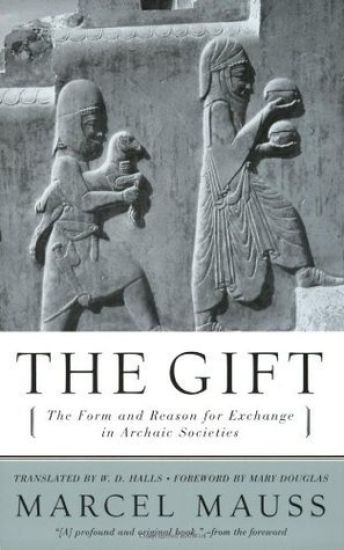
The Gift: The Form and Reason for Exchange in Archaic Societies
A brilliant example of the comparative method, The Gift presents the first systematic study of the custom--widespread in primitive societies from ancient Rome to present-day Melanesia--of exchanging gifts. The gift is a perfect example of what Mauss calls a total social phenomenon, since it involves legal, economic, moral, religious, aesthetic, and other dimensions. He sees the gift exchange as related to individuals and groups as much as to the objects themselves, and his analysis calls into question the social conventions and economic systems that had been taken for granted for so many years. In a modern translation, introduced by distinguished anthropologist Mary Douglas, The Gift is essential reading for students of social anthropology and sociology.