Kirjojen hintavertailu. Mukana 11 342 296 kirjaa ja 12 kauppaa.

Kirjahaku

Etsi kirjoja tekijän nimen, kirjan nimen tai ISBN:n perusteella.

1000 tulosta hakusanalla "Mexico"

Mexico

Mexico

Roderic Ai Camp

Oxford University Press Inc
2017
sidottu
Today all would agree that Mexico and the United States have never been closer--that the fates of the two republics are inextricably intertwined. It has become an intimate part of life in almost every community in the United States, through immigration, imported produce, business ties, or illegal drugs. It is less a neighbor than a sibling; no matter what our differences, it is intricately a part of our existence. In the fully updated second edition of Mexico: What Everyone Needs to Know®, Roderic Ai Camp gives readers the most essential information about our sister republic to the south. Camp organizes chapters around major themes--security and violence, economic development, foreign relations, the colonial heritage, and more. He asks questions that take us beyond the headlines: Why does Mexico have so much drug violence? What was the impact of the North American Free Trade Agreement? How democratic is Mexico? Who were Benito Juárez and Pancho Villa? What is the PRI (the Institutional Revolutionary Party)? The answers are sometimes surprising. Despite ratification of NAFTA, for example, Mexico has fallen behind Brazil and Chile in economic growth and rates of poverty. Camp explains that lack of labor flexibility, along with low levels of transparency and high levels of corruption, make Mexico less competitive than some other Latin American countries. The drug trade, of course, enhances corruption and feeds on poverty; approximately 450,000 Mexicans now work in this sector. Brisk, clear, and informed, Mexico: What Everyone Needs To Know® offers a valuable primer for anyone interested in the past, present, and future of our neighbor to the South.
Mexico

Mexico

Roderic Ai Camp

Oxford University Press Inc
2017
nidottu
Today all would agree that Mexico and the United States have never been closer--that the fates of the two republics are inextricably intertwined. It has become an intimate part of life in almost every community in the United States, through immigration, imported produce, business ties, or illegal drugs. It is less a neighbor than a sibling; no matter what our differences, it is intricately a part of our existence. In the fully updated second edition of Mexico: What Everyone Needs to Know®, Roderic Ai Camp gives readers the most essential information about our sister republic to the south. Camp organizes chapters around major themes--security and violence, economic development, foreign relations, the colonial heritage, and more. He asks questions that take us beyond the headlines: Why does Mexico have so much drug violence? What was the impact of the North American Free Trade Agreement? How democratic is Mexico? Who were Benito Juárez and Pancho Villa? What is the PRI (the Institutional Revolutionary Party)? The answers are sometimes surprising. Despite ratification of NAFTA, for example, Mexico has fallen behind Brazil and Chile in economic growth and rates of poverty. Camp explains that lack of labor flexibility, along with low levels of transparency and high levels of corruption, make Mexico less competitive than some other Latin American countries. The drug trade, of course, enhances corruption and feeds on poverty; approximately 450,000 Mexicans now work in this sector. Brisk, clear, and informed, Mexico: What Everyone Needs To Know® offers a valuable primer for anyone interested in the past, present, and future of our neighbor to the South.
Mexico

Mexico

Roderic Ai Camp

Oxford University Press Inc
2011
nidottu
Today most would agree that Mexico and the United States have never been closer—that the fates of the two republics are inextricably intertwined. It has become an intimate part of life in almost every community in the United States, through immigration, imported produce, business ties, or illegal drugs. They are less neighbors than siblings; no matter the differences, they are intricately a part of each others' existence. In this outstanding contribution to Oxford's acclaimed series, What Everyone Needs to Know®, Roderic Ai Camp gives readers the most essential information about America's sister republic to the south. Camp organizes chapters around major themes—security and violence, economic development, foreign relations, the colonial heritage, and more. He asks questions that take us beyond the headlines: Why does Mexico have so much drug violence? What was the impact of the North American Free Trade Agreement? How democratic is Mexico? Who were Benito Juárez and Pancho Villa? What is the PRI (the Institutional Revolutionary Party)? The answers are sometimes surprising. Despite ratification of NAFTA, for example, Mexico has fallen behind Brazil and Chile in economic growth and rates of poverty. Camp explains that lack of labor flexibility, along with low levels of transparency and high levels of corruption, make Mexico less competitive than some other Latin American countries. The drug trade, of course, enhances corruption and feeds on poverty; approximately 450,000 Mexicans now work in this sector. But Camp reveals that President Calderón's recent assault on narcotics smugglers—and the violence resulting from it—may have actually lessened the government's control of parts of the country and national institutions. Brisk, clear, and informed, Mexico: What Everyone Needs To Know® offers a valuable primer for anyone interested in the past, present, and future of America's neighbor to the South.
Mexico

Mexico

Roderic Ai Camp

Oxford University Press Inc
2011
sidottu
Today all would agree that Mexico and the United States have never been closer--that the fates of the two republics are inextricably intertwined. It has become an intimate part of life in almost every community in the United States, through immigration, imported produce, business ties, or illegal drugs. It is less a neighbor than a sibling; no matter what our differences, it is intricately a part of our existence. In this outstanding contribution to Oxford's acclaimed series, What Everyone Needs to Know, Roderic Ai Camp gives readers the most essential information about our sister republic to the south. Camp organizes chapters around major themes--security and violence, economic development, foreign relations, the colonial heritage, and more. He asks questions that take us beyond the headlines: Why does Mexico have so much drug violence? What was the impact of the North American Free Trade Agreement? How democratic is Mexico? Who were Benito Juárez and Pancho Villa? What is the PRI (the Institutional Revolutionary Party)? The answers are sometimes surprising. Despite ratification of NAFTA, for example, Mexico has fallen behind Brazil and Chile in economic growth and rates of poverty. Camp explains that lack of labor flexibility, along with low levels of transparency and high levels of corruption, make Mexico less competitive than some other Latin American countries. The drug trade, of course, enhances corruption and feeds on poverty; approximately 450,000 Mexicans now work in this sector. But Camp reveals that President Calderón's recent assault on narcotics smugglers--and the violence resulting from it--may have actually lessened the government's control of parts of the country and national institutions. Brisk, clear, and informed, Mexico: What Everyone Needs To Know offers a valuable primer for anyone interested in the past, present, and future of our neighbor to the South.
Mexico

Mexico

Daniel Levy

Routledge
2019
sidottu
In the four years since the first edition was published, Mexico's political system—exceptional among Latin American nations—has been severely tested. The administration has been struggling to cope with the effects of a depressed market for oil, the demands of an increasingly vocal opposition, and the foreign policy challenges posed by violence in Central America. In this timely second edition of a work that has received favorable attention in the United States and in Mexico, the authors extend their analysis of Mexico's current and future prospects to cover the dramatic developments of the past few years. Throughout, the authors have updated their discussion to assess the social and political impact of the latest elections, the recent earthquakes, and the continuing cycle of economic crisis, recovery, and renewed crisis. They also pay special attention to Mexico's initiatives for peace in Central America and to recent shifts in Mexican-U.S. relations. Appropriate for courses in Mexican studies, Latin American politics, and Third World development, this text also will be of value to anyone interested in Mexico's political and economic affairs.
Mexico

Mexico

Daniel Levy

Routledge
2020
nidottu
This book analyses Mexico's current and future prospects to cover the dramatic developments in 1987. It assesses the social and political impact of the elections, earthquakes, and the continuing cycle of economic crisis, recovery, and renewed crisis.
Mexico

Mexico

Michael D Coe; Koontz Rex; Urcid Javier

Thames Hudson Ltd
2019
nidottu
This authoritative volume has been revised throughout and expanded, with stunning new images and accounts of the major discoveries of recent years. Recent findings have been added to expand our understanding of the Olmecs outside of their heartland, and new research on the legacy of the Maya offers a wider and more cohesive narrative of Mexico’s history. New co-author Javier Urcid has added greater coverage of Oaxaca and of Monté Alban, one of the earliest cities in Mesoamerica and the center of the Zapotec civilization, and a fully revised Epilogue discusses the survival of indigenous populations in Mexico from the Conquest up to the present. This longstanding classic now features full-colour photos of the vibrant art and architecture of ancient Mesoamerica throughout.
Mexico

Mexico

Alicia Hernández Chávez

University of California Press
2006
pokkari
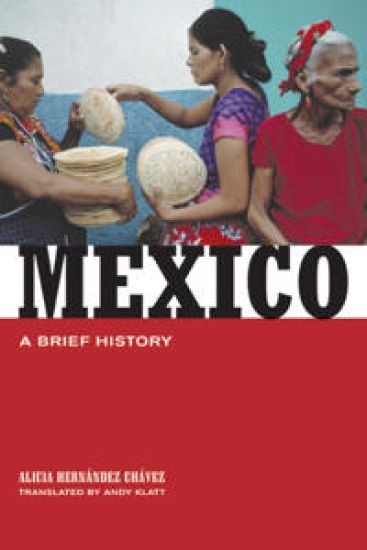
Beginning with the pre-Hispanic period and ending with the latest democratic developments of the twenty-first century, this definitive one-volume history of Mexico analyzes the ways that economic, social, and political dynamics have interacted to shape the nation's past. Alicia Hernandez Chavez takes into account new historiography--which is fully integrated with anthropology, political science, economics, and international relations--to present an original and fresh interpretation of the structures and processes that determined the country's evolution. Based on the latest sources in both Spanish and other languages, this book illustrates that Mexico's history--far from being one of violent change, uprisings, and revolution--tended more toward stability and political collaboration. Hernandez Chavez argues that Mexicans relied on tradition and institutions to effect change, resorting to disorder and destruction as little as possible. Numerous maps, tables, and charts support the text, providing extensive information on geography, social structures, the economy, politics, education, health, and transportation.
Mexico

Mexico

Daniel C. Levy; Kathleen Bruhn

University of California Press
2006
pokkari
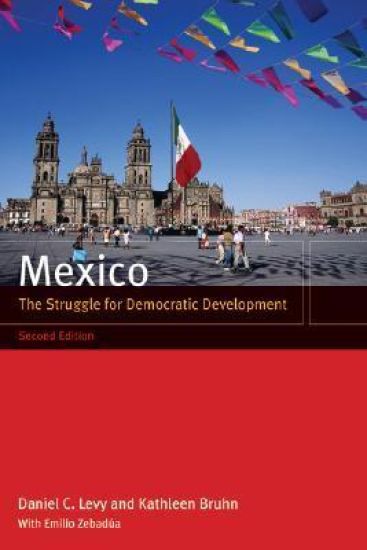
This engaging book provides a broad and accessible analysis of Mexico's contemporary struggle for democratic development. Now completely revised, it brings up to date issues ranging from electoral reform and accountability to drug trafficking, migration, and NAFTA. It also considers the rapidly changing role of Mexico's mass and elite groups, and its national institutions, including the media, the military, and the church.
Mexico

Mexico

Ramon Ruiz

University of California Press
2010
sidottu
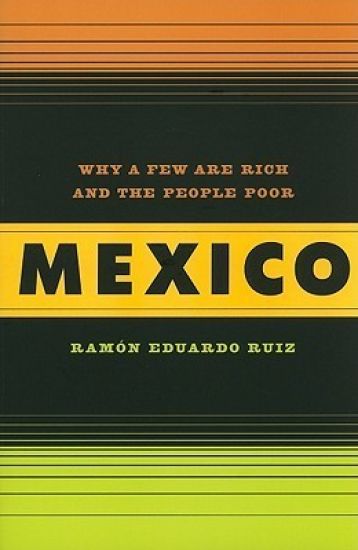
Explicitly focusing on the malaise of underdevelopment that has shaped the country since the Spanish conquest, Ramon Eduardo Ruiz offers a panoramic interpretation of Mexican history and culture from the pre-Hispanic and colonial eras through the twentieth century. Drawing on economics, psychology, literature, film, and history, he reveals how development processes have fostered glaring inequalities, uncovers the fundamental role of race and class in perpetuating poverty, and sheds new light on the contemporary Mexican reality. Throughout, Ruiz traces a legacy of dependency on outsiders, and considers the weighty role the United States has played, starting with an unjust war that cost Mexico half its territory. Based on Ruiz's decades of research and travel in Mexico, this penetrating work helps us better understand where the country has come, why it is where it is today, and where it might go in the future.
Mexico

Mexico

Ramon Ruiz

University of California Press
2010
pokkari
Explicitly focusing on the malaise of underdevelopment that has shaped the country since the Spanish conquest, Ramon Eduardo Ruiz offers a panoramic interpretation of Mexican history and culture from the pre-Hispanic and colonial eras through the twentieth century. Drawing on economics, psychology, literature, film, and history, he reveals how development processes have fostered glaring inequalities, uncovers the fundamental role of race and class in perpetuating poverty, and sheds new light on the contemporary Mexican reality. Throughout, Ruiz traces a legacy of dependency on outsiders, and considers the weighty role the United States has played, starting with an unjust war that cost Mexico half its territory. Based on Ruiz's decades of research and travel in Mexico, this penetrating work helps us better understand where the country has come, why it is where it is today, and where it might go in the future.
Mexico

Mexico

Margarita Carrillo Arronte

Phaidon Press Ltd
2014
sidottu
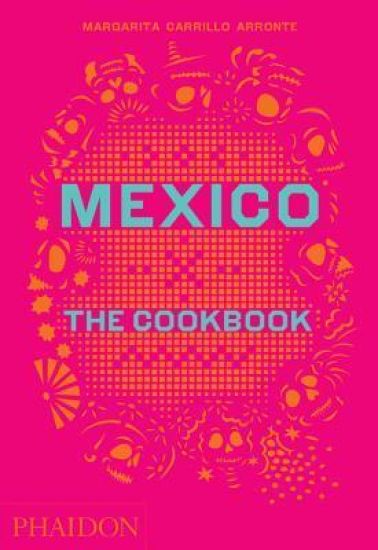
The definitive bible on Mexican homecooking by Mexico's leading culinary authority, Margarita Carrillo Arronte Mexico: The Cookbook is the definitive bible of home-cooking from Mexico. With a culinary history dating back 9,000 years, Mexican food draws influences from Aztec and Mayan Indians and is renowned for its use of fresh aromatic ingredients, colorful presentations and bold food combinations. The book features more than 700 delicious and authentic recipes that can be easily recreated at home. From tamales, fajitas, and moles to cactus salad, blue crab soup, and melon seed juice, the recipes are a celebration of the fresh flavors and ingredients from a country whose cuisine is revered around the world. Organized by food type/style (Street Food, Starters, Drinks, Fish and Seafood, Meat and Poultry, Vegetables, Pulses and Rice, and Dessert), Mexico: The Cookbook also includes an extensive introduction to Mexican culinary history, ingredients, and techniques, while a Chef Menu section proffers inspirational recipes and menus by some of the world's most prominent Mexican chefs.
Mexico

Mexico

Bobbie Kalman

Crabtree Publishing Co,Canada
2009
nidottu
Brilliant new photos highlight Mexico’s deserts, plains, rainforests, and mountains in this newly revised edition. Mexico’s agriculture, industries, overpopulation, and Mayan and Aztec roots are featured along with a new map and new information on free trade and immigration.
Mexico

Mexico

Bobbie Kalman

Crabtree Publishing Co,Canada
2009
nidottu
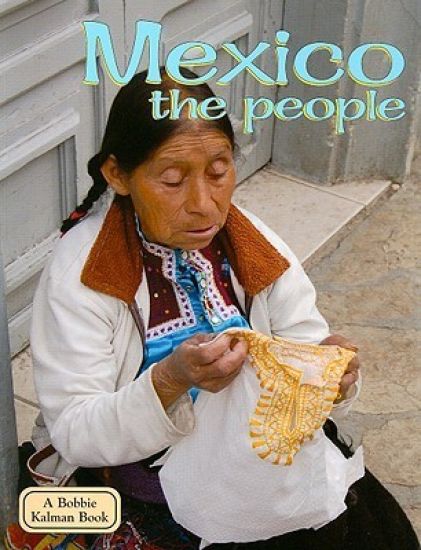
This updated book celebrates Mexico’s heroes’ past and present and explores the values and the traditions of Mexicans at home, school, and work. A new easy-to-follow timeline has been added to show Mexico’s history from the Olmecs to the 21st century. New information discusses the unrest in Chiapas, language and education, and people at work.
Mexico

Mexico

Paul Gillingham

GROVE PRESS / ATLANTIC MONTHLY PRESS
2025
sidottu
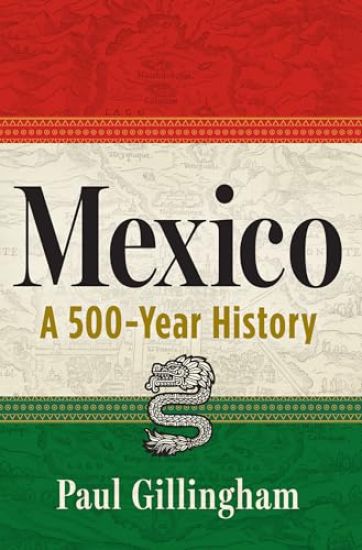
From acclaimed and prize-winning historian Paul Gillingham, a rich and vibrant history of one of the world's most diverse, politically ground-breaking, and influential of countriesAt the beginning of his masterful work of scholarship and narration, Paul Gillingham writes, from its outset "Mexico was more profoundly, globally hybrid than anywhere else in the prior history of the world." Over the ensuing five centuries, Mexicans have prefigured and shaped the course of human lives across the globe.Gillingham begins in 1511 with the dramatic shipwreck of two Spanish sailors in the far south of Mexico. Ten years later Hern n Cort s led an army of European adventurers and indigenous rebels to seize the legendary island city of Tenochtitl n, the center of Montezuma's empire, the largest in the Americas. The capture of the future Mexico City was, more than an extraordinary military event, the collision of two long-separated worlds, radically different in everything from biota to urban planning. Spaniards discovered tomatoes, chocolate, and a city larger and more sophisticated than anything they had ever seen. Mexicans discovered horses, wheels, and lethal germs, sparking a cataclysmic century of disease that wiped out a majority of the pre-existing population and led to a unique recombination of European and indigenous cultures. The industrial mining of Mexico's silver transformed the wealth and trade of the world. Mexico's independence from the Spanish Empire in 1821 led to a calamitous mid-century war with the United States and one of the first great social revolutions that brought peace for Mexicans throughout many of the global horrors of the 20th century, before the country itself collapsed into the violence of the cartels and a refugee crisis in the 2000s.The history of Mexico has been, Gillingham shows, one of suffering empire but also of overcoming. Through it all the country set new standards for inclusivity, for progressive social policies, for artistic expression, for adroitly balancing dictatorship and democracy. While racial divides endured, so too did indigenous peoples, who enjoyed rights unthinkable in the United States. Mexico was among the first countries to abolish slavery in 1829, and Mexicans elected North America's first Black president, Vicente Guerrero, its only indigenous president, Benito Ju rez, and its only woman president, Claudia Sheinbaum.As elegantly written as it is powerful in scope, rich in character and anecdote, Mexico uses the latest research to dazzling effect, showing how often Mexico has been a dynamic and vital shaper of world affairs.