Kirjojen hintavertailu. Mukana 11 244 527 kirjaa ja 12 kauppaa.

Kirjahaku

Etsi kirjoja tekijän nimen, kirjan nimen tai ISBN:n perusteella.

27 tulosta hakusanalla "Mitsi"

Mitsi

Mitsi

Delly

Prodinnova
2020
pokkari
...Mitsi demeurait seule en face de Parceuil et de la pr sidente qui, tous deux, ne cherchaient pas dissimuler leur vive contrari t . Plus loin, Christian s'appuyait au chambranle de la porte. Il consid rait avec indiff rence la sc ne qui se passait devant lui, tout en frappant petits coups sa botte, de la cravache qu'il tenait la main. Pr s de lui, Florine jetait des regards d daigneux sur la petite cr ature engonc e dans sa vieille robe frip e par le voyage...
Mitsi-pomoschnitsa

Mitsi-pomoschnitsa

G. Koster

Knizhniki
2017
pahvisivuinen
Orig.nazvanie Mitzi's MitzvahV iudaizme est vazhnaja zapoved - mitsva kibud zakejnim - ljubvi i pochitanija starshikh. Vypolnjaja etu zapoved, geroi nashej knizhki prikhodjat v dom prestarelykh pozdravit babushku s evrejskim Novym godom, Rosh a-Shana. I tolko sobachka Mitsi vynuzhdena grustit za dverju. No ona tozhe ljubit babushku i gotova prodelat dlja nee svoi luchshie trjuki.Perevodchik Viktor Lunin
Greece in Early English Travel Writing, 1596–1682

Greece in Early English Travel Writing, 1596–1682

Efterpi Mitsi

Springer International Publishing AG
2017
sidottu
This book examines the letters, diaries, and published accounts of English and Scottish travelers to Greece in the seventeenth century, a time of growing interest in ancient texts and the Ottoman Empire. Through these early encounters, this book analyzes the travelers’ construction of Greece in the early modern Mediterranean world and shows how travel became a means of collecting and disseminating knowledge about ancient sites. Focusing on the mobility and exchange of people, artifacts, texts, and opinions between the two countries, it argues that the presence of Britons in Greece and of Greeks in England aroused interest not only in Hellenic antiquity, but also in Greece’s contemporary geopolitical role. Exploring myth, perception, and trope with clarity and precision, this book offers new insight into the connections between Greece, the Ottoman Empire, and the West.
Greece in Early English Travel Writing, 1596–1682

Greece in Early English Travel Writing, 1596–1682

Efterpi Mitsi

Springer International Publishing AG
2018
nidottu
This book examines the letters, diaries, and published accounts of English and Scottish travelers to Greece in the seventeenth century, a time of growing interest in ancient texts and the Ottoman Empire. Through these early encounters, this book analyzes the travelers’ construction of Greece in the early modern Mediterranean world and shows how travel became a means of collecting and disseminating knowledge about ancient sites. Focusing on the mobility and exchange of people, artifacts, texts, and opinions between the two countries, it argues that the presence of Britons in Greece and of Greeks in England aroused interest not only in Hellenic antiquity, but also in Greece’s contemporary geopolitical role. Exploring myth, perception, and trope with clarity and precision, this book offers new insight into the connections between Greece, the Ottoman Empire, and the West.
The Decision-Making Process of Investor-State Arbitration Tribunals
The Decision-Making Process of Investor-State Arbitration Tribunals explores the ways in which arbitral tribunals interpret the law in investor-state disputes. It examines the emergence of a specialised way of decision-making adapted to the characteristics and needs of investment arbitration. In the course of a single investor-state dispute, an arbitrator may make numerous decisions, from interpreting the treaty or national laws to taking into account case law, customs and policies. In practice, this process raises important issues regarding the consistency of arbitral awards and the predictability and legitimacy of the arbitral decision-making process. This is the first book to offer an in-depth analysis of the transnational characteristics of investment arbitration and to analyse the interpretive arguments of investment tribunals. It particularly examines the way tribunals reason their awards making reference to treaties, precedent, policies, general principles of law and customary law in their decision-making process. What's in this book: The process arbitrators follow to render an award raises important concerns regarding the way arbitral awards are reasoned, and the further predictability and legitimacy of the investment arbitration framework. Drawing on publicly available arbitral case law supplemented with personal interviews with investment arbitrators, the author touches on such concepts and practices as the following: an overview of various decision-making genres of arbitral tribunals: attitudinal, economic, strategic and legal; the legal argumentation triptych of language-rhetoric-dialogue; the specific language arbitrators have developed when interpreting the law; how arbitrators use the concepts 'standards', 'rules', 'principles' and 'rights'; the importance of the legal reasoning of arbitral awards and the role of rhetoric therein; concepts of 'acceptability', 'audience' and 'legitimacy'; limitations of the public international law interpretive methodology enshrined in the Vienna Convention; interpretation of precedents, customary law, general principles of law and policies; the way national and international legal orders interact in the context of interpretation; and how decision-making is connected to the issues of predictability, consistency and the rule of law. The core of the book proposes a novel, full-fledged dialogical network theory for analysing the interpretation process. How this will help you: As an exemplary demonstration of developing theory to keep up with practice, this unique book provides a deeply engaged means for enhancing the practice of international arbitration. Its introduction of a new field of interdisciplinary analysis employing legal argumentation theories is sure to provide inestimable guidance for institutions and policymakers, especially in light of recent proposals for the creation of a permanent investment arbitration court. Given that unveiling the legal decision-making process is critical for the well-being of the whole dispute resolution procedure, and that being aware of how arbitrators interpret the law can constitute a roadmap for counsel's arguments and approaches when dealing with cross-border disputes, the topic of this book is relevant for both academics and practitioners, and its significance can only grow as recourse to investor-state arbitration continues to expand.
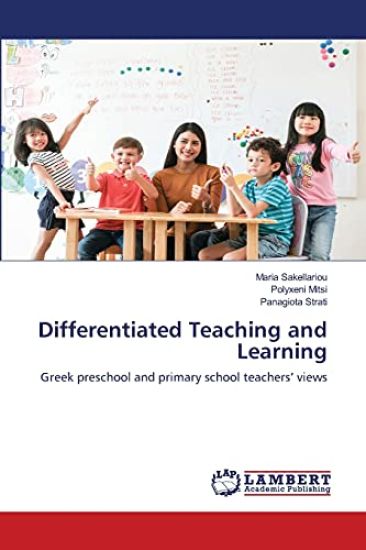
Differentiated Teaching and Learning

Differentiated Teaching and Learning

Maria Sakellariou; Polyxeni Mitsi; Panagiota Strati

LAP Lambert Academic Publishing
2021
pokkari
Social and cultural pluralism of our contemporary reality has pointed out all the different facets of students' population in terms of readiness, interests, experiences, culture, needs and learning abilities, bringing thus the traditional, one-dimensional way of teaching and learning, down to inadequacy. On the basis of such rationale, it seems that Differentiated Instruction and Learning comprises a modern teaching perspective which is capable of corresponding to the complexity of the multi-leveled activation of each pupil's psycho-mental potentiality, to the acquisition of skills, to their actual involvement into the educational process and the development of motivation which leads to building new knowledge.
Teaching Methods, Strategies and Practices

Teaching Methods, Strategies and Practices

Sakellariou Maria Strati Panagiota; Mitsi Pol Anagnostopoulou Rodokleia; Banou Maria Papoutsi Katerina

Lap Lambert Academic Publishing
2024
pokkari
Inclusive Education, which is the content of our first chapter, is based on the right of every child to be part of the common school life and to be provided with appropriate teaching and educational experiences. Differentiation referred to in the second chapter is perhaps the most realistic proposal to the requirement for the implementation of child-centred individualization practices and seems to respond dynamically to the need for teaching effectiveness in contemporary classrooms. Play, which is the subject of our third chapter, enhances the teaching practice as it has a key role in preschool and early school settings. The ways in which teachers can teach and transmit values that are integral to democracy should be explored. We demonstrate this in chapter four, which is an example of the application of inclusive education in a democratic school. All of the above is difficult to implement without addressing the issue of successful transition, which is the subject of our fifth chapter and is a topic of study in the scientific community in order to identify ways and factors to improve the experiences for children with typical and non-typical development and their families.