Kirjojen hintavertailu. Mukana 11 342 296 kirjaa ja 12 kauppaa.

Kirjahaku

Etsi kirjoja tekijän nimen, kirjan nimen tai ISBN:n perusteella.

3 tulosta hakusanalla "Morris Graves"

Morris Graves

Morris Graves

Wolff Theodore F.

University of Washington Press
1995
sidottu
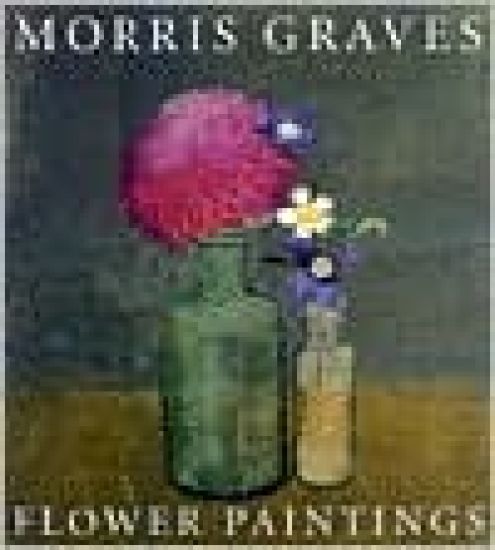
This visually stunning book will be a revelation to admirers of Northwest visionary artist Morris Graves (b. 1910) who know him chiefly through his profoundly original, metaphysically charged paintings of chalices, birds, snakes, and other small creatures. Graves's national reputation began with the Museum of Modern Art's exhibitions "Americans 1942--18 Artists from 9 States." Throughout his long career as one of America's most highly regarded painters of the transcendental, Graves has been less well known for his later flower paintings, represented here in more than fifty full-page color plates encompassing selected works from 1938 through 1992. A number of these paintings first captures public attention in 1983-84, during the course of a retrospective, "Morris Graves, Vision of the Inner Eye," organized by the Phillips Collection, Washington, D.C., which travelled to six major American museums. In the past decade, Graves's flower paintings have continued to command increasing critical and public acclaim. In the view of noted art critic Theodore Wolff, whose superb analysis informs this presentation, Graves has created several dozen of the finest American flower paintings of the century. A product of Graves's later years, these serene and radiantly beautiful paintings show distinct compositional parallels with a significant number of his early symbolic and metaphoric works. At the same time, they incorporate the dramatic shift in emphasis that took place in his art during the 1970s, when flowers and light began to embody his evolving sense of what color could be and could do. To a very real degree, notes Wolff, the flower paintings are Graves's culminating work, epitomizing and summarizing his lifelong attempts to translate the spiritually ineffableinto pictorial form. In addition to Theodore F. Wolff's inspired and insightful essay, Morris Graves: Flower Paintings features an excellent introduction by John Yau, art critic and author of recent book on A.R. Penck and Andy Warhol. The book will be of significant interest to collectors as well as to art historians.
Morris Graves

Morris Graves

University of Washington Press
2013
sidottu
Morris Graves is a major American painter with roots in the Pacific Northwest. Morris Graves: Selected Letters draws on a vast cache of the his unpublished correspondence, dating from his teenage years until his death in 2001. Few visual artists of any era have left such a rich and wide-ranging collections of letters, which makes this body of work an unusual and valuable document in American art.The Graves correspondence is remarkable for its scope, variety, and depth. Written to many correspondents over long periods of time, the letters include the artist's reflections on his art, the art world, philosophy (Zen Buddhism and Vedanta in particular), architecture (Graves designed his homes and gardens), and relationships with family, friends, and lovers. Graves himself preserved most of the letters, or copies of them, and put no restrictions on their use. Other letters come from a wide range of private and institutional sources.Among the correspondents are Graves's family; Marian Willard, his art dealer; Richard Svare, his companion in the 1950s; and Nancy Wilson Ross, novelist and Buddhist scholar. Other notable figures with whom Graves corresponded are poet Carolyn Kizer, art critic Theodore Wolff, curator Peter Selz, choreographer Merce Cunningham (for whom Graves created a set design), and painter Mark Tobey.Recurrent themes in the Graves letters are the tensions between sociability and solitude; the desire to be free of the material world versus the need for material comfort; the dismissal of commerce and the desperate need for money; the pleasures and pitfalls of love; and the difficulties of the creative life. The letters are organized topically under the broad categories of people (family, friends, intimates), places (homes and travels), and art (finances and philosophy).
Morris Graves

Morris Graves

Richard Svare

Process Media
2013
sidottu
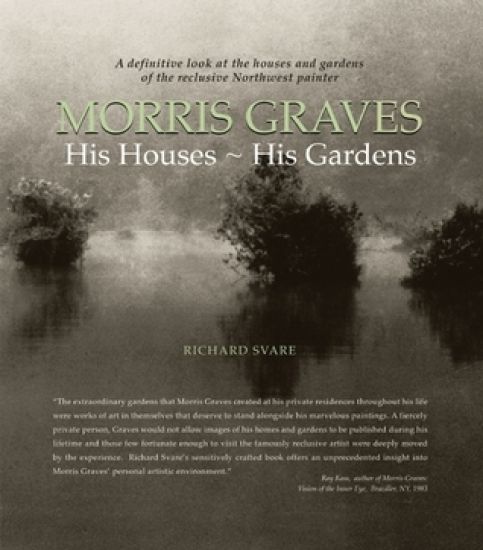
The long-awaited "Morris Graves: His Houses, His Gardens" tells the story of the homes of Morris Graves, a leading figure in Northwest Art and one of the most important American artists of the twentieth century. This high-quality book with beautiful duotone photographs concerns itself with four locations--The Rock, Careladen, Woodtown Manor, and The Lake. Author, photographer, and close Graves friend Richard Svare makes clear that the world Morris Graves inhabited physically was the world he experienced transcendentally. Morris Graves soared from obscurity to fame in 1942, when thirty of his works appeared in New York's Museum of Modern Art's exhibition "Americans 1942: 18 Artists from Nine States." A review in "ARTnews" magazine praised his paintings as the "sensation of the show." As a charismatic figure who traveled extensively throughout Europe and Asia, Graves developed friendships with artists like John Cage and Merce Cunningham, and hobnobbed with celebrities and royalty. Throughout his career, Graves's work is represented in many public and private collections, including The Museum of Modern Art and Whitney Museum, Washington's Phillips Collection, and the Los Angeles County Museum of Art. Partly because he chose to live in the Northwest, Graves was often said to be reclusive. Many of his early paintings were created at "The Rock," a cabin he built for himself eighty-five miles north of Seattle. He built a home in Ireland and spent the last thirty-five years of his life in Northern California.