Kirjojen hintavertailu. Mukana 11 244 527 kirjaa ja 12 kauppaa.

Kirjahaku

Etsi kirjoja tekijän nimen, kirjan nimen tai ISBN:n perusteella.

95 tulosta hakusanalla "Muhammad Iqbal"

Muhammad Iqbal

Muhammad Iqbal

Javed Majeed

Routledge India
2009
nidottu
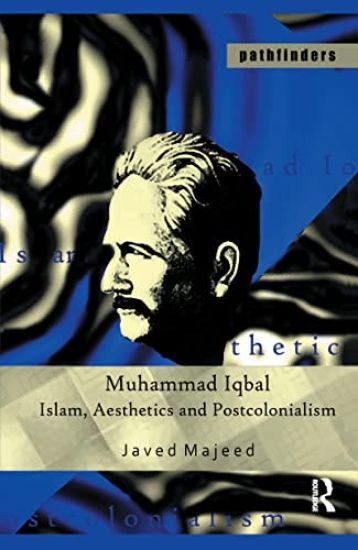
Bringing together Islamic studies, a postcolonial literary perspective, and a focus on the interaction between aesthetics and politics, this book analyses Iqbal’s Islamism through his poetry. It argues that his notion of an Islamist selfhood was expressed in his verse through the interplay between poetic tradition and creative innovation. It also considers how Iqbal expressed an Islamist geopolitical imagination in his work, and examines his exploration of the relationship between the modern West and a reconstructed Islam. For the first time, Iqbal’s personal letters have been drawn upon to provide an insight into his inner conflicts as articulated in his poetry. Concentrating on the complexity of his work in its own right, the book eschews the standard appropriation of Iqbal into any one political agenda — be it Indian nationalism, Muslim separatism or Iranian Islamic republicanism. With its analytical and in-depth reading of Iqbal’s verse and prose, this book opens a fresh perspective on Islam and postcolonialism. It will be a fascinating study for general readers and readers with interests in the intellectual and political history of modern South Asia, colonialism and postcolonialism, Islamic studies, and modern South Asian literature (especially Urdu and Persian poetry).
Muhammad Iqbal

Muhammad Iqbal

Edinburgh University Press
2015
sidottu
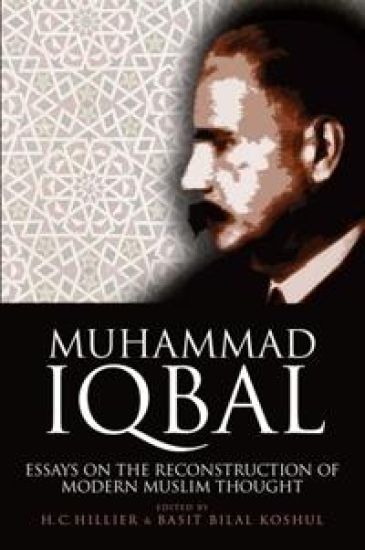
This book examines the ideas central to Muhammad Iqbal's thought and life: religion, science, metaphysics and nationalism. Commonly known as the 'spiritual father of Pakistan', the philosophical and political ideas of Muhammad Iqbal shaped the face of Indian Muslim nationalism and the direction of modernist reformist Islam around the world. This volume brings together a range of prominent and emerging voices within American and European Islamic studies to share the latest developments on Iqbal's thought. They re examine the ideas that lie at the heart of Iqbal's own thought: religion, science, metaphysics, nationalism and religious identity, and bring out many new connections between the 'Sage of the Ummah' and the greatest thinkers and ideas of European and Islamic philosophies. It responds to the recent rediscovery of Iqbal's thought within Anglo American scholarship on Islam. It provides an examination of ideas central to Iqbal's thought: the connection between religious belief and modern knowledge, the expression of Islamic belief through modern concepts and the political dimension of Muslim identity. It shows new connections between Iqbal and his contemporary European philosophers, including Bergson, Pierce, and Whitehead.
Muhammad Iqbal

Muhammad Iqbal

Javed Majeed

Routledge India
2016
sidottu
Bringing together Islamic studies, a postcolonial literary perspective, and a focus on the interaction between aesthetics and politics, this book analyses Iqbal’s Islamism through his poetry. It argues that his notion of an Islamist selfhood was expressed in his verse through the interplay between poetic tradition and creative innovation. It also considers how Iqbal expressed an Islamist geopolitical imagination in his work, and examines his exploration of the relationship between the modern West and a reconstructed Islam. For the first time, Iqbal’s personal letters have been drawn upon to provide an insight into his inner conflicts as articulated in his poetry. Concentrating on the complexity of his work in its own right, the book eschews the standard appropriation of Iqbal into any one political agenda — be it Indian nationalism, Muslim separatism or Iranian Islamic republicanism. With its analytical and in-depth reading of Iqbal’s verse and prose, this book opens a fresh perspective on Islam and postcolonialism. It will be a fascinating study for general readers and readers with interests in the intellectual and political history of modern South Asia, colonialism and postcolonialism, Islamic studies, and modern South Asian literature (especially Urdu and Persian poetry).
Muhammad Iqbal

Muhammad Iqbal

Edinburgh University Press
2017
nidottu
Commonly known as the 'spiritual father of Pakistan', the philosophical and political ideas of Muhammad Iqbal shaped the face of Indian Muslim nationalism and the direction of modernist reformist Islam around the world. This volume brings together a range of prominent and emerging voices within American and European Islamic studies to share the latest developments on Iqbal's thought. They re-examine the ideas that lie at the heart of Iqbal's own thought: religion, science, metaphysics, nationalism and religious identity, and bring out many new connections between the 'Sage of the Ummah' and the greatest thinkers and ideas of European and Islamic philosophies.
Mashhoor Shayaron kee Pratinidhi Shayari Muhammad Iqbal

Mashhoor Shayaron kee Pratinidhi Shayari Muhammad Iqbal

Muhammad Iqbal

Prabhakar Prakashan Private Limited
2022
pokkari
आता है याद मुझको गुजरा हुआ ज़माना वो बाग की बहारें वो सब का चहचहाना आजादियाँ कहाँ वो अब अपने घोंसले की अपनी खुशी से आना अपनी खुशी से जाना इकबाल युग निर्माता शायर थे। उनकी शायरी एक विचार के खास निज़ाम से रोशनी ग्रहण करती है। इक़बाल आदमी की महानता के अलमबरदार थे और वो किसी बख्शी हुई जन्नत की बजाय अपने खून-ए-जिगर से स्वयं अपनी जन्नत बनाने की प्रक्रिया को अधिक संभावित और अधिक जीवनदायिनी समझते थे। इसके लिए उसका उपाय तजवीज करते हुए उन्होंने कहा था, "पूरब के राष्ट्रों को ये महसूस कर लेना चाहिए कि ज़िन्दगी अपनी हवेली में किसी तरह का इन्किलाब नहीं पैदा कर सकती जब तक उसकी अंदरूनी गहराईयों में इन्किलाब न पैदा हो और कोई नई दुनिया एक बाहरी अस्तित्व नहीं हासिल कर सकती जब तक उसका वजूद इंसानों के ज़मीर में रूपायित न हो।"" इकबाल की शायरी मूल रूप से सक्रियता व कर्म और निरंतर संघर्ष को बयाँ करती है। यहाँ तक कि उनके यहाँ कभी-कभी ये संघर्ष उद्देश्य प्राप्ति के माध्यम की बजाय खुद मकसद बनती नज़र आती है। - इसी किताब से
The Political Philosophy of Muhammad Iqbal

The Political Philosophy of Muhammad Iqbal

Iqbal Singh Sevea

Cambridge University Press
2012
sidottu
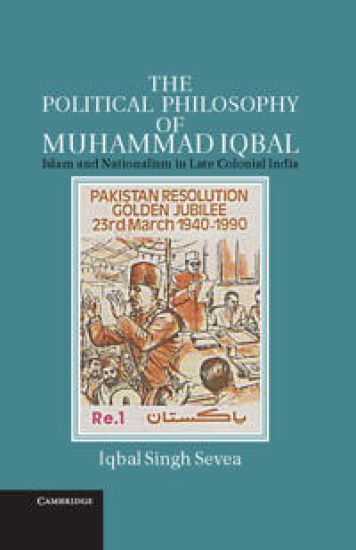
This book reflects upon the political philosophy of Muhammad Iqbal, a towering intellectual figure in South Asian history, revered by many for his poetry and his thought. He lived in India in the twilight years of the British Empire and, apart from a short but significant period studying in the West, he remained in Punjab until his death in 1938. The book studies Iqbal's critique of nationalist ideology and his attempts to chart a path for the development of the 'nation' by liberating it from the centralizing and homogenizing tendencies of the modern state structure. Iqbal frequently clashed with his contemporaries over his view of nationalism as 'the greatest enemy of Islam'. He constructed his own particular interpretation of Islam - forged through an interaction with Muslim thinkers and Western intellectual traditions - that was ahead of its time, and since his death both modernists and Islamists have continued to champion his legacy.
The Political Philosophy of Muhammad Iqbal

The Political Philosophy of Muhammad Iqbal

Iqbal Singh Sevea

Cambridge University Press
2017
pokkari
This book reflects upon the political philosophy of Muhammad Iqbal, a towering intellectual figure in South Asian history, revered by many for his poetry and his thought. He lived in India in the twilight years of the British Empire and, apart from a short but significant period studying in the West, he remained in Punjab until his death in 1938. The book studies Iqbal's critique of nationalist ideology and his attempts to chart a path for the development of the 'nation' by liberating it from the centralizing and homogenizing tendencies of the modern state structure. Iqbal frequently clashed with his contemporaries over his view of nationalism as 'the greatest enemy of Islam'. He constructed his own particular interpretation of Islam - forged through an interaction with Muslim thinkers and Western intellectual traditions - that was ahead of its time, and since his death both modernists and Islamists have continued to champion his legacy.
Arts and Arts letter to Mustafa Sadiq Al-Rafii and Muhammad Iqbal

Arts and Arts letter to Mustafa Sadiq Al-Rafii and Muhammad Iqbal

Mostafa Mohamed Lotfy Al-Qattan

Noor Publishing
2020
pokkari
The first purpose of literature and the arts is to create for the soul the meanings appropriate to that constant tendency in it to the unknown and to the metaphor of the truth and to throw secrets in open matters in which he imagines and responds a little from life sufficiently to multiply its meanings and leave the past from it fixed by what immortalizes its description and makes the painful Including a delightful delight, which proves in it a passion and complacency, a sweet pleasure, in which it reveals the beauty and wisdom in it, and all of that is related to the delivery of the soul, the pleasure of the unknown, which is in itself an unknown pleasure, as this soul is a capricious countenance that does not seek pure anonymity or a pure knowledge, as if it were aware of its nature. Is not explicit in the universe is absolute and absolutely invisible, but, seeking an appropriate case arises between these two lives or where the concern of which concern
Javid-Nama (RLE Iran B)

Javid-Nama (RLE Iran B)

Muhammad Iqbal

Routledge
2011
sidottu
Sir Muhammad Iqbal (1873-1938) was not only amongst the leading political figures of his time, but regarded by many as the spiritual father of Pakistan and a great champion of the reform movement of modern Islam. He was also a poet, in both Urdu and Persian. The recurrent theme of his poems is the infinite potentiality of man, as partner with God in shaping the destiny of the universe. As an ardent Muslim, Iqbal saw the realization of mankind’s future in a union of Islamic peoples, unfettered by the bonds of separate nationhood, fully liberated from the chains of imperial domination. The Javid-nama, commonly acknowledged as his greatest work, develops this theme within the frame-work of the ‘Ascension’ story. In imitation of the Prophet of Islam, the poet soars through the spheres, encountering on his heavenly journey many great figures of history with whom he converses. The resemblance to Dante’s Divine Comedy is obvious.
The Secrets of the Self: A Philosophical Poem

The Secrets of the Self: A Philosophical Poem

Muhammad Iqbal

Literary Licensing, LLC
2013
sidottu
""The Secrets of the Self"" is a philosophical poem written by Muhammad Iqbal, a renowned philosopher and poet from South Asia. The book is a reflection on the nature of the self and its relationship with the divine. The poem is divided into two parts, each containing several sections. In the first part, Iqbal explores the nature of the self, its limitations, and its potential for growth and transformation. He argues that the self is not a fixed entity but rather a dynamic and evolving process that is shaped by both internal and external factors.In the second part of the poem, Iqbal delves into the relationship between the self and the divine. He argues that the self is not separate from the divine but rather a manifestation of it. He explores the idea of the self as a mirror reflecting the divine and the importance of spiritual practice in achieving a deeper understanding of this relationship.Throughout the poem, Iqbal draws on a variety of philosophical and mystical traditions, including Sufism, Vedanta, and Western philosophy, to explore the nature of the self and its relationship with the divine. The language of the poem is rich and evocative, with vivid imagery and powerful metaphors that bring the ideas to life. Overall, ""The Secrets of the Self"" is a profound and thought-provoking work that offers insights into the nature of the self, the divine, and the relationship between the two.This is a new release of the original 1944 edition.This scarce antiquarian book is a facsimile reprint of the old original and may contain some imperfections such as library marks and notations. Because we believe this work is culturally important, we have made it available as part of our commitment for protecting, preserving, and promoting the world's literature in affordable, high quality, modern editions, that are true to their original work.
The Development of Metaphysics in Persia

The Development of Metaphysics in Persia

Muhammad Iqbal

Createspace Independent Publishing Platform
2016
nidottu
The Development of Metaphysics in Persia is the book form of Muhammad Iqbal's PhD thesis in philosophy at the University of Munich submitted in 1908 and published in the same year. It traces the development of metaphysics in Persia from the time of Zoroaster to the advent of the Bah ' Faith.
Zarb-I-Kalim ( Urdu Edition )

Zarb-I-Kalim ( Urdu Edition )

Muhammad Iqbal

Createspace Independent Publishing Platform
2018
nidottu
Zarb-i-Kalim (or The Rod of Moses) is a philosophical poetry book of Allama Iqbal in Urdu, a poet-philosopher of the Indian subcontinent. It was published in 1936, two years before his death. This is third collection of Allama Sir Muhammad Iqbal's poetry, which described as his political manifesto. It was published with the subtitle "A Declaration of War Against the Present Times." Muhammad Iqbal who also known as "Poet of the East" argues that modern problems are due to the godlessness, materialism and injustice of modern civilisation, which feeds on the subjugation and exploitation of weak nations, especially the Indian Muslims.