Kirjojen hintavertailu. Mukana 11 244 527 kirjaa ja 12 kauppaa.

Kirjahaku

Etsi kirjoja tekijän nimen, kirjan nimen tai ISBN:n perusteella.

79 tulosta hakusanalla "Panu"

To ja ukradlem panu samochod

To ja ukradlem panu samochod

Tomasz Hejnowicz

etkth
2021
pokkari
Opis Opowiadanie "trochę" kryminalne. Perypetie motoryzacyjne gl wnego bohatera widziane są oczami jego krewnych i przyjaci l. Forma opowiadania to groteskowy reportaż - wywiad inspirowany filmem Woody Allena "Bierz forsę i w nogi".
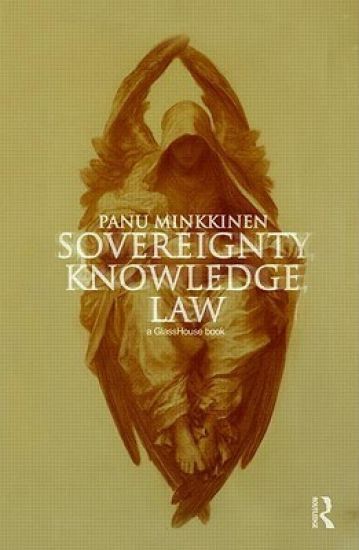
Sovereignty, Knowledge, Law

Sovereignty, Knowledge, Law

Panu Minkkinen

Routledge Cavendish
2009
sidottu
Sovereignty, Knowledge, Law investigates the notion of sovereignty from three different, but related perspectives: as a legal question in relation to the sovereign state, as a political question in relation to sovereign power, and as a metaphysical question in relation to sovereign self-knowledge. The varied and interchangeable uses of legal sovereignty, political sovereignty and metaphysical sovereignty in contemporary debates have resulted in a situation where the word ‘sovereignty’ itself has become something of a non-concept. Panu Minkkinen shows here how these three perspectives have informed one another, by addressing their shared relationship to law, and to the ‘autocephalous’ function of sovereignty; that is, the attempt to provide a single source and foundation for law, power, and self-knowledge. Through an effort to domesticate the intrinsically ‘heterocephalous’ nature of power, the juridical and jurisprudential aim has been to confine power within the closed vertical hierarchy of traditional legal thinking. Sovereignty, Knowledge, Law thus elaborates this heterocephaly, proposing new understandings of sovereignty, as well as of law and of legal scholarship.
Law as a Human Science

Law as a Human Science

Panu Minkkinen

Routledge
2026
sidottu
Law as a Human Science argues for the reintroduction of crucial aspects of the humanist tradition in legal thinking. Interdisciplinary studies of law are now primarily understood as policy-oriented and socio-legal in their orientation; whilst the older ties between law and the humanities (with philosophy, history, rhetoric, etc.) have become more marginal academic curiosities. This book makes a renewed case for law as a human science, by investigating the development of modern law as an academic discipline in relation to both the social scientific and hermeneutical traditions. The former – more Anglophone – approach associates law with an instrumental notion of knowledge and science: legal knowledge can be exploited both as a practitioner's tool and to provide potentially workable solutions to social problems. In contrast, the hermeneutic – and more Continental – approach situates law among the human sciences. This makes the instrumentalisation of legal knowledge difficult, if not impossible. But it is this approach that Panu Minkkinen defends here, in a radicalisation of law’s traditional affiliations with the human sciences. The ‘hermeneutical legal academic’, he argues, provides not only a renewed basis for seeing law as a human science, but also a new foundation for understanding it as an essentially critical enterprise.
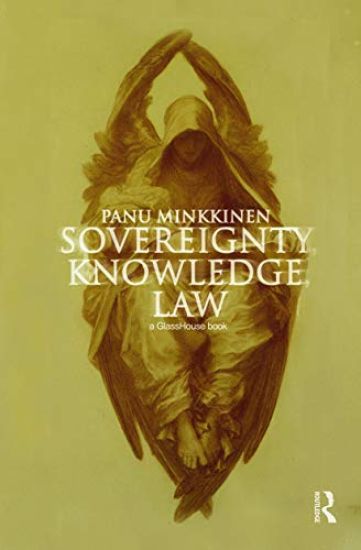
Sovereignty, Knowledge, Law

Sovereignty, Knowledge, Law

Panu Minkkinen

Routledge Cavendish
2011
nidottu
Sovereignty, Knowledge, Law investigates the notion of sovereignty from three different, but related perspectives: as a legal question in relation to the sovereign state, as a political question in relation to sovereign power, and as a metaphysical question in relation to sovereign self-knowledge. The varied and interchangeable uses of legal sovereignty, political sovereignty and metaphysical sovereignty in contemporary debates have resulted in a situation where the word ‘sovereignty’ itself has become something of a non-concept. Panu Minkkinen shows here how these three perspectives have informed one another, by addressing their shared relationship to law, and to the ‘autocephalous’ function of sovereignty; that is, the attempt to provide a single source and foundation for law, power, and self-knowledge. Through an effort to domesticate the intrinsically ‘heterocephalous’ nature of power, the juridical and jurisprudential aim has been to confine power within the closed vertical hierarchy of traditional legal thinking. Sovereignty, Knowledge, Law thus elaborates this heterocephaly, proposing new understandings of sovereignty, as well as of law and of legal scholarship.
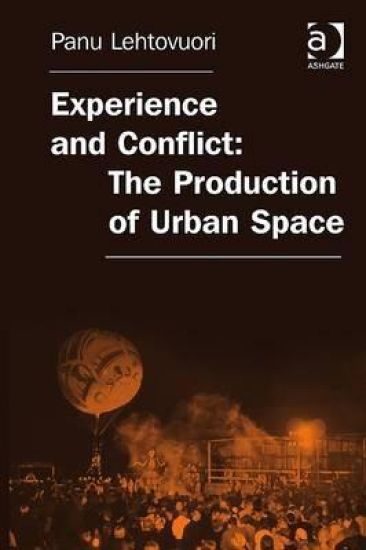
Experience and Conflict: The Production of Urban Space

Experience and Conflict: The Production of Urban Space

Panu Lehtovuori

Ashgate Publishing Limited
2009
sidottu
When designing, planning and building urban spaces, many contradictory and conflicting actors, practices and agendas coexist. This book propounds that, at present, this process is conducted in an artificial reality, 'Concept City', characterized by a simplified and outdated conception of space. It provides a constructive critique of the concepts, underlying the practices of planning and architecture and, in order to facilitate more dynamic, inclusive and subtle practices, it formulates a new theory about space in general and public urban space in particular. The central notions in this theory are temporality, experiment and conflict, which are grounded on empirical observations in Helsinki, Manchester and Berlin. While the book contextualizes Lefebvre's ideas on urban planning and architecture, it is in no way limited to Lefebvrean discourse, but allows insights to new theoretical work, including that of Finnish and Swedish authors. In doing so, it suggests and develops exciting new approaches and tools leading to 'experiential urbanism'.
Experience and Conflict: The Production of Urban Space
When designing, planning and building urban spaces, many contradictory and conflicting actors, practices and agendas coexist. This book propounds that, at present, this process is conducted in an artificial reality, 'Concept City', characterized by a simplified and outdated conception of space. It provides a constructive critique of the concepts, underlying the practices of planning and architecture and, in order to facilitate more dynamic, inclusive and subtle practices, it formulates a new theory about space in general and public urban space in particular. The central notions in this theory are temporality, experiment and conflict, which are grounded on empirical observations in Helsinki, Manchester and Berlin. While the book contextualizes Lefebvre's ideas on urban planning and architecture, it is in no way limited to Lefebvrean discourse, but allows insights to new theoretical work, including that of Finnish and Swedish authors. In doing so, it suggests and develops exciting new approaches and tools leading to 'experiential urbanism'.
Spedestä Säätiöön

Spedestä Säätiöön

Panu Petteri Höglund

Evertype
2017
pokkari
SPEDESTA SAATIOON - kolme esseetA populaari-kulttuu-rista. Spede Pasanen oli vuosikymmenten ajan Suomen tuotteliain viihdemies. Olisiko nyt aika pohtia myOs Speden ansioita suomalaisen komedian uudistajana? John Carter oli Tarzanista kuuluisan Edgar Rice Burroughsin toiseksi tunnetuin seikkailijahahmo, joka sai uutta kuuluisuutta taannoisen suurelokuvan ansiosta. Miten apinamiehen luojalta onnistui tieteisfantasian kirjoittaminen? Isaac Asimov oli yhdessA Arthur C. Clarken ja Robert A. Heinleinin kanssa yksi klassisen angloamerikkalaisen tieteiskirjallisuuden kolmesta suuresta. HAnen ensimmAisiA voimannAytteitAAn oli SAAtiO-trilogia. Oliko SAAtiO kovaa scifiA vai pelkkAA avaruusoopperaa?
Tine sa Chacoin

Tine sa Chacoin

Panu Petteri Hoeglund

EVERTYPE
2018
pokkari
Tir shuaimhneach shiochanta i dTuaisceart na hEorpa a bhi sa Chacoin trath. Anois afach ta si ar coipeadh le seinea-foibe is le sceimhlitheoireacht. A thriller about Caconia, a country in Northern Europe coping with xenophobia and terrorism.
Thinking without Desire

Thinking without Desire

Panu Minkkinen

Hart Publishing
1999
sidottu
The book is an attempt to evaluate the reception of Continental philosophy (phenomenology,hermeneutics, deconstruction, etc.) within mainstream jurisprudence. The book claims that the reduction of philosophy to social theory can only be accomplished by impoverishing the impetus of philosophical thinking and, consequently, by transforming critique into criticism, and the philosophy of law into legal theory. The response developed in this book is the creation of a metaphysical understanding of law or, in other words, what Aristotle called a 'first philosophy'. In addition to philosophy proper - the classics of Antiquity, the great German philosophers, contemporary French thinking -, the book covers a wide range of jurisprudential literature. These include the neo-Kantian philosophers of law whose thinking is allegedly at the root of legal positivism, but special emphasis is also given to 'existential' philosophers of law deeply inspired by the hermeneutical phenomenology of Martin Heidegger. Lastly, the book encourages specifically philosophical approaches in law to the thinking of French contemporaries whose work has inspired critical legal scholarship during the past ten years.