Kirjojen hintavertailu. Mukana 11 244 527 kirjaa ja 12 kauppaa.

Kirjahaku

Etsi kirjoja tekijän nimen, kirjan nimen tai ISBN:n perusteella.

1000 tulosta hakusanalla "Peru"

Peru

Peru

Klaren

Oxford University Press Inc
1999
nidottu
Peru is a country with a remarkable history--in the earliest times, the Incas managed to found a major civilization here, despite the region's environment, which is one of the harshest in the world. The Spanish colonial rule which folled this golden age exploited basic mineral resources in the area without bringing either stability or wealth to the existing population, and unfortunately, economic depression and civil war have frequently left their pockmarks on Peruvian history ever since. In this book, Klaren explores the country's long history, with particular emphasis on social and economic issues, from pre-Incan times to the present. Organized chronologically, the text also discusses the major themes of Peru's past, focusing not only on prominent figures, but on the daily lives of ordinary people as well.
Peru

Peru

James Rudolph

Praeger Publishers Inc
1992
sidottu
This volume gives specialists and students alike a comprehensive political history of Peru that includes the first full-length treatment of the 1980s, a decade in which early optimism sparked by the return of democratic rule gave way to widespread pessimism amidst a full-blown social, economic, and political crisis. Discussed are Peru's return to democracy in the 1980s and the multiple challenges that process has faced. The study traces the growth of the Sendero Luminoso insurgency; the economic collapse that brought Peru hyperinflation coupled with its deepest depression of the twentieth century; and the evolution of the electoral political system that brought Alberto Fujimori, a political novice, to the presidency in 1990.Many of the key causes of Peru's contemporary crisis--foreign debt, fiscal irresponsibility, desgobierno (erratic, inappropriate, or incompetent behavior on the part of the government), and the centralization of governmental authority--have been recurrent themes in Peruvian history since at least the early republican period. The profound social divisions within Peru's population, which constitute the principal cause of la crisis, have persisted even longer. A number of these divisions have broken down, however; in this development, the author sees cause for optimism in the midst of crisis. Latin American specialists, Peru watchers, advanced students in comparative politics, journalists, and anyone interested in the far-reaching changes occurring in Latin America will find this book useful and compelling.
Peru

Peru

James Rudolph

Praeger Publishers Inc
1992
nidottu
This volume gives specialists and students alike a comprehensive political history of Peru that includes the first full-length treatment of the 1980s, a decade in which early optimism sparked by the return of democratic rule gave way to widespread pessimism amidst a full-blown social, economic, and political crisis. Discussed are Peru's return to democracy in the 1980s and the multiple challenges that process has faced. The study traces the growth of the Sendero Luminoso insurgency; the economic collapse that brought Peru hyperinflation coupled with its deepest depression of the twentieth century; and the evolution of the electoral political system that brought Alberto Fujimori, a political novice, to the presidency in 1990. Many of the key causes of Peru's contemporary crisis--foreign debt, fiscal irresponsibility, desgobierno (erratic, inappropriate, or incompetent behavior on the part of the government), and the centralization of governmental authority--have been recurrent themes in Peruvian history since at least the early republican period. The profound social divisions within Peru's population, which constitute the principal cause of la crisis, have persisted even longer. A number of these divisions have broken down, however; in this development, the author sees cause for optimism in the midst of crisis. Latin American specialists, Peru watchers, advanced students in comparative politics, journalists, and anyone interested in the far-reaching changes occurring in Latin America will find this book useful and compelling.
Peru

Peru

Victor Alba

Routledge
2019
sidottu
This book focuses on the topography, the political system, the economy, the culture, and the population of Peru, providing a foundation for the understanding and forecasting of Latin America's course for the near future.
Peru

Peru

Victor Alba

Routledge
2020
nidottu
This book focuses on the topography, the political system, the economy, the culture, and the population of Peru, providing a foundation for the understanding and forecasting of Latin America's course for the near future.
Peru

Peru

Cecilia Pardo; Jago Cooper

British Museum Press
2021
nidottu
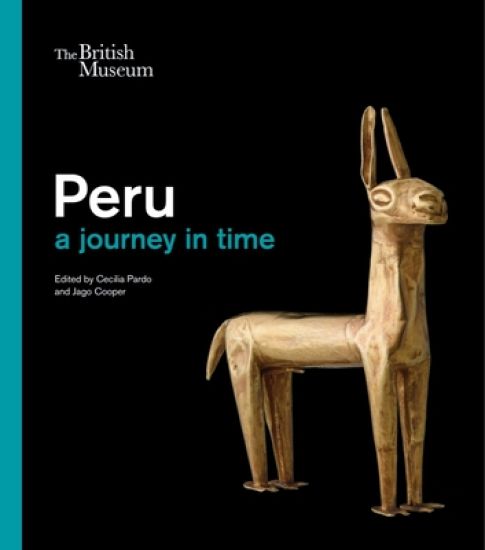
‘The exhibition is now over, but the splendid book lives on.’ ‘A delightful, very readable eyecandy dive in the history of the cultures of Peru’ ‘An excellent book as you would expect from the British Museum, and a delight to dive into.’ -- Sacred Hoop Magazine, March 2022 The environments of the Central Andean region in Peru, South America, are some of the most geographically rich and diverse in the world. This publication highlights the history, beliefs and cultural achievements of the different peoples who lived in these remarkable landscapes from 1500 BC to the arrival of Europeans in the 1500s, and the importance of their legacy up until today. Over thousands of years, the people of the Andes have approached agriculture, economy, gender, power and belief in fascinating ways. Many archaeological sites in Peru are uniquely preserved, and the book discusses key examples with a thematic and geographical approach. The vibrant and varied material depicted includes ceramics, colourful textiles, golden objects and wooden carvings, drawn from the British Museum and museums and collections in Peru and beyond. When juxtaposed with breathtaking photography of archaeological sites and landscapes, they reveal new narratives about the country’s rich history.
Peru

Peru

Gastón Acurio

Phaidon Press Ltd
2015
sidottu
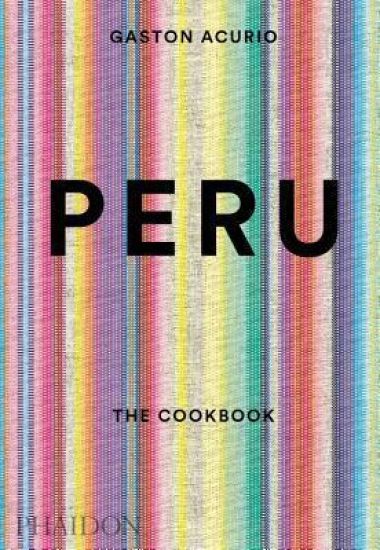
The definitive cookbook on Peruvian cuisine by the country’s most famous and popular chef, Gastón Acurio. Gastón Acurio is a major national celebrity with 735,000 Twitter followers and more than 1 million Facebook friends. He has his own television show and supporters who want him to be President. Brings 500 authentic recipes from the Peruvian home to the worldwide kitchen for the first time. Named ‘a hot food trend’ by USA Today and ‘the next big thing’ by the Wall Street Journal, Peru is now poised to expand its influence into the home kitchen. From quinoa and ceviche to gluten-free amaranth and aji amarillo, Peruvian food offers an abundance of healthy and unique ingredients. The launch coincides with Peruvian restaurants opening in major cities worldwide as the cuisine is embraced by the mainstream
Peru

Peru

World Bank Publications
2011
nidottu
This Peru Country Program Evaluation for the World Bank Group, 2003-2009 is part of IEG's country program evaluation series. To date, IEG's in-depth country evaluations have comprised IEG-WB Country Assistance Evaluations (CAEs) and IEG-IFC Country Impact Reviews (CIRs). Both the CAEs and CIRs have involved comprehensive evaluations of the respective institutions' activities in a country. In a pilot approach, this evaluation was prepared by a single IEG team that looked at development interventions across the three WBG institutions. The evaluation draws on WBG documents, external literature, and on interviews with government officials, representatives of the private sector and civil society, nongovernmental organisations, bilateral and multilateral development partners, and Bank, IFC, and MIGA staff in Washington and in Peru. An IEG mission visited Peru in September 2009. IEG also cooperated with the Evaluation Office of the Global Environment Facility that was conducting a parallel evaluation in Peru.
Peru

Peru

John Crabtree

Oxfam
2002
nidottu
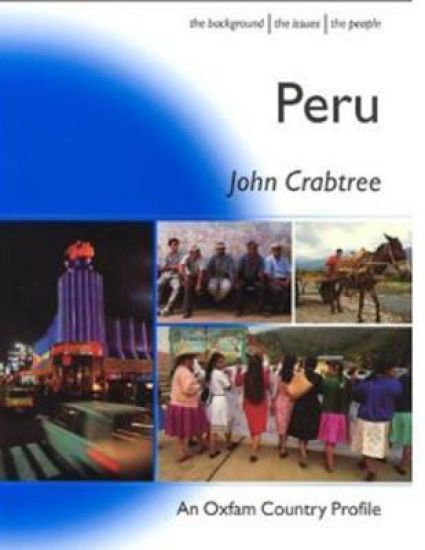
This outstanding series provides concise and lively introductions to countries and the major development issues they face. Packed full of factual information, photographs, and maps, the guides also focus on ordinary people and the impact that historical, economic and environmental issues have on their lives.
Peru

Peru

N. Pitman

Field Museum of Natural History,U.S.
2003
nidottu
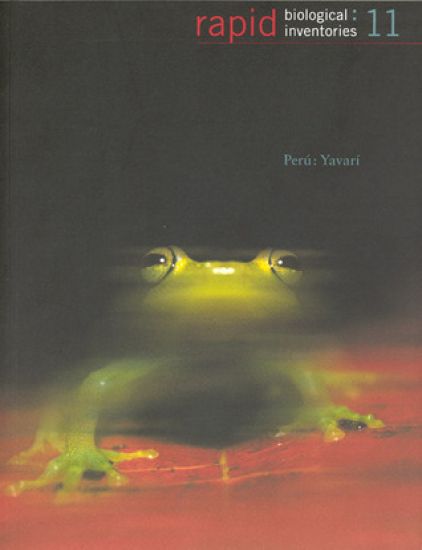
Conducted during the spring of 2003 in the Yavarí and Yavarí Mirín river valleys in the Amazonian lowlands of northeastern Peru, this survey provides both biological and social analyses offering a deep and multi-faceted picture of the area. Participating scientists examined four sites along the Yavarí River. At each site, they surveyed a mix of forest types and microhabitats, both in the hilly uplands and on the Yavarís broad floodplain. Their report covers surveys of vascular plants, fishes, reptiles, and amphibians; birds, large mammals, and bats. The report also discusses the findings of a social assets inventory among nearby communities, in which teams used participant observation and conducted semi-structured interviews to quickly evaluate the assets of local communities, and estimate how the communities could be points of engagement for long-term participation in conservation efforts. The survey also reports on the main threats to the area, and offers recommendations for protection, management, and long-term conservation benefits.
Peru

Peru

N. Pitman

Field Museum of Natural History,U.S.
2004
nidottu
Conducted during August of 2003 in the broad interfluvium between the Amazon and Putumayo rivers in the vast lowlands of northeastern Peru, this inventory provides both biological and social analyses of the region, with concrete recommendations for its protection. Collaborating with the 26 indigenous communities who have led the initiative to conserve this intact, terra firme forest north of the Amazon, participating scientists examined the upper headwaters of the Yaguas, Ampiyacu, and Apayacu rivers. This report covers surveys of vascular plants, fishes, reptiles and amphibians, birds, large mammals, and bats. The recommendations call for protection of 1.9 million hectares in a complex that includes three Communal Reserves surrounding a core area of strict protection -- Yaguas National Park.
Peru

Peru

Field Museum of Natural History,U.S.
2005
nidottu
Conducted during the spring of 2004 on the eastern side of the Peruvian Andes, this inventory offers biological and social analyses of the Zona Reservada Megantoni. The participating scientists survey three of the most inaecessible and isolated sites in this rugged territory, examining vascular plants, dung beetles, fishes, reptiles and amphibians, birds, and large mammals. The report also features a brief history of the Megantoni region and its peoples, reviewing more than ten years of collaborative work between scientists and the native communities in the area, including the Machiguenga, Ashaninka, Yine Yami, and Nanti peoples. The report concludes with recommendations for the region's conservation and management, calling for the protection of 216,005 hectares as Santuario Nacional Megantoni. Such a measure would keep intact a corridor between two of the largest protected areas in Peru, the Parque Nacional Manu and the conservation complex in Cordillera Vilcabamba.
Peru

Peru

C. Vriesendorp; N. Pitman; J.I. Rojas Moscoso; B.A. Pawlak; L. Rivera Chavez; L. Calixto Mendez; M. Vela Collantes; P. Fasabi Rimachi

Field Museum of Natural History,U.S.
2006
nidottu
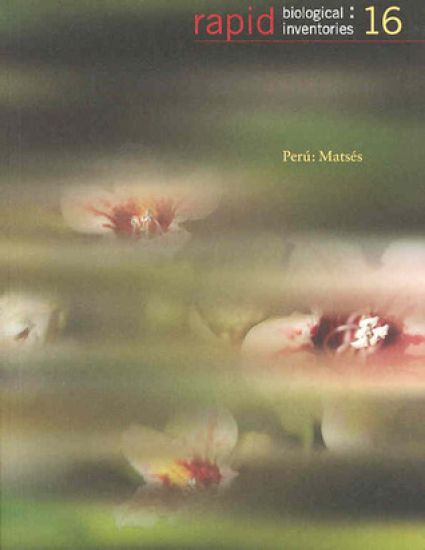
In the fall of 2004, scientists from Chicago's Field Museum conducted a biological inventory in the forests of the Comunidad Nativa Matses in the northeastern region of the Peruvian Amazon. This assessment, presented in English, Spanish, and Matses, collects their research on the plant and animal ecology of the Amazon, includes a brief history of the region and the indigenous Matses people, and concludes with recommendations for the region's long-term management.